DRIFT AUDIO
Listen to this story
Choose a voice, then press play.
Kronthaler’s Fall 2026 outing turns mourning into mischief, built on three unlikely muses and a closing model named for the house itself.
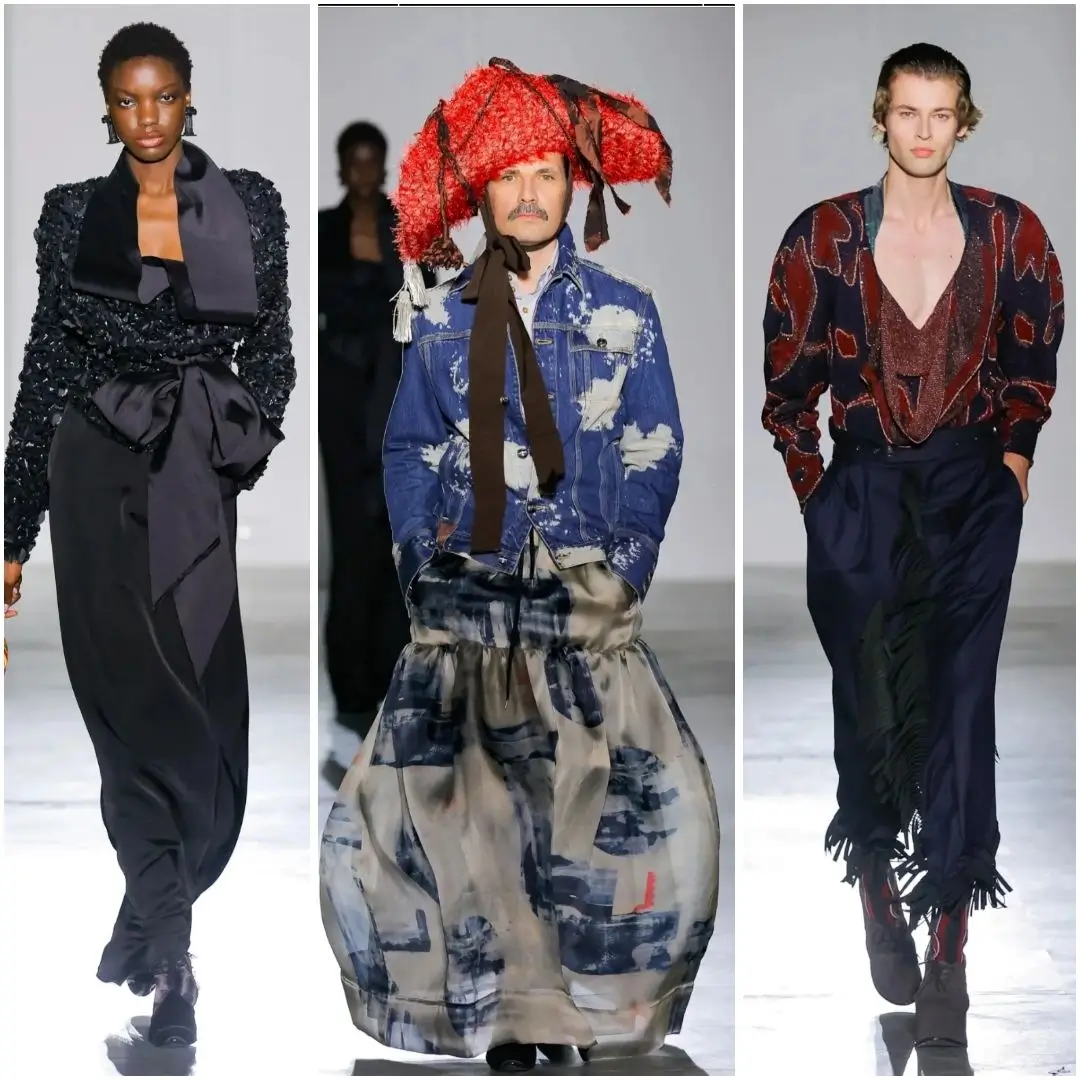
Paris Fashion Week closed out its Fall 2026 menswear and womenswear runs with a show that felt less like a collection preview than a confession. Andreas Kronthaler titled his 21st outing for Vivienne Westwood “Catch the Rhythm! Let’s Go!,” a phrase pulled from Westwood’s own notebooks and repurposed as a kind of instruction to himself. Three years on from his wife’s death, the designer used the runway to work through what he has called an ongoing negotiation between loss and forward motion, and he did it the only way the house knows how: loudly, with humor, and without a trace of good taste.
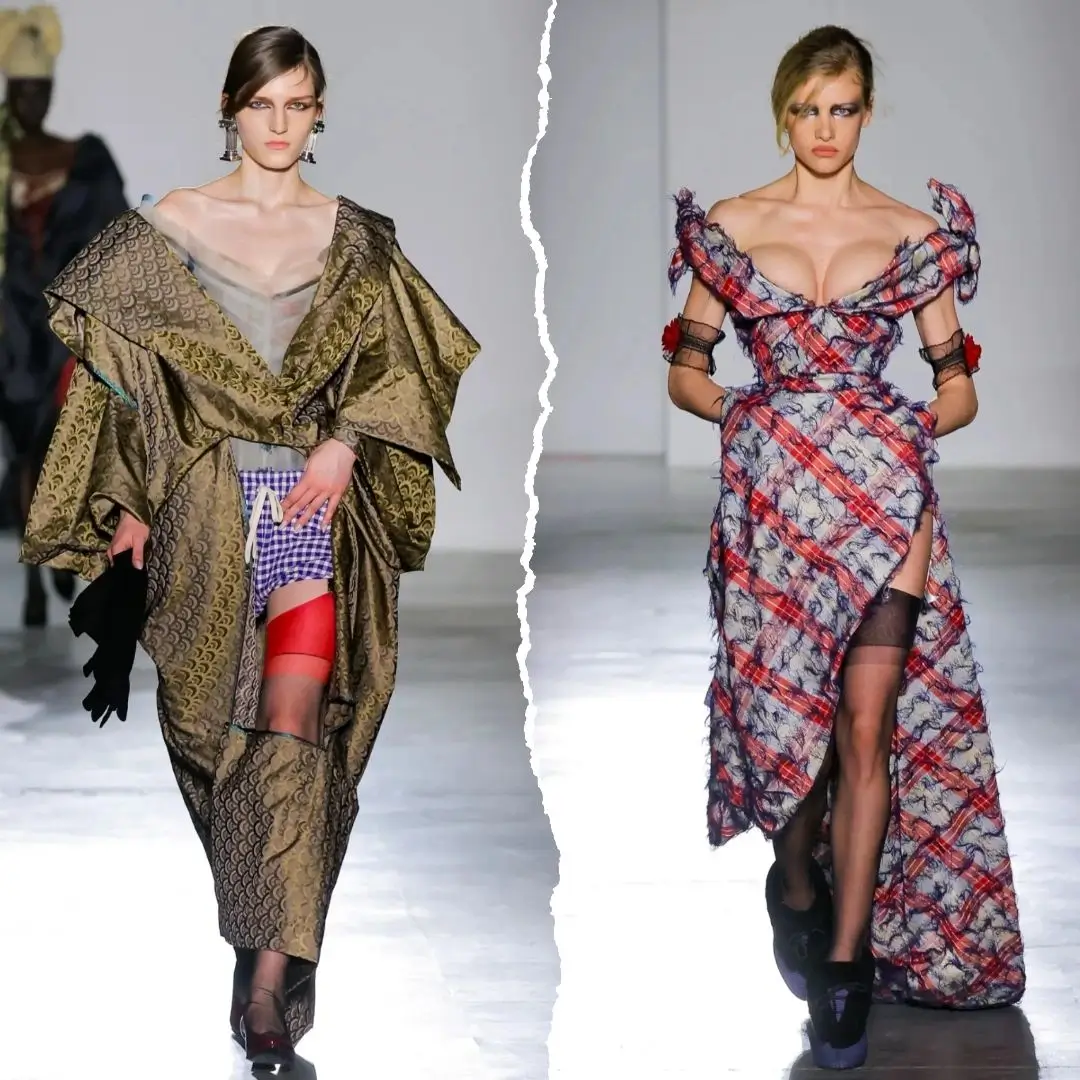
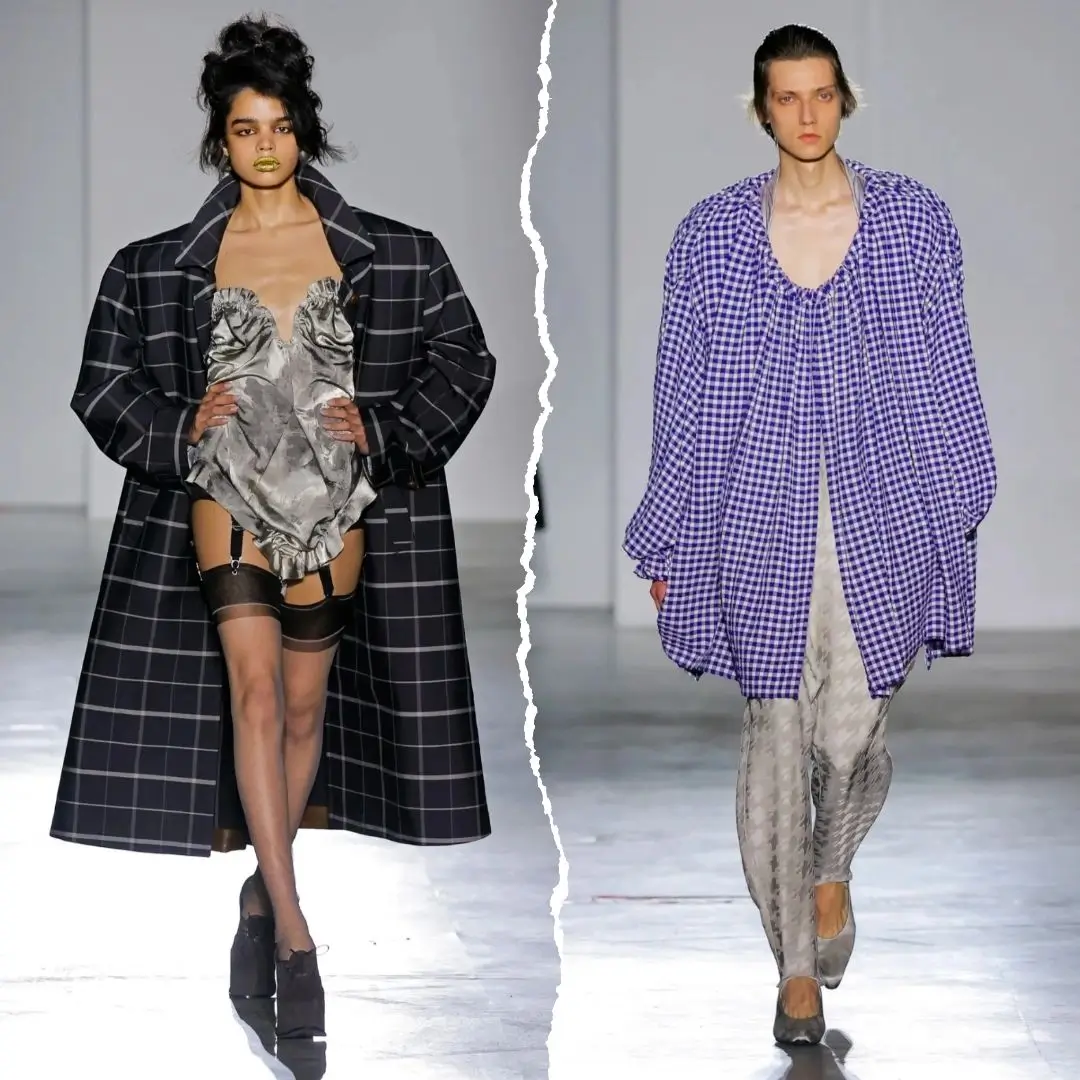
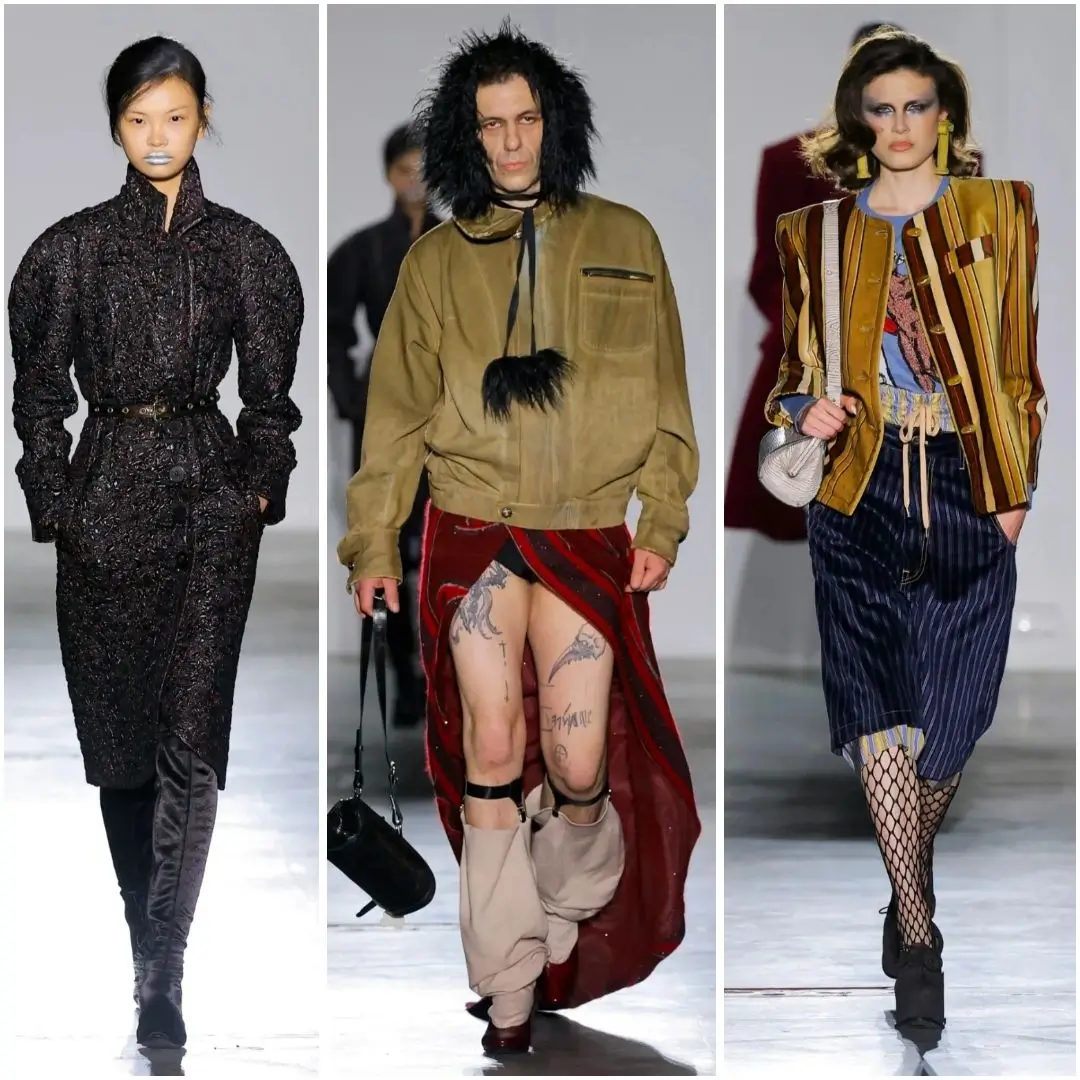
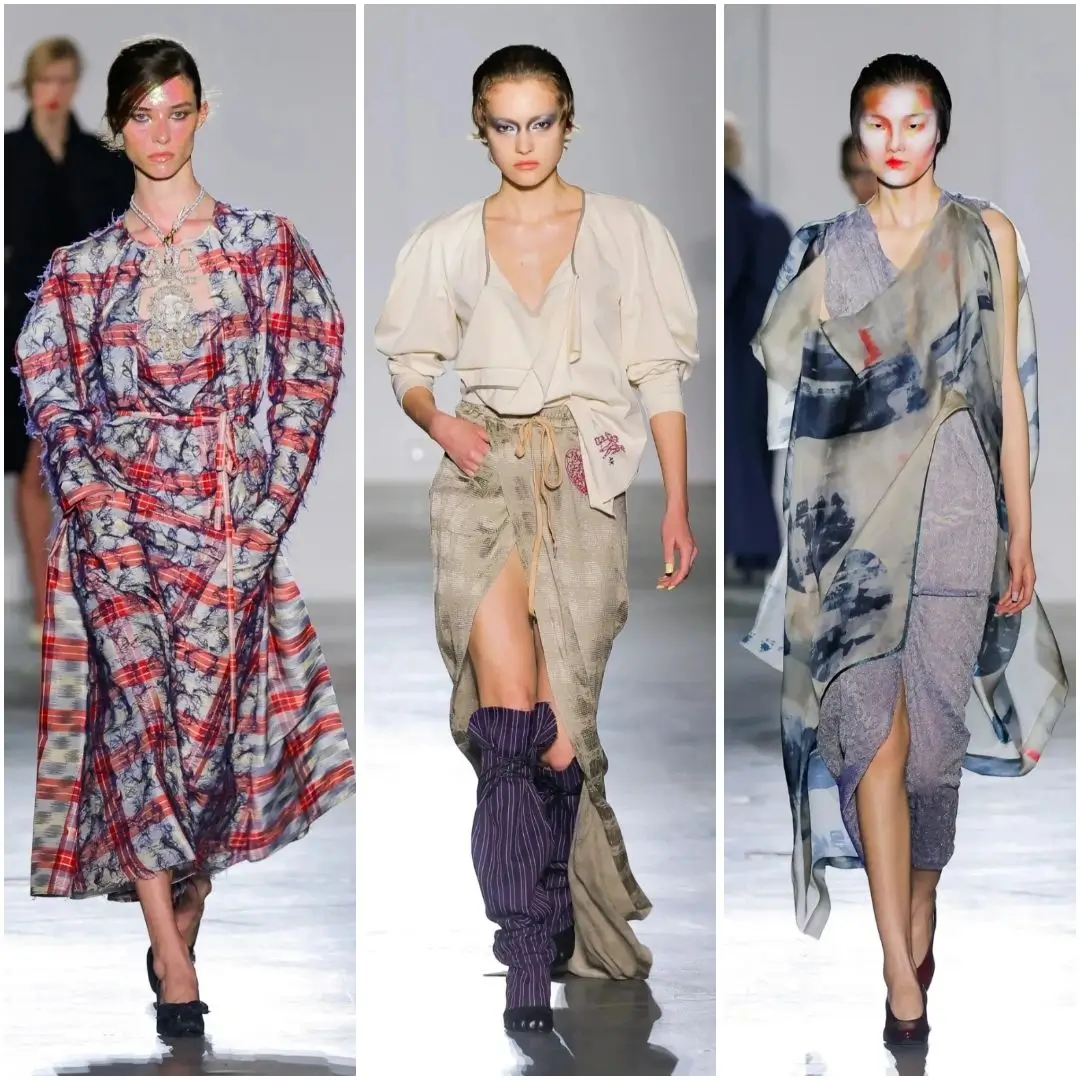
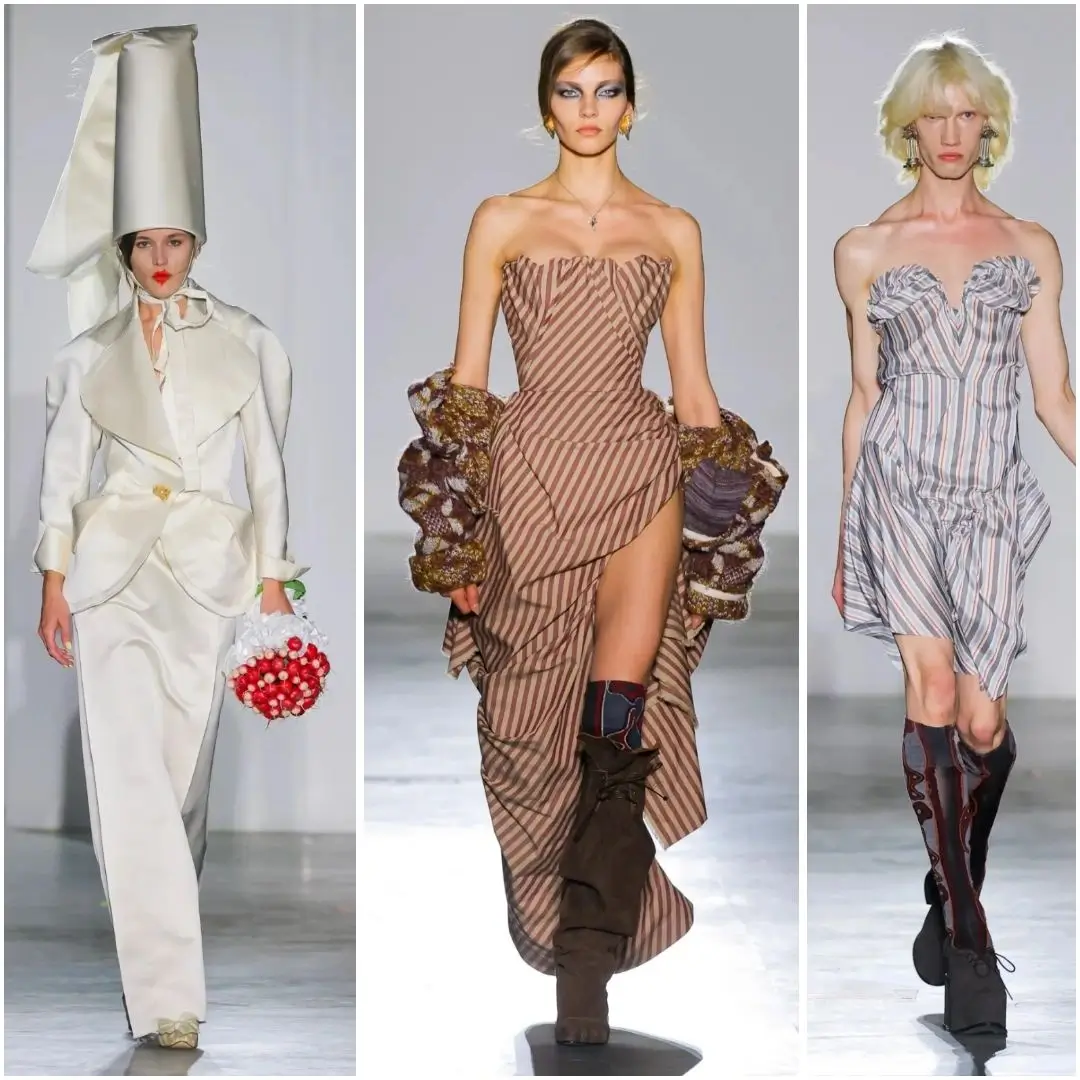
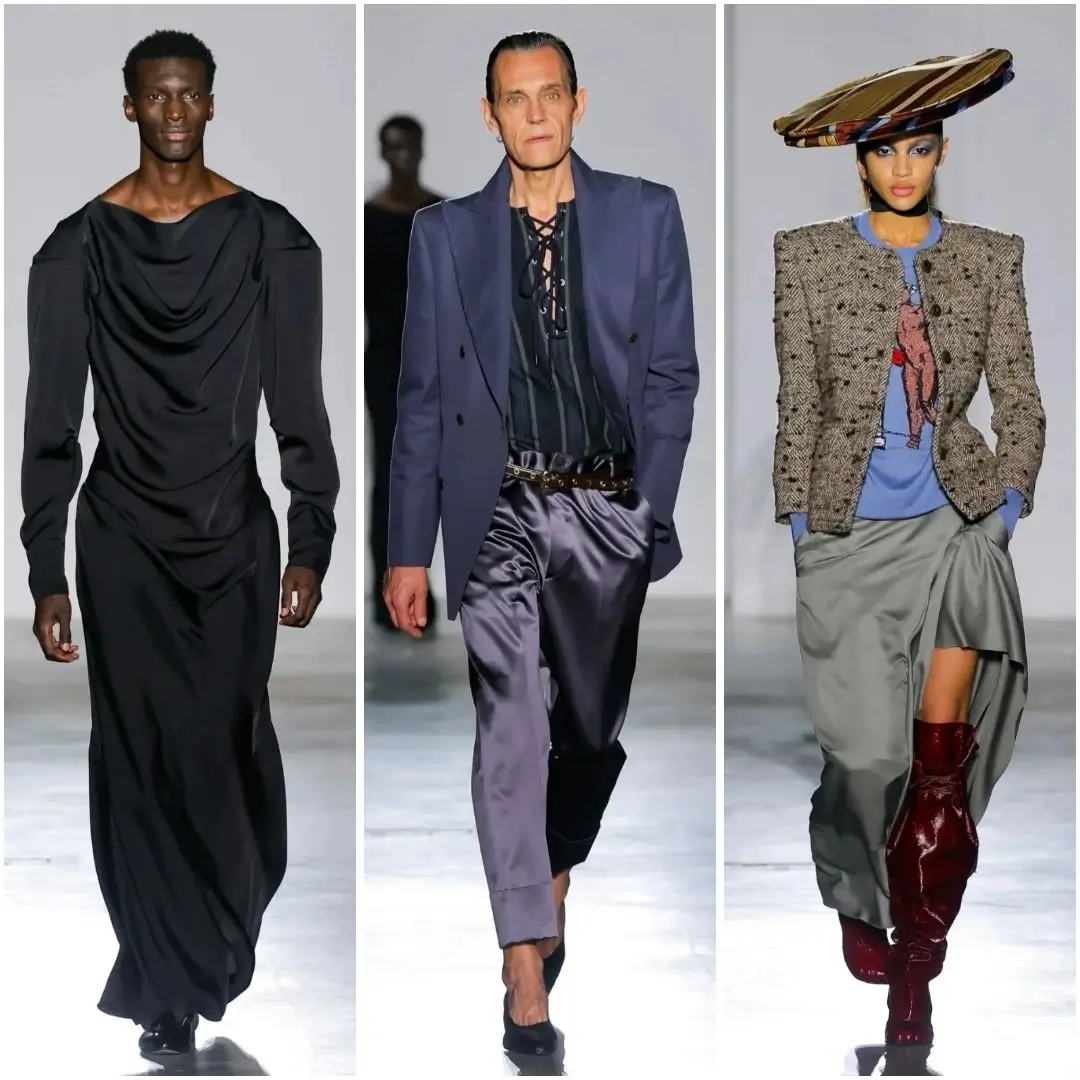
Andreas Kronthaler For Vivienne Westwood Autumn-Winter 2026/27
stir
Kronthaler has now design more seasons for the house alone than he did alongside Westwood before her passing in December 2022, and Fall 2026 read as his most candid statement yet on what that continue actually costs him. Speaking backstage, he described a collection assemble from memory, cinema, costume and desire, aimed at a wardrobe that could feel intimate in one moment and anarchic in the next. The eroticism that has defined his tenure was present from the opening exits, but it sat alongside something shh: an admission that moving forward and missing someone are not mutual exclusive states.
“The world is in a funny state. It’s a terrible moment for so many things and for so many people. But you can’t stop,” he said, in comments reported by WWD. “I’ve lost something in my life that is impossible to forget. Nevertheless, I’m trying to move on, to learn how to live with the loss and still have fun.”
That balancing act, between elegy and appetite, has become the throughline of his solo era at the house, and Fall 2026 pushed it further than any collection since Westwood’s death by naming its influences so plainly.
Kronthaler’s relationship to the house predates his marriage to its founder by several years. He joined Westwood’s studio in 1989 after training as a jeweler and later studying industrial design in Vienna, where the two had met while she was teaching. Their first joint collection arrived in 1991, and by the time they married the following year, Kronthaler had already become the person most responsible for translating Westwood’s ideas into finished garments. Since her death in December 2022, he has kept the house running under her name while quietly asserting his own voice within it, and this season made that negotiation explicit rather than implied. Where earlier post-2022 collections leaned on tribute, Fall 2026 read more like a diary entry, structured around what he was thinking about rather than what he felt obligated to reference.
View this post on Instagram
ensemble
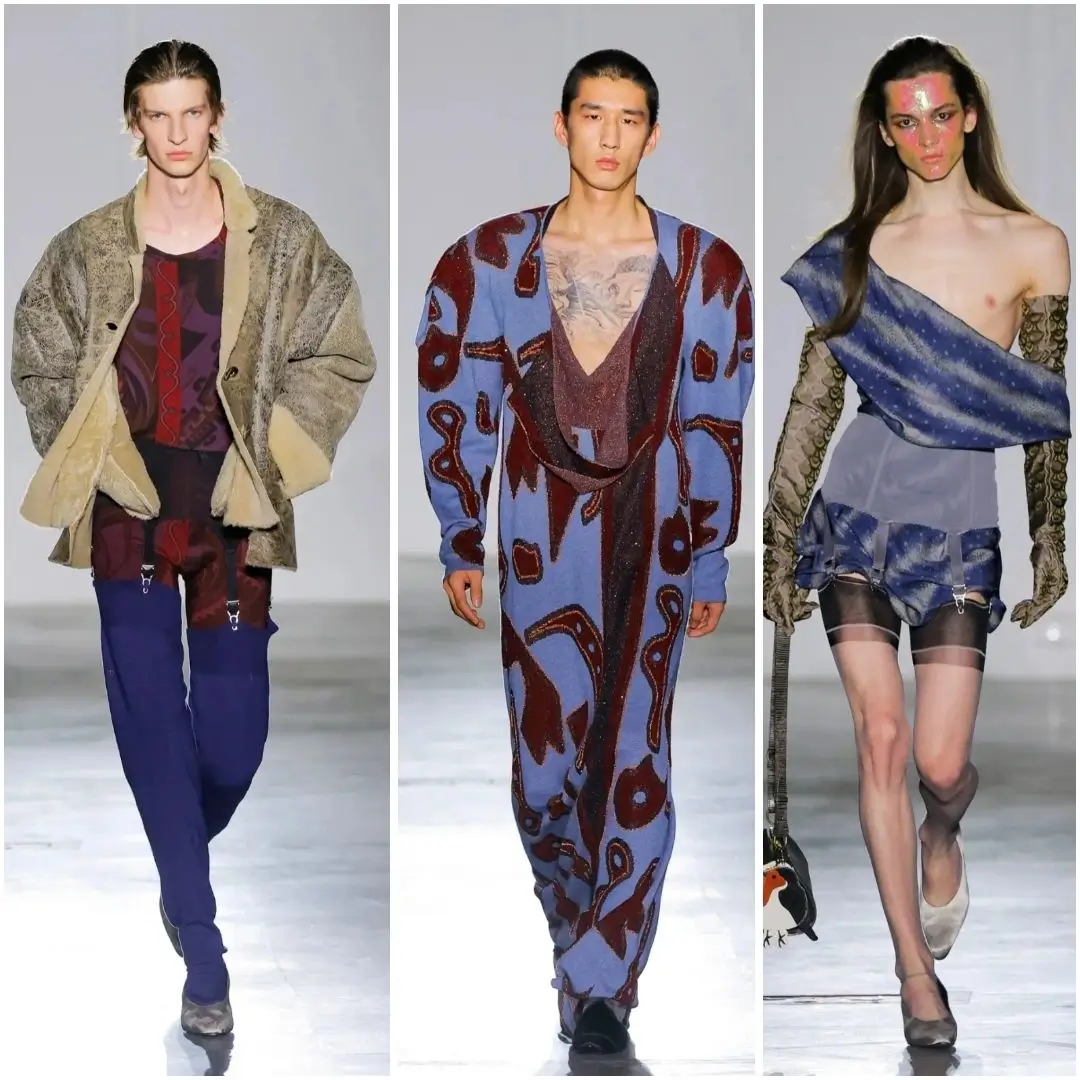
The first of Kronthaler’s three muses this season was Romy Schneider, the Austrian screen actress whose long, restless career became a structural device for the collection rather than a decorative reference. Schneider’s shifting screen personas informed the glitter makeup that ran across the cast, applied by Swedish makeup artist Daniel Sällström, who told Vogue Scandinavia that the main inspiration he took from Kronthaler and stylist Sabina was Schneider’s particular strain of glamour.
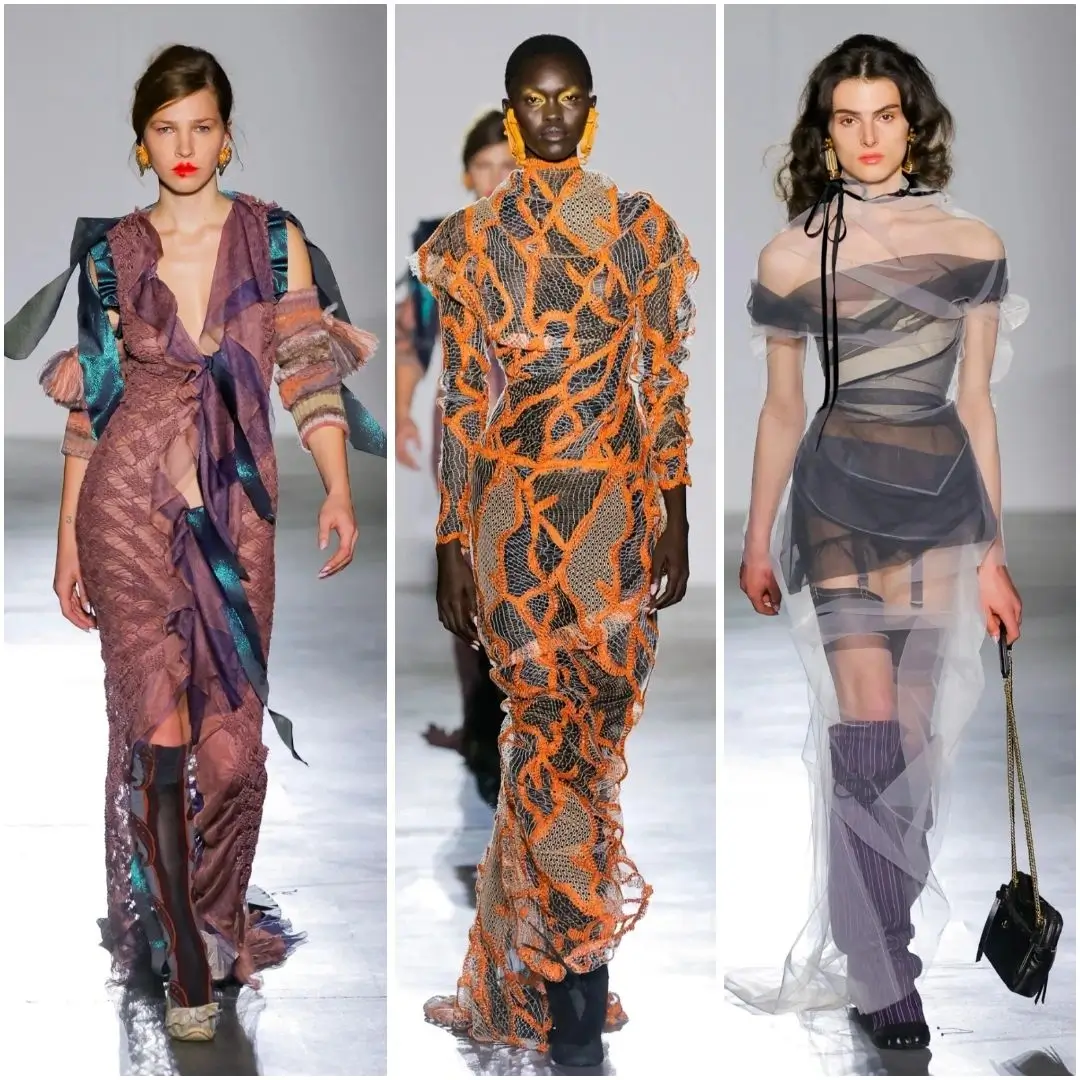
Kronthaler’s own read on Schneider leaned toward temperament rather than image. “She was an incredible actress, very powerful. She wasn’t frightened. She always went for the risky things in life,” he said. That nerve showed up literal in the construction: dresses cut with rough, open seams left exposed rather than finished, twisting and drag unpredictable around the body as models walked, as if the garment itself hadn’t quite decided what shape to settle into. It is a technique Kronthaler has returned to across several seasons, but here it carried a more specific emotion charge, tied directly to a woman he described as someone who refused to be careful.
Schneider’s own career, which ran from teenage stardom in the Sissi films through darker, more psycho demand work in French cin, gave Kronthaler a template for range rather than a single look to copy. The reference showed up less as literal costume history and more as a permission structure: a cast of characters who could shift register from scene to scene the way Schneider shifted between roles, glamorous in one exit and undone in the next. That range is part of what critics picked up on backstage, where the mood was describe as a mix of mischief, memory and unresolved chaos held together by a stronger sense of cohesion than some of Kronthaler’s early solo season manage.
View this post on Instagram
flow
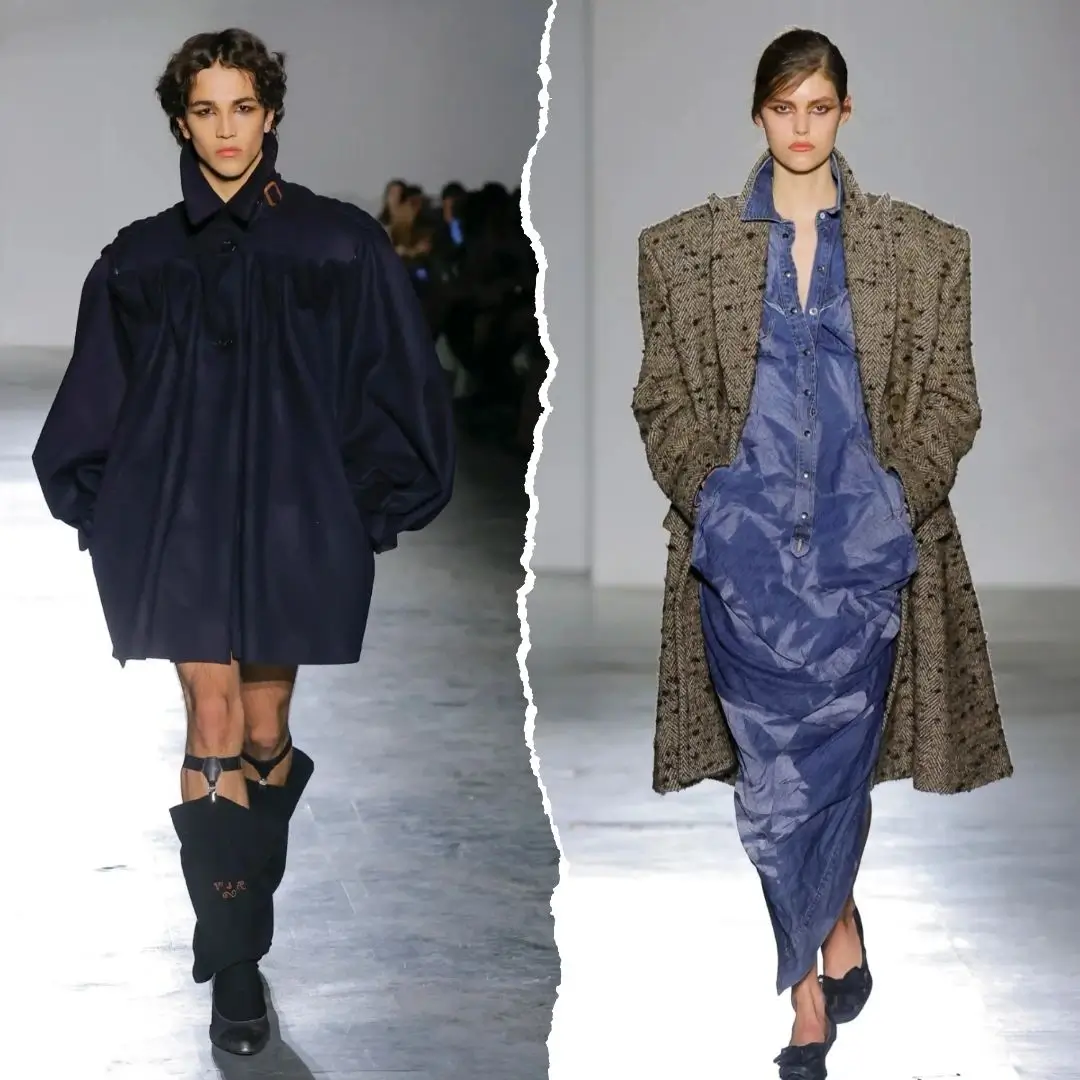
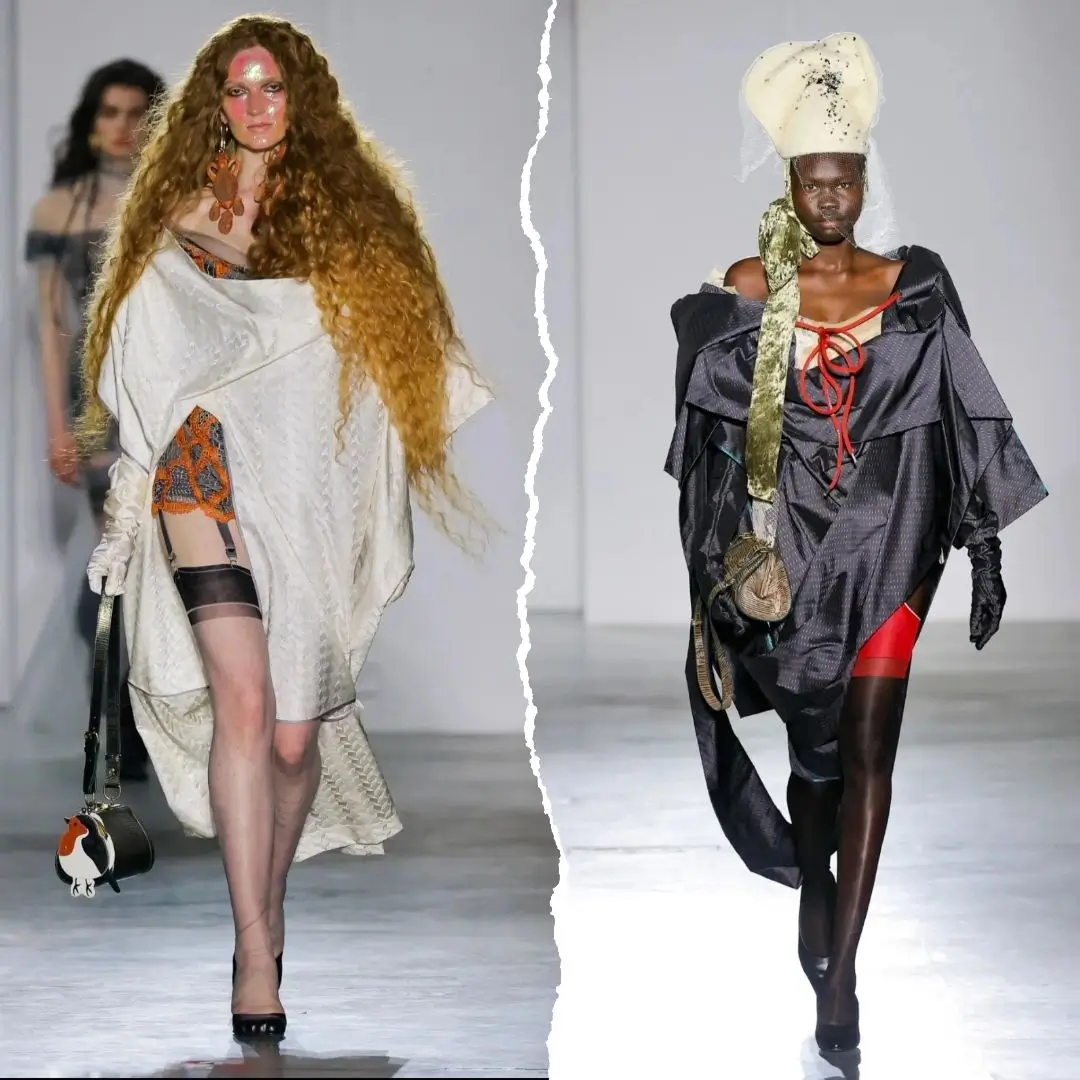
The second reference point was Danilo Donati, the Italian costume designer whose work on Pier Paolo Pasolini‘s 1972 film adaptat of The Canterbury Tales supply both a literary bridge to Kronthaler’s third muse and a view one to his own history of theatre costume. Donati’s spirit surfaced most directly in the show’s bridal moment, a raw and almost improvise look built from fabric wrapped and left hang in torn, unfinishe strips, crown with an oversize sculpture headpiece that suggested some antique world reassembled through a punk lens.
Elsewhere in the collection, the Donati and Pasolini influence showed up as over-stitched mesh, tied smock dresses, collage blazers and off-the-shoulder wrap dresses with cutaway front panels expose garter-strap leg beneath, a device that read as both medieval undress scene and straightforward Westwood-house eroticism. Shoulders were double-pad to near-cartoonish proportion on some silk college blazer and dinner jacket, a nod to costume drama scaled up for the runway rather than the screen.
Donati himself worked across four decades of Italian cinema, collect multiple Academy Awards for costume and production design and building a reputation for turning historical research into something closer to fantasy than documentation. That instinct, treating period reference as raw material rather than a rulebook, lines up closely with how Kronthaler has always approached the Westwood archive: less interested in recreating a specific era than in cutting it apart and reassembling it under different rules. Knitwear pieces nicknamed “Cupid” by the design team clung to the body in a way that softened the harder Chaucer-era tailoring elsewhere in the show, and outerwear pulled from what one backstage account described as an attic of collective memory kept the Donati references from tipping into full costume-drama pastiche.
end
The bridal look closed the show, and the model wearing it happened to be named Vivienne. Her mother had given her the name because Westwood was her favorite designer, a coincidence Kronthaler said he loved for the way it folded the show’s themes back on themselves without any styling department having to engineer it. A collection built around continuing to work in the wake of Westwood’s absence ended, literally, with a woman carrying her name down the runway in a dress built from another artist’s meditation on ritual and transformation.
It is the kind of detail that could read as sentimental if the rest of the collection weren’t so committed to keeping things unruly, and it landed instead as one more instance of Kronthaler finding humor and coincidence inside grief rather than around it.
Westwood herself was no stranger to using her own name as material. Born in Derbyshire in 1941, she adopted the Westwood surname from her first marriage and later built an entire design language around punk’s habit of turning personal history into provocation. Kronthaler has spent his solo seasons trying to keep that instinct alive without simply repeating it, and closing a show on a stranger who happens to share her name gave him a way to make the point without writing a single line of show notes about it.
encore
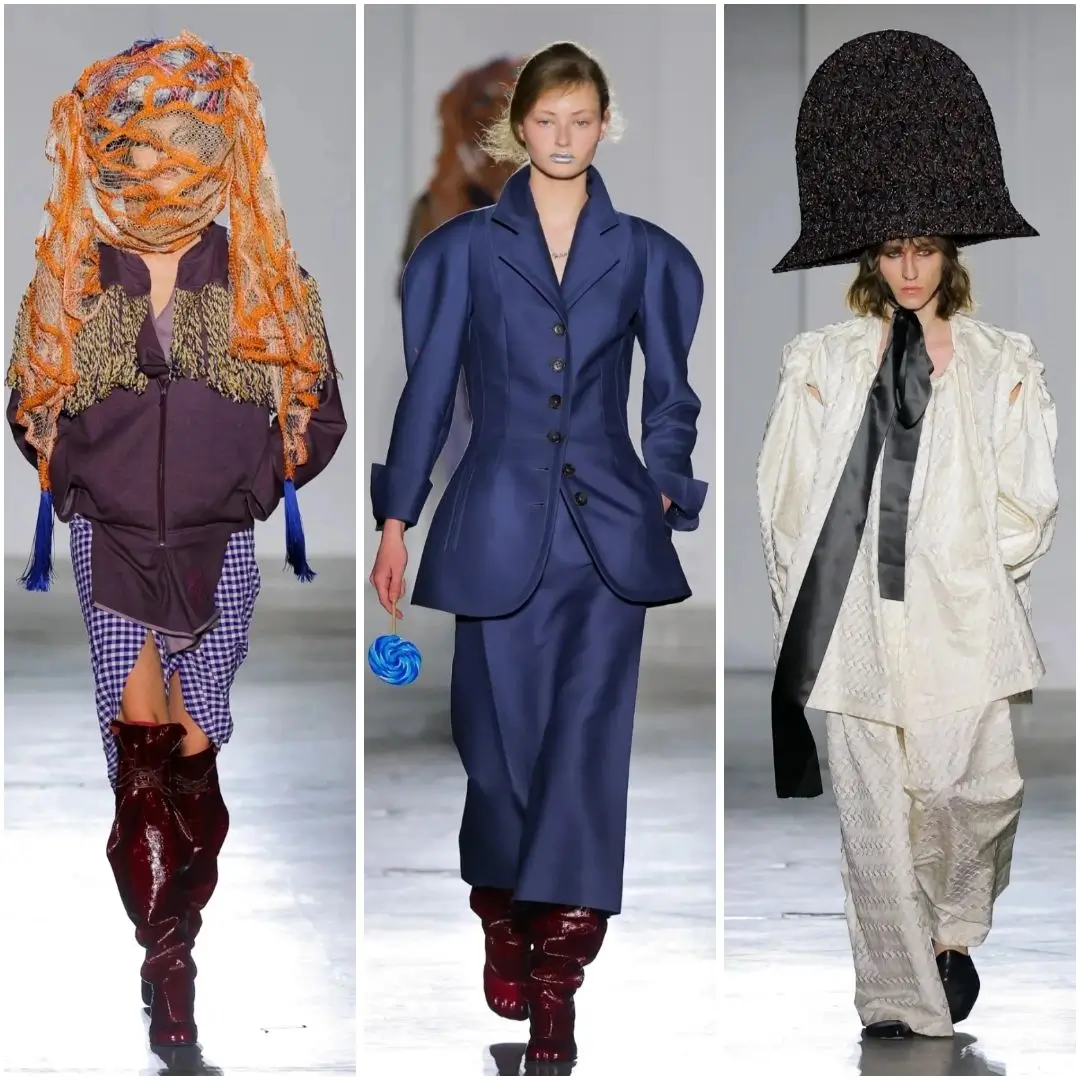
The third muse, and the one that gave the collection its literary spine, was Geoffrey Chaucer, whose Canterbury pilgrims Kronthaler read for what he called their pursuit of a sensible existence underlined with humor. That description translated into clothes that looked deliberately, almost stubbornly imprecise: college blazers, dinner jackets, coats and stripes all pulled slightly off their expected proportions, mixed and layered in combinations that avoided anything close to polish.
The effect was a modern-day pilgrimage cast, Chaucer’s mismatched band of travelers reimagined as a group of over-dressed, slightly rumpled Parisians. Fabrics with clean structure sat next to pieces in deliberately uncoordinated color mixes, and the tailoring, sharp in cut but loose in intention, gave the literary reference a lived-in quality rather than a costume-party one. It is a reference that has shown up before in fashion’s long relationship with Chaucer’s text, but Kronthaler’s version leaned on humor over pageantry, keeping the medieval framing as a mood rather than a literal dress code.
View this post on Instagram
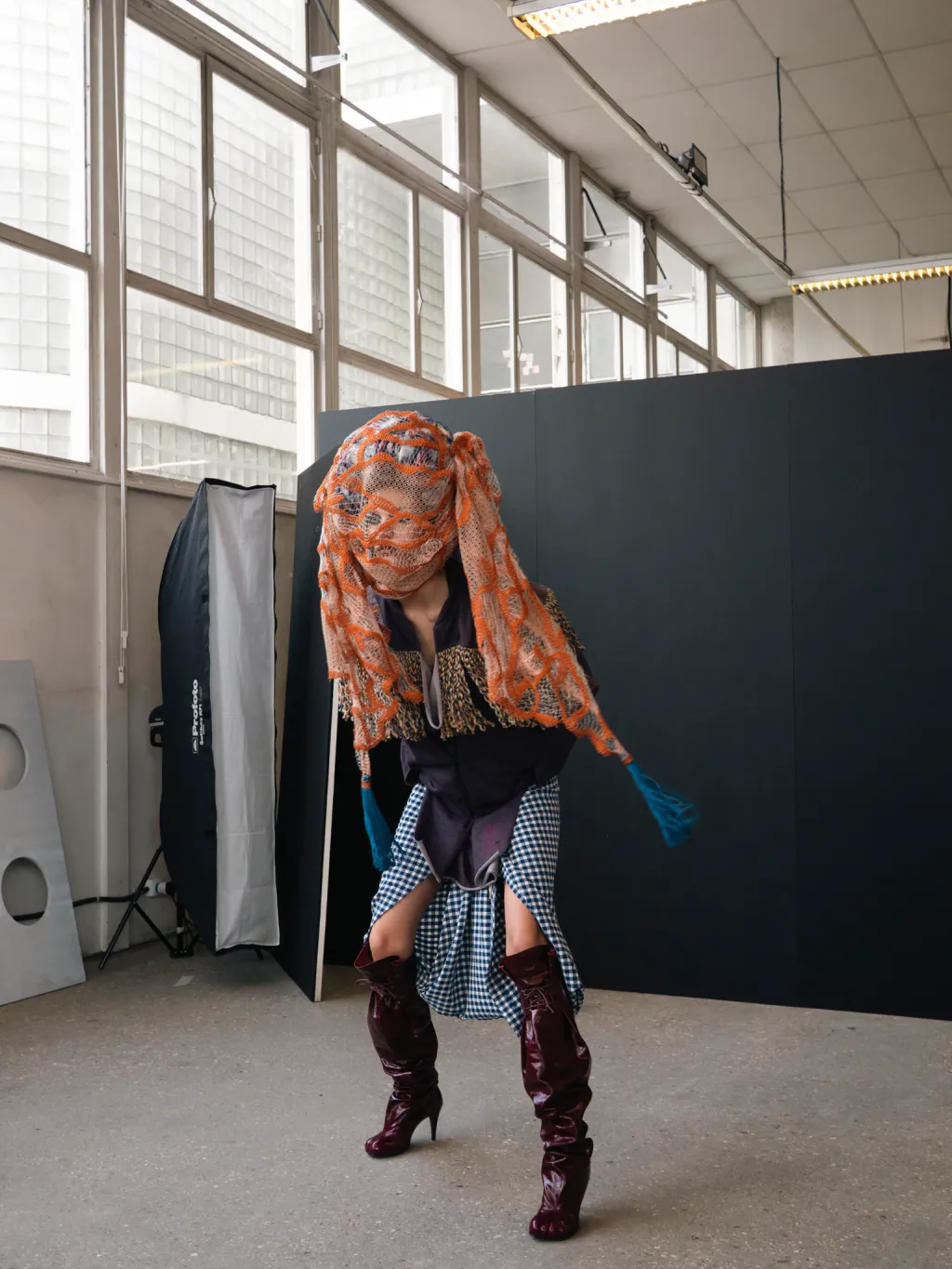
Chaucer wrote The Canterbury Tales in the late fourteenth century as a collection of stories told by a group of pilgrims traveling together toward a shrine, each character defined as much by their flaws and appetites as by their piety. That mix of high purpose and very human distraction gave Kronthaler a useful frame for a fashion show staged in the middle of what he called a funny state of the world: people still getting dressed up, still traveling somewhere together, still finding reasons to laugh, even when the larger journey feels uncertain. Netted face coverings worn over some of the tailored looks nodded toward pilgrimage costume without tipping into literal historical dress, keeping the reference legible without turning the runway into a re-enactment.
straddle
Thread through all three references was the eroticism that has been a constant of Kronthaler’s tenure, delivered this season through props as much as garments. Models carry candies down the runway that Kronthaler admit backstage, before greet Chappell Roan, were a cheeky stand-in for knickers, a small joke that fit the show’s broader habit of hid suggestive reference inside play objects rather than state them outright. Lace bras and garter belts worn openly over and under other pieces carry the same wink, treat underwear as costume rather than concealment.
The show’s soundtrack came courtesy of Boy George and Kinky Roland, a pairing that matched the collection’s blend of theatrical camp and genuine feeling. Boy George’s presence, an artist who has spent four decades turning personal reinvention into public spectacle, sat naturally alongside a designer doing something similar in his own register. Front row, the show drew a crowd that included Roan and singer Lola Young, two performers whose own approach to fame and image has more than a little in common with the house’s founder.
Roan in particular has spent much of the past year working out her own version of the tension Kronthaler put on the runway, negotiating how much of herself to hand over to public life while trying to protect something private underneath it. That she was greeted backstage by a designer mid-conversation about candy and knickers says something about how naturally Westwood’s world absorbs performers who share its appetite for spectacle over restraint. Boy George, for his part, has been cited before as a reference point for Roan’s own bold makeup choices, giving the soundtrack pairing a quiet second layer of continuity between the music and the front row it was playing to.
By the time the lights came up, Kronthaler had made his case plainly, in clothes and in his own words. “To keep working, keep playing, and find pleasure in things, even while I’m carrying this absence with me,” he said, describing the collection not as a memorial but as a method, a way of staying in motion without pretending the loss isn’t there. Fall 2026 didn’t resolve that tension. It just kept walking through it, one deliberately unfinished seam at a time.
From the DRIFT archive: Inside the World’s Most Iconic Ski Experiences
Related Articles
Loewe Spring/Summer 2027: McCollough and Hernandez Pull the House Within Arm’s Reach
Inside a scaffold arena at the Château de Vincennes, Jack McCollough and Lazaro Hernandez spent […]