DRIFT AUDIO
Listen to this story
Choose a voice, then press play.
A Tokyo warehouse held the private language of one designer’s process for decades. This October, Thames & Hudson finally opens it up.
Alexandre Samson was not looking for a book when he opened the box. It was 2024, and Samson, a fashion historian and curator at the Palais Galliera in Paris, was working through storage inside a Tokyo warehouse tied to the Yohji Yamamoto archive. What he found inside was not paperwork in the administrative sense. It was hundreds of drawings, some on proper sketch paper, some on newspaper, some on whatever material happened to be within reach at the time, stacked in a box that had not been opened in any meaningful way for years.
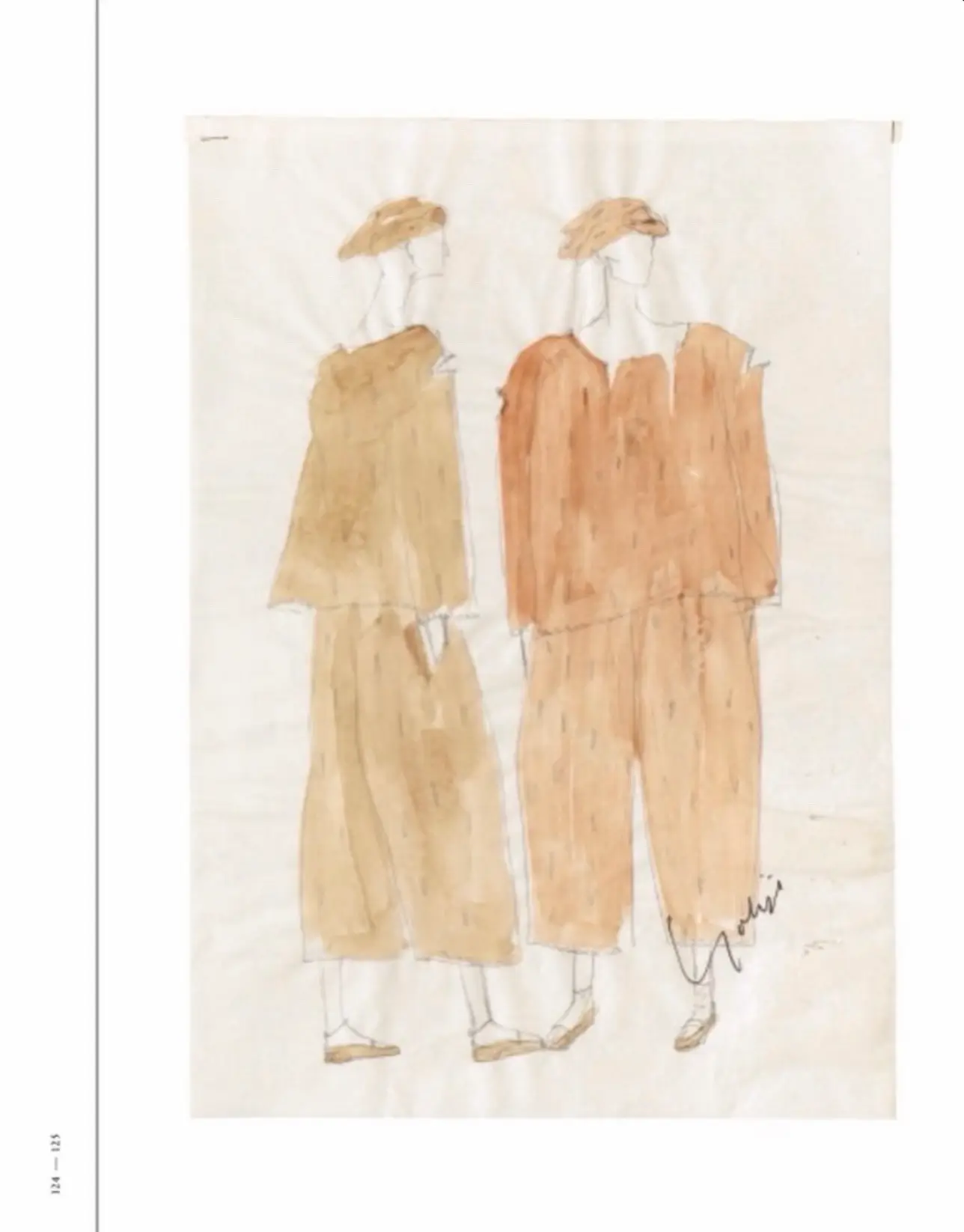
The drawings covered menswear and womenswear collections produced between 1981, the year Yamamoto staged his first Paris show, and 1999. That is nearly two decades of a working method nobody outside the atelier had seen. They were not made for exhibition. They were made for pattern cutters, the people who take a designer’s line and turn it into cloth that moves the way a body moves. Pencil, ink and marker sit next to handwritten notes on proportion and construction, the kind of shorthand that only makes sense to the two people standing over the table together.
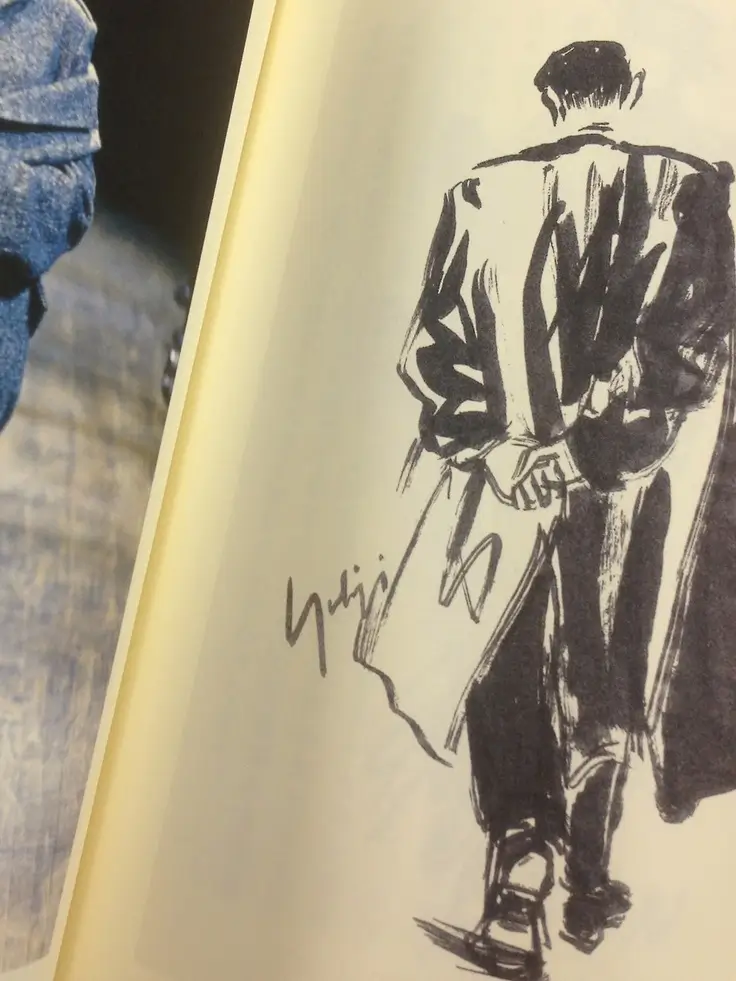
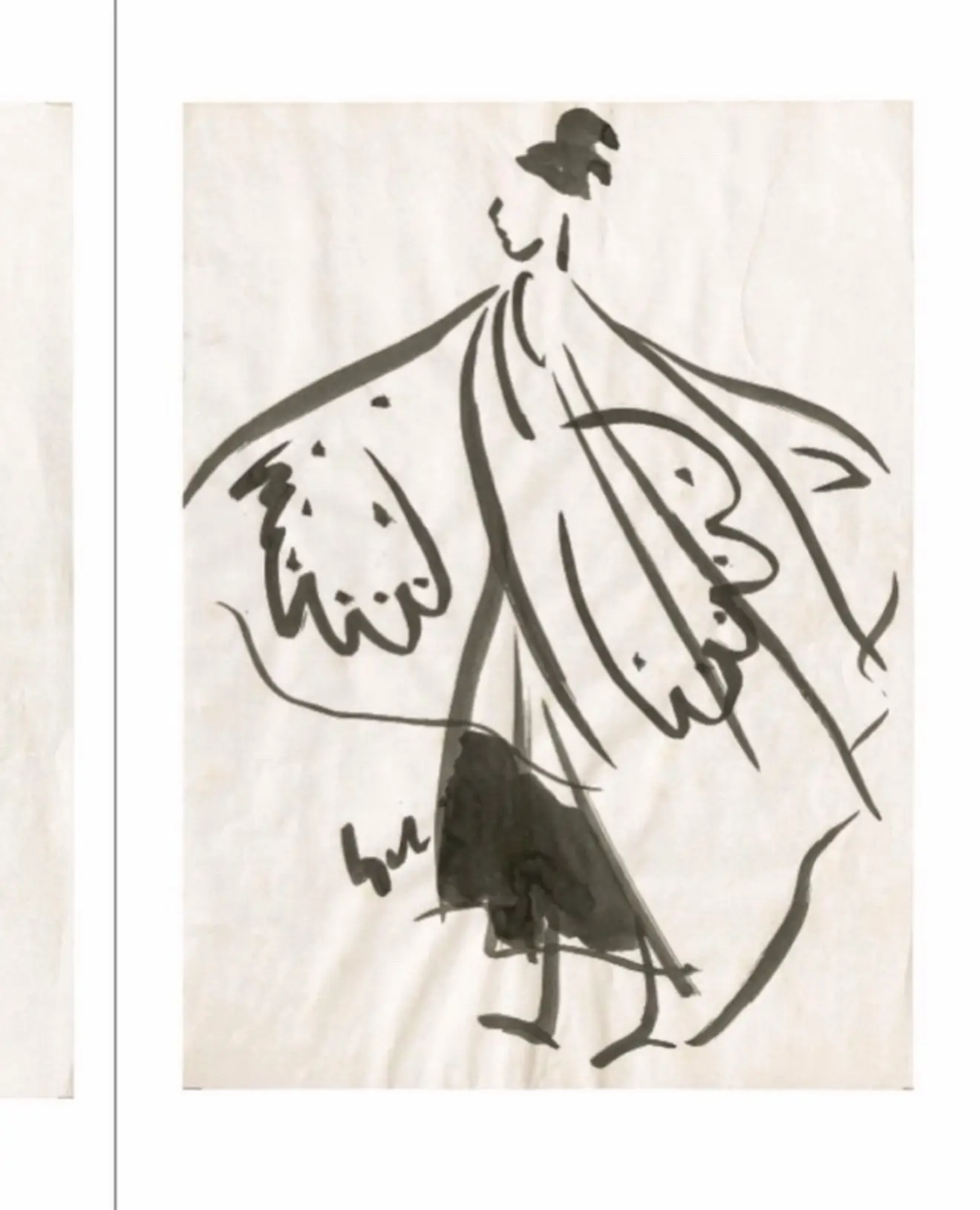
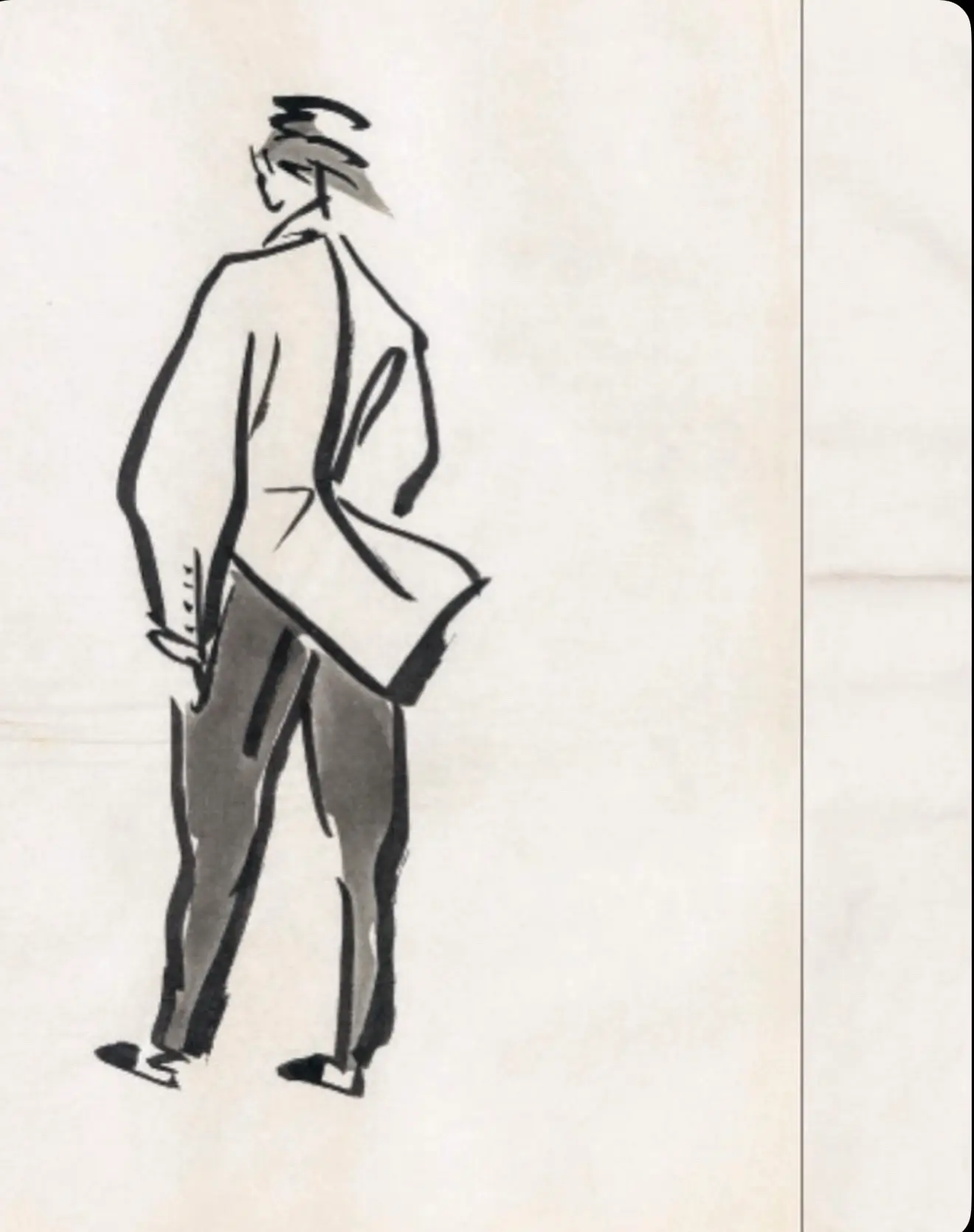
One of the expressive fashion sketches featured in the Yohji Yamamoto archive publication, this ink drawing captures a solitary figure from behind with fluid brushwork that distills silhouette, movement, and proportion into a few confident strokes, reflecting the designer’s instinctive approach to visualizing garments.
There is something specific about finding this kind of material years after the fact rather than during a scheduled archive audit. The drawings arrived less like a curated donation and more like a genuine discovery, sheets of paper packed away with no accompanying index or catalog to explain which drawing belonged to which season. Piecing the timeline back together, matching a sketch to a specific runway show close to two decades after the fact, is its own kind of detective work, one that depends on knowing the collections well enough to spot a silhouette before it carries a label.
stir
Yamamoto has written about this distinction himself. In his 2010 book “My Dear Bomb,” he described a fashion drawing as something closer to a private code than to art in the gallery sense. It is not a miniature version of the finished garment, and it is not meant to be admired on its own. It exists to communicate one specific thing to one specific person: the cutter who has to make the coat stand up, or slump, or catch the light the way Yamamoto pictured it.
That framing matters for how “Yohji Yamamoto Drawings,” the new book from Thames & Hudson, asks to be read. This is not a retrospective of finished looks dressed up as a coffee table object. It is closer to an intercepted conversation, decades old, between a designer and the people who built his clothes with him. The drawings were never intended for an audience, which is part of why they carry weight now that one exists.
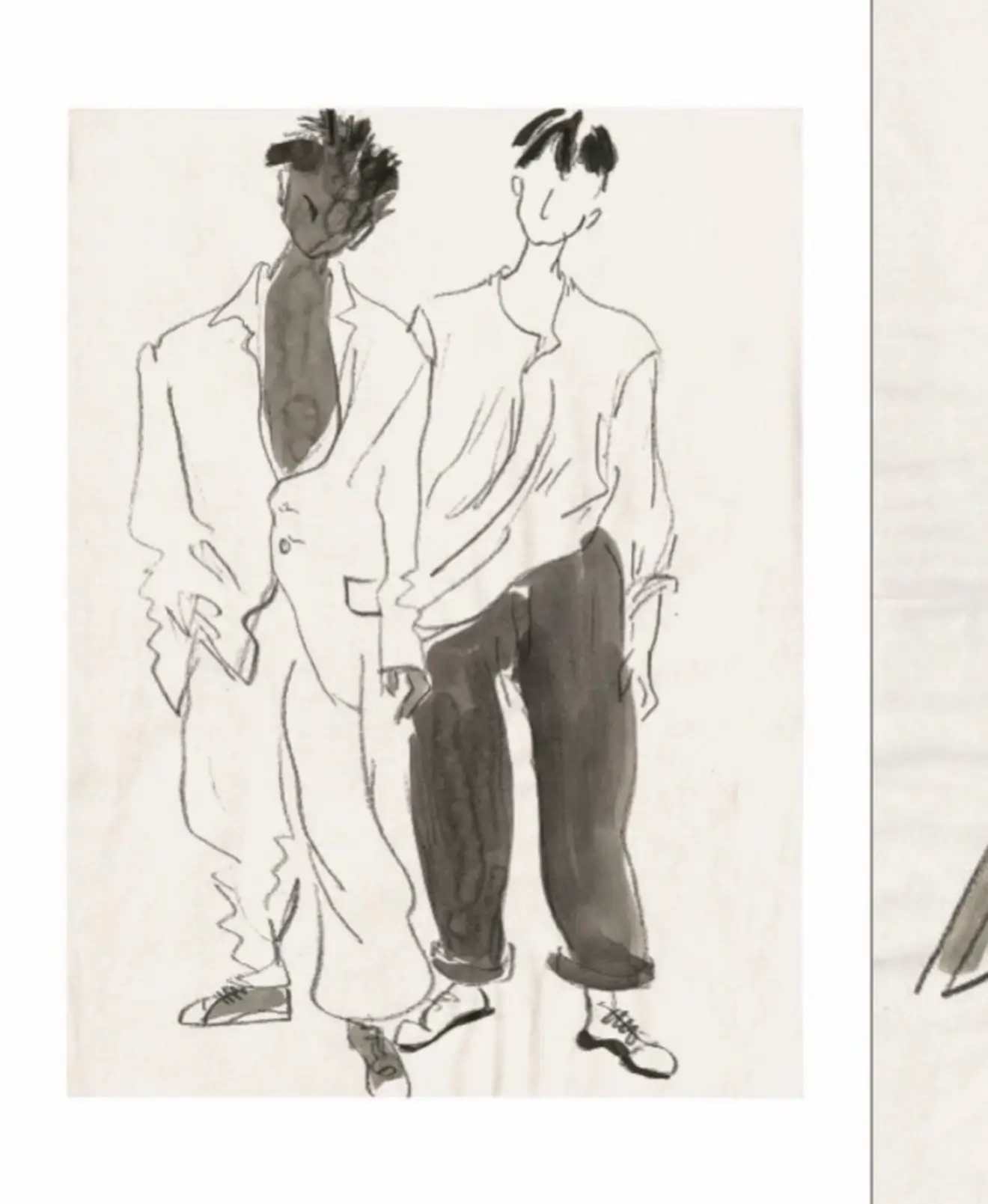
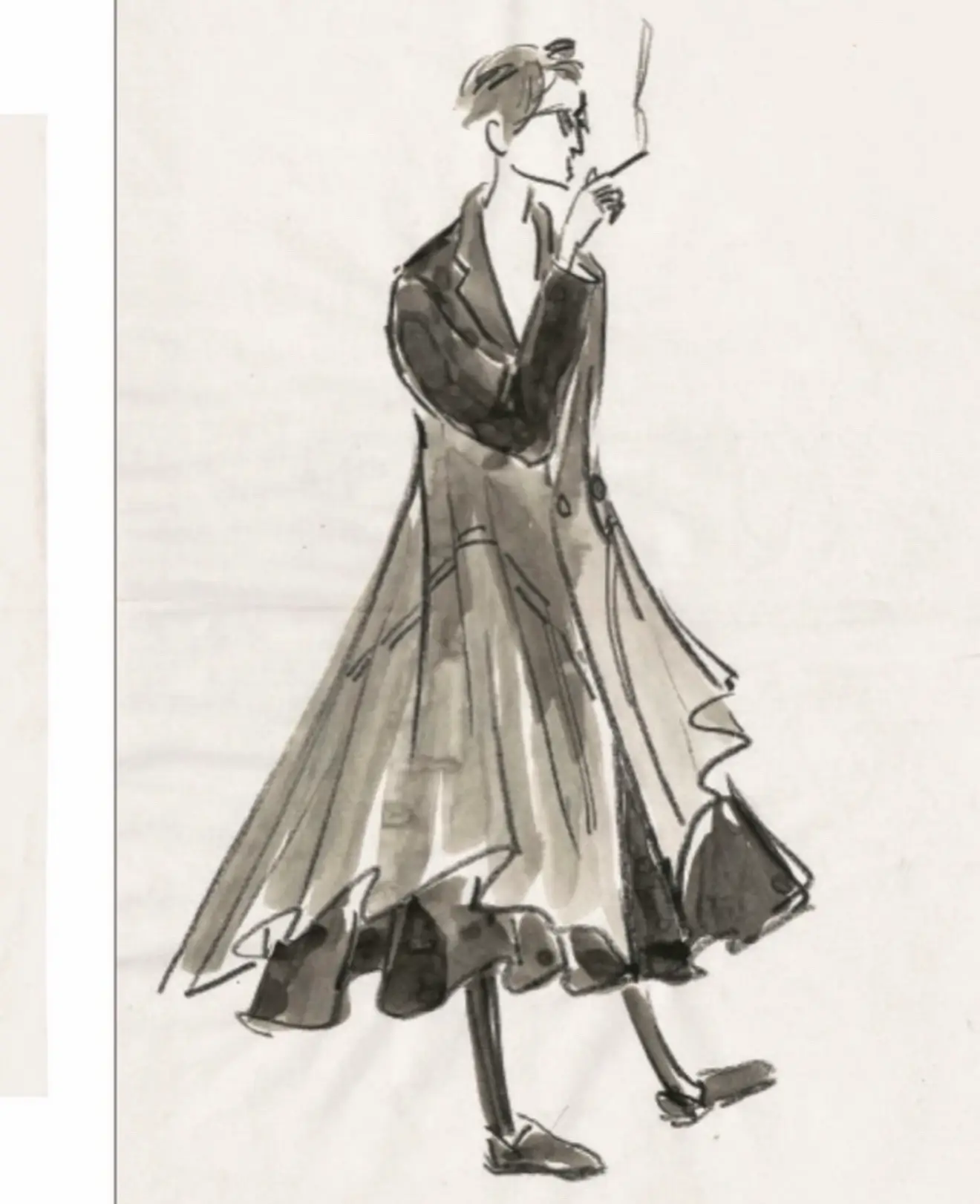
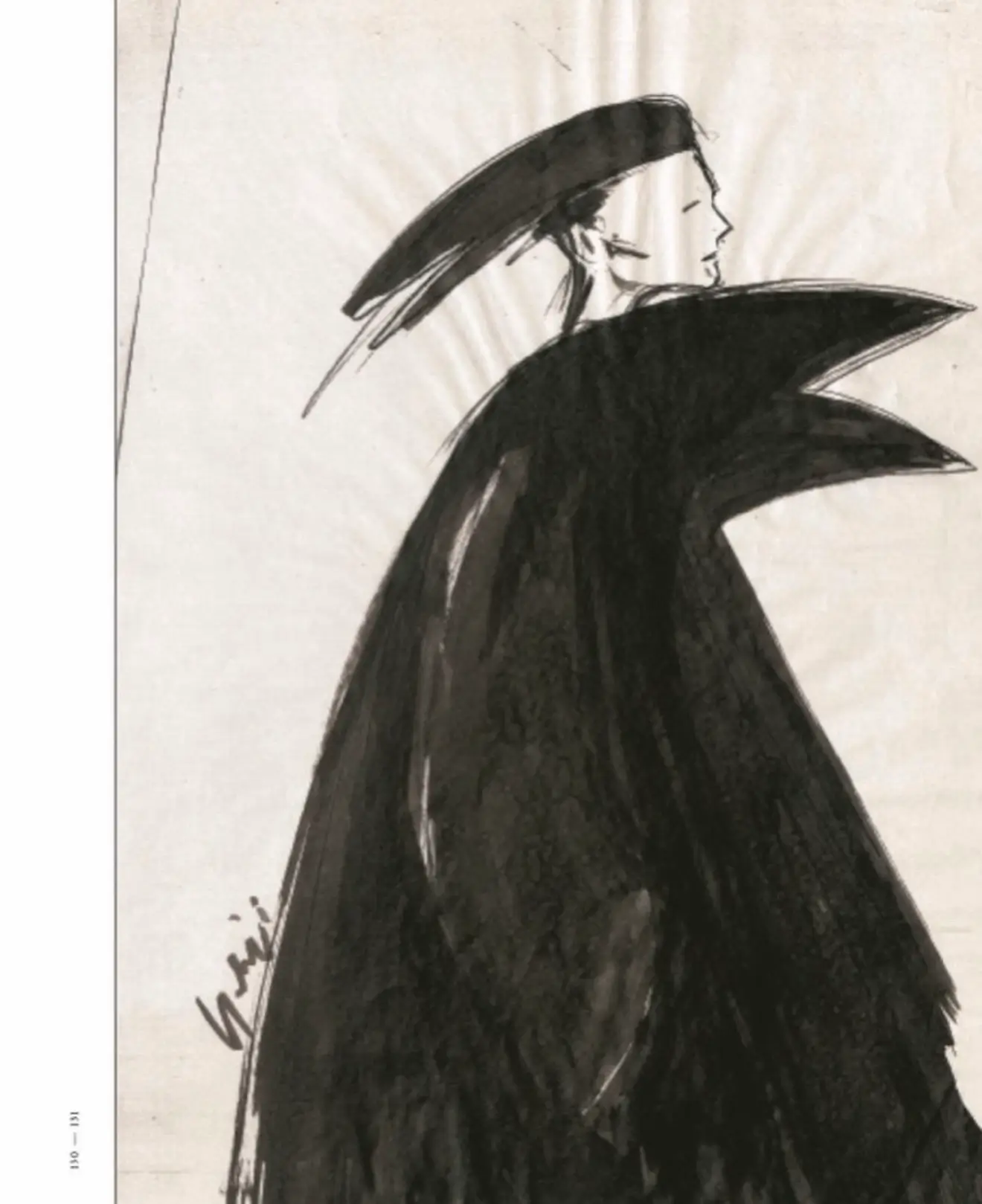
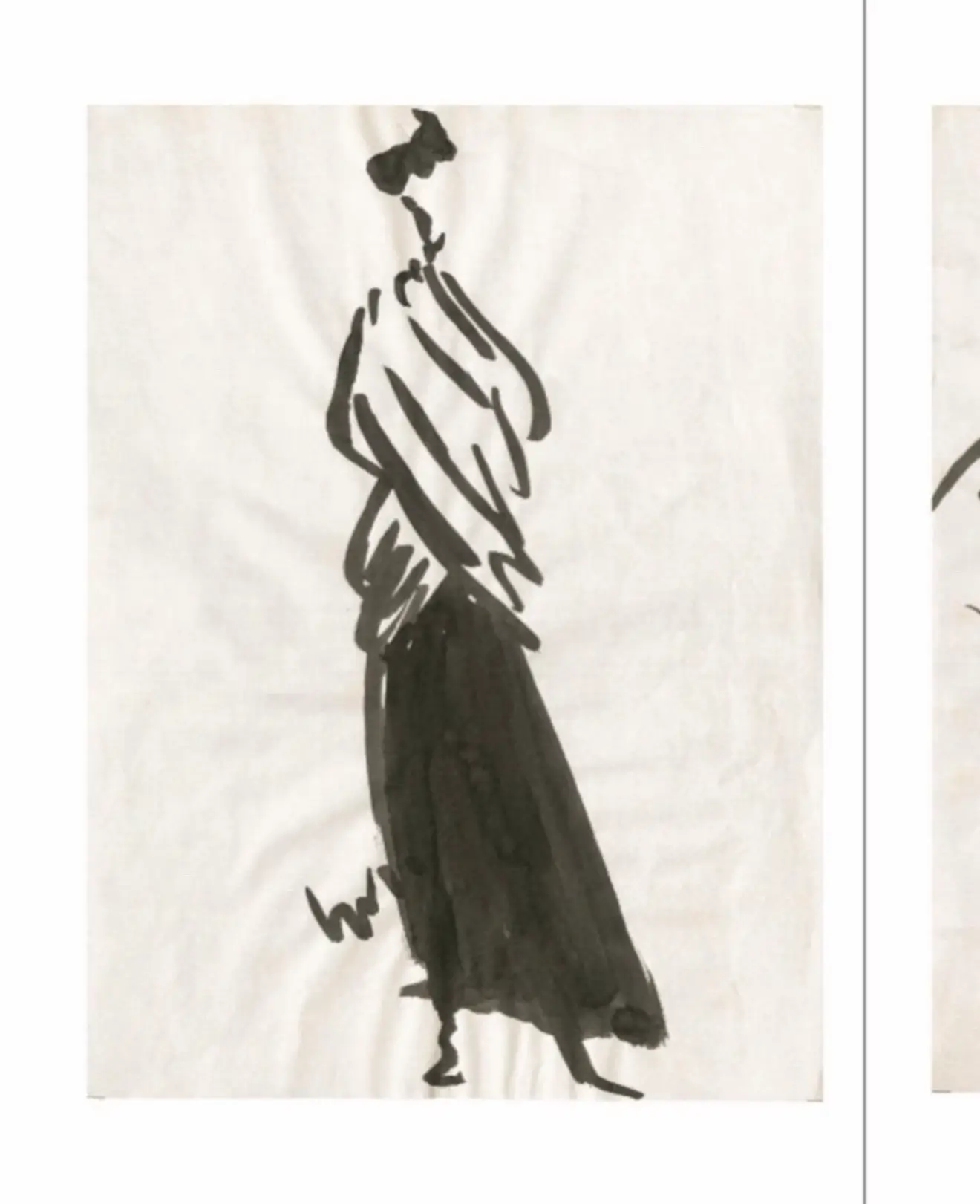
It also explains why the drawings look the way they reportedly do, unpolished by design rather than by accident. A finished fashion illustration, the kind meant for a lookbook or a press kit, tends to flatter a garment before it exists, smoothing proportions and posing a figure to sell an idea. These sketches do the opposite. A coat gets drawn mid motion because motion was the point Yamamoto needed to communicate to the cutter standing across from him. A figure gets drawn slumped because slump was the silhouette under discussion that day. None of it needed to look good to a stranger. It only needed to be understood by one other person in the room.
length
The book gathers 183 drawings, all previously unpublished, selected personally by Yamamoto from the material Samson uncovered. Across 310 pages, the collection spans both menswear and womenswear, tracking a period when Yamamoto was building the reputation that would make him one of the defining figures to come out of Japan and reshape how Paris thought about tailoring, volume and black.
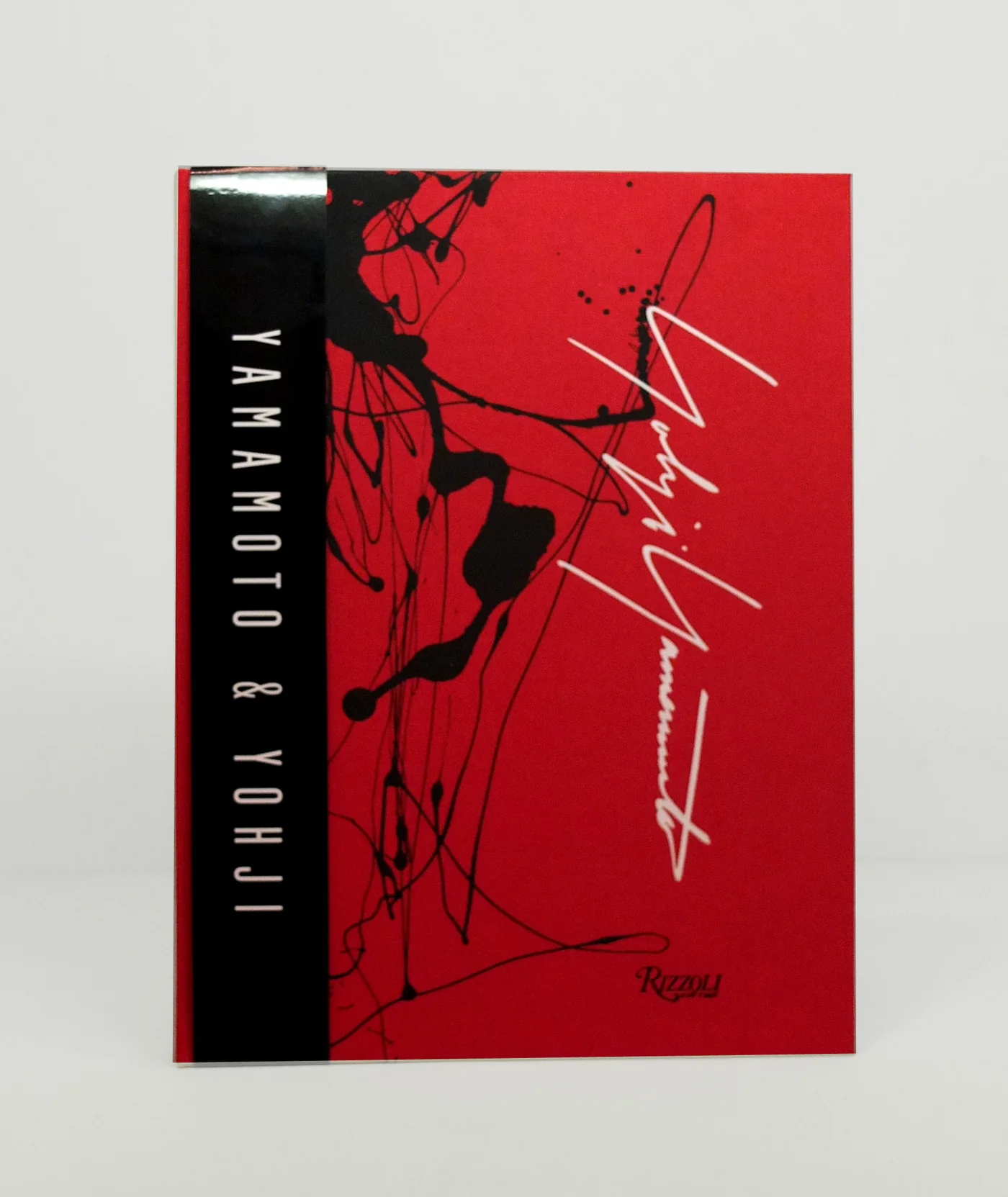
The cover of Yamamoto & Yohji pairs a bold red background with expressive black ink gestures and Yohji Yamamoto’s signature, establishing the publication’s visual identity before presenting an archive of sketches, artwork, and reflections on the designer’s creative process.
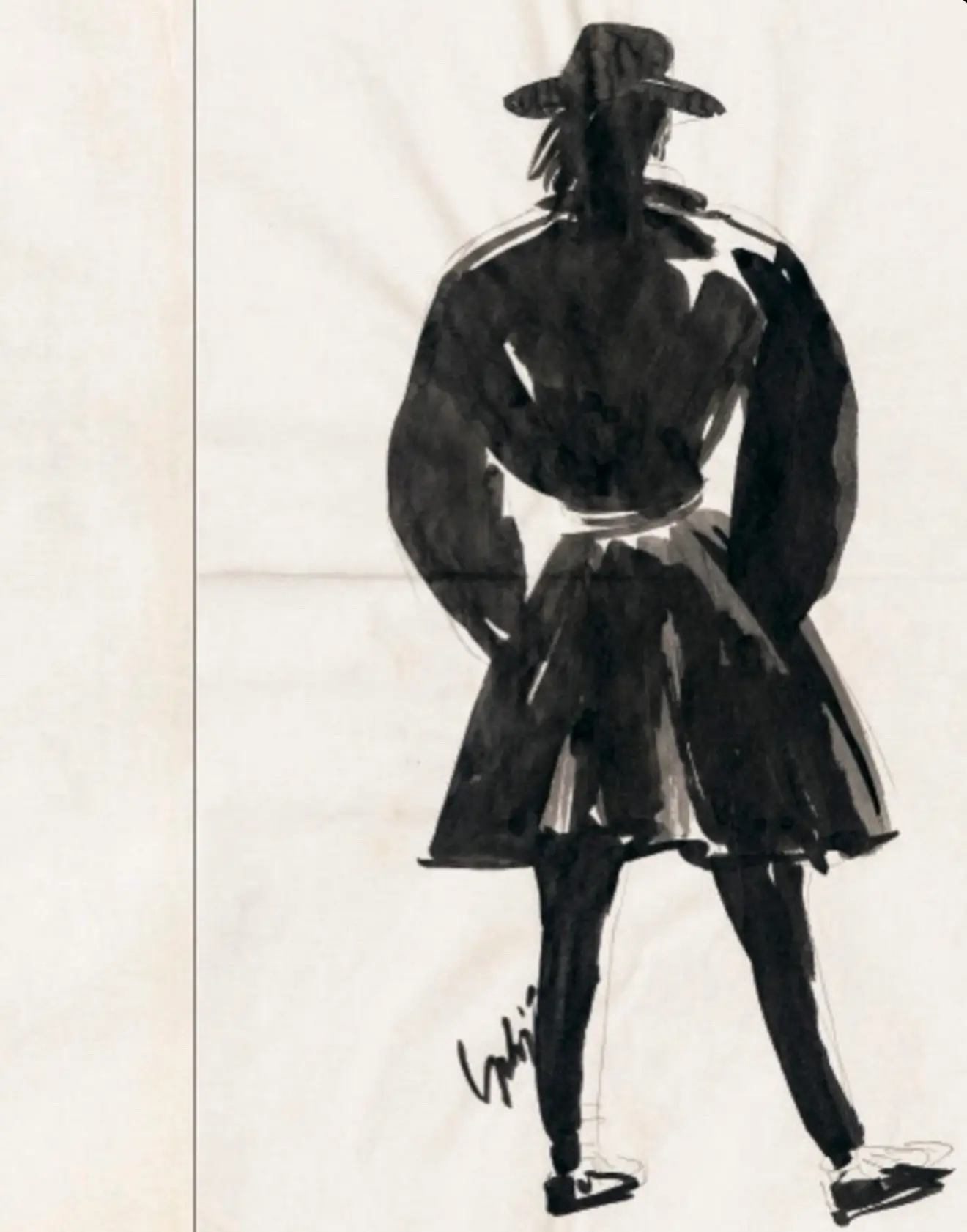
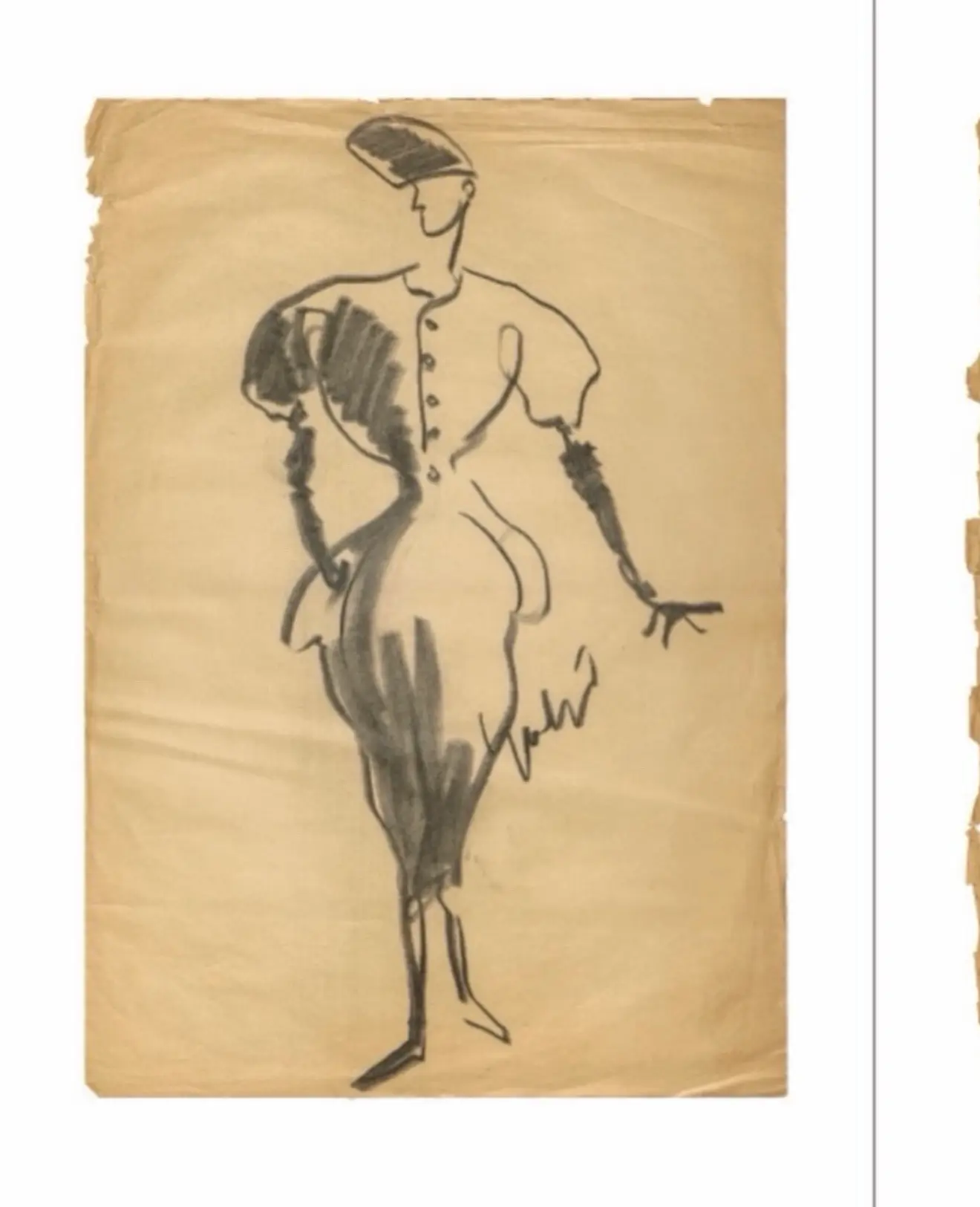
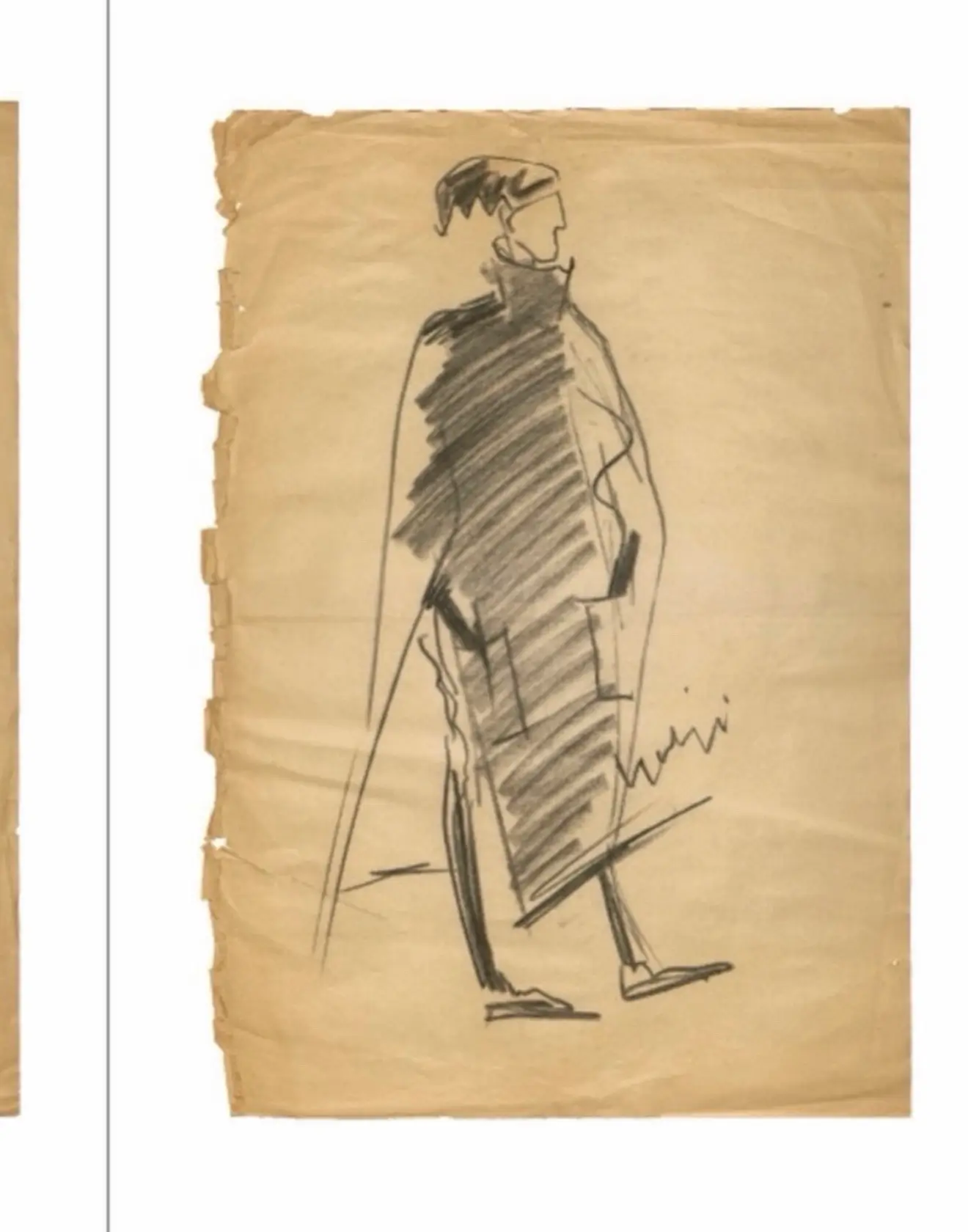
Flip through descriptions of the pages and a certain visual language repeats: coats rendered as if caught mid motion, figures slumped or twisted rather than posed, dresses reduced to a handful of lines that somehow still read as elegant. None of it looks like a finished illustration meant to sell a look. It looks like thinking, captured on whatever surface was closest, which is precisely the point. The mix of sketch paper, newspaper clippings and found materials suggests an atelier where drawing was a constant habit rather than a scheduled task.
Eighteen years is also long enough to track a designer’s hand changing without the drawings ever announcing it. An early 1980s sketch, made in the immediate aftermath of Yamamoto’s Paris debut and the shockwaves it sent through a fashion press unused to his particular vocabulary of black and asymmetry, sits differently on the page than something drawn closer to the turn of the millennium, once that vocabulary had become his signature rather than his provocation. Reading the book in sequence, rather than as a single flat archive, gives it a shape closer to a diary than a portfolio.
review
Samson is not a newcomer to this kind of work. As Head of Collections, 1947 to the present, at the Palais Galliera, he has spent years building exhibitions around designers whose archives demand careful, patient handling. He co-authored “Givenchy Catwalk” and has curated shows including “Martin Margiela 1989 to 2009: The Women’s Collections,” “Back Side, Fashion from Behind,” “1997, Fashion Big Bang,” and “Rick Owens, Temple of Love.”
That background shows in how the book is framed. Samson provides the accompanying text throughout, positioning himself less as a critic passing judgment on the drawings and more as someone translating a working method for people who never stood in the room where the decisions happened. Given that the drawings were addressed to pattern cutters rather than the public, someone has to carry that context across, and Samson’s curatorial history with archives this delicate makes him a natural fit for the job.
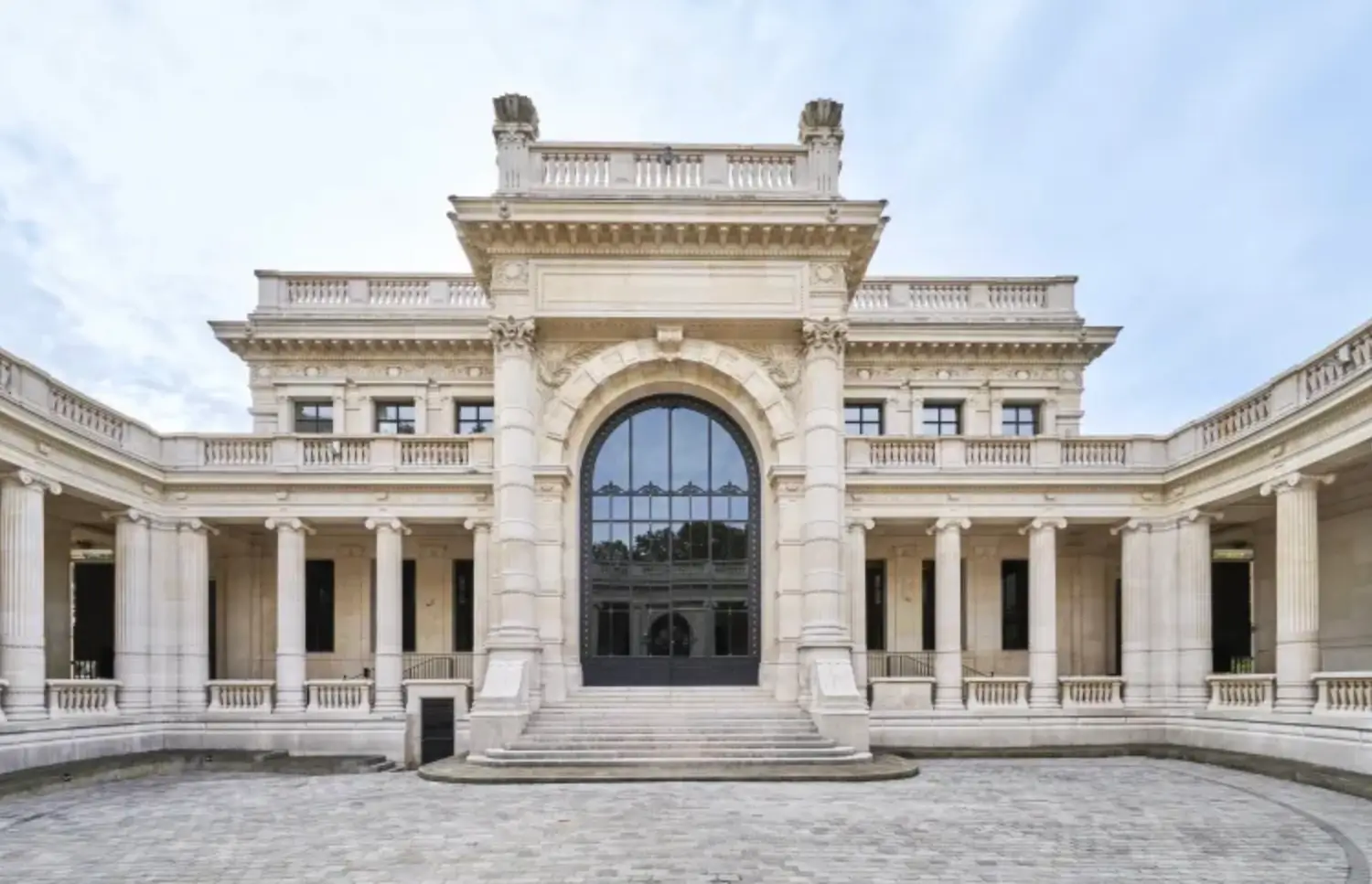
The neoclassical building’s monumental façade, defined by its colonnades, ornate stonework, and imposing central arch, provides a fitting architectural setting for a cultural institution dedicated to preserving and presenting significant works of art, design, and fashion.
The Palais Galliera itself has spent recent years positioning its programming around exactly this kind of granular, process focused storytelling rather than broad chronological surveys, and Samson’s prior exhibitions on Margiela and on Rick Owens both leaned on similar instincts, treating construction detail and studio habit as worthy of the same scrutiny usually reserved for a finished silhouette on a runway. Bringing that same lens to a body of work that was never meant to leave the studio at all is a natural extension of the museum’s recent curatorial direction rather than a departure from it.
cover
The book’s design fell to Peter Saville, the graphic designer whose work defining the look of Factory Records and New Order helped set the visual tone for an entire era of British music packaging. Saville’s relationship with Yamamoto is not new. The two have worked together since the mid 1980s, a collaboration that has quietly shaped how Yamamoto’s world has been presented in print for close to four decades.
Handing design duties to someone with that much shared history changes what the book can do. Saville is not walking in cold to make raw archival material look presentable. He is extending a visual conversation that predates this specific discovery, which means the book can lean on a shared design instinct rather than inventing one from scratch for the occasion.
That matters more than it might first appear. Raw studio drawings, especially ones made on scrap newspaper and found paper rather than proper stock, can easily read as a curiosity rather than a coherent body of work once they are pulled out of context and laid flat on a printed page. A designer with a lesser feel for Yamamoto’s specific visual grammar could flatten that distinction entirely, treating four decades of working notes as interchangeable ephemera. Saville’s long familiarity with how Yamamoto’s world is meant to look on paper, built across roughly forty years of prior collaboration, is precisely what keeps that from happening here.
in
Strip away the framing and the physical object is straightforward: a 310 page hardback collecting 183 drawings across menswear and womenswear, covering 1981 through 1999, with text by Samson and design by Saville. What makes it notable is simpler than any of the language around it. These drawings have never been made public before. Some of them sat in that Tokyo warehouse for over forty years without anyone outside the atelier seeing them.
For a designer whose finished garments are already extensively documented, photographed on runways and studied in museum retrospectives, the appeal here is the opposite of documentation. It is the mess before the polish, the notes in the margin, the moment before a coat became a coat. Readers who know Yamamoto through the black tailoring and asymmetric cuts get something closer to his handwriting.
That is also what separates this book from a standard monograph. A monograph tends to work backward from the finished collection, using photography and critical text to explain why a look mattered once it existed. This book works the other direction, starting from the moment before anything existed at all, when a coat was still just graphite lines and a marginal note about how the shoulder needed to sit. For anyone who has studied Yamamoto’s finished work closely, that reversal is the entire draw. It is not a new angle on familiar clothes. It is the missing first draft.
archive
Publishing houses have leaned harder into designer archives over the past several years, and Thames & Hudson’s own catalog already includes earlier Yamamoto volumes built around photography and convincer interviews, including work featuring Nick Knight, Marc Ascoli and Saville himself discussing the designer’s broader creative relationships. What separates this new book is the shift from photographed output to raw process. Where earlier volumes documented what Yamamoto made, this one documents how he thought about making it, before a single garment existed.
That distinction lines up with a wider appetite for process over product across fashion publishing generally, where sketchbooks, toiles and studio ephemera increasingly get treated as worth preserving in their own right rather than as disposable steps on the way to a finished collection. A designer’s private shorthand, once considered internal to the point of being throwaway, now reads as its own kind of historical record.
It is worth noting how much of that shift depends on timing and on the designers themselves being willing to hand over material that was never meant to leave the studio. Yamamoto is still working, still showing collections, and still very much the author of his own archive rather than a historical subject being reconstructed after the fact. Choosing to open this particular box now, rather than leaving it for a future retrospective built after his career had fully closed, puts him in a small group of working designers willing to let the public see process while it is still an active, ongoing part of the job rather than a finished chapter.
clue
“Yohji Yamamoto Drawings” is set for UK release on October 29, 2026, arriving as a 310 page hardback from Thames & Hudson. US availability follows on November 17, 2026, with the title priced at 85 euros in Europe ahead of a $115 US price point. It marks the first time this particular body of archival drawings has been made available to the public in any form.
Read Drift’s related feature, The Boxes in the Warehouse: How Yohji Yamamoto’s Private Sketches Became a Book.
Related Articles
NikeSKIMS Opened Fall On Cloth That Wicks And A Wash That Looks Used
Fall ’26 Edit 01. Perform Cotton Blend. Dri-FIT in the mix. Garment wash on the […]