DRIFT AUDIO
Listen to this story
Choose a voice, then press play.
No crew, no hype man, just one skier, a camera on a tripod, and a season’s worth of empty Italian streets.
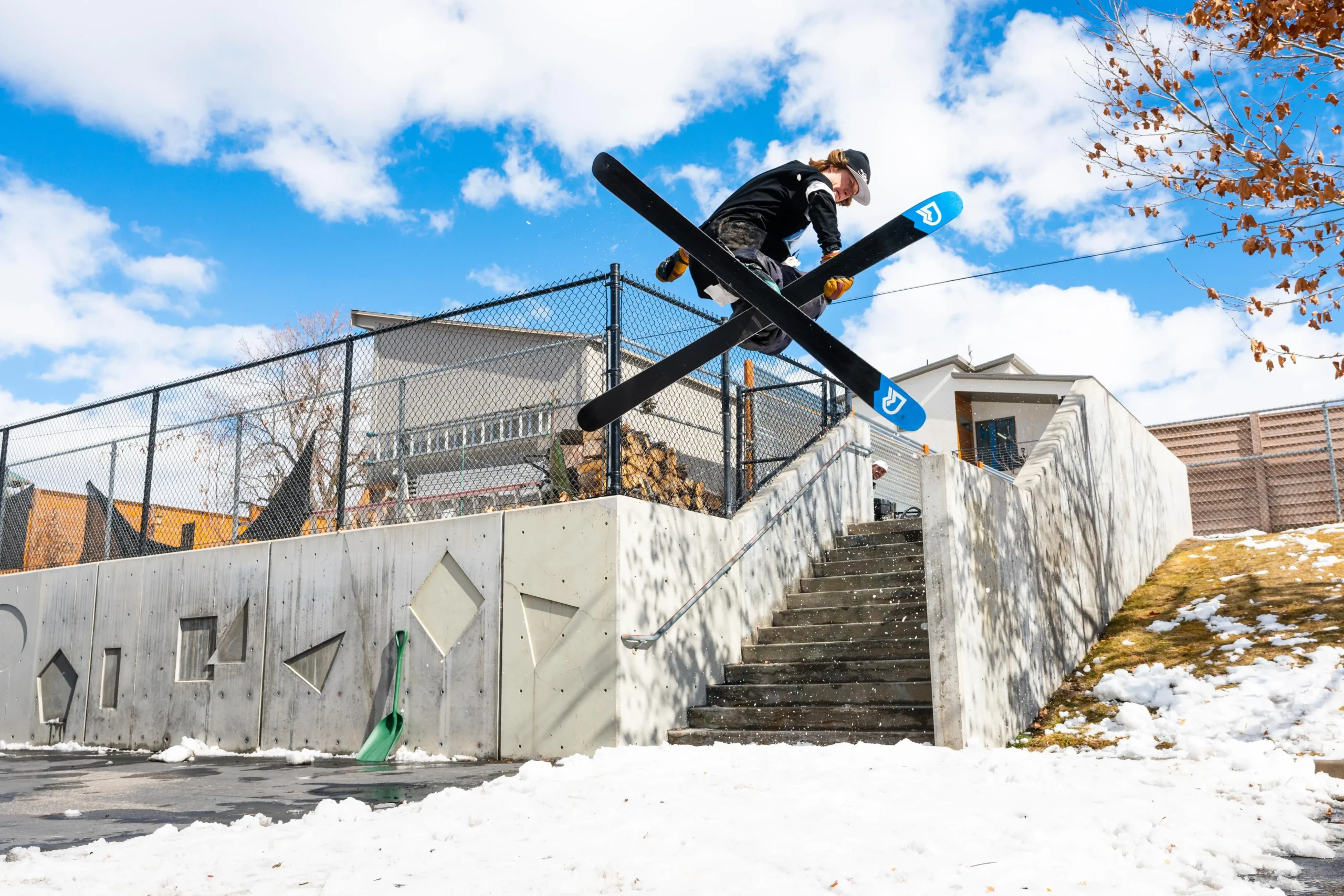
There’s a specific kind of loneliness built into filming a street ski part alone, and Martin Longhitano spent the better part of a season living inside it. His new project, Atom, was shot entirely by himself in the Dolomites, without a filmer, without a crew, without anyone around to spot a landing or help drag gear back to the car. Longhitano set up every shot himself, skied every line himself, and then hiked back to retrieve his own camera, over and over, spot after spot.
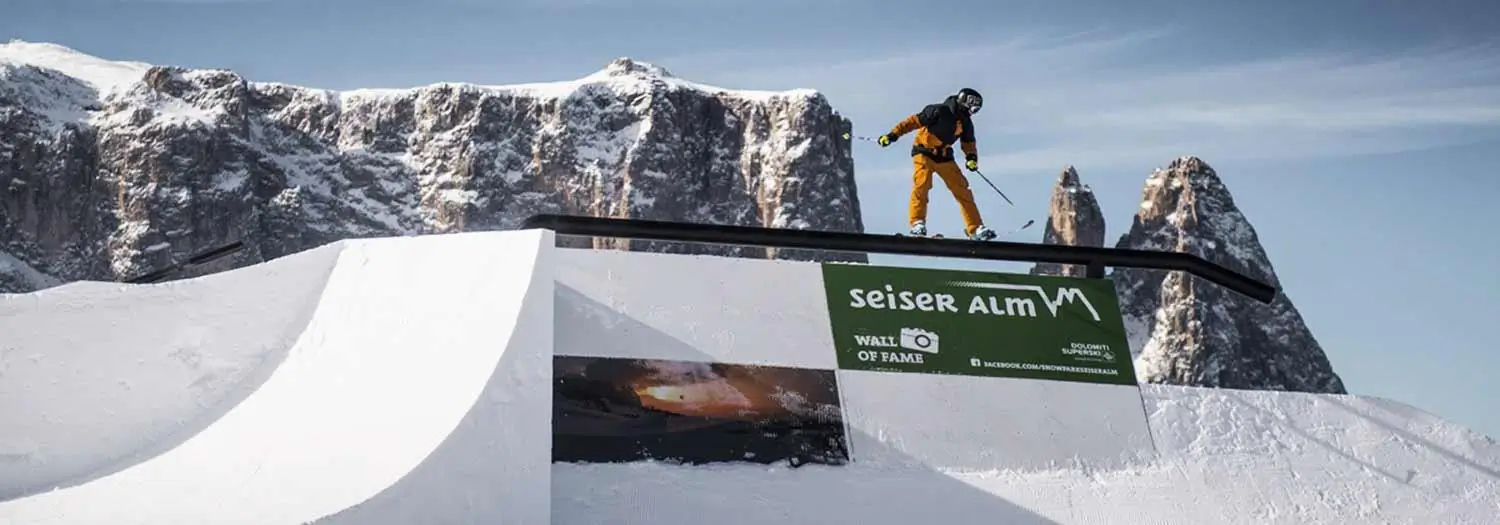
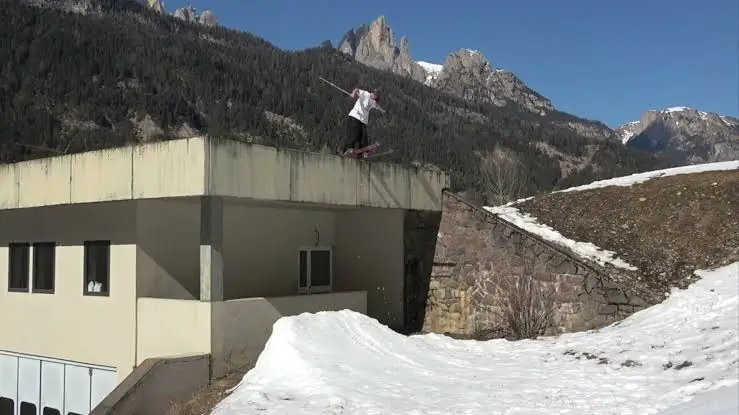
Australian freestyle skier Martin Longhitano combines urban creativity with alpine terrain in Atom, his self-produced solo ski film. This rooftop feature, set against the dramatic backdrop of Italy’s Dolomites, reflects the technical precision and independent filmmaking that define the project.
The result landed on Downdays on July 23, framed by writer Scott Naismith as a reminder that motivation doesn’t have to wait around for a crew to catch up. That framing undersells how much physical labor sits behind a project like this. A filmed street segment with a full crew already asks a lot of a rider: scout the spot, build the feature, land the trick, and do it again until the shot works. Doing all of that solo multiplies the workload, because every one of those jobs falls on one person, and that person still has to ski.
Downdays published the part under its Ken Burns Effect banner, the site’s recurring slot for self-shot and unconventional edits, tagging the release simply under Longhitano’s name, the Dolomites, and street skiing. There’s no bigger campaign around it, no premiere, no title sponsor splashed across the thumbnail. It reads like exactly what it is: one rider’s footage, uploaded because it stands on its own.
stir
Longhitano’s own description of the project gets at exactly why he called it Atom. The idea began with two spots he skied the previous season and grew from there this year, as he kept scoping new locations, hauling gear into position, building the setups by hand, and skiing them alone before walking back out. He likened the process to atoms building up matter, describing every space in the film as constructed through countless layers of individual effort stacking on top of each other.
That comparison holds up better than most riders’ project statements do. An atom isn’t view on its own, but enough of them arranged the right way build something solid and recognizable. Longhitano’s solo sessions work the same way: no single day of scouting, building, or skiing looks like much by itself, but stacked across a season they add up to a finished part. The title isn’t a throwaway reference either. It’s a fairly precise description of how the film was actually made, one small, mostly invisible unit of effort at a time.
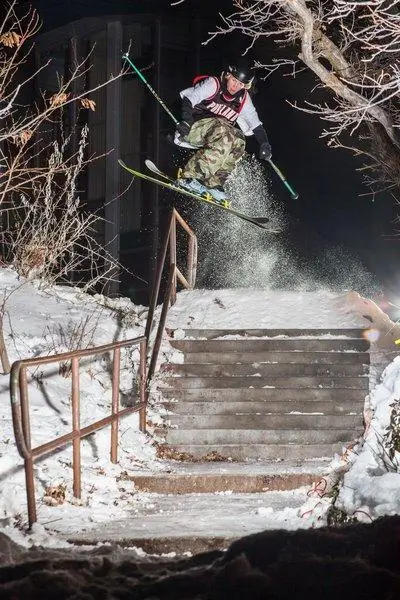
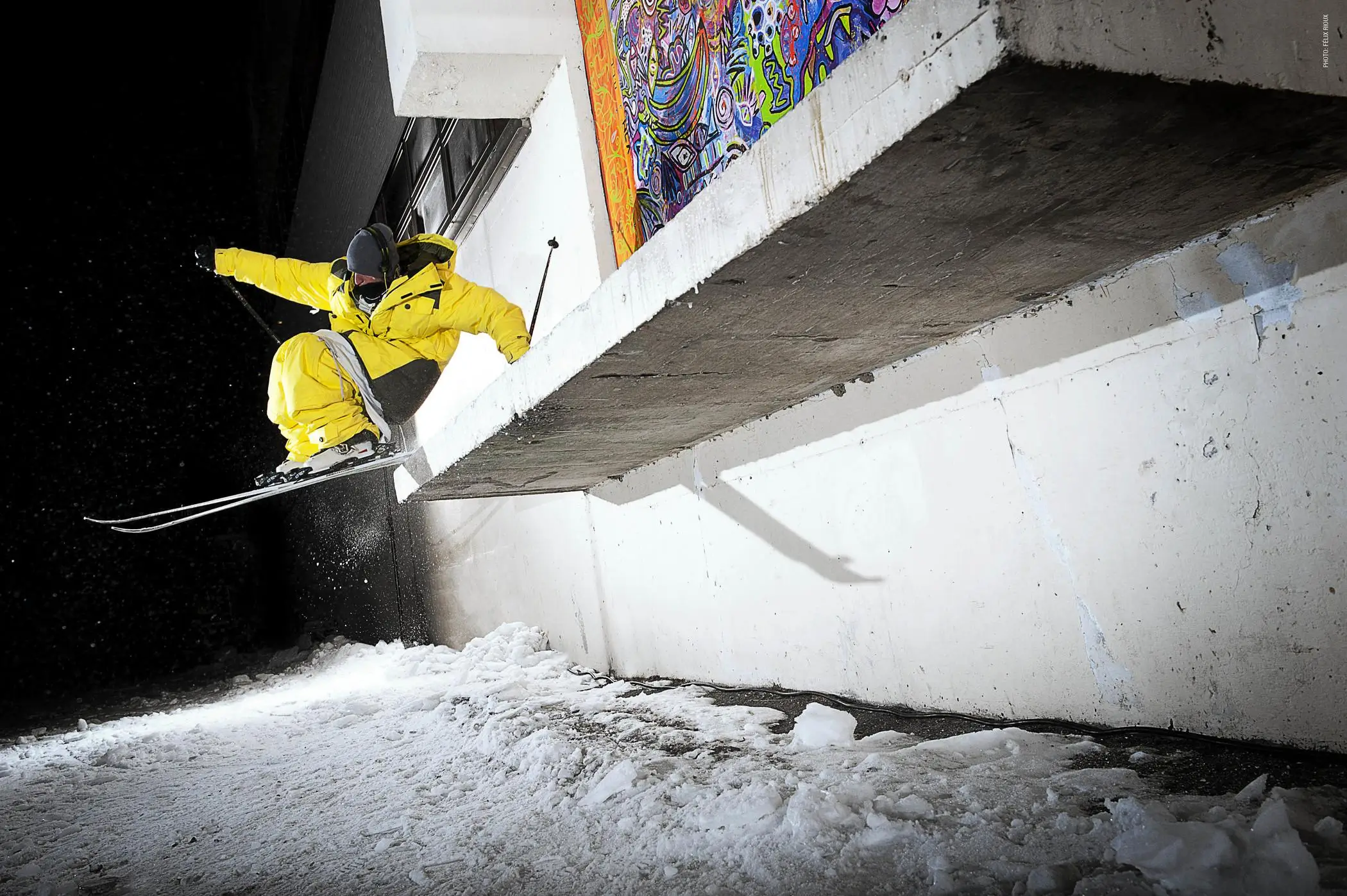
It’s also worth noting what Atom isn’t. It isn’t a big mountain film, and it isn’t a resort part shot in a groomed terrain park with a chairlift five minutes away. The description of carrying gear, scoping locations, and walking back to a car places this squarely in street skiing’s tradition of found urban features: stair sets, handrails, ledges, and whatever else a town happens to offer up in winter. That tradition has always demanded scouting and setup work, but almost always with at least a filmer along for the ride. Atom removes that second person entirely.
flow
Some of the spots in Atom took multiple days just to set up, according to Longhitano, and that detail is worth sitting with. In a normal street mission, setup time gets split across a crew: someone shovels, someone builds the feature, someone checks camera angles, and the rider saves their energy for the actual attempts. Alone, that division of labor disappears. Longhitano describes the full solo cycle plainly: scope the spot, carry all the gear in, build the setup, position the camera, ski the feature, then walk back to the car, and start the next spot from scratch.
Multiply that cycle across a season and the logistics start to look less like skiing and more like a one-man construction operation that occasionally involves sliding down what’s been built. There’s no one to help carry a shovel, a saw, or extra padding up a hillside, and no one to reset a camera angle after a missed attempt so the next try isn’t wasted on a bad frame. Every one of those small tasks, usually invisible in a finished edit, fell on Longhitano alone for the entire project.
mindset
Longhitano is also direct about what changes mentally when there’s no one else around. The physical toll of building your own features and hauling your own gear is one thing, but he points to the psychological side as a separate battle entirely, one that plays out differently when there’s no crew standing around to share the pressure of a make or miss attempt. Filming with friends means someone else is there to hype up a landing or talk you into one more try. Filming alone means that conversation only happens in your own head.
View this post on Instagram
That distinction separates Atom from most street parts built around a single rider’s name. A part credited to one skier still usually has a filmer standing behind the camera, someone whose presence alone changes the conscious sensible of an attempt, if only by making the rider feel watched, encouraged, or accountable to another person’s patience. Strip that away and every hesitation, every talked-down doubt, and every decision to commit to a feature belongs entirely to the person about to ski it.
transition
Longhitano’s rise in street skiing started a long way from Northern Italy. He built his name skiing the terrain park at Perisher in the Snowy Mountains of Australia, a country not exactly known for producing rail-heavy street segments. FREESKIER covered his breakout street edit, The Filth, describing him as one of a kind and noting how unusual it was to see a fully realized street part built on Australian snow, ice, and no small amount of grass and dirt. That edit also tied him to Level 1 Productions’ SuperUnknown competition, a launching pad that has put a number of park and street skiers on the wider industry’s radar.
The jump from Perisher’s Front Valley Park to the narrow alleys and stairsets of the Dolomites tracks with how Longhitano has built his reputation: find a feature wherever it exists, whether that’s a snow gun in the Australian backcountry or a handrail buried under Italian snowfall, and figure out how to ski it. Atom extends that same instinct into a full solo project, this time in a mountain range better known for its jagged limestone peaks than for street skiing.
Perisher itself has stayed part of Longhitano’s regular rotation even as his profile has grown internationally, with park tours and end of season edits from the resort continuing to circulate through freeski media. The Dolomites detour reads less like a departure from that home terrain and more like an extension of the same restless approach applied somewhere entirely new.
why
Street skiing edits built around a single rider working alone are rare enough that Downdays framed Atom specifically as proof that a lack of crew shouldn’t be an excuse to sit out a season. That framing matters because most street parts, even ones credited to a single skier, still rely on a filmer and often a few extra hands for setup and safety. Atom strips all of that away and leaves only the rider and the camera he set up himself.
The result is a kind of footage that looks different in small, specific ways from a crew-shot part, even when the tricks themselves are comparable. A static, self-triggered camera can’t follow a rider’s line the way a human filmer can pan and adjust in real time, which forces the skier to plan a shot around a fixed frame rather than trust someone else to track the action. Every angle in Atom is one Longhitano chose, set up, and then had to hit correctly on the ski run itself, with no chance to call out for a reframe between attempts.
fin
Either Atom marks a one off solo season or becomes a format Longhitano returns to going forward isn’t something the project itself answers. What it does confirm is that the setup, the walking, the failed attempts nobody films, and the eventual clip that makes the final cut are all now credited to exactly one person. For a rider who first got noticed skiing park laps and street features on the other side of the world from where most street skiing edits get made, that kind of self-sufficiency tracks with everything that got him noticed in the first place.
Related Articles

NikeSKIMS Opened Fall On Cloth That Wicks And A Wash That Looks Used
Fall ’26 Edit 01. Perform Cotton Blend. Dri-FIT in the mix. Garment wash on the […]