DRIFT AUDIO
Listen to this story
Choose a voice, then press play.
In an timing where streaming platforms often chase virality with diminishing returns, Netflix’s official announcement of a KPop Demon Hunters sequel lands with a different kind of weight. This is not merely an extension of a successful intellectual property—it is a continuation of a cultural moment that fused global music phenomena, high-concept animation, and emotionally resonant storytelling into something unexpectedly definitive.
The return of directors Maggie Kang and Chris Appelhans signals not just creative continuity, but a reaffirmation of authorship—an increasingly rare quality in franchise-era filmmaking. Their involvement ensures that the sequel is less about replication and more about evolution, guided by the same sensibilities that elevated the original from a genre experiment into an awards-season force.
And that force, crucially, was not hypothetical. It was historic.
oscar
When KPop Demon Hunters entered the awards circuit, it did so as an outlier—an animated feature rooted in K-pop aesthetics, supernatural mythology, and stylized action. Yet what began as a bold tonal hybrid quickly transformed into one of the most celebrated animated films of its year.
At the Academy Awards, the film achieved what few streaming-era animations have managed:
- Winner — Best Animated Feature
- Winner — Best Original Song (“Golden”)
This dual recognition placed the film in rare company. For Kang and Appelhans, it marked a transition from respected creatives to Oscar-winning directors, a distinction that reframes the narrative around the sequel announcement entirely.
The industry often labels talent as “Oscar-nominated” as a shorthand for prestige—but in this case, the accolade goes further. The pair delivered a project that not only resonated with audiences but also convinced the Academy to embrace a stylistic language often overlooked in traditional animation discourse.
The victory of “Golden” in Best Original Song further underscores the film’s interdisciplinary success—bridging music and cinema in a way that felt both authentic and globally attuned. It was not merely a soundtrack addition; it was a narrative extension, embedded within the film’s emotional architecture.
View this post on Instagram
anime
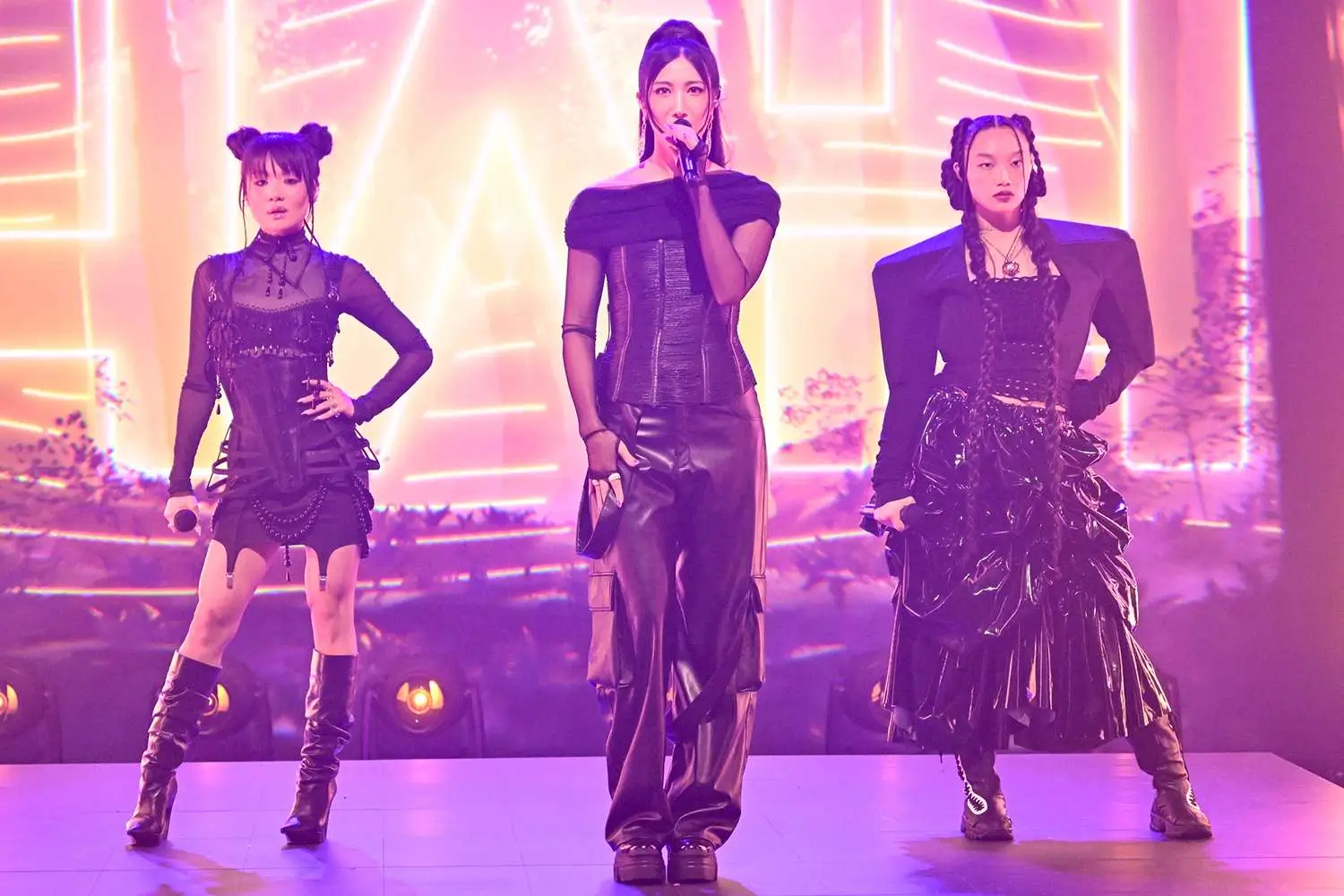
KPop Demon Hunters operated at the intersection of several global currents:
- The continued expansion of K-pop as a transnational cultural force
- The evolution of animation as a medium for adult-adjacent storytelling
- The appetite for hybrid genres that reject strict categorization
Rather than treating K-pop as aesthetic garnish, the film embedded it into its narrative DNA. Performance sequences were not interruptions; they were battlegrounds. Identity was not static; it was performative, fluid, and often weaponized.
Visually, the film distinguished itself through a hyper-saturated palette and kinetic camera movement that mirrored live concert energy. The choreography of both dance and combat blurred distinctions between spectacle and storytelling.
This approach resonated with audiences who had grown accustomed to traditional Western animation frameworks. It offered something different—something that felt closer to a live event, a music video, and a mythological epic all at once.
net
Netflix’s decision to not only greenlight a sequel but also secure a multi-year exclusive deal with Kang and Appelhans speaks volumes about the platform’s long-term ambitions in animation.
In recent years, the streaming giant has sought to position itself as a serious contender in a space historically dominated by studios like Pixar and DreamWorks. Yet consistency has been elusive.
KPop Demon Hunters changes that equation.
By anchoring its animation slate around proven, award-winning creatives, Netflix signals a shift toward director-driven storytelling—a model that prioritizes vision over volume. The deal suggests that the sequel is only one component of a broader pipeline, one that could redefine how original animated IP is developed and sustained on streaming platforms.
This is not just expansion; it is consolidation.
View this post on Instagram
converge
The creative partnership between Maggie Kang and Chris Appelhans is central to the franchise’s identity. Their collision represents a synthesis of distinct sensibilities:
- Kang brings a deep understanding of Korean cultural frameworks, visual language, and performance aesthetics
- Appelhans contributes narrative structure, character-driven storytelling, and a grounding emotional core
Together, they navigate a space that could easily tip into excess. The original film’s success lies in its restraint—its ability to balance maximalist visuals with intimate character arcs.
Their return ensures that the sequel will not dilute that balance. Instead, it opens the possibility for expansion—new mythologies, deeper character exploration, and potentially more ambitious visual experimentation.
cept
Sequels often struggle under the weight of expectation. The challenge lies in scaling up without losing the qualities that made the original resonate.
For KPop Demon Hunters, that challenge is uniquely complex.
The first film established a world where music, identity, and supernatural conflict coexist seamlessly. Expanding that world requires careful calibration:
- Narrative expansion: exploring broader mythologies without overwhelming the core story
- Character evolution: allowing protagonists to grow without sacrificing relatability
- visual innovation: pushing stylistic boundaries while maintaining coherence
The involvement of Kang and Appelhans suggests an awareness of these challenges. Their track record indicates a preference for deliberate evolution rather than reactive escalation.
muse
The Oscar-winning track “Golden” serves as more than a highlight—it is a blueprint for how music can function within the sequel.
Rather than treating songs as ancillary elements, the film positioned them as narrative catalysts. Each performance carried emotional weight, advancing character arcs and thematic development.
In the sequel, this approach could evolve further:
- More integrated storytelling through music
- Expanded collaboration with global artists
- A deeper exploration of performance as identity
The success of “Golden” demonstrates that audiences—and the Academy—are receptive to this model. It validates the idea that animated musicals can transcend traditional boundaries when executed with precision.
lang
One of the most significant achievements of KPop Demon Hunters lies in its ability to function as a global text.
It does not belong exclusively to one tradition. Instead, it draws from multiple influences:
- Anime-inspired visual dynamism
- Western narrative structure
- Korean cultural motifs and musical frameworks
This hybridity positions the sequel within a broader conversation about the future of animation. As audiences become increasingly global, the demand for cross-cultural storytelling grows.
Netflix, with its international reach, is uniquely positioned to capitalize on this shift. The sequel is not just a continuation—it is an opportunity to further refine a model of animation that reflects a truly interconnected audience.
imply
The Oscar success of KPop Demon Hunters challenges long-standing assumptions about what constitutes “prestige” animation.
Historically, the category has favored certain aesthetics and narratives—often centered around family-friendly themes or established studio formulas.
By contrast, this film embraced:
- High-energy performance culture
- Genre hybridity
- A distinctly non-Western narrative lens
Its victory signals a potential shift in how the Academy evaluates animated films. It suggests an openness to projects that deviate from traditional expectations, provided they demonstrate technical excellence and emotional resonance.
For Netflix, this is more than validation—it is leverage.
fin
The announcement of a KPop Demon Hunters sequel arrives not as a routine continuation, but as a statement of intent.
It affirms that:
- Director-driven animation can thrive within the streaming model
- Global cultural influences can redefine genre boundaries
- Awards recognition can coexist with mainstream appeal
Most importantly, it reinforces the significance of Maggie Kang and Chris Appelhans as creative forces shaping the future of animation. Their return ensures that the sequel will not merely revisit familiar territory, but expand upon it with purpose.
And hovering over all of it is that Oscar-winning legacy—a reminder that this franchise was never just a hit. It was a breakthrough.
The challenge now is not to replicate that success, but to build upon it—to create a sequel that feels as necessary as the original once did.
If the first film was a revelation, the second has the potential to become something even rarer: a continuation that justifies its existence not through scale, but through vision.
Read Drift’s related feature, KPop Demon Hunters Sequel Officially in the Works at Netflix and Sony Pictures Animation.
From the DRIFT archive: Dunkin’ Revisits the Munchkins’ Origin Story in a Tender, Holiday-Bright Animated Tale · In The Making: Live-Action Legend of Zelda in New Zealand
Related Articles
Two Chicago Lifers, One Wave: Kaicrewsade and Luke Titus on ‘#SWAG SURF’
Kaicrewsade's new album RAINBOW_ arrived on October 14, and its second track pulls in Chicago drummer and singer Luke Titus.