DRIFT AUDIO
Listen to this story
Choose a voice, then press play.
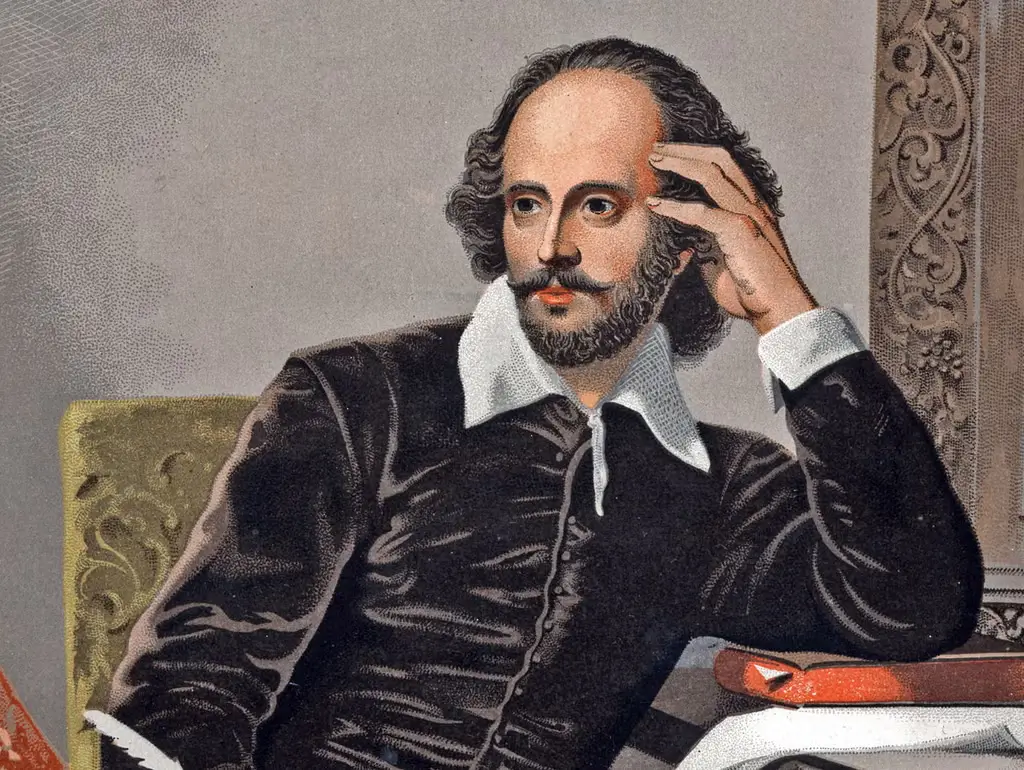
On World Poetry Day, poetry is often framed as inheritance—something handed down, carefully maintained, and periodically revisited as a gesture of cultural continuity. It is invoked through citation, through recitation, through the quiet authority of names that have come to define the canon. Among them, William Shakespeare remains singular—not merely for the endurance of his language, but for the persistence of his structures.
stir
To approach Shakespeare today is to confront a paradox. His works are among the most studied in literary history, yet their continued relevance cannot be explained by familiarity alone. They are not sustained by reverence. They are sustained by applicability.
View this post on Instagram
Shakespeare does not endure because we return to him.
He endures because we continue to live within the frameworks he constructed.
On a day dedicated to poetry, this distinction matters. It shifts the conversation away from preservation and toward recognition—away from poetry as artifact and toward poetry as condition. For if Shakespeare’s work remains active, it is not because his words are repeated, but because the patterns of thought, identity, and tension he articulated continue to shape contemporary experience.
To understand poetry in this sense is not to locate it in text alone, but to identify it in structure.
And in Shakespeare, that structure remains profoundly intact.
hamlet
In Hamlet, poetry is inseparable from consciousness. It is not deployed to embellish action, but to expose hesitation—to render visible the internal processes that precede, interrupt, and often prevent resolution.
Hamlet does not act because he cannot conclude.
His language unfolds as a series of recursive inquiries, each thought destabilizing the one before it. The famous soliloquies do not clarify his position; they deepen its complexity. In this way, Shakespeare establishes a poetic form that is fundamentally interior—one that privileges process over outcome, ambiguity over certainty.
This interiority is not confined to the stage.
It has become, in many ways, the defining condition of modern life.
Contemporary existence is structured by a similar density of thought. Decisions are rarely immediate; they are filtered through layers of reflection, doubt, anticipation, and reinterpretation. The self is not a fixed entity, but an ongoing negotiation—an accumulation of internal dialogues that rarely resolve into singular conclusions.
In this context, Hamlet’s enduring relevance becomes clear.
He is not a relic of a distant literary past, but a prototype of modern consciousness.
The soliloquy, as Shakespeare constructs it, is not dependent on spoken language. It exists wherever thought turns inward, wherever the self becomes both subject and observer. In the contemporary world, these soliloquies are rarely articulated aloud. They remain internal—fragmented, continuous, often unstructured.
Yet their presence is undeniable.
They shape how we interpret events, how we assign meaning, how we navigate uncertainty. They determine not only what we do, but how we understand what we have done.
To recognize this is to acknowledge that poetry, in its Shakespearean form, does not begin with expression.
It begins with attention.
With the act of thinking itself.
verona
If Hamlet establishes poetry as an interior structure, The Two Gentlemen of Verona extends that structure outward—into the domain of relationships, loyalty, and social identity.
At first glance, the play appears to operate within a more conventional framework. It is concerned with friendship, with romantic entanglement, with the shifting dynamics of allegiance. Yet beneath these surface elements lies a more complex inquiry: the instability of the self when placed in relation to others.
The title itself—Two Gentlemen—implies a shared identity, a mutual adherence to a recognizable code. And yet, throughout the play, this identity proves remarkably fragile. Loyalty is compromised. Promises are reinterpreted. The designation of “gentleman” becomes less a stable category than a contested space—one that is continuously redefined through action.
In this sense, Verona anticipates a distinctly modern condition.
Identity is not singular.
It is relational.
It exists not in isolation, but in response—to context, to expectation, to the presence of others. The self is shaped as much by observation as by intention. It is performed, though not always consciously, and its coherence is subject to disruption.
This instability is not presented as an anomaly.
It is presented as inherent.
Shakespeare does not resolve the contradictions his characters embody. Instead, he allows them to persist, to circulate, to reveal the extent to which identity is contingent rather than fixed.
In the contemporary world, this contingency has only intensified.
We move between roles—professional, personal, public, private—each requiring a recalibration of behavior, language, and presentation. The boundaries between these roles are increasingly porous, and the coherence of the self becomes an ongoing project rather than an established fact.
Verona’s relevance, then, lies not in its narrative specifics, but in its structural insight.
It reveals that identity is not something we possess.
It is something we negotiate.
compare
Taken together, Hamlet and The Two Gentlemen of Verona form a comprehensive framework for understanding the poetic dimensions of contemporary life.
One articulates the interior.
The other, the external.
One isolates the individual within the complexity of thought.
The other disperses that individual across the shifting terrain of relationships.
Between them, a dynamic emerges—one that defines the modern condition.
We think privately, within the recursive structures of internal dialogue.
We act publicly, within the performative structures of social interaction.
And rarely do these two domains align seamlessly.
This misalignment is not incidental.
It is generative.
It produces tension, contradiction, ambiguity—the very elements that constitute poetry in its most fundamental sense.
Shakespeare’s achievement lies in his ability to map this tension without resolving it. He does not reconcile the interior with the external; he stages their interaction, allowing each to inform and destabilize the other.
In doing so, he provides a framework that extends far beyond the specificities of his time.
It becomes a method for understanding experience itself.
lang
To speak of Shakespeare in the context of World Poetry Day is often to emphasize language—the richness of his vocabulary, the precision of his metaphors, the musicality of his verse.
These qualities are undeniable.
But they are not sufficient to explain his endurance.
Language changes.
Meanings shift.
And yet, Shakespeare remains legible—not because his words are static, but because his structures are adaptable.
The soliloquy persists as a form of internal articulation, even when it is not spoken.
The conflict of identity persists as a form of social negotiation, even when it is not dramatized.
The interplay between thought and action, between intention and consequence, remains a defining feature of human experience.
In this sense, Shakespeare’s work functions less as a repository of language than as a system of relations.
A framework through which experience can be interpreted.
This is where poetry, in its most expansive definition, resides.
Not in the arrangement of words alone, but in the recognition of patterns—in the ability to perceive structure within the flux of lived experience.
show
World Poetry Day invites recognition.
But what, precisely, is being recognized?
If poetry is understood narrowly—as written verse, as formal composition—then its relevance risks becoming confined to specific contexts. It becomes something we engage with intermittently, rather than something that informs our perception continuously.
Shakespeare challenges this limitation.
His work suggests that poetry is not a category of writing, but a condition of experience.
It emerges wherever there is tension between thought and action.
Wherever identity is negotiated rather than assumed.
Wherever meaning is not given, but constructed through interaction.
In this framework, poetry is not separate from life.
It is embedded within it.
It appears in the hesitation before a decision.
In the recalibration of self in response to others.
In the recognition that certainty is often provisional, that identity is often unstable, that meaning is often contingent.
These are not traditionally poetic moments.
And yet, they are structured by the same principles that underlie Shakespeare’s work.
To recognize this is to expand the scope of poetry beyond its conventional boundaries.
It is to see poetry not as something we produce, but as something we inhabit.
idea
The persistence of Shakespeare’s relevance is not accidental, nor is it merely a product of institutional reinforcement. It reflects a deeper alignment between the structures he articulated and the conditions of contemporary life.
In an era defined by constant observation—where the boundaries between private and public are increasingly blurred—the tension between interior thought and external performance has become more pronounced. The self is simultaneously introspective and exposed, engaged in continuous negotiation across multiple contexts.
This duality is precisely what Shakespeare’s work captures.
Hamlet anticipates the intensification of interiority—the recursive, self-reflexive mode of thinking that defines modern consciousness.
The Two Gentlemen of Verona anticipates the fluidity of identity—the ease with which roles can shift, the instability of allegiance, the complexity of maintaining coherence across contexts.
Together, they provide not only a literary framework, but a conceptual one.
They allow us to interpret contemporary experience not as fragmented or unprecedented, but as structured—shaped by patterns that have been recognized, articulated, and explored long before the present moment.
This is the critical significance of Shakespeare on World Poetry Day.
He does not simply represent poetry.
He reveals its underlying mechanics.
fin
To commemorate poetry through Shakespeare is not to look backward.
It is to recognize continuity.
The frameworks he constructed remain active—not because they are preserved, but because they are continually reactivated through lived experience.
We think as Hamlet thought—within the complexity of internal dialogue, navigating uncertainty without resolution.
We act as the gentlemen of Verona act—within the fluid dynamics of identity, negotiating relationships that resist stability.
Between these two modes, poetry emerges.
Not as a fixed form, but as a structure of experience.
On this World Poetry Day, the task is not merely to read or recite, but to recognize.
To identify the presence of poetry not only in language, but in the patterns that shape how we think, how we act, how we understand ourselves in relation to others.
The skeleton remains.
We move within it.
And in that movement—unwritten, often unnoticed, yet profoundly structured—poetry continues to exist.
Not as something distant.
But as something immediate.
Not as something composed.
But as something lived.
Related Articles
Modigliani’s Limestone ‘Tête’
Carved from a single block of limestone in Montparnasse more than a century ago, one of Modigliani's rare stone heads goes to auction for the first time…