New England Exhibitions Examine Labor, Capital, and Incarceration Through Contempo

May 31, 2026
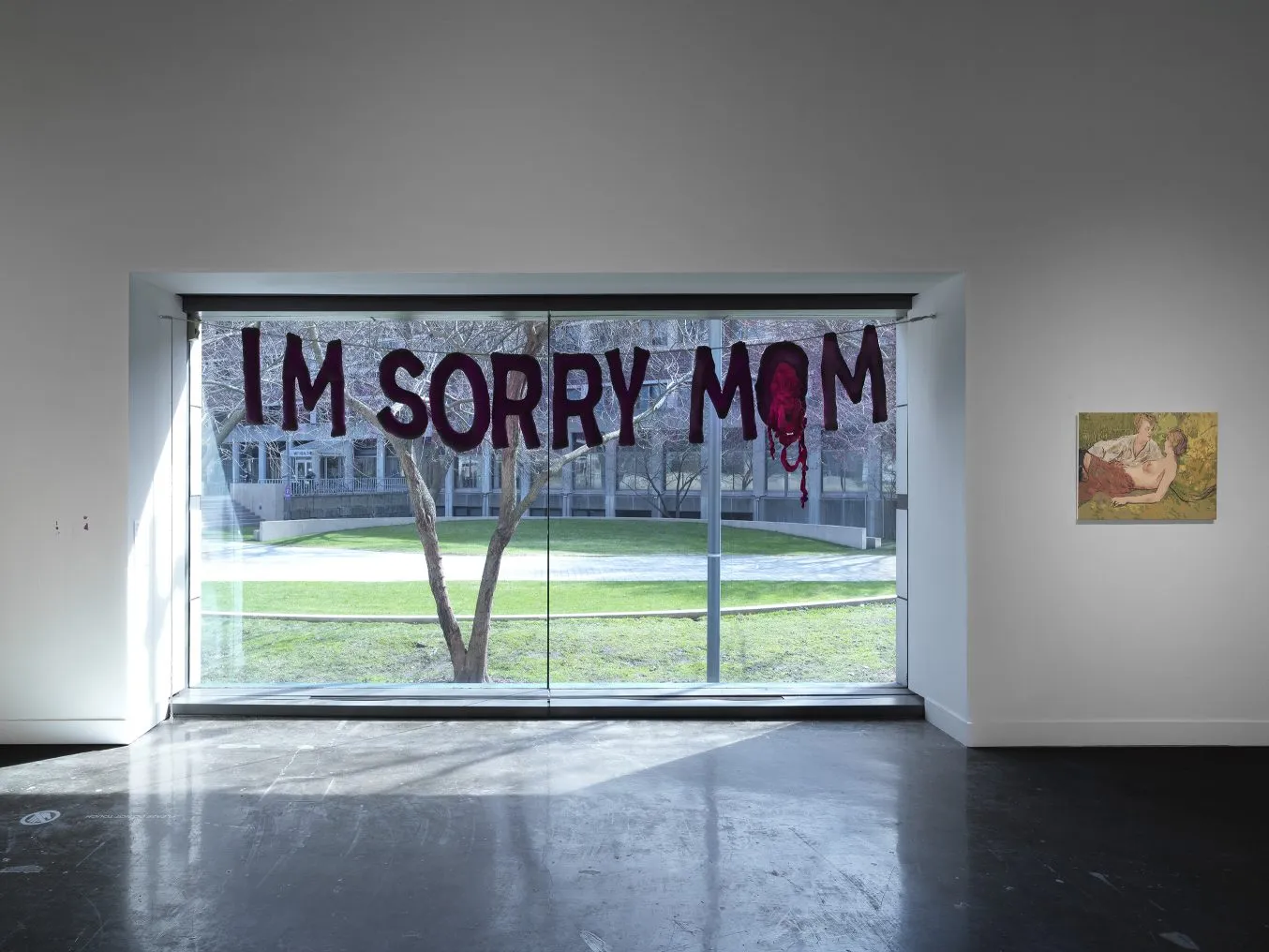
In the spring and summer of 2026, three distinct yet thematically resonant exhibitions across New England—Performing Conditions: Artistic Labor and Dependency as Form at the MIT List Visual Arts Center in Cambridge, CITADEL at the Fall River Museum of Contemporary Art (FR MoCA), and Prisoners of Love: Until the Sun of Freedom by Basel Abbas and Ruanne Abou-Rahme at the Bell Gallery at Brown University—collectively probe the entangled relationships between labor, capital, and systems of incarceration. Curated and presented in conversation through Gee Wesley’s insightful Artforum Field Notes piece (May 29, 2026), these shows offer a regional lens on global crises. They examine how artistic production intersects with economic precarity, institutional power, and carceral logics.
Spanning April to August 2026, these exhibitions arrive at a moment of heightened awareness around gig economies, AI-disrupted creative labor, prison abolition movements, and the lingering effects of neoliberal capitalism on culture institutions. Together, they form an unofficial triptych that demands viewers confront not only the aesthetics of work but its ethics, costs, and potential for resistance.
stir
At the MIT List Visual Arts Center, Performing Conditions (April 11 – August 2, 2026), organized by Natalie Bell and Ramona Ngin, anchors the conversation with a sharp focus on artistic labor, debt, and dependency. The exhibition occupies the Hayden, Reference, and Bakalar Galleries, featuring works by Senga Nengudi, Constantina Zavitsanos, and others that treat dependency not as weakness but as a structural condition of creative life under late capitalism.
Senga Nengudi’s R.S.V.P. Reverie–“B” Suite (1977/2011) reappears as a poignant anchor. Her stretched nylon and sand sculptures evoke the physical toll of bodily labor, mirroring the invisible strains artists endure in pursuit of view. Nearby, Zavitsanos’s LEAVE – A – PENNY / TAKE – A – PENNY (2024) literalizes transactional dependencies through interactive elements, inviting viewers to engage with economic exchange as performance. Archival material in the Bakalar Gallery documents three 1969 episodes of refusal at MIT, including the Art Workers’ Coalition’s early actions, drawing direct lines between historical labor organizing and contemporary precarity.
The exhibition’s strength lies in its refusal to romanticize artistic autonomy. In an era where freelancers juggle multiple platforms and institutions grapple with funding cuts, Performing Conditions highlights how debt and dependency shape not only individual careers but the very form of artworks. Video and performance pieces explore burnout, care work, and the blurred boundaries between studio and survival labor. One standout installation uses projected schedules and time-tracking data to visualize the hidden hours artists spend on grant writing, social media promotion, and unpaid residencies.
Critically, the show positions MIT—an institution historically tied to technological capital and defense contracts—as a fitting site for such inquiry. By juxtaposing 1970s feminist and conceptual works with 2020s responses, it reveals continuities in how capital extracts value from creative bodies while disciplining dissent. Visitors leave understanding artistic labor not as exceptional but as emblematic of broader workforce transformations: gigification, emotional labor demands, and the erosion of collective bargaining in culture sectors.
scope
In the former textile mill city of Fall River, Massachusetts, FR MoCA’s CITADEL (curated by Cory John Scozzari) operates on radically different terrain. Housed in the ground floor of Merrow Manufacturing—a still-operational textile facility—FR MoCA embodies its mission as a “museum for the working class.” Artists Joel Dean and Maguette Dieng feature prominently, their works addressing industrial legacies, migration, and informal economies.
Fall River’s history as a 19th-century mill boomtown, marked by brutal labor conditions, immigrant exploitation, and eventual deindustrialization, infuses every aspect of the institution. Upstairs, factory workers continue sewing while downstairs, contemporary art interrogates those very conditions. This spatial proximity collapses the distance often found in white-cube galleries, making labor tangible rather than abstract.
Dean’s sculptural and painted works evoke the architectural remnants of mills—ruined yet resilient—while Dieng’s pieces draw on Senegalese textile traditions and global supply chains. The exhibition probes how capital relocates labor: from New England mills to offshore factories, and from formal employment to precarious gig work. Installations incorporate found materials from the building itself, underscoring themes of reuse, adaptation, and the persistence of working-class creativity amid economic decline.
FR MoCA, founded by artists Harry Gould Harvey IV and Brittni Ann Harvey, rejects tokenistic representations of labor. Instead, it centers artists from working-class backgrounds without exoticizing them. Programming includes workshops with local textile workers and discussions on union history, bridging artistic practice with lived experience. In Wesley’s Artforum review, CITADEL is praised for grounding abstract discussions of capital in the specificities of place—reminding viewers that labor is not merely conceptual but embodied in bodies that age, communities that hollow out, and buildings that stand as testaments to both exploitation and endurance.
The museum’s artist-run model itself performs a critique of institutional capital. Operating with limited resources in an economically challenged city, it models alternative economies of care, mutual aid, and community investment. This DIY ethos resonates with broader conversations around arts funding, gentrification, and who gets to define “contemporary art.”
flow
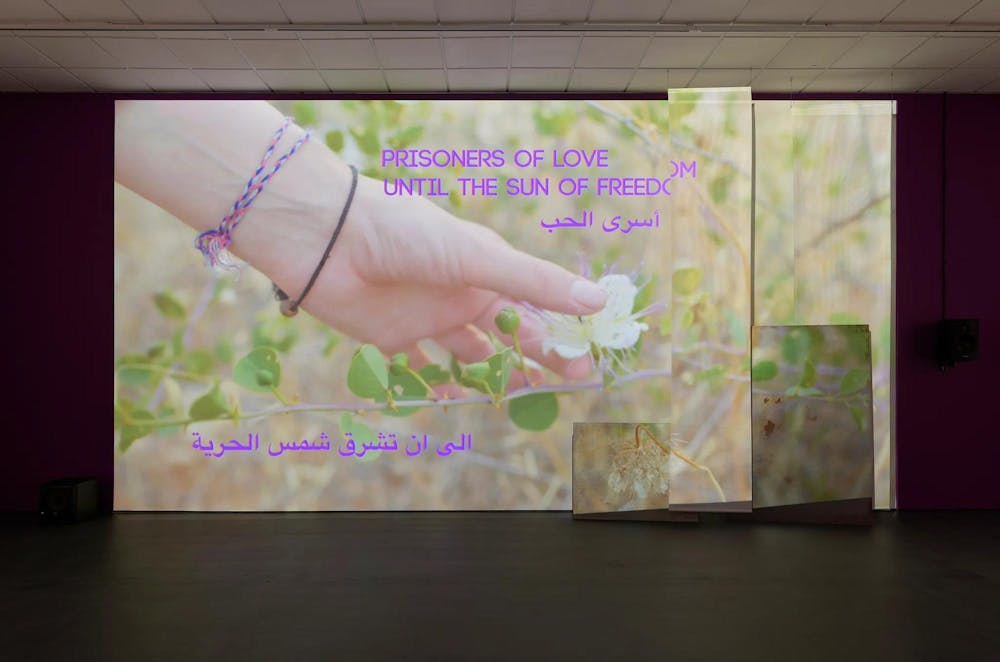
At Brown University’s Bell Gallery, Basel Abbas and Ruanne Abou-Rahme’s Prisoners of Love: Until the Sun of Freedom (opened February 19, 2026) extends the thematic thread into carceral systems. The multimedia installation features interviews with former Palestinian political prisoners, weaving poetry, music, and visual fragments into a meditation on survivance under incarceration.
Abbas and Abou-Rahme, known for their sound and video installations addressing displacement and resistance, transform the gallery into an immersive environment. Large-scale projections show hands reaching through foliage, overlaid with bilingual text: “Prisoners of Love / Until the Sun of Freedom.” Archival footage, recorded testimonies, and sonic landscapes create a polyphonic chorus that links U.S. mass incarceration to Palestinian experiences under occupation. The work refuses victimhood, instead celebrating cultural production—songs, poems, drawings—as tools of defiance and world-building.
The exhibition’s timing, amid global conversations on prison abolition and political imprisonment, amplifies its urgency. It draws parallels between domestic carceral systems—disproportionately affecting Black, Brown, and poor communities—and international ones sustained by imperial power. Audio elements allow visitors to hear voices that are often silenced, emphasizing how incarceration attempts to erase not only bodies but narratives and futures.
Brown’s institutional context adds layers. As an Ivy League university with its own labor disputes and investments, hosting such work invites reflection on complicity and complicit critique. Extended public hours in late May 2026 suggest efforts to broaden access beyond campus communities. The piece aligns with the Bell’s history of socially engaged programming, including previous exhibitions like Marking Time: Art in the Age of Mass Incarceration.
reason
What binds these three shows is their refusal to treat labor, capital, and incarceration as isolated phenomena. Artistic labor under capitalism often mirrors carceral discipline: surveillance of productivity, extraction of surplus value, and punishment for non-compliance. Performing Conditions dissects the economic dependencies of artists; CITADEL grounds them in post-industrial realities; Prisoners of Love reveals the ultimate endpoint of unchecked carceral capitalism—literal imprisonment of bodies and spirits.
New England’s specific history enriches the dialogue. From Lowell mill girls to Boston’s abolitionist traditions, from Rhode Island’s industrial past to Massachusetts’ tech corridors, the region embodies contradictions of progress and exploitation. These exhibitions leverage that history without nostalgia, using it to illuminate contemporary conditions.
Gee Wesley’s Artforum essay masterfully weaves the shows together, noting how each grapples with “the conditions under which artists continue to make public work.” The piece highlights institutional pressures, from funding dependencies to curatorial labor, and broader societal shifts toward abolitionist futures.
imply
These exhibitions arrive amid ongoing debates: the rise of mutual aid networks in arts communities, unionization efforts at museums, and cultural boycotts tied to geopolitical conflicts. They challenge viewers to consider their own positions—as consumers, workers, or beneficiaries of capital flows.
Art’s role here is dual: diagnostic and propositional. The works diagnose systemic failures while proposing alternatives—collective care in Performing Conditions, community-rooted institutions in Fall River, and cultural resistance in Prisoners of Love. They suggest that ethics of work must encompass not just compensation but dignity, autonomy, and abolition of exploitative structures.
For emerging artists, the shows offer models of resilience. For institutions, they pose uncomfortable questions about labor practices within their walls. For the public, they humanize abstract statistics on inequality and incarceration through sensory, affective experiences.
clue
As summer 2026 unfolds, these three New England exhibitions collectively advocate for reimagined work ethics. They demand we confront how capital commodifies creativity, how labor is devalued across sectors, and how incarceration perpetuates cycles of dispossession. Yet they also illuminate paths forward: through dependency acknowledged as strength, place-based practice, and art as liberation technology.
In an uncertain economic and political landscape, such shows remind us that culture production remains a vital site of contestation. Whether in the shadow of MIT’s innovation labs, within Fall River’s living mills, or amid Brown’s ivy-covered walls, these exhibitions assert that another ethics of work—one rooted in justice, care, and freedom—is not only possible but already in formation.
Visitors to any one show would benefit from experiencing all three. Their proximity (Cambridge to Fall River to Providence) makes a regional pilgrimage feasible, rewarding those who trace the threads of labor, capital, and incarceration across New England’s complex terrain. In doing so, they participate in the very ethical labor the artworks demand: seeing connections, questioning systems, and imagining otherwise.