DRIFT AUDIO
Listen to this story
Choose a voice, then press play.
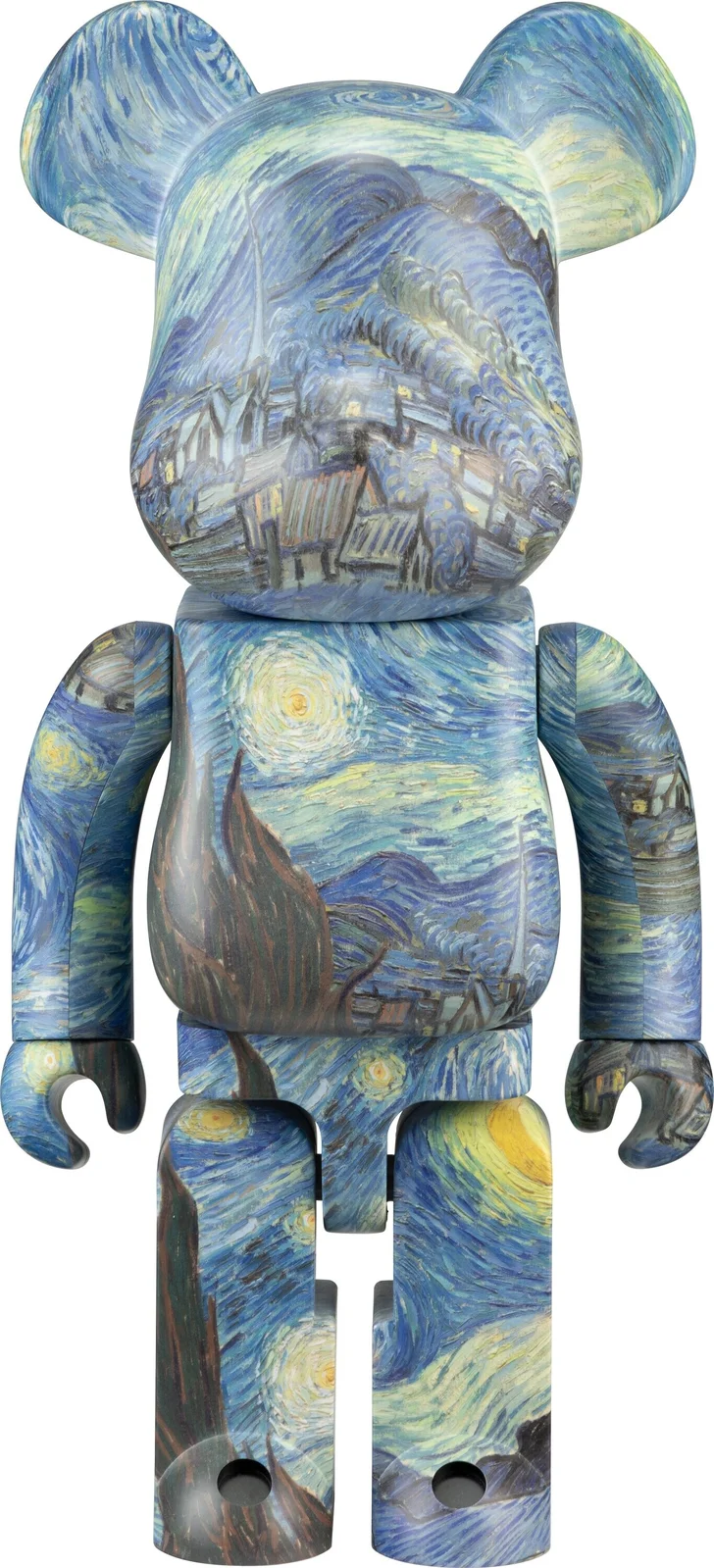
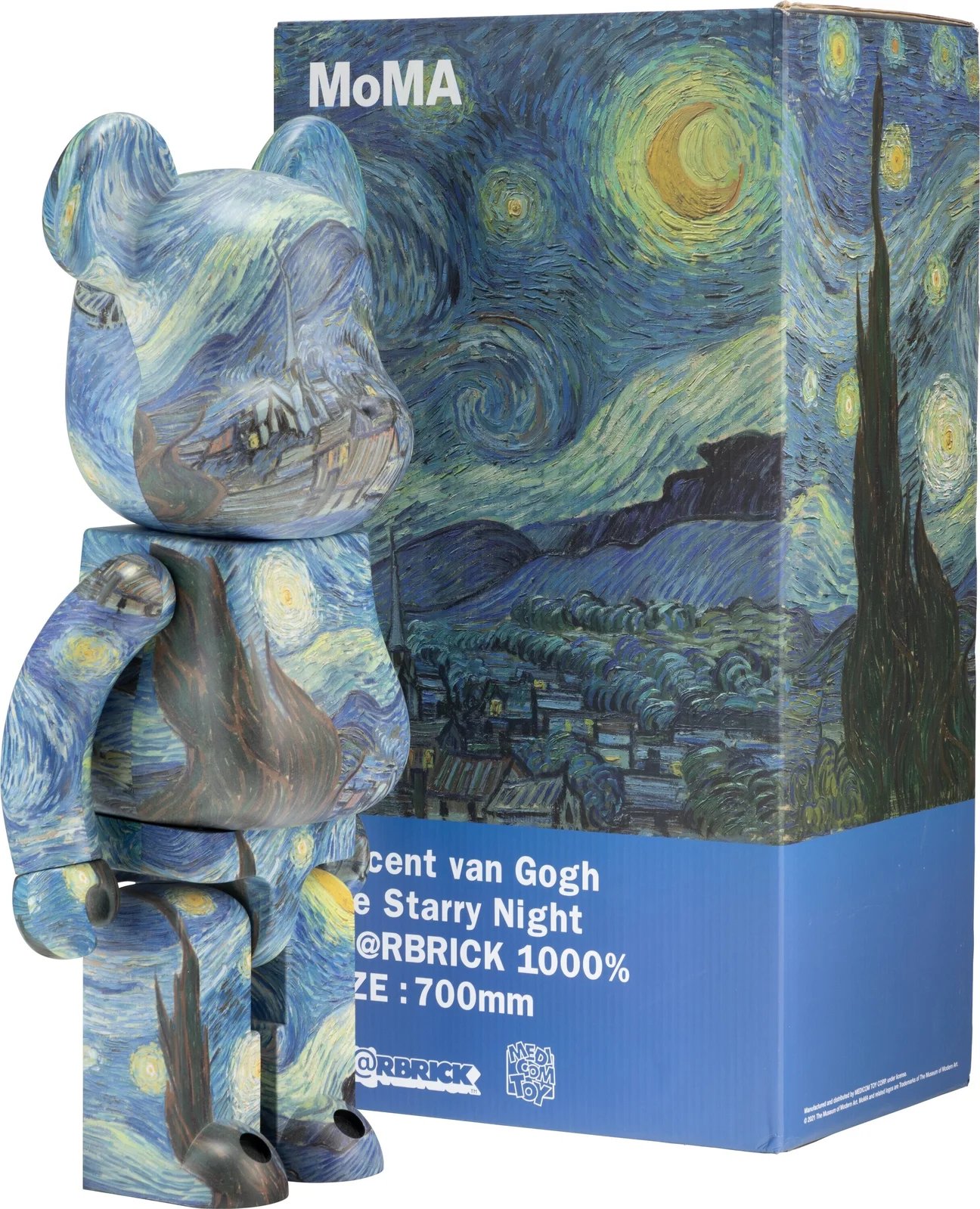
In 2021 MEDICOM TOY and MoMA printed Van Gogh’s swirling 1889 sky across a 70cm BE@RBRICK. Five years on, the figure says as much about museum licensing as about the painting.
Seventy centimeters of bear, built from nine separate parts, with every surface covered in coiling blue sky, a crescent moon and a flame-shaped cypress. That is the 1000% edition of the BE@RBRICK that MEDICOM TOY made with the Museum of Modern Art in 2021, a figure that takes The Starry Night, painted by Vincent van Gogh in June 1889, and stretches it over the rounded head, block torso and stubby limbs of Japan’s best-known collectible figure. The Tokyo company priced it at ¥66,000 including tax when it went on sale in August 2021 through its own shops and online stores and through MoMA Design Store. Five years later, the figure still circulates on resale platforms and in online gallery listings that catalogue it the way they would a sculpture: title, date, medium, dimensions. The medium line usually reads painted cast vinyl.
Signal. What happened: MEDICOM TOY and the Museum of Modern Art released a BE@RBRICK printed all over with Vincent van Gogh’s The Starry Night in 2021, and the 1000% version continues to trade on the secondary market and in art-market listings that describe it as painted cast vinyl. Exact object: Vincent van Gogh The Starry Night BE@RBRICK 1000%, approximately 700mm tall, released alongside a smaller 100% and 400% pairing. When and where: rel in August 2021 through MEDICOM TOY’s directly run stores and online shops and through MoMA Design Store, at ¥66,000 including tax for the 1000% and ¥16,500 for the 100% and 400% set; it now trades mainly through resale. Source: MEDICOM TOY’s own Japanese product pages, MoMA’s collection audio materials and current resale market data. Why it matters: the figure was the first BE@RBRICK partner between MEDICOM TOY and MoMA’s retail arm, a template the museum has since repeated, and it lands back in view during the year BE@RBRICK turns 25 and MEDICOM TOY turns 30.
The pairing is less strange than it first sounds. MEDICOM TOY has spent a quarter century using the BE@RBRICK as a blank surface for other people’s images, from streetwear labels to artist estates, and the bear’s proportions suit a painting whose whole energy sits on the surface. Van Gogh built his sky from short, directional strokes laid side by side, and on the figure those strokes have to wrap around curves the canvas never had. A star can land on an ear. The village steeple can end up somewhere near a knee.
stir
Van Gogh painted The Starry Night at Saint-Rémy-de-Provence, where he had entered an asylum in the spring of 1889. The scene is based on the east-facing view from his window, hills and sky just before sunrise, with a village he added to the composition. In a letter to his brother Theo that May, he described looking through iron bars at an enclosed square of wheat and watching the sun come up over it, a view he returned to again and again during his year there. The painting itself was made in his ground-floor studio during the day, working from that view rather than in front of the night sky. The canvas measures 73.7 by 92.1 centimeters, and it has belonged to MoMA since 1941.
How it got there is one of the museum’s better origin stories. Lillie P. Bliss, one of MoMA’s founders, wanted a Van Gogh badly enough near the end of her life to cut back on other spending, but she died in 1931 without buying one. Her bequest of roughly 120 works, which reached the museum in 1934, became the core of MoMA’s early collection, and it came with the freedom to trade works for others. Ten years after her death, MoMA’s first director asked a dealer whether The Starry Night was still available, and the dealer proposed exchanging it for three pictures from the Bliss bequest. That is why the wall label still reads Acquired through the Lillie P. Bliss Bequest (by exchange), and why the museum now presents the purchase as a way of completing a collection its founder never got to finish.
Ann Temkin, the MoMA curator who narrates the museum’s audio commentary on the painting, has argued that the sky is less a record of what anyone saw on a summer night in 1889 than a projection of turmoil in Van Gogh’s own imagination. She has also pointed out the obvious practical fact about the work, that almost nobody looks at it alone, and tied its standing to the way Van Gogh’s handling of paint reaches people emotionally rather than descriptively. The Starry Night is one of the most famous works in MoMA’s collection, and the museum has licensed it onto everything from building-brick sets to dolls, which turns a single canvas into something many people can own a version of, at many price points. The BE@RBRICK sits near the top of that range.
from
MEDICOM TOY was founded in Shibuya, Tokyo, in June 1996, and the company still describes its purpose as making what it wants to exist. Its president, Tatsuhiko Akashi, puts the case more grandly, describing the output as art, culture and experiences rather than mere figures. Its first breakout was a block-built human figure. The BE@RBRICK came from swapping that figure’s human head for a bear’s, and the first one was handed out free at the World Character Convention in Tokyo in 2001, timed to the 100th anniversary of the teddy bear. The company marked its 30th anniversary in July with a six-day exhibition at Omotesando Hills, the same complex that houses its MEDICOM TOY PLUS store.
The sizing system is part of the appeal. A standard 100% figure is about seven centimeters tall, a 400% is 28 and a 1000% is 70, so the large figure is ten times the standard bear in height and built from the same nine-part structure, scaled up. At that size the BE@RBRICK stops behaving like a desk toy and starts taking up floor or shelf space the way a small sculpture would, which is one reason dealers and online galleries list the 1000% editions alongside prints and multiples rather than next to figures.
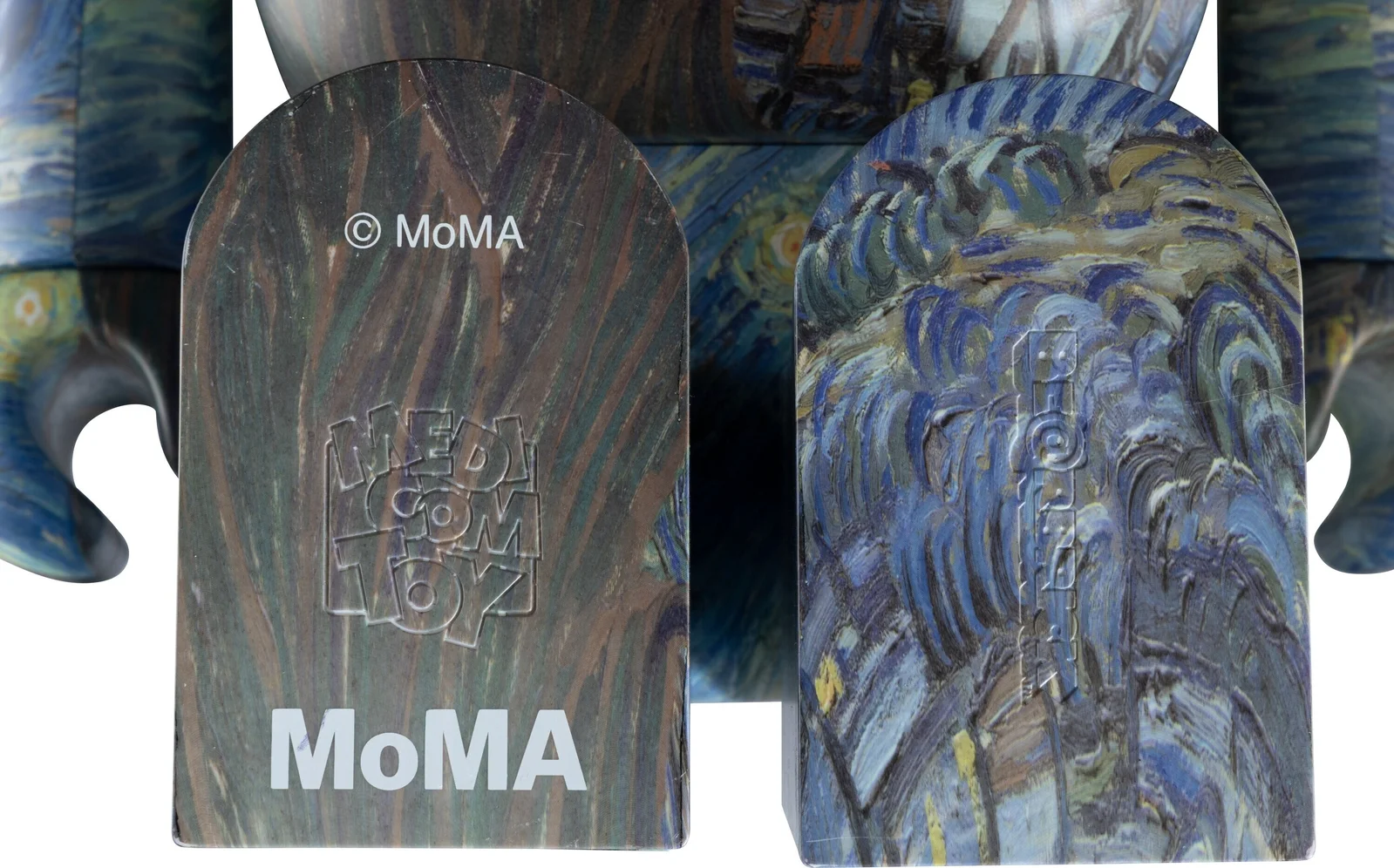
The collide also made sense commercially for both sides. MEDICOM TOY’s Japanese rel page announced that the figure would sell through MEDICOM TOY’s directly run shops, its online stores and MoMA Design Store, and it carried MoMA’s copyright line on the product imagery. For MoMA, a 70cm bear printed with one of its most famous paintings was a new kind of object for its shops: not a reproduction to hang, but a three-dimensional souvenir sized more like furniture than a poster. The boxed figure weighs close to seven kilograms, according to retailers that stocked it, which says something about how seriously the format takes itself.
show
The medium line that follows this figure around the art market, painted cast vinyl, does some quiet work. Dealer listings use it alongside dimensions given to the centimeter and a note that the edition size is unknown, which is how one would describe a sculpture. The decoration itself is not hand-painted. The figure is decorated by water transfer printing, a process in which a printed film floats on water and the object is dipped through it, so the image settles onto a three-dimensional surface wherever it happens to fall. Retail copy for the 1000% says the result is that no two figures carry the painting in exactly the same position.
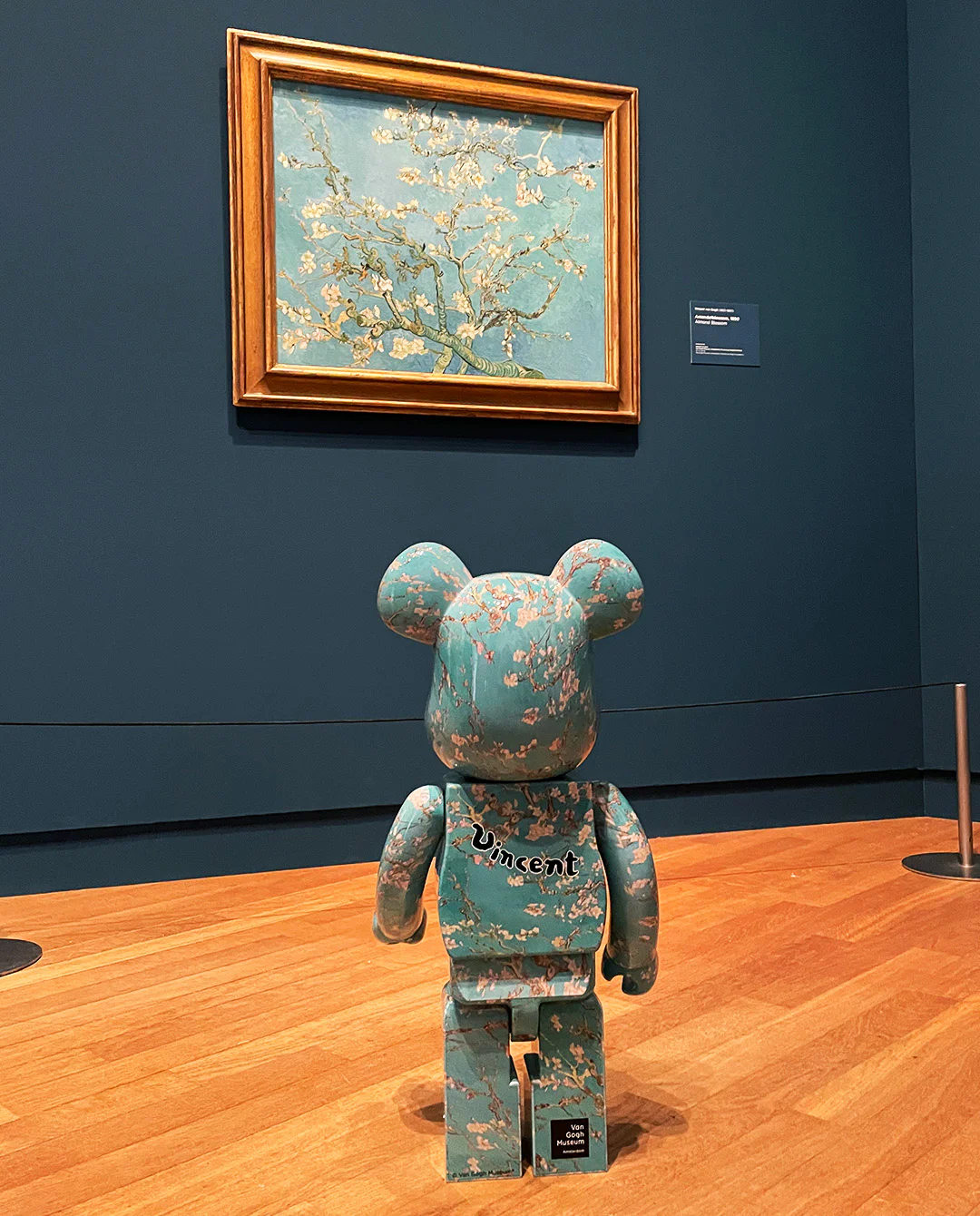
The same technique appears on the Van Gogh Museum‘s own BE@RBRICK editions, which the Amsterdam museum describes as unique for the same reason. For collectors, that variability cuts both ways. It gives each figure a claim to individuality that an edition number would otherwise supply, and it means the composition of the painting, the moon at upper right and the cypress rising on the left, is effectively redistributed by chance. MEDICOM TOY’s own release page warned that its photography showed a sample still under supervision and that finished figures could differ.
Material descriptions vary too. MoMA lists its later Dalí BE@RBRICK as ABS plastic, secondary listings for the Starry Night figure tend to say vinyl, and MEDICOM TOY’s Japanese release page does not specify either. MEDICOM TOY also never published an edition size for the Starry Night 1000%, which is why gallery listings describe it as being from an unknown edition.
nar
The Starry Night bear arrived around the same time as the Van Gogh Museum’s first BE@RBRICK editions, and the overlap has caused lasting confusion. The Amsterdam museum holds the largest collection of Van Gogh’s work and has issued its own series, built at first around paintings that show his interest in Japanese prints, with its first three editions selling out within days, according to the museum. The choice was pointed: Van Gogh copied prints by Hiroshige and Eisen in late 1887, so a Japanese toy company was printing his paintings onto Japanese figures that echoed a debt running the other way. The museum has said openly that it saw BE@RBRICK as a way to reach a new audience outside the museum, pointing to the figure’s popularity in hip-hop and streetwear culture. That series has since included a Self-Portrait with Grey Felt Hat figure, almond blossoms, sunflowers and a courtesan after Eisen, plus a 2023 floral edition for the museum’s 50th anniversary. It does not own The Starry Night. Even so, more than one dealer listing seen during research filed the MoMA figure under the Van Gogh Museum’s name.
For MoMA, the Van Gogh bear turned out to be a template. When MoMA Design Store and MEDICOM TOY followed it with a figure printed with Salvador Dalí’s The Persistence of Memory, the museum framed the new release as a sequel. MoMA’s Robin Sayetta introduced it as a second partnership, “following the success of the Vincent van Gogh The Starry Night BE@RBRICK,” and credited MEDICOM TOY with keeping the Dalí image as accurate as possible from bear to bear. The Dalí 1000% sold through MoMA’s own store for $750, with a limit of one per customer, and reached New York a day before Japan and Hong Kong.
fin
Resale prices for the Starry Night 1000% have been uneven. On StockX, the figure’s page on October 4 showed a lowest ask of $999, a last recorded sale of $543 and a 12-month range between $385 and $855, with no completed sales in the previous three months. The platform lists a US retail figure of $600, roughly what ¥66,000 converted to in 2021. At the other end of the range, one online gallery listing had offered the figure for US$3,980, catalogued with the painted cast vinyl medium line and an unknown edition size, before the listing was taken down.
The spread is wide, but it fits how large-format BE@RBRICKs trade. On the same platform the same week, the Van Gogh Museum’s Sunflowers 1000% carried a lowest ask of $1,425 and its Self Portrait 1000% one of $498, so the MoMA figure sits in the middle of its own family. The smaller 100% and 400% Starry Night set, which cost ¥16,500 in Japan, was listed at $300.
The canvas the figures borrow from is still in Midtown Manhattan, 85 years after the Bliss exchange, and still the reason a crowd forms in front of one wall of MoMA’s collection galleries.
Related Articles
BEAMS Fiftieth Year
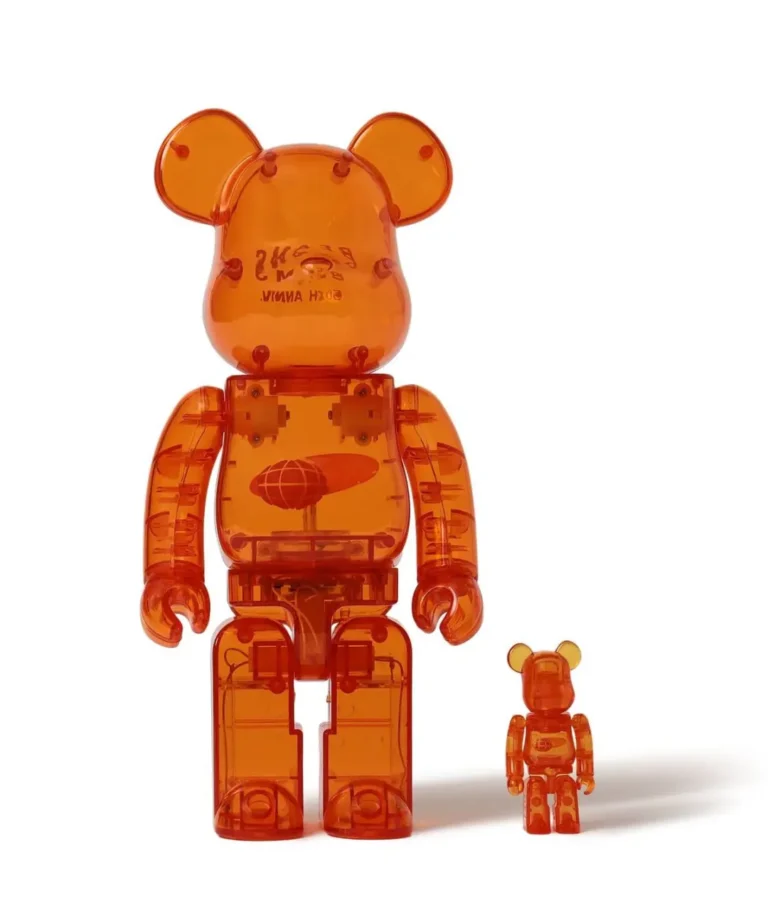
BE@RBRICK x BEAMS 50th. 100 percent and 400 percent. Late October 2026. Medicom block. Print […]