DRIFT AUDIO
Listen to this story
Choose a voice, then press play.
Nike’s sensory sneaker trades its orange pressure points for a single dulled-down green, and Japan gets its own turn on the release calendar.
A pair of round perforate catch the light differently depending on how the foot lands inside them, which is about as much view noise as the Nike Mind 002 “Camo Green” allows itself. Style code HQ4308-300 folds the shoe’s normally shouting design language into a single dull green, a departure for a sil that has spent most of 2026 leaning on bright, almost surgical tint-blocking to draw attention to its underfoot mechanics. Where earlier pairs, including the black FLYKNIT built with fragment design, used contrast to spotlight the shoe’s node array, Camo Green buries it.
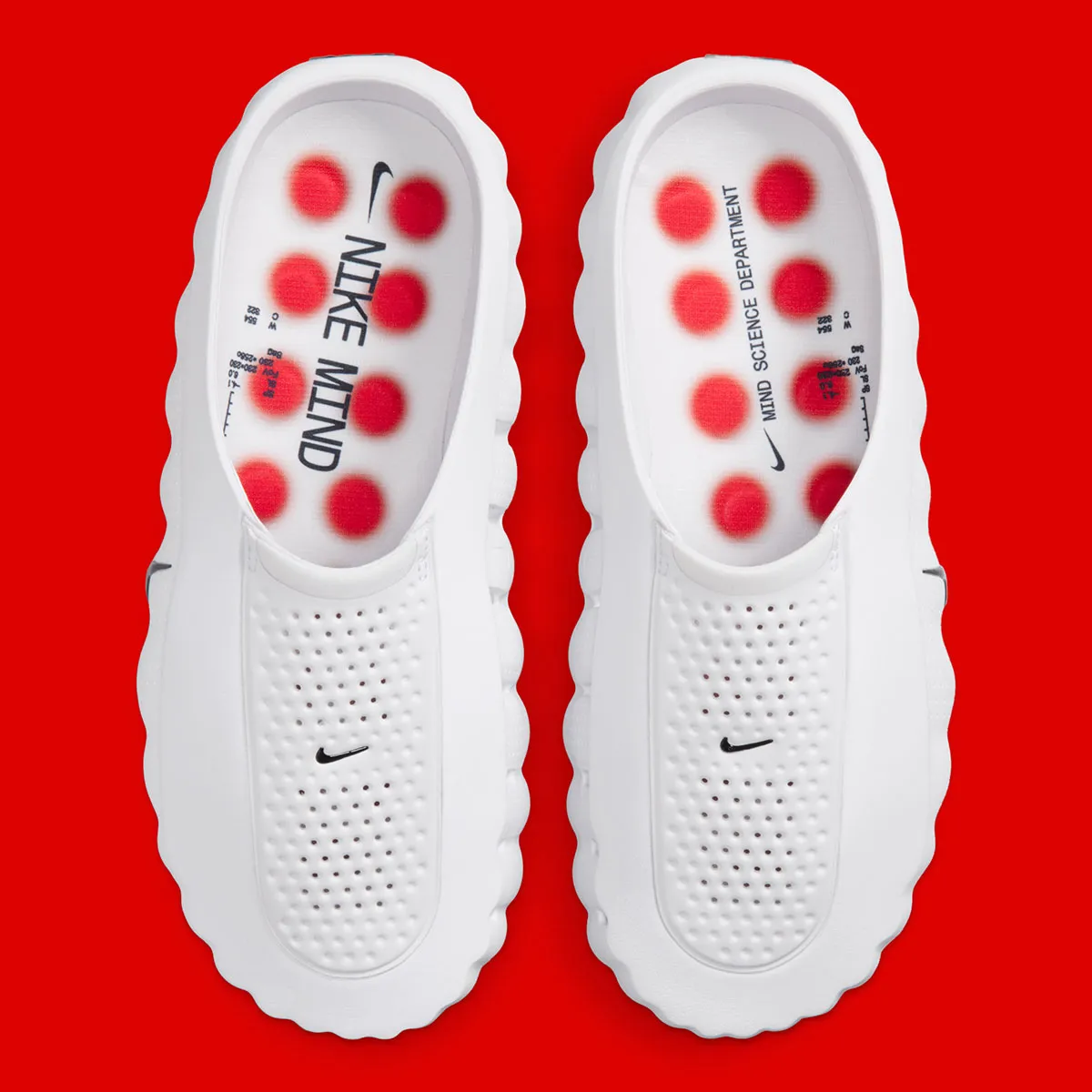
White Nike Mind Slip-On Pair With Red Cushioning Pods
The one-piece knit upper, the columned midsole, and the podded outsole all run the same tonal green, a treatment Nike hasn’t applied to the model before. Black foam wraps the heel counter, tongue, and sockliner, giving the back half of the shoe a slightly darker footing than the front. Dark green laces sit close enough to the upper’s base color that they read as texture rather than contrast, a departure from the stark lace treatments seen on prior Mind releases. Metallic silver Swooshes on the lateral panel and tongue are the only element built to catch light rather than absorb it, a small concession to legibility on a shoe that otherwise wants to disappear into itself.
nar
The reason any of this matters is buried in the sole. Nike Mind 002 carries 22 independently articulated foam nodes arranged across the outsole, each one moving in a piston-like rhythm as the wearer walks, translating ground texture up through the foot in a way ordinary cushioning is designed to smooth away. On earlier colorways, including the shoe’s original rel, those nodes were finished in bright orange, turning the sole into the loudest part of the shoe. Camo Green paints them the same dull tone as everything else, an aesthetic choice that also happens to be the most literal expression of the shoe’s stated purpose: subtract view stimulation so the wearer’s attention has somewhere else to go.
Above the sole, a stretchy footbed gives those nodes room to flex without losing contact with the foot, while the lace structure anchors the foot down close to the platform, tightening the connection between node and nerve ending. A molded heel and sockliner round out daily wearability, along with rubber pods positioned near the toe and heel for traction on surfaces the shoe’s piston-driven sole isn’t built to grip on its own. None of that construction changes across colorways; Camo Green’s only real departure from the rest of the Mind 002 line is how shh it wears all of it.
That distinction matters more for the Mind 002 than it would for most shoe, since the model was built as the lace-up counterpart to the Mind 001 mule specifically because it holds the foot tighter against the node array. Nike has framed the two form as different entry points into the same underlying system, the mule for quick on-and-off wear before or after activity, the lace-up for anyone who wants firmer, more consistent contact with the sole’s moving parts. Camo Green’s restraint doesn’t change that mechanical relationship; it just changes what the shoe looks like while it’s doing the work.
from
Nike Mind traces back to the Nike Sport Research Lab inside the LeBron James Innovation Center in Beaverton, where a dedicated Mind Science Department spent more than a decade studying how sensory input at the foot connects to attention and focus elsewhere in the body. Eric Avar, Nike’s VP of Creative Director for Innovation, described the platform at launch as one meant to “reawaken the foot, the body and the mind,” while chief science officer Matthew Nurse framed it as an extension of decades of biomechanics research into new territory: not how fast someone moves, but how present they feel while doing it. The Mind 001 mule and Mind 002 lace-up debuted together in January 2026 as the first products to come out of that research, and both sold through their initial release windows quickly enough to draw coverage well outside typical sneaker press.
Camo Green is not a first-run colorway. It join the Mind 002 lineup in the U.S. by way of a July 23, 2026 release through Nike and select retailers at a $145 retail price, and the pair has already cycled off Nike’s own product page as sold out in several sizes, consistent with how quickly the platform’s earlier drops have moved. That U.S. rollout sits alongside a wider slate of Mind 001 and Mind 002 colorways Nike has pushed through 2026, part of an unusually fast release cadence for a technology platform still under a year old.
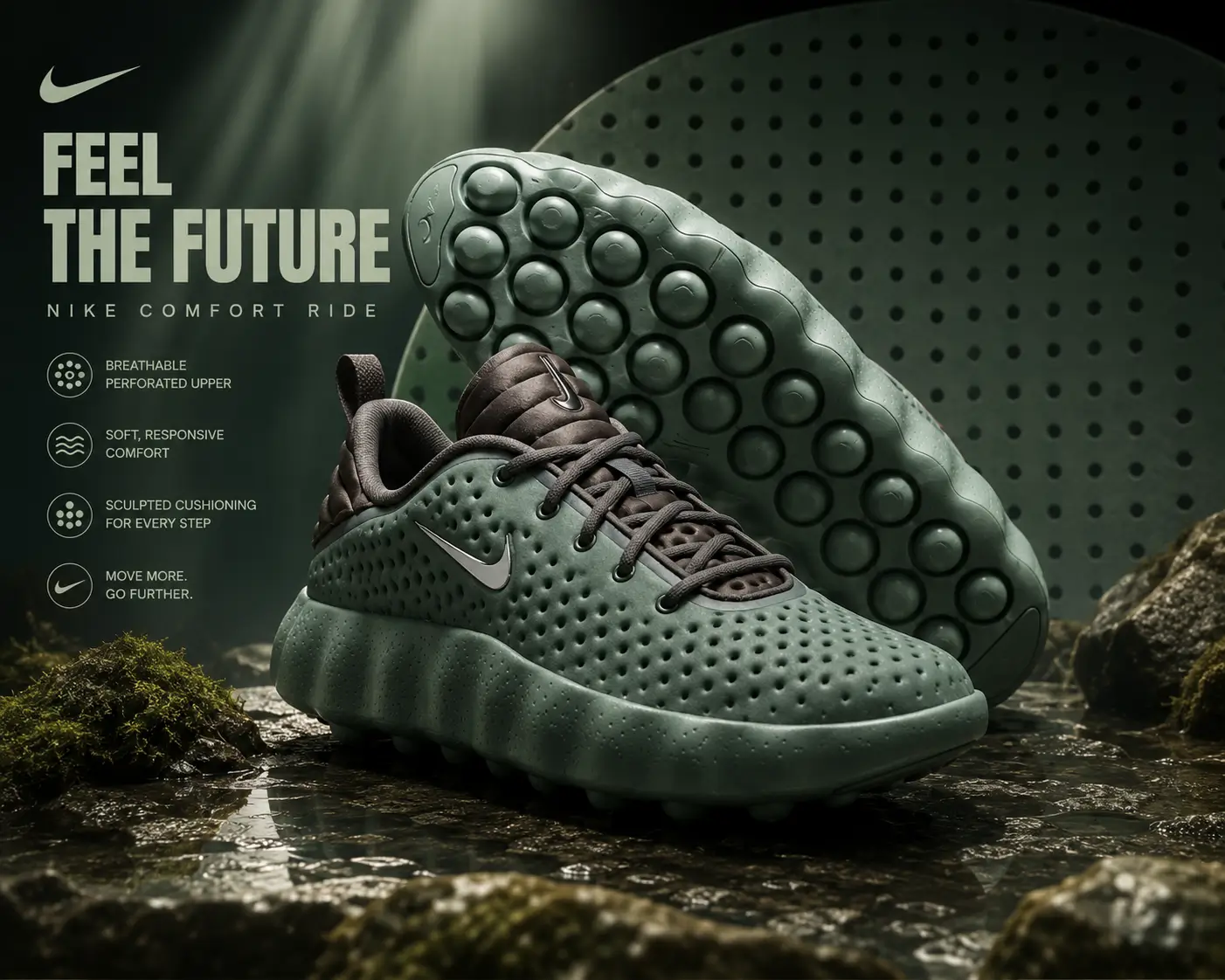
Nike Comfort Ride Green Shoe — Feel The Future
fin
Japan is due to get its own crack at Camo Green on August 20, 2026, through NIKE.COM, priced at 20,900 yen tax included, according to a Japan market release notice. That date puts the region roughly a month behind the U.S. launch, a gap that has become fairly typical for how Nike has staggered Mind colorways across markets so far in 2026 rather than releasing them everywhere at once. Full sizing and stock levels for the Japan drop hadn’t been detailed beyond the date and price at the time of writing.
The staggered rollout gives the Camo Green pair a longer runway than most single-market rel get, and Nike has signaled the colorway will continue reach more retailer into the fall regardless of region. Whether that translates into steadier available than the platform’s January debut, or another rapid sellout matching the pattern set by earlier Mind rel, should become clear shortly after the Japan date passes.
Japan has been a consistent stop for the Mind platform since its debut, and the market’s appetite for the line’s more understated colorways has tended to track closely with how quickly U.S. and European releases have moved. A muted, camo-adjacent option arriving into late summer gives retailers there a pair that reads less like a novelty and more like something built to be worn on repeat, which is closer to the argument Nike has been making about the technology since January: less spectacle, more routine.
From the DRIFT archive: The Nike LeBron 23 “From This Point Forward”
Related Articles
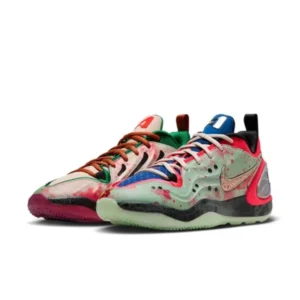
Nike A’Two “Potion No. 22” Gives A’ja Wilson a Mismatched Horror Double Bill
Two shoes, two monsters: A’ja Wilson’s Halloween A’Two splits blood splatter and honeycomb across a […]