DRIFT AUDIO
Listen to this story
Choose a voice, then press play.
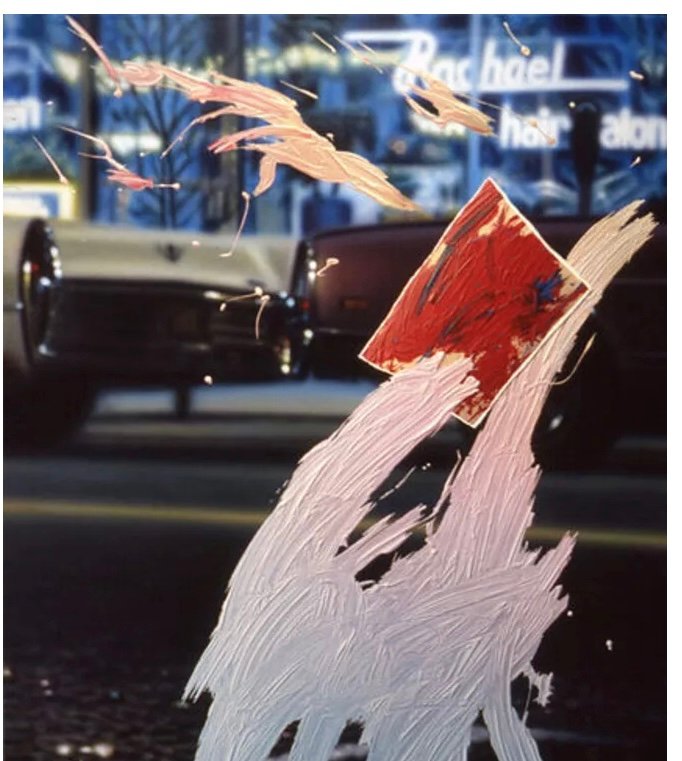
“Rachel’s” (1986) is a notable artwork by Bruce Evans, an artist known for his evocative portrayals of human figures. This piece exemplifies Evans’ ability to capture the emotional depth and complexity of his subjects through a combination of realism and abstraction.
“Rachel’s” is a portrait that conveys a sense of quiet introspection. The figure is rendered with a careful attention to detail, yet there is a softness in the lines and shading that adds a dreamlike quality to the work. Evans often employed a muted color palette, and in “Rachel,” this technique serves to enhance the contemplative mood of the piece. The subtle hues of grays, blues, and soft whites create an atmosphere that feels both intimate and distant, drawing the viewer into Rachel’s world while also keeping them at arm’s length.
The composition of the artwork suggests a moment of stillness, with Rachel’s gaze slightly averted, as if lost in thought. This introspective pose invites viewers to speculate on her inner life, emotions, and the narrative behind the portrait. Evans’ ability to evoke such questions without providing clear answers is a hallmark of his work, making “Rachel’s” a piece that encourages reflection and engagement from those who encounter it.
Bruce Evans was active during a period when figurative art was experiencing a resurgence, and his works often explored the boundaries between traditional portraiture and more modern, abstract approaches. “Rachel’s” fits within this context, as it balances realistic depiction with elements of abstraction. The work is not just a portrait in the conventional sense but also an exploration of identity, emotion, and the passage of time.
In “Rachel’s,” Evans continues his exploration of the human condition, a theme that runs throughout his body of work. His art often focuses on solitary figures, capturing moments of introspection or quietude, and this piece is no exception. The subtle tension between the detailed representation of Rachel and the abstract qualities of the background and color scheme speaks to Evans’ ability to blend different artistic approaches into a cohesive whole.
Impression
Although Bruce Evans may not be as widely recognized as some of his contemporaries, works like “Rachel’s” demonstrate his significant contributions to the world of figurative art. His ability to blend realism with abstraction and his focus on capturing the emotional essence of his subjects make his work enduringly relevant.
“Rachel’s” stands as a testament to Evans’ skill in portraying the nuances of the human experience, and it continues to resonate with viewers who are drawn to its quiet power and depth. The artwork remains an important example of 1980s figurative art and serves as a reminder of the lasting impact of Evans’ contributions to the field.
Related Articles
Modigliani’s Limestone ‘Tête’
Carved from a single block of limestone in Montparnasse more than a century ago, one of Modigliani's rare stone heads goes to auction for the first time…