DRIFT AUDIO
Listen to this story
Choose a voice, then press play.
Rudy Burckhardt, a name that resonates with those familiar with the intersections of photography, film, and painting, remains an enigmatic figure in the art world. Known for his understated genius, Burckhardt’s work spans several decades and mediums, capturing the essence of urban life with a quiet yet profound intensity. Despite his significant contributions, Burckhardt’s work is often overlooked, perhaps due to his reluctance to seek the spotlight or promote his own mastery. This exploration delves into the life and work of Rudy Burckhardt, examining the nuances of his artistic journey and the enduring impression of his creations.
Early Life and Influences
Born in Basel, Switzerland, in 1914, Rudy Burckhardt was immersed in a culturally rich environment from a young age. His family, well-versed in the arts, provided a nurturing backdrop for his burgeoning interests. Burckhardt’s early exposure to European art and culture laid the foundation for his eclectic artistic pursuits. In the 1930s, he moved to New York City, a decision that would profoundly shape his artistic trajectory.
New York, with its vibrant energy and dynamic urban landscape, became both a muse and a canvas for Burckhardt. The city’s streets, architecture, and inhabitants provided endless inspiration, fueling his passion for capturing the essence of urban life. Burckhardt’s early work in photography and film reflects his fascination with the city’s rhythm and the interplay between light and background.
Photography and Film: Capturing the Urban Pulse
Burckhardt’s photography is characterized by its candid and unpretentious style. He had an uncanny ability to capture fleeting moments, imbuing them with a sense of timelessness. His photographs of New York City, in particular, reveal a deep appreciation for the city’s architecture and the people who inhabit it. Through his lens, Burckhardt documented the everyday life of the city, from bustling streets to quiet corners, creating a visual narrative that resonates with authenticity.
In addition to photography, Burckhardt ventured into filmmaking, producing a body of work that further explores the urban experience. His films, often connective efforts with artists and poets, are marked by their experimental nature and poetic sensibility. Burckhardt’s cinematic approach mirrors his photographic style, emphasizing spontaneity and the beauty of the mundane. His films capture the essence of the city, offering viewers a glimpse into the vibrant tapestry of urban life.
Painting: A Quiet Mastery
While Burckhardt is perhaps best known for his photography and film, his work as a painter is equally compelling. His paintings, often shrouded by his other endeavors, reveal a mastery of color, composition, and form. Burckhardt’s approach to painting is characterized by a sense of immediacy and spontaneity, reflecting his broader artistic philosophy.
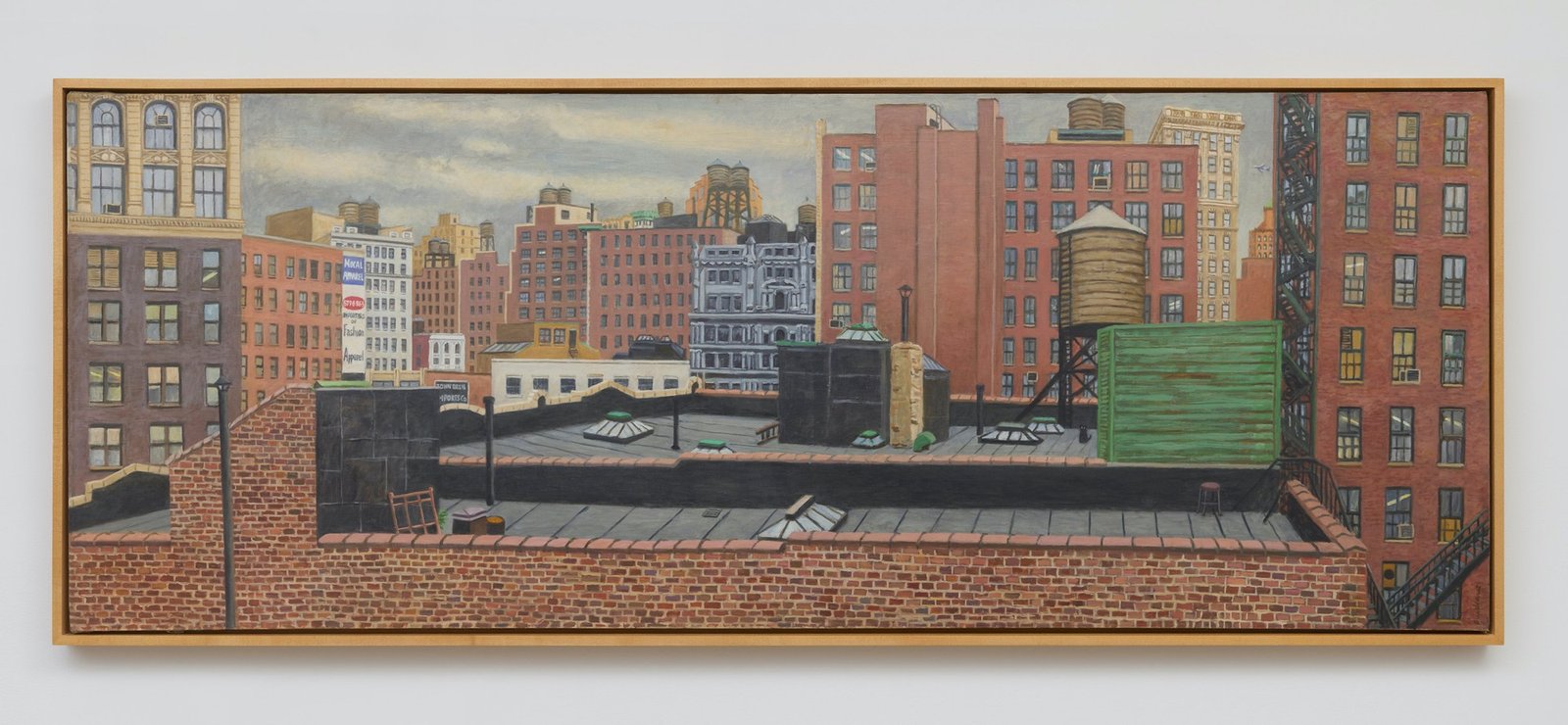
“Sixth Avenue” (1977), one of Burckhardt’s notable paintings, exemplifies his ability to capture the essence of a scene with minimalistic precision. The painting, an oil on linen, depicts a bustling New York street, rendered with bold brushstrokes and a vibrant palette. Burckhardt’s use of color and light creates a dynamic composition that conveys the energy and movement of the city.
Despite the complexity and depth of his paintings, Burckhardt never sought to draw attention to his technical prowess. His reluctance to promote his work or engage in self-promotion contributed to his status as a “reluctant genius.” Burckhardt’s humility and dedication to his craft are evident in the quiet intensity of his paintings, which continue to captivate viewers with their understated beauty.
Connection and Community
Throughout his career, Burckhardt maintained close ties with a community of artists, poets, and intellectuals. His collaborations with figures such as Willem de Kooning, Edwin Denby, and Jane Freilicher enriched his artistic practice and expanded his creative horizons. These collaborations were not merely professional endeavors but also personal relationships that shaped Burckhardt’s artistic vision.
Burckhardt’s interactions with other artists fostered a spirit of experimentation and innovation. His willingness to collaborate and engage with diverse artistic disciplines reflects his open-minded approach to creativity. This collaborative ethos is evident in his films, which often feature contributions from poets and musicians, creating a rich tapestry of sound and imagery.
Legacy and Impression
Two decades have passed since the last exhibition devoted solely to Rudy Burckhardt’s paintings, yet his work continues to resonate with contemporary audiences. Burckhardt’s ability to capture the essence of urban life with subtlety and grace has left an indelible mark on the art world. His photographs, films, and paintings offer a unique perspective on the human experience, inviting viewers to see the beauty in the everyday.
Burckhardt’s legacy is one of quiet brilliance and artistic integrity. His reluctance to seek fame or recognition allowed him to focus on his craft, resulting in a body of work that is both authentic and timeless. As the art world continues to evolve, Burckhardt’s contributions serve as a reminder of the power of art to transcend boundaries and connect us to the world around us.
Rudy Burckhardt’s work is a testament to the enduring power of art to capture the essence of life. His photographs, films, and paintings reflect a deep appreciation for the world around him, offering viewers a glimpse into the beauty of the everyday. Despite his reluctance to seek the spotlight, Burckhardt’s genius shines through in his work, leaving a lasting impact on the art world.
As we reflect on Burckhardt’s legacy, we are reminded of the importance of humility, dedication, and authenticity in the creative process. His work challenges us to see the world with fresh eyes, to find beauty in the mundane, and to appreciate the complexity of the human experience. In celebrating the reluctant genius of Rudy Burckhardt, we honor an artist whose work continues to inspire and captivate audiences around the world.
Related Articles
Modigliani’s Limestone ‘Tête’
Carved from a single block of limestone in Montparnasse more than a century ago, one of Modigliani's rare stone heads goes to auction for the first time…