DRIFT AUDIO
Listen to this story
Choose a voice, then press play.
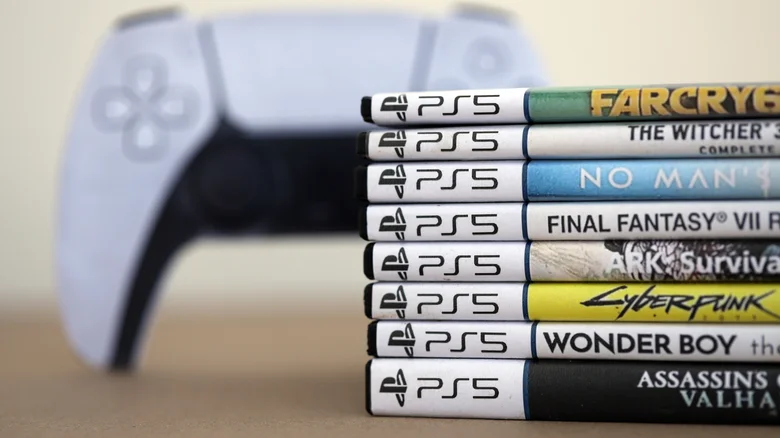
Sony will end PlayStation disc production in 2028 — critics call it an anti-consumer move dressed up as customer preference.
In This Story
- The Announcement: No Discs After January 2028
- Sony’s Math vs. the Optics
- GTA VI Set the Stage
- What Players Actually Lose
- The Preservation Problem Nobody Has Solved
- Stop Killing Games Pushes Back
- Retailers Brace for a Reckoning
- Where This Leaves PS6
The news landed on the PlayStation Blog under a headline built for corporate reassurance rather than alarm. Sony’s senior director of content communications, Sid Shuman, wrote that physical disc production for all new games releasing on PlayStation consoles will be discontinued starting January 2028, adding that new games will be released on PlayStation Store and at retailers in digital formats only from that date forward. Titles that already have physical editions, or that are scheduled to release on disc before the cutoff — including this fall’s Marvel’s Wolverine — are unaffected, according to the official PlayStation Blog announcement.
The same post confirmed a second, arguably more brutal decision: Sony is finally shutting down the PlayStation Store storefronts for PS3 and PS Vita, a move it attempted once before, in 2021, only to reverse course after a fan backlash. This time, there’s no indication a petition will change anything.
Sony’s stated rationale leans entirely on consumer behavior. “This is a natural direction for Sony Interactive Entertainment to adapt to consumer trends as the general preference for digital media significantly outpaces physical discs,” the company said, framing the shift as simply meeting players where they already are.
View this post on Instagram
stir
The digital numbers are real. Nearly four-fifths of full game purchases for PS4 and PS5 were bought digitally in Sony’s last fiscal year, and that figure rose to 85 percent in the most recent quarter. Third-party publishers are moving even faster: Capcom reported 93 percent digital sales over the same period and expects that to climb toward 95.4 percent this fiscal year.
But framing this purely as Sony “following the data” undersells what’s actually driving the decision. Industry analyst Daniel Ahmad, whose commentary was widely cited following the announcement, described it as “entirely a platform led decision that is designed to cut costs for Sony, eliminate resale / used markets” rather than a neutral response to shifting taste. Analyst Piers Harding-Rolls made a similar case, arguing the move will help “streamline the business of games retail” and mitigate margin pressures tied to development and staffing costs elsewhere in the business. In plainer terms: Sony no longer has to split revenue with retailers, manufacture and ship a physical product, or compete on price with a used copy sitting on a GameStop shelf. Removing discs doesn’t just track a trend — it locks in a permanent revenue advantage.
It’s also worth noting what hasn’t collapsed. According to reporting on Sony’s own figures, almost 70 million PlayStation discs were still sold last year, and physical retail — even in decline — remains meaningful business for many publishers. Sony isn’t killing a dead format. It’s killing a shrinking but still-functioning one, on its own timeline, for its own margins.
The trajectory is worth putting in perspective. When the PS4 launched in 2013, digital purchases made up roughly 13 percent of games sold on the platform. By 2025, that figure had climbed to around 80 percent. Viewed against that curve, Sony’s announcement looks less like a sudden pivot and more like the final step of a decade-long migration the company has been steering toward the entire time — starting with the digital-only PSP Go in 2009, continuing through the digital-only PS5 edition released eleven years later, and now arriving at its logical endpoint for the platform as a whole.
Grand Theft Auto VI plays best on PS5.
Pre-order today to get ready for launch: https://t.co/x0q87gfR8N pic.twitter.com/3qLy0Mym7X
— PlayStation (@PlayStation) June 26, 2026
gta
Sony’s announcement didn’t arrive in a vacuum. Days earlier, Rockstar Games and parent company Take-Two Interactive confirmed that Grand Theft Auto VI — arguably the most anticipated release in the medium’s history — would not ship with a disc at all. Instead, buyers of the “physical” edition will receive a code in a box, a workaround reportedly chosen in part so Rockstar Games can prevent leaks of the most highly-anticipated game in years.
That decision effectively normalized disc-less “physical” editions right before Sony’s own announcement, and reporters covering the PlayStation news repeatedly drew a direct line between the two. As Variety noted, Sony’s move comes on the heels of Rockstar Games revealing that Grand Theft Auto VI will not launch with a disc version, offering only a digital copy or a code-in-a-box in its place.
challenge
Strip away the corporate language and the practical losses are concrete. Chief among them: no more reselling a finished game, no more trading titles with friends, and no more shopping around for a better price on a physical copy, since the PlayStation Store becomes the only place new games exist. As one report on the fallout put it, the shift reduces consumer options — with physical games you could shop around, even buy a game second-hand, and now it’s likely that it will only be Sony that you can buy digital games from, which allows the company to set prices without competition.
Collector’s editions won’t disappear, but their substance changes. Publishers can still bundle steelbooks, art books, and pins — these will still just have a digital game code in a box rather than an actual disc. The trade-in economy that retailers like GameStop have depended on for decades effectively evaporates for anything released after January 2028.
There’s also a quieter, more personal loss: lending. Handing a friend a disc so they can try a game has been part of console culture since the format existed. Players may not be able to lend their friend their copy of a game either, and there are concerns around not being able to transfer one’s game collection to others at all going forward.
solve
This is where the story stops being about convenience and starts being about history. A disc, once purchased, keeps working regardless of what happens to a publisher’s servers or storefront. A digital license does not carry that guarantee. As one analysis bluntly put it, discs ensure a game remains playable decades after corporations abandon the software, something that is almost guaranteed to happen with each and every game.
The examples aren’t hypothetical. Titles like Driver: San Francisco, Spec Ops: The Line, King Kong, Splatterhouse, and The Operative: No One Lives Forever have all been pulled from digital storefronts at various points — but their physical versions can at least be found on the used market, even if prices have climbed. Take away the disc, and a delisted game simply ceases to exist for new buyers.
Frank Cifaldi, director of the Video Game History Foundation, called the death of PlayStation discs “unfortunate news” while pointing to a broader institutional problem: museums and archives have been preparing for this future for a while, with the expectation that putting discs on a shelf isn’t going to be a long-term solution for preserving new games. In other words, even the preservation community had already accepted discs were a fading safety net — Sony’s announcement just moved up the timeline for dealing with what replaces it.
“I stand with the people who started this citizen initiative. I signed and will continue to help them. A game, once sold, belongs to the customer, not the company.”
Thank you @nicustefanuta !https://t.co/Bh4KKIqN8j https://t.co/8gHEaMfsxa pic.twitter.com/crM7xb6cgC
— Stop Killing Games Official (@StopKilingGames) July 12, 2025
huh
The announcement has reenergized Stop Killing Games, the consumer campaign founded by YouTuber Ross Scott after Ubisoft shut down the always-online racer The Crew in 2024. The movement, which gathered over 1.4 million signatures for a European Citizens’ Initiative demanding publishers keep purchased games in a playable state, argues Sony’s messaging is missing the real issue.
Speaking to Tom’s Guide, Scott was careful not to dispute Sony’s usage data, but reframed the stakes entirely: “The lack of the disc is just a symptom and not the core problem in itself,” he said, describing the shift as a surface-level change that obscures the deeper erosion of player ownership. Scott also pointed to Microsoft’s infamous original Xbox One reveal — which proposed mandatory online checks and murky used-game rules before backlash forced a reversal — as a preview of “where the industry would like to take things.”
Retailers are making noise too. Spanish gaming chain Game issued a statement reading, in part, “Digital and physical [games] can coexist; in fact, they have been doing so for years,” while declaring its “silence is over.” reported by TechRadar.
The campaign’s leverage isn’t purely rhetorical. Stop Killing Games’ European Citizens’ Initiative closed in mid-2025 with roughly 1.45 million signatures, comfortably clearing the one-million threshold that obligates the European Commission to formally respond. Countries with strong consumer-protection traditions, particularly France and Germany, have been the campaign’s primary focus, and French consumer courts are already weighing a related case over Ubisoft’s shutdown of The Crew. Sony’s disc announcement doesn’t trigger that regulatory process directly, but it lands in the middle of a political environment where lawmakers are actively debating how much control publishers should retain over goods consumers believe they’ve purchased outright — and campaigners are likely to point to it as fresh evidence for their case.

A PlayStation 5 setup illuminated by iconic PlayStation symbol lights, highlighting the console as the gaming industry shifts toward an increasingly digital future.
extent
The knock-on effects extend well beyond Sony’s own storefront. A world without new PlayStation discs is a world where used-game retailers lose their primary supply line for future titles, where trade-in credit disappears for anything released after the cutoff, and where the second-hand market — long a target of publisher frustration — finally gets legislated out of existence by omission rather than by law. It’s a pattern that echoes what happened to DVDs and CDs before it: Netflix wound down its own DVD-by-mail business back in 2023, part of a broader shift toward on-demand media that vinyl records have notably bucked, with vinyl sales topping $1 billion in a single year for the first time since 1983 — proof that physical formats can survive digital dominance when a market decides they’re worth preserving.
Whether the video game industry treats discs the way the music industry has treated vinyl, or the way DVDs were treated as an afterthought, remains an open question. Right now, the signs point toward the latter.
end
Sony hasn’t confirmed final hardware specs for its next console, but the disc announcement makes the direction fairly obvious: expect PS6 to ship without a built-in disc drive as standard, if one is offered at all, likely limited to backward compatibility with existing PS4 and PS5 libraries rather than supporting new releases. Reporting around the announcement suggests Sony’s confirmation that it will stop making physical PS5 discs in 2028 follows Grand Theft Auto VI’s move to a digital-only release, positioning the console transition and the software transition as two halves of the same strategy.
For now, nothing changes for existing PS4 and PS5 libraries, and games already slated for physical release before January 2028 will still ship on disc. But the runway is short — roughly eighteen months — for anyone who values ownership over convenience to build out a physical collection while the option still exists. Whether Sony reverses course the way it did with PS3 and Vita storefronts in 2021 seems unlikely this time. The company has made its bet, and it’s a bet on margins, not on the players asking it to reconsider.
The bigger question hanging over the industry is whether Microsoft and Nintendo follow suit. Xbox has already faced its own share of hardware and pricing turbulence this generation, and speculation about a disc-free future for its next console has followed almost immediately in Sony’s wake. Nintendo, notably, has taken the opposite approach on some first-party titles, pricing physical cartridges higher than digital downloads rather than phasing discs out — a reminder that “consumer preference” is doing a lot of interpretive work in Sony’s messaging, and that other platform holders have so far chosen to keep the physical option alive, even if they’re nudging players away from it with pricing rather than eliminating it outright.
From the DRIFT archive: PANTONE’s 2026 Color of the Year Takes Shape With Play-Doh and Post-It Editions
Related Articles

Under Rue de Castiglione, Liaigre Gives Hôtel Costes a Spa With No Hard Corners
A 20-meter lap pool, eight treatment rooms and not one sharp angle: Studio Liaigre’s spa […]