DRIFT AUDIO
Listen to this story
Choose a voice, then press play.
A splintered instrument from 1979 gets printed onto cloth fabric, and the illustrator who was actually in the room finally gets billing.
Reservations open at 10:00 on July 31 and close at 23:59 on August 16, a sixteen day window that decides either the shirt gets made at all. The listing is structured as a made to order run rather than a stocked item, so the eventual print quantity is sized to however many people actually commit during those two and a half weeks rather than sitting on a shelf afterward. That format is common enough in Japan’s licensed band merchandise trade, where importers and small print houses use order windows to manage costs on runs built around a single design rather than a full seasonal collection.
View this post on Instagram
The Clash catalog has stayed unusually present in that market for a band that broke up in 1986. Dedicated rock tee retailers across Japan keep multiple Clash prints in rotation season after season, most pulling from the same handful of tour photographs and album sleeves that have circulated for decades. Specific pricing and the identity of the handling retailer were not confirmed through the sources available for this piece, a gap noted here rather than filled in with a guess.
stir
The show behind this particular shirt traces back to Ray Lowry, a Manchester born cartoonist who spent years contributing satirical work to NME, The Guardian and Private Eye before he ever crossed paths with the band. He met the Clash at the Sex Pistols’ notorious Anarchy Tour stop at Manchester’s Electric Circus, and the friendship that followed led to an invitation most working illustrators never receive. In 1979 Lowry joined the band across the United States on their Take the Fifth tour, sketchbook and ink pen in hand, working less like a photographer trailing the show and more like a correspondent filing dispatches from inside it.
Strummer gave him a nickname that stuck for the rest of his life: the war artist, a nod to how Lowry treated the chaos of a Clash gig as something worth reporting on rather than simply photographing. He filled several sketchbooks over the course of that tour, and it was this same body of reportage that later produced the cover concept for the band’s third album.
flow
The moment Lowry was on hand to witness happened at the Palladium in New York City, where bassist Paul Simonon smashed his Fender Precision bass into the stage floor mid show, frustrated by security keeping a standing crowd pinned to their seats. Photographer Pennie Smith caught the swing in a single frame that has since been ranked among the most reproduced images in rock photography, and it went on to become the cover of the band’s third record, London Calling. Simonon has said in later interviews that he regretted wrecking a favorite instrument and gathered the broken pieces up afterward rather than leaving them on the stage.
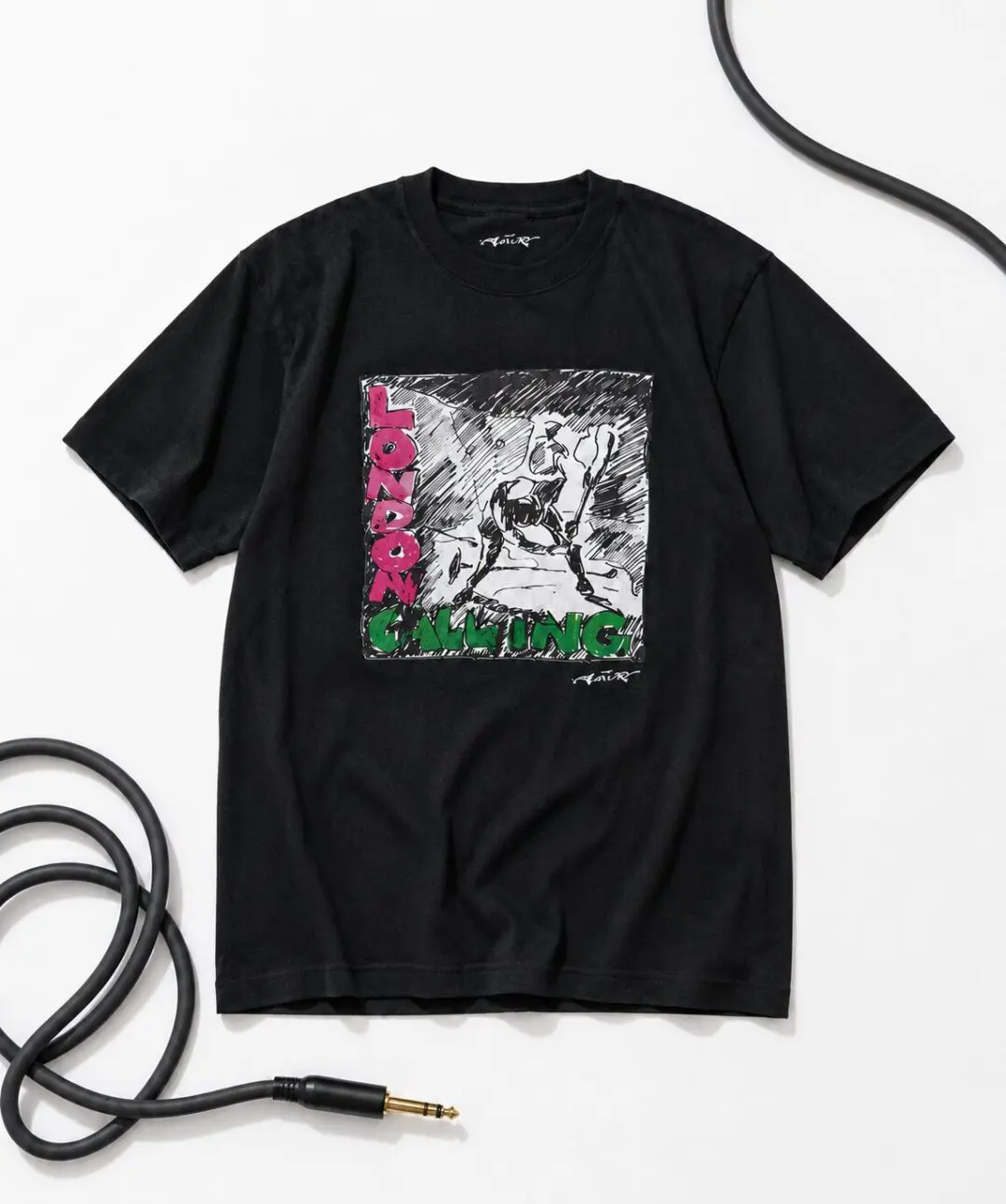
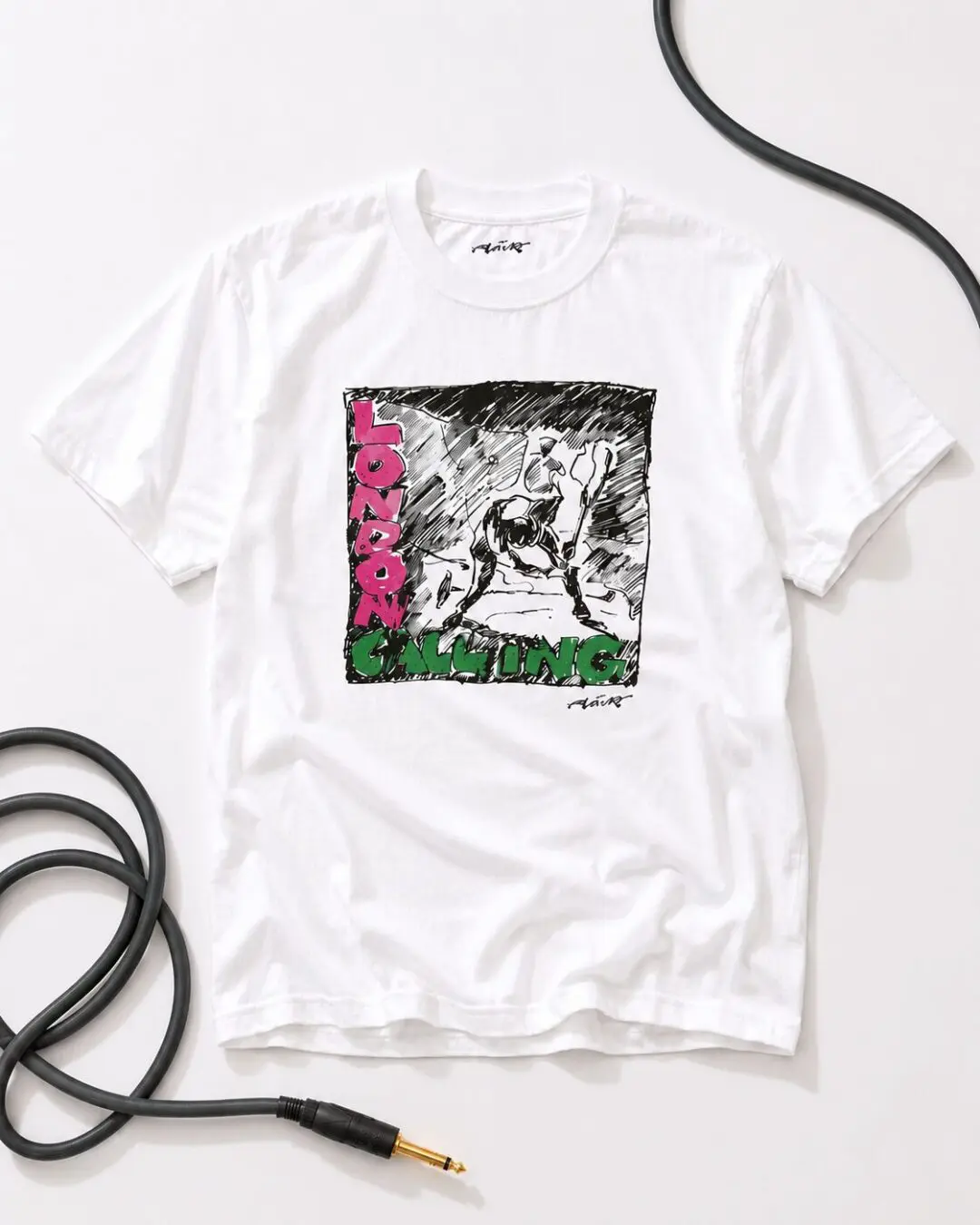
Lowry, working the same room with a pen instead of a camera, produced his own rendering of that instant, and it is his drawn version of the scene, not Smith’s photograph, that has been adapted for this shirt. When Lowry later designed the London Calling sleeve itself, he built the typography as a direct homage to Elvis Presley’s debut album, using the same pink and green lettering treatment over Smith’s photo, a choice he made because he believed the Clash carried the same raw authenticity Presley once had.
stay
What separates this release from the usual run of licensed Clash shirts already sitting in Japan’s rock apparel stores is that source material. Most Clash merchandise draws from the same photographs and album covers that have circulated since the late 1970s. This print instead pulls from Lowry’s own hand, a sketch made in real time from inside the tour rather than a photograph reproduced after the fact.
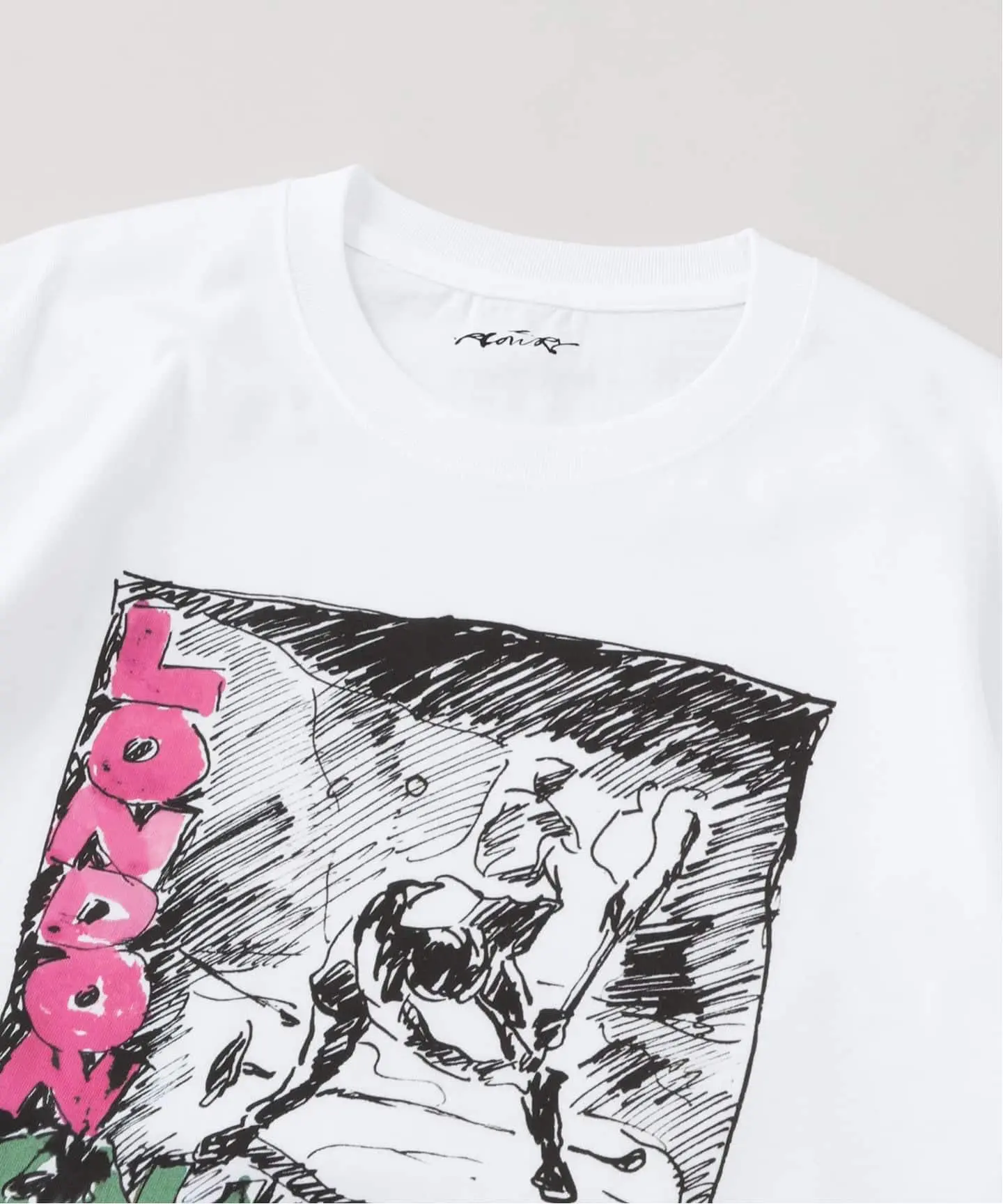
The shirt itself: Lowry’s Palladium sketch under the pink London Calling lettering treatment, his signature stitched at the collar.
Lowry’s own reportage sketch of the Palladium moment, the basis for the shirt’s print, licensed through his estate.
This is also not the first time Lowry’s tour era sketchbooks have been turned into wearable prints. A UK retailer has previously run a line of Ray Lowry branded shirts built from the same archive of Clash illustrations and concert passes he kept from that period, so this Japan release sits inside a broader, ongoing effort to move his reportage off the printed page and onto clothing rather than standing as a one off. Full construction details for this specific run, including fabric weight, cut, and available sizing, were not confirmed through the sources checked for this piece.
why
Permission for the print came through the Ray Lowry Foundation in London, the body that has managed his archive since his death in 2008 and continues to sell prints and licensed goods through the estate’s own online shop. Lowry’s Clash era work has resurfaced periodically since then, most visibly as part of the Museum of London’s 2019 exhibition marking forty years since London Calling, which drew on personal items from Strummer, Jones, Simonon and Headon alongside Smith’s photography and Lowry’s own sketchbooks.
Lowry died before the current wave of interest in archive driven band merchandise fully took hold, so the timing of a release like this reflects renewed attention to his estate rather than anything planned during his lifetime. What started as a sketchbook filled on a tour bus in 1979 is, close to fifty years later, being offered as something a stranger in Tokyo can order online and wear.
Related Articles
Nubian Put Distressed Cotton Jersey On Needles Track
20th Exclusive Vol.7. Needles. Four shapes. Black and grey. 19 September 2026. All NUBIAN doors […]