DRIFT AUDIO
Listen to this story
Choose a voice, then press play.
Acura’s 40th anniversary concept trades restraint for spectacle, and confirms the parts of it that are actually coming to a production RDX.
Acura picked a loaded moment to show its hand. The brand turns 40 this year, and instead of marking it with a nostalgia lap, it used Monterey Car Week to unveil a coupe that looks nothing like anything currently sitting in an Acura showroom. The NEXERA Vision made its global debut on August 14 at The Quail, a Motorsports Gathering, and the company was unusually direct about its purpose. This isn’t a flight of fancy meant to generate buzz and quietly disappear. It’s a statement of the design lang that will carry into Acura’s next generation of production vehicles, starting with the fourth-gen RDX Hybrid.
stir
Every design decision on the NEXERA Vision traces back to a single frame device: Acura’s founding 40 years ago as a “challenger” brand, built to take on established European haute marques with something sharper and more performance-minded. That challenger framing shows up explicitly in Acura’s own language around the car, and it’s echoed by the timing. Rather than treat the anniversary as an excuse to look backward, Acura used it to signal where the next four decades of design are headed.
The car was developed at the Acura Design California studio in Los Angeles, under the direction of Yasutake Tsuchida, who took over as the brand’s Creative Director and Vice President of Auto Design earlier this year. Tsuchida described the goal in blunt terms: define Acura show through disciplined proportions, sculpted form, and the seamless integration of advanced technology. It’s language that sounds like standard concept-car copy until you look at what actually made it onto the car, at which point it reads more like an honest mission statement than marketing filler.
View this post on Instagram
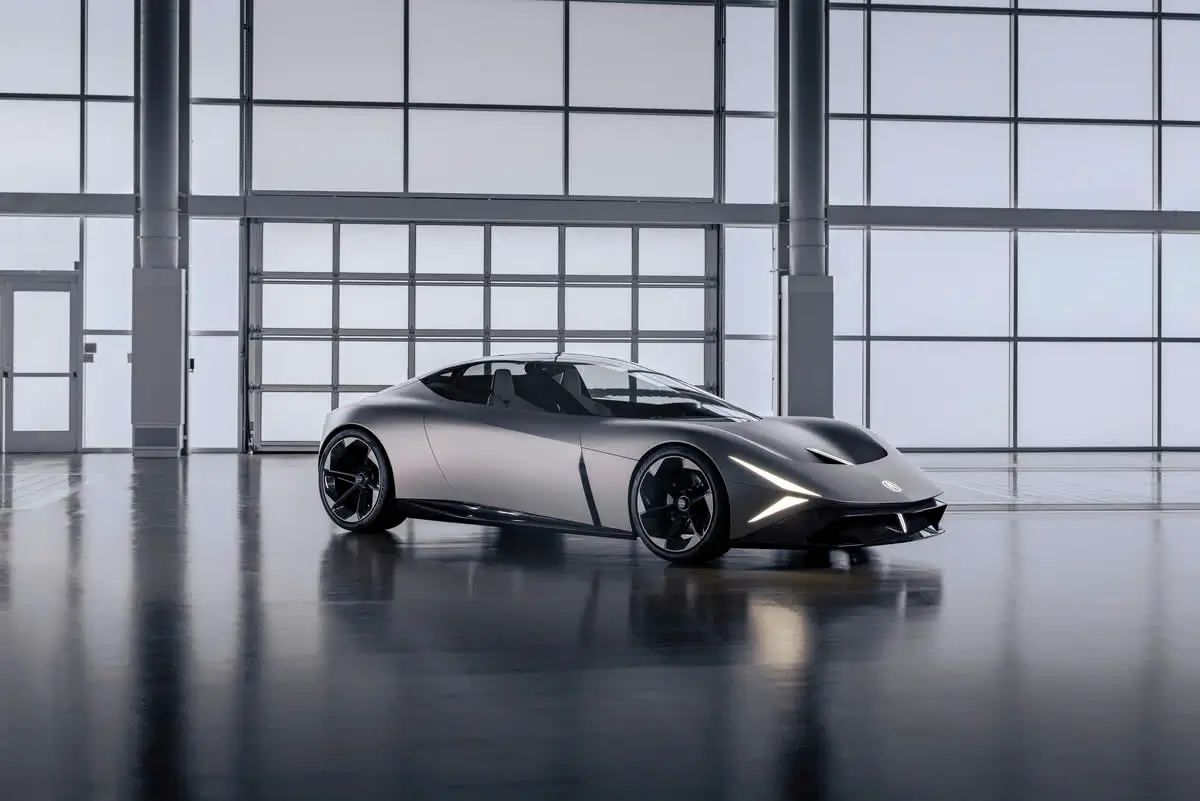
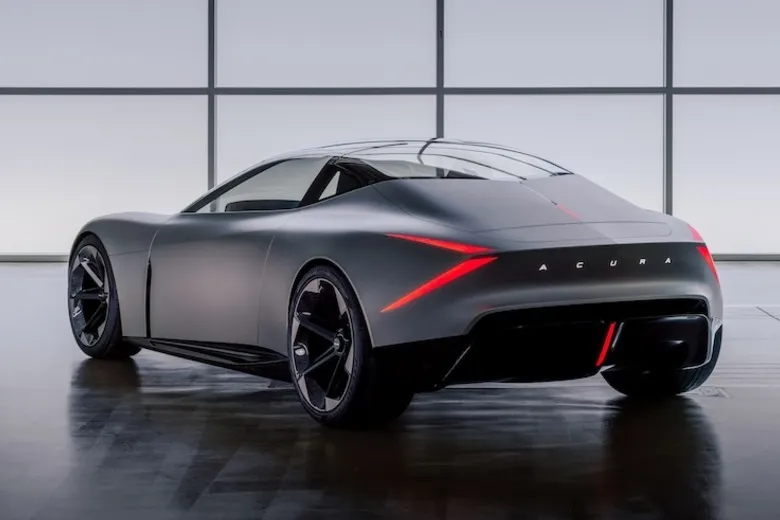
The proportions back that up. The NEXERA Vision has a long dash-to-axle ratio, a wide and muscular stance, and a one-motion cabin silhouette that pulls from Acura’s own back catalog without directly copying anything in it. Reviewers who saw the car in person before its public reveal noted shades of the first-gen Integra and the early-2000s RSX in its shape, even though nothing about the surfacing is retro. It’s a genuinely new form with an inherited attitude.
flow
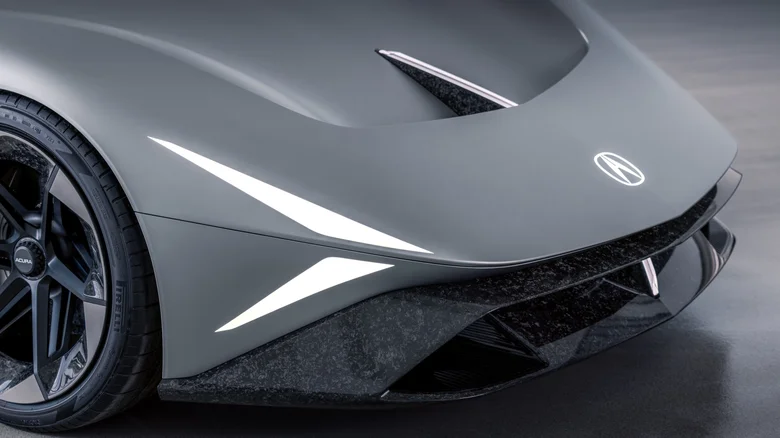
The single most talked-about element of the NEXERA Vision is also the part Acura has confirmed will show up on real, buyable cars soonest. The concept uses what Acura calls “phantom lighting,” a system where the headlights and taillights are completely invisible until switched on. At rest, the ultra-thin lighting elements disappear entirely into the sculpted Matte Titanium bodywork, leaving uninterrupted surfacing with no view lens or housing. Turn the car on, and twin triangular lighting graphics appear, inspired directly by the shape of Acura’s own “A” emblem.
Tsuchida called it an unmistakable design element created to make this new era of Acura instantly recognizable, and the phrasing matters. Acura isn’t treating the lighting signature as a one-off flourish limited to a halo concept. It’s being positioned as the through-line for the whole future lineup, the kind of visual signature a pedestrian could identify from two blocks away long before they could name the model. Of every idea on this car, it’s the one with the clearest, most immediate path to production, and Acura has already confirmed the next-generation RDX Hybrid will be the first vehicle to carry it.
That’s a meaningful choice on Acura’s part. The RDX is the brand’s best-selling model, which means the design language debuting on the NEXERA Vision won’t shh surface on some low-volume halo car years from now. It’s headed straight for the vehicle most people actually cross-shop when they’re looking at a compact luxury SUV, arriving within the next roughly year and a half.
show
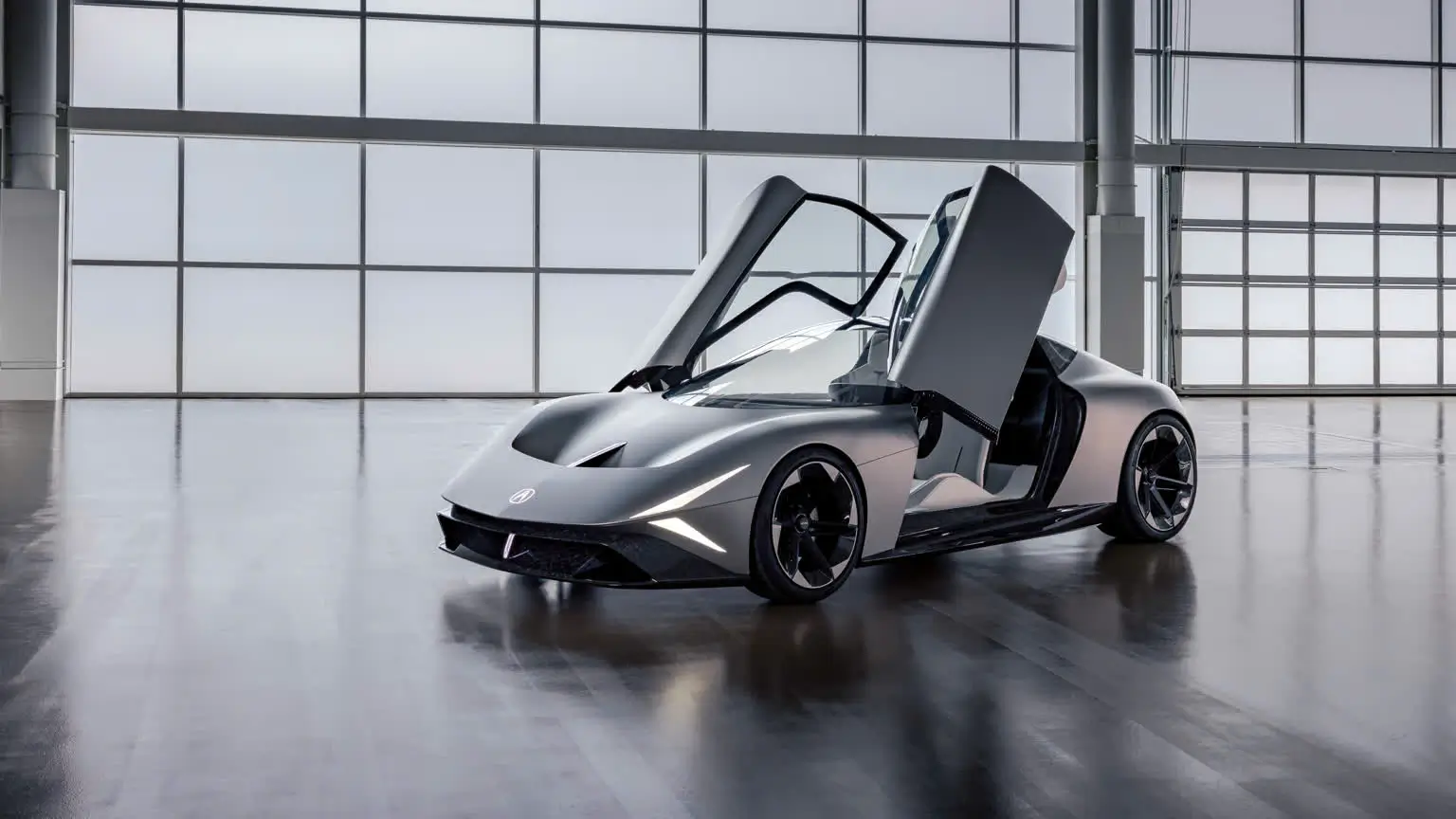
View, nothing announces the NEXERA Vision’s intentions faster than its doors. The coupe uses dramatic dual-hinge butterfly doors, a mechanism that swings both up and outward, which is about as clear a performance-car signifier as exists in automotive design. It’s also, by Acura’s own admission, one of the elements least likely to survive the jump to a mainstream SUV. Nobody expects butterfly doors on a family RDX. What the gesture communicates instead is where Acura wants its performance identity to sit in the public imagination, even for models that will never share the concept’s proportions.
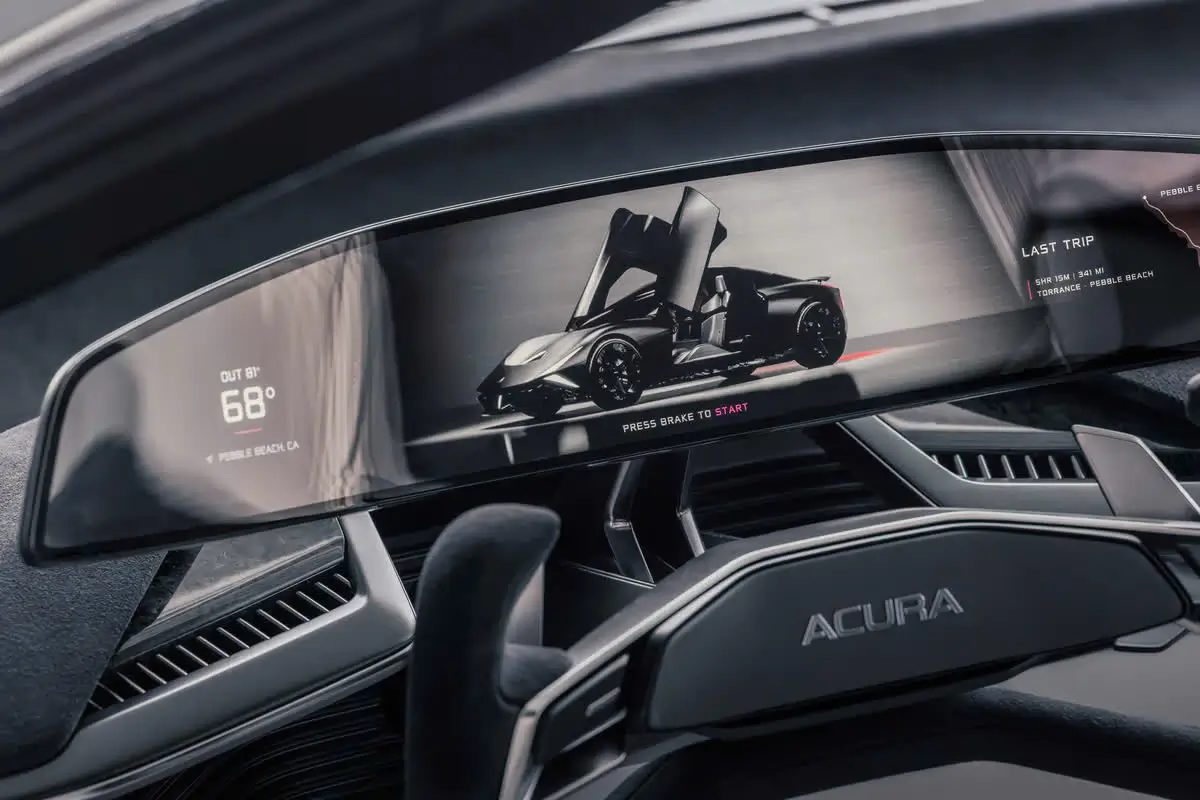
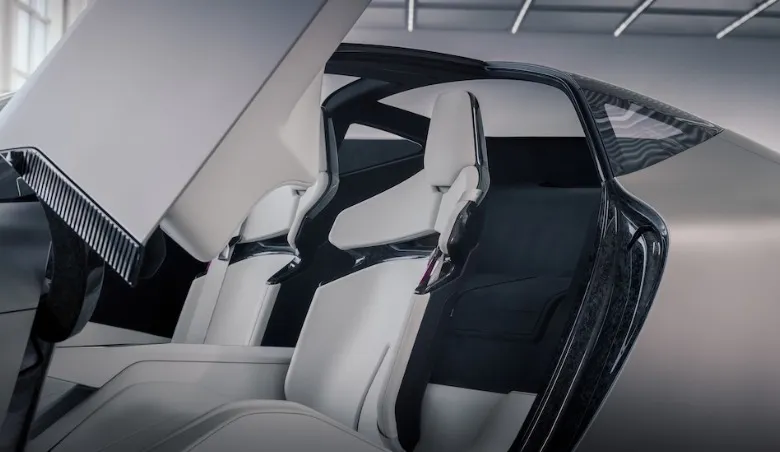
Inside, the cabin takes an equally uncompromising approach. The front seats are integrated directly into the floor in a fixed position, which lowers the driver and passenger significantly compared with a conventional adjustable seat. Rather than moving the seat to fit the driver, the car flips the relationship: the pedals and steering wheel adjust to meet the person sitting in the fixed seat. It’s a layout borrowed more from racing cockpits than road cars, built to eliminate distraction and put the driver as low and centered as possible.
The hue treatment reinforces the intent. The interior runs black and white as its base palette, with gloss black finishes and unexpected pink accents cutting through what could otherwise read as a purely clinical, motorsport-inspired space. It’s a cabin designed to feel spacious and precise at once, which is a harder balance to strike than it sounds, especially in a two-seat layout where every surface is visible and every material choice gets scrutinized.
sustain
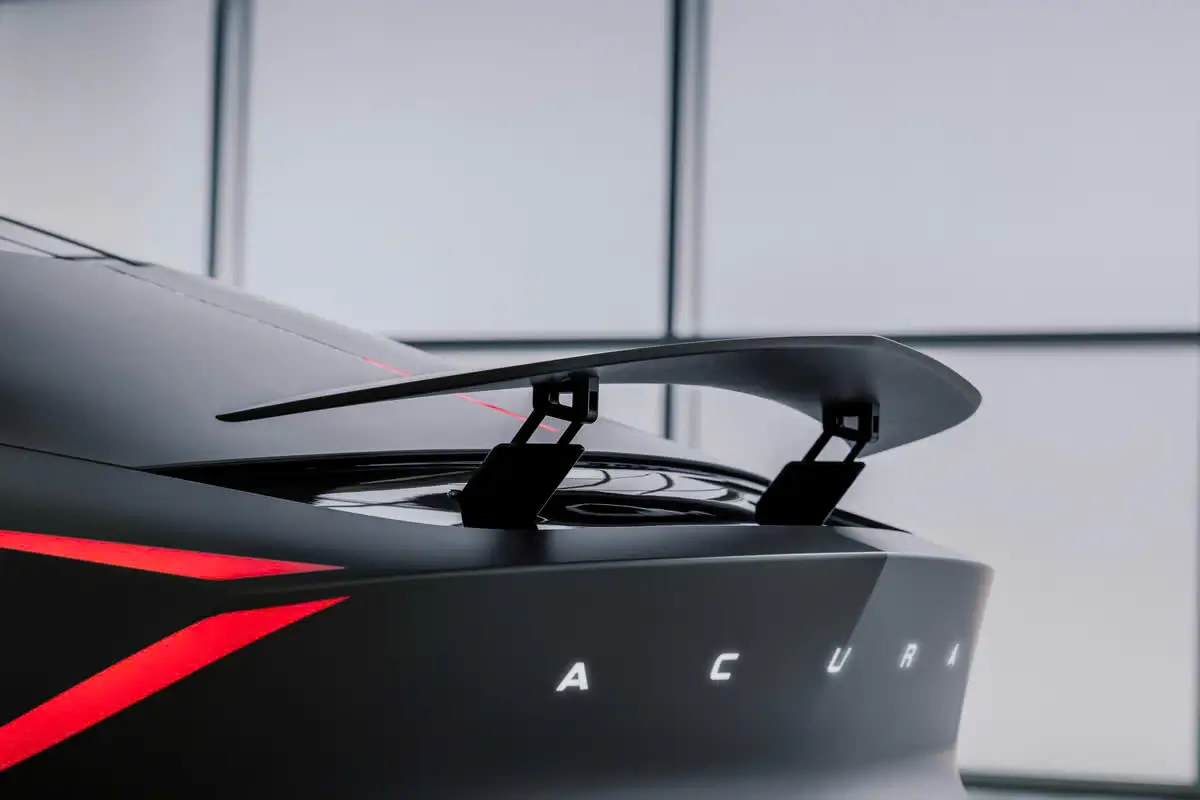
The NEXERA Vision’s material nar is where the concept gets more interesting than a typical “look how fast this could theoretically go” showpiece. Structure and view, forged carbon does a lot of the heavy lifting. It shows up in the aero-channel fascia, the rear diffuser, the rocker panels, and the inner door structures, giving the car a consistent technical language from the outside in. The 22-inch centerlock wheels, a first for Acura, use a 3D directional design finished in matte anodized tones with forged carbon inserts, and they’re paired with carbon ceramic Brembo brakes visible behind the spokes. An active rear spoiler manages airflow across the decklid, a detail aimed less at concept-car theater and more at genuine aerodynamic efficiency and high-speed stable.
Alongside all of that motorsport hardware sits a very different set of priority. Acura built the cabin around recycle aluminum, Alcantara incorporating certified post-consumer recycled polyester, and CircuLeather, a genuine leather material engineered to support a more circular material lifecycle. Tsuchida frame sustain as something increasingly inseparable from how premium quality and performance get defined going forward, arguing that these material choices reduce the carbon footprint tied to Acura’s products while opening up new ways to think about what “premium” actually means. It’s a notably specific claim for a concept car to make, and it suggests these material decisions aren’t purely cosmetic exercises confined to a single show vehicle.
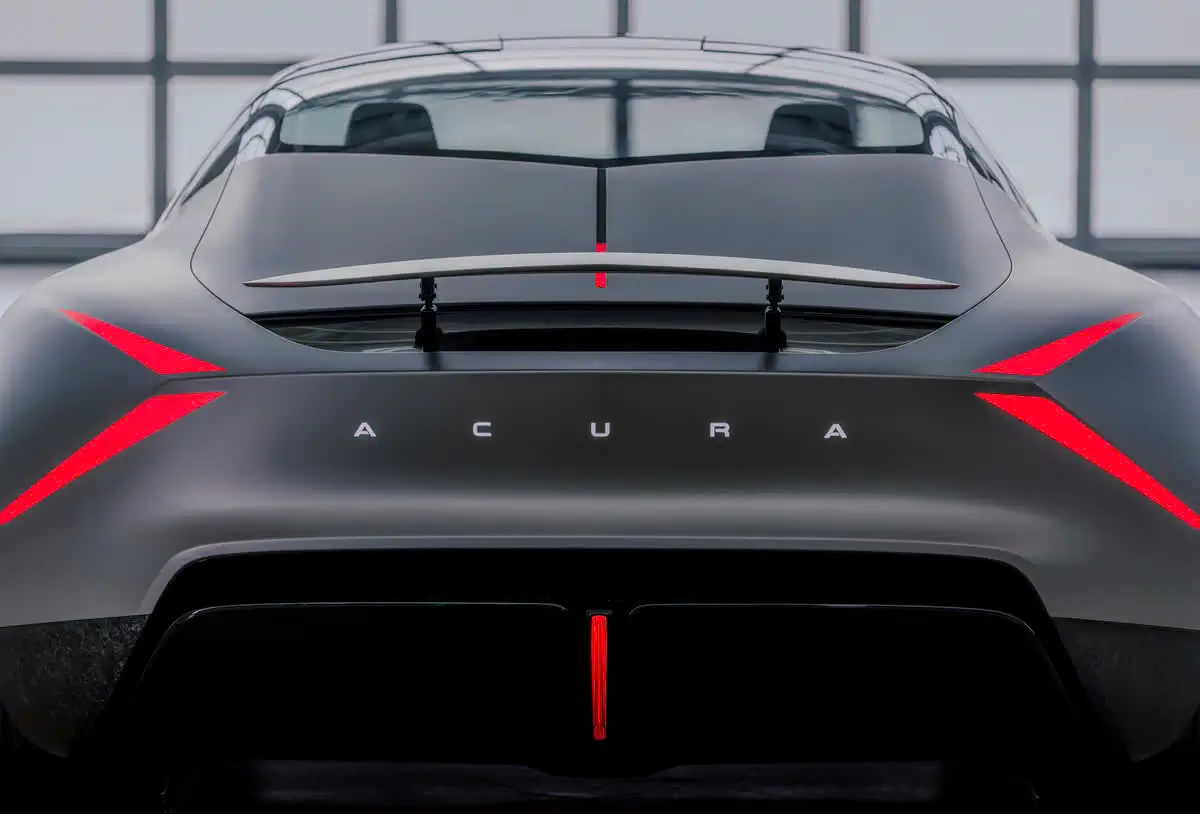
Rear Close-Up Of The Acura NEXERA Vision Highlighting Angular Red LED Taillights, Illuminated Acura Lettering, And A Raised Active Rear Wing.
transition
Timing and venue were not incidental here. The NEXERA Vision’s global debut at The Quail, a Motorsports Gathering, placed it directly in front of one of the most influential audiences in the collector and enthusiast car world during Monterey Car Week, an event where automakers routinely use rare and expensive metal to signal brand direction. Acura followed that debut with a second appearance at the historic Pebble Beach Concours d’Elegance Concept Lawn on August 16, extending the concept’s visibility into the weekend’s marquee event.
Acura has a specific history of using Monterey Car Week this way. The NEXERA Vision continues a lineage of two-door sports car concepts the brand has shown at similar moments, including the Honda Sports Concept from 2004, the Acura Advanced Sports Car Concept from 2007, and the NSX Concept from 2012, which eventually evolved into the production hybrid supercar of the same name. Not every concept in that lineage made it to a dealership floor. But the NSX Concept’s path from show car to genuine production halo model is exactly the kind of precedent that makes Acura’s insistence that the NEXERA Vision previews real, near-term production styling worth taking seriously rather than dismissing as typical auto show hyperbole.
hint
Acura has been unusually specific about separating what’s aspirational from what’s confirmed. The phantom lighting signature is locked in for the next-generation RDX Hybrid. The broader design vocab, the disciplined proportions, the sculpted surfacing, and the material philosophy that mixes performance hardware with sustainable materials, is described as the foundation for future Acura models generally, not just a single upcoming SUV.
What almost certainly won’t make the trip are the concept’s most theatrical elements: the butterfly doors, the fixed racing seats, and the two-seat coupe body itself. Acura has been explicit that the NEXERA Vision isn’t a preview of a new production sports car, despite how strongly its shape might suggest otherwise to anyone hoping for a spiritual successor to the S2000 or a rival to the Toyota Supra. The company’s own reasoning is that the concept exists to demonstrate a commitment to performance and a new design identity, not to greenlight a two-seat halo car.
Still, Acura left the door open in a way concept-car press cycles usually don’t. The company has acknowledged that a strong enough public reaction could push elements of the NEXERA Vision closer to actual development, rather than leaving the coupe permanently confined to auto show turntables. For a brand whose current lineup consists of just four models, the Integra, ADX, RDX, and MDX, a concept this aggressive represents a real bet that its next design chapter needs to look and feel meaningfully different from what’s currently on the road. The RDX Hybrid will be the first real test of whether that bet pays off with buyers, but the NEXERA Vision itself has already done its job: it gave Acura’s 40th anniversary a design identity instead of just a number.
Related Articles
Four-Fifths of a Giant Killer: Hedley Studios Builds an Electric Porsche 550 J
Porsche opened its archive to a workshop in Bicester. What came back is a two-seat, […]