DRIFT AUDIO
Listen to this story
Choose a voice, then press play.
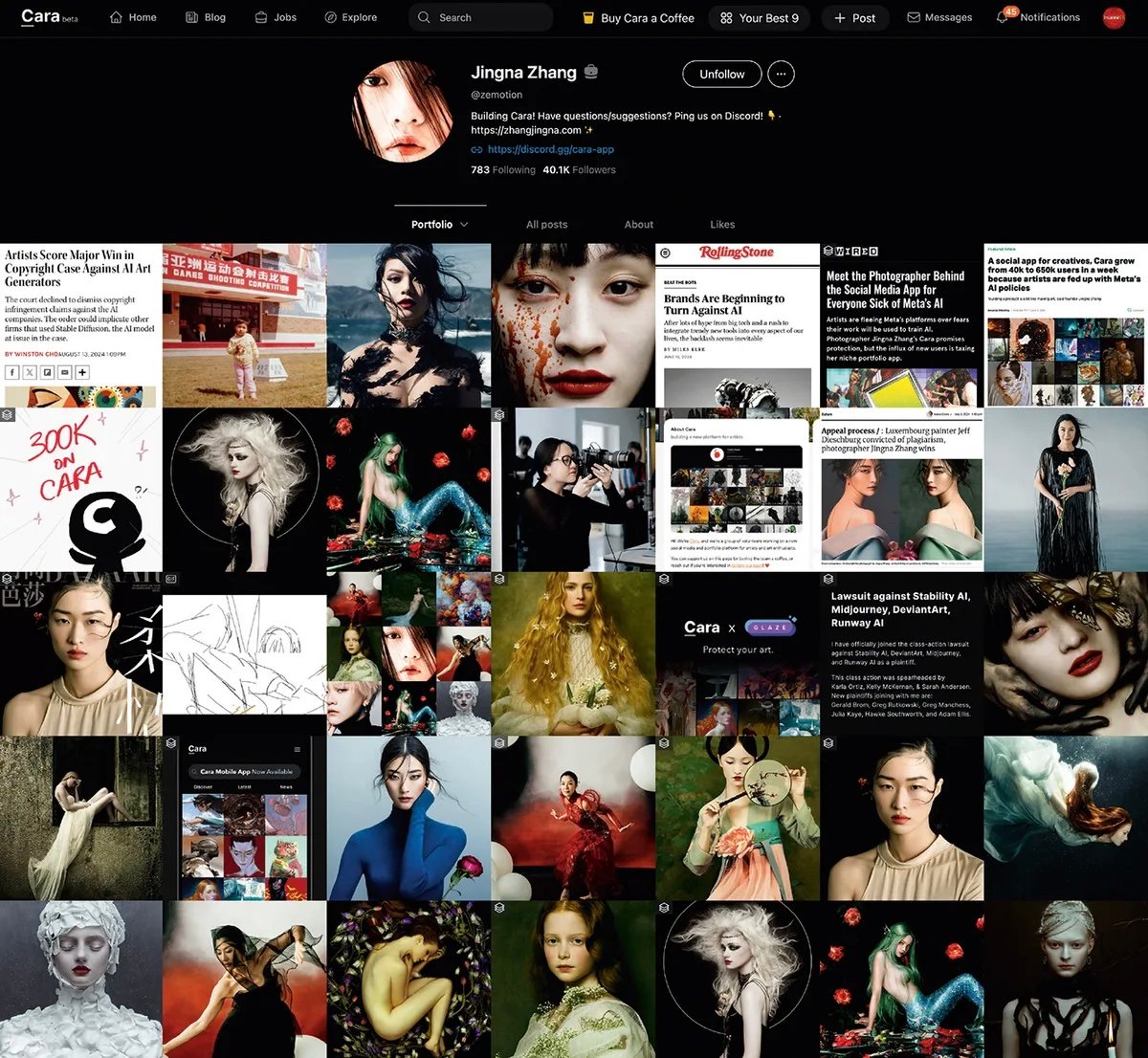
In an era dominated by algorithm-driven platforms, the emergence of Cara represents a bold new frontier for artists. Touted as the first “anti-AI” social media network, Cara rejects the encroaching influence of artificial intelligence on creativity and human expression, providing a sanctuary for artists seeking to reconnect with genuine engagement, authentic interactions, and creative autonomy. But what exactly makes Cara different, and why is it gaining traction as a haven for those disillusioned with the pervasive reach of AI in the creative world?
A Reaction Against Algorithmic Domination
The rise of AI-driven content generation tools has sparked heated debates within creative communities. While these technologies offer new possibilities for productivity and exploration, many artists feel that AI’s rapid advancement poses a threat to the value of human creativity. In spaces like Instagram or TikTok, algorithms increasingly dictate what content gets seen, and the advent of AI-generated art has led to concerns about originality and ownership. This is where Cara steps in, positioning itself as the antithesis of these trends.
Cara’s mission is simple yet profound: to foster an environment where art is judged by its intrinsic value rather than its ability to engage an algorithm. At its core, Cara is built around the idea that technology should support creativity, not overshadow or commodify it. The platform’s interface and features are designed to encourage genuine interactions rather than passive scrolling, making it an appealing option for artists tired of chasing likes and followers.
Cara’s Features: Reimagining the Artist-Platform Relationship
Unlike mainstream platforms that emphasize metrics such as views, likes, and comments, Cara focuses on promoting meaningful connections. The platform operates without engagement-based algorithms, meaning that what users see is not filtered or prioritized by an unseen AI. This lack of algorithmic interference creates a level playing field, where established artists and newcomers alike can share their work without being at the mercy of automated content curation.
Key features of Cara include:
– Chronological Feed: Cara reinstates the chronological feed, a feature that many social media users lament the loss of. This approach ensures that users see posts in the order they are shared, encouraging them to interact with content in a more intentional and less reactive manner.
– Curated Communities: Instead of generalized feeds, Cara offers curated communities based on shared interests and artistic disciplines. Users can join communities that resonate with their creative practices—be it painting, photography, music, or mixed media—enabling a more focused and respectful space for discussions and feedback.
– No AI-Generated Content: One of the most radical aspects of Cara is its explicit ban on AI-generated content. The platform’s guidelines prohibit the use of AI tools to create or manipulate posts, maintaining a clear distinction between human-generated art and machine output. This policy has garnered praise from traditional artists who feel sidelined or overshadowed by the proliferation of AI-driven artwork.
– Interaction Limits: To prevent shallow engagement and promote thoughtful exchanges, Cara limits the number of posts users can “appreciate” (its equivalent of the like button) in a given time period. This feature is designed to discourage mindless interactions and encourage users to engage deeply with the work that genuinely resonates with them.
An Inclusive Space for All Artists
While Cara’s stance against AI might initially seem exclusionary or overly purist, the platform’s founders emphasize that it is not anti-technology—it’s pro-human. Cara does not aim to turn back the clock or reject technological progress; rather, it seeks to create a balanced environment where artists can thrive without the pressures and distortions introduced by AI.
Cara’s ethos resonates strongly with artists across a range of disciplines, from visual artists disheartened by AI-generated art dominating online spaces to musicians seeking refuge from AI-curated music discovery algorithms. By positioning itself as a sanctuary for human creativity, Cara offers an alternative that feels increasingly necessary in today’s AI-saturated digital landscape.
Addressing Skepticism and Challenges
Of course, no platform is without its challenges. Critics argue that Cara’s hardline stance against AI might limit its ability to scale and attract a broader audience. In a world where AI is becoming ubiquitous, eschewing it entirely could alienate tech-savvy users who see value in AI’s capabilities for creative work, such as collaborative tools or data-driven insights.
There is also the question of how effectively Cara can maintain its policies as it grows. Policing AI-generated content is not a straightforward task, and as generative tools become more sophisticated, distinguishing between human and AI-created art will become increasingly difficult. The platform will need to develop robust moderation practices and community standards to uphold its values without stifling legitimate artistic experimentation.
Moreover, some artists may feel conflicted about the idea of limiting technological integration altogether. For many, technology and digital tools have expanded the boundaries of what’s possible in art. Cara will need to strike a delicate balance, ensuring that its stance is seen as a form of artistic preservation rather than a rejection of innovation.
Impression
Cara’s rise signals a broader shift in the creative community’s relationship with technology. As artists grapple with the implications of AI, platforms like Cara serve as a reminder that digital spaces don’t have to conform to a one-size-fits-all model. The success of Cara will largely depend on how effectively it can cultivate an engaged and supportive community that values the principles of authenticity and artistic integrity.
If Cara manages to establish itself as a viable alternative to traditional social media networks, it could pave the way for more niche platforms that prioritize specific aspects of the creative process over sheer scale and reach. In this sense, Cara is not just a platform; it’s a statement—a declaration that human creativity cannot and should not be reduced to an algorithmic formula.
Cara’s emergence prompts an important question: are anti-AI platforms the future for artists seeking authenticity in digital spaces? While it’s too early to say definitively, the platform’s rapid growth suggests that there is a significant demand for such spaces. As AI continues to evolve and shape our interactions with art and content, platforms like Cara will be crucial in preserving spaces that prioritize human expression above all else.
Whether Cara ultimately succeeds in reshaping the digital landscape for artists or serves as a temporary refuge amid the AI boom, it has already made a meaningful impact. By standing up for the principles of artistic autonomy and genuine connection, Cara has challenged the status quo, reminding us that in the battle between man and machine, there is still room for human creativity to flourish.
Related Articles
Modigliani’s Limestone ‘Tête’
Carved from a single block of limestone in Montparnasse more than a century ago, one of Modigliani's rare stone heads goes to auction for the first time…