DRIFT AUDIO
Listen to this story
Choose a voice, then press play.
Thirty years after Martin Scorsese’s Las Vegas epic, those burnt orange and mint green suits still make us want to walk straight into Ace Rothstein’s wardrobe.
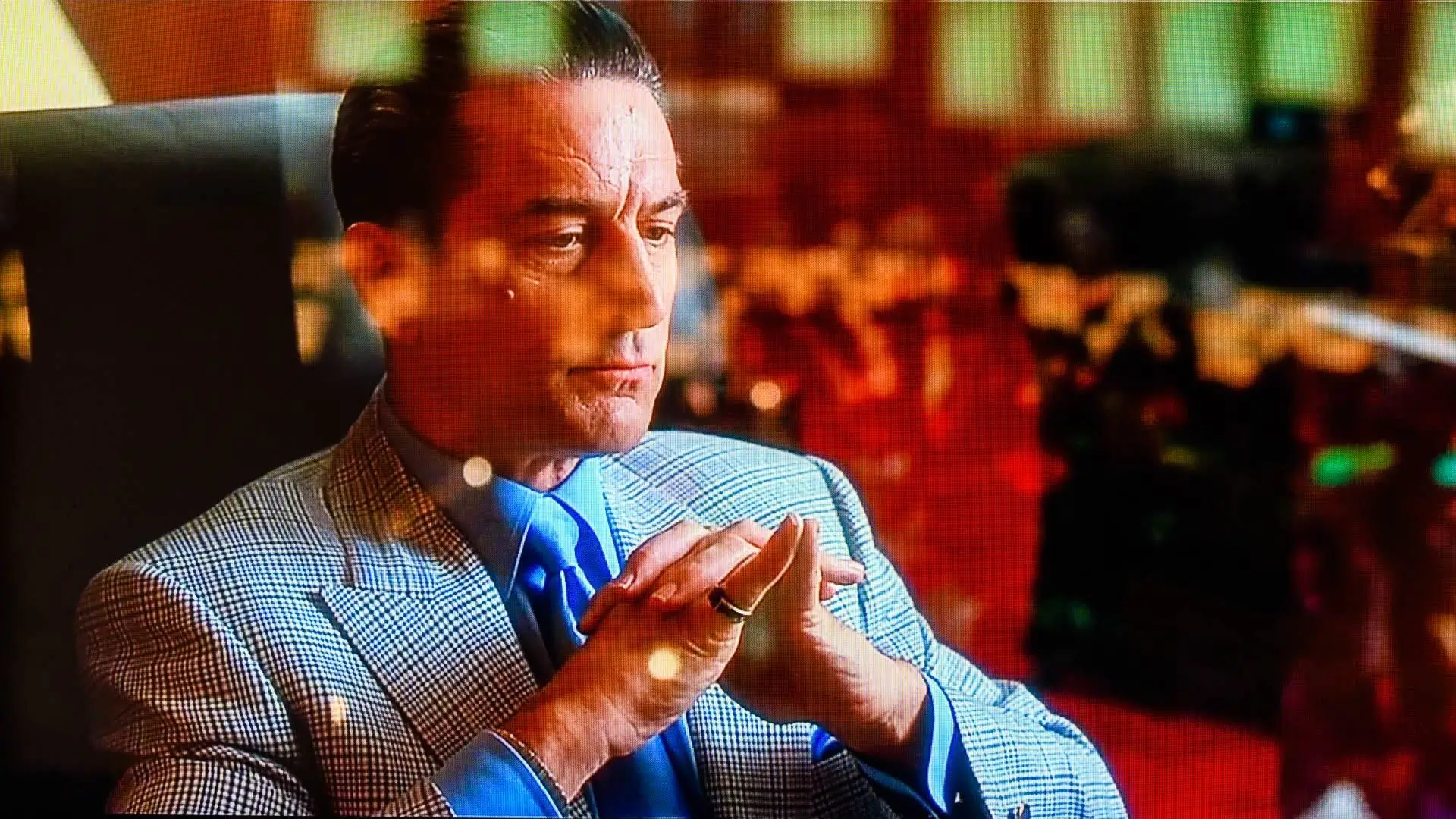
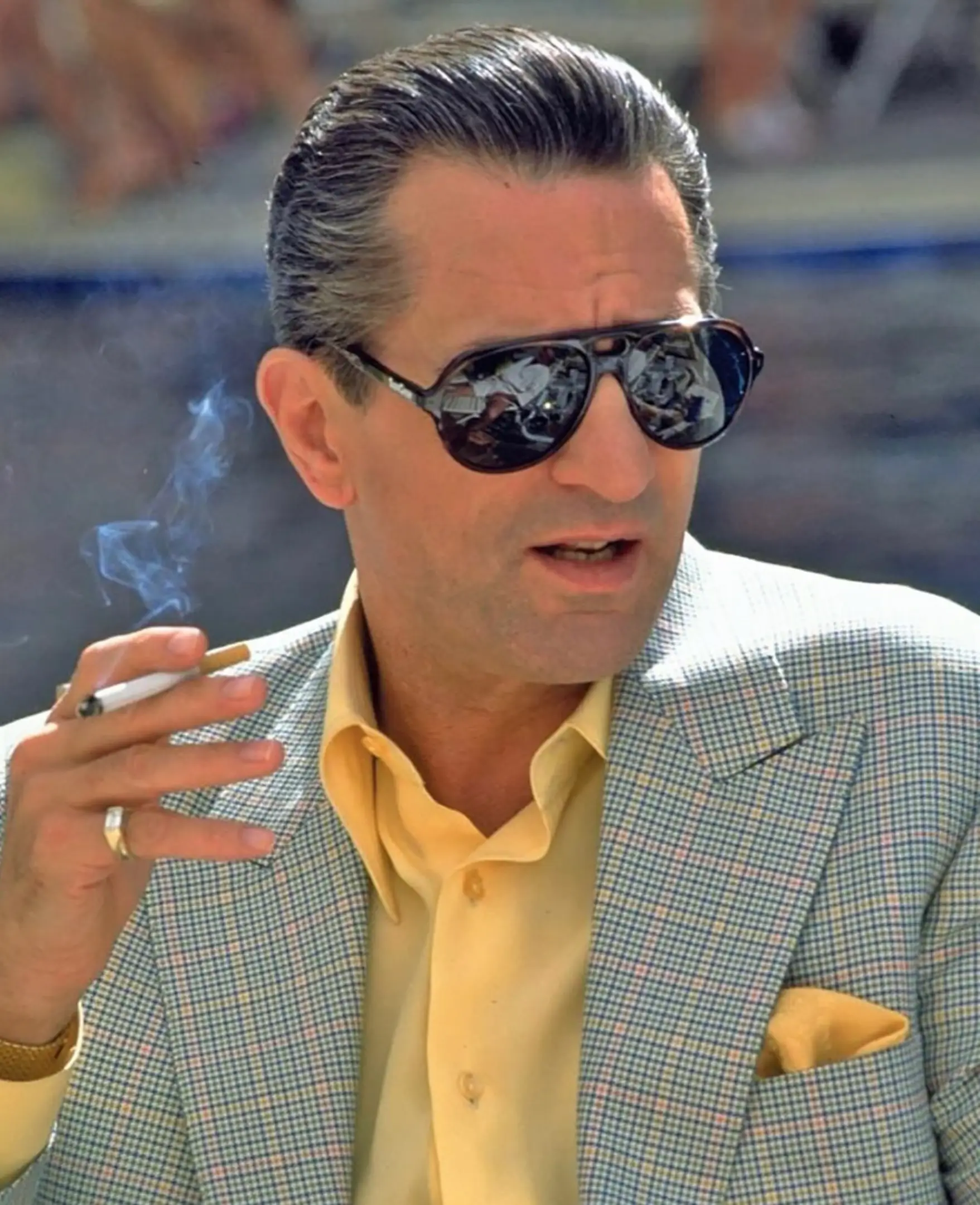
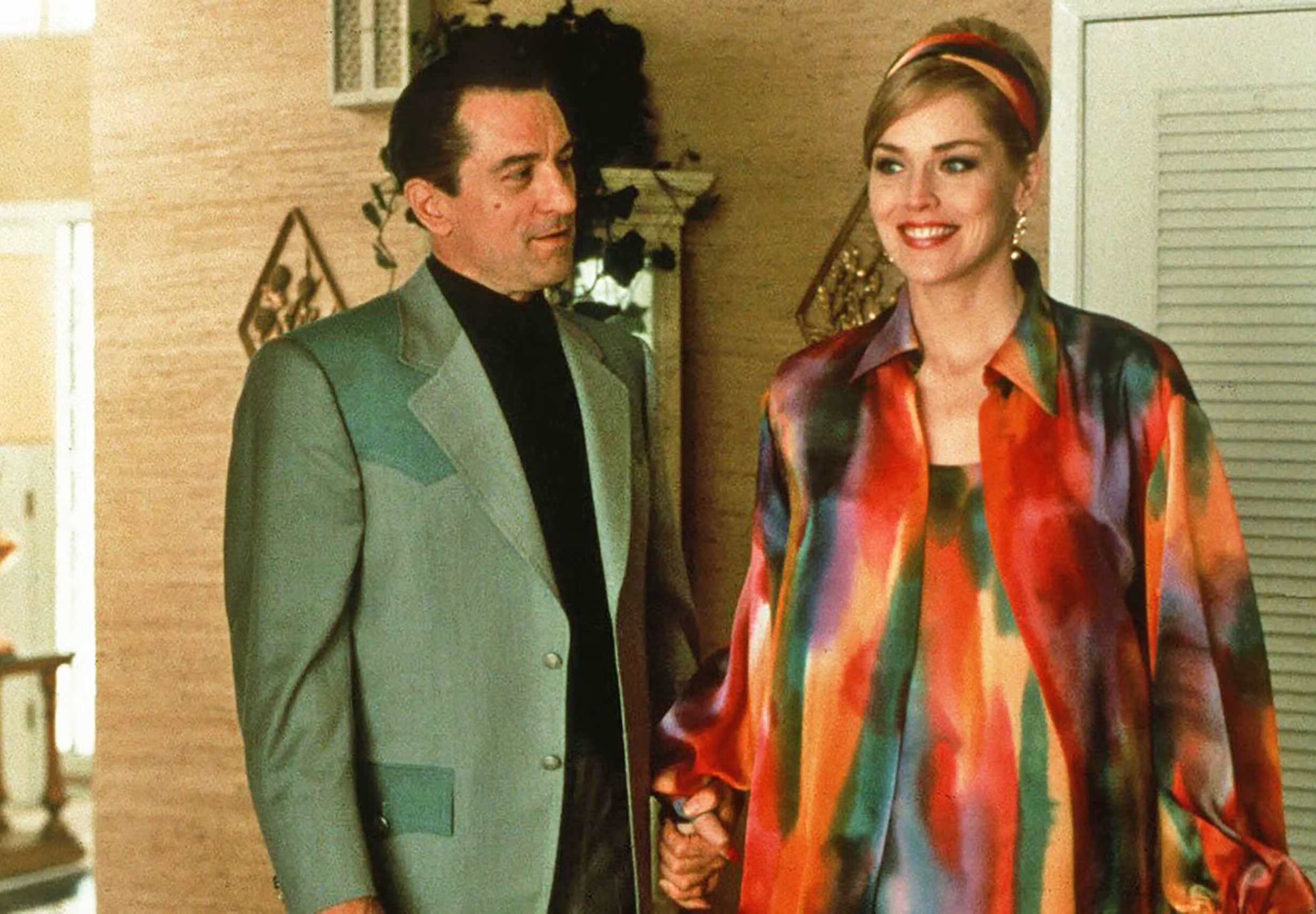
There was a moment around 1995 when audiences walked out of Martin Scorsese’s Casino wanting one thing above all else: to step inside Robert De Niro’s closet. Not his money. Not his power. Not his doomed romance with Sharon Stone’s Ginger. The walk-in wardrobe of Sam “Ace” Rothstein became the film’s most envied character, a treasure chest of burnt orange jackets, mint green blazers, pastel pink suits, and patterns so loud they could drown out a roulette wheel’s spin.
The film arrived at a peculiar moment in menswear history. The early 1990s were witnessing the death of 1980s excess, with grunge and minimalism creeping onto runways and into closets. Then came Casino, a throwback to a time when men wore suits that announced their presence before they ever spoke a word. Scorsese’s blockbuster, set in the golden age of Las Vegas, told the story of Ace Rothstein, a character inspired by Frank “Lefty” Rosenthal, the real casino executive tied to the Chicago mob who ran the famous Stardust in the 1970s. Ace is a man obsessed with control: he oversees his empire with mathematical precision, manages his volatile friend Nicky Santoro, and endures a tempestuous relationship with Ginger, played by a Sharon Stone who has never looked more glamorous. And then there were the suits.
For a brief, shining moment, we all envied that spectacular collection. Approximately 52 different suits, part of a larger wardrobe of roughly 70 pieces made specifically for the film, created a chromatic parade of audacity. Burnt orange, mint green, pastel pink, bold patterns, combinations impossible to imagine anywhere outside Las Vegas. An exaggerated, almost brazen aesthetic that, three decades on, continues to captivate. We revisit it today, on the occasion of De Niro’s 83rd birthday, to understand why those clothes still matter.
Robert De Niro In Casino
stir
Behind the looks in Casino were costume designers Rita Ryack and John Dunn, tasked with an extraordinary mission: build an image capable of telling the story of Sam Rothstein before his actions could. Ace was not simply meant to look elegant. He had to project power, confidence, and a certain danger concealed beneath impeccable fabrics and improbable colours.
Ryack and Dunn approached the project with a researcher’s rigor. They studied photographs of 1970s Las Vegas, interviewed tailors, and pored over archival footage of Rosenthal. They also had to consider De Niro’s physicality, how he moved, how he gestured, how he inhabited a room. The suits had to work in close-ups, wide shots, and action sequences alike. Each garment needed to photograph beautifully under the harsh fluorescent lights of a casino while remaining believable as something a real mobster would actually wear.
The character was based on Frank Rosenthal, whose actual wardrobe was even more extreme than what appeared on screen. The crew met Rosenthal and observed his clothes directly, some of which were even loaned to the production, adding further realism to the picture. This was not a costume department working from photographs; they were handling artifacts from a living legend, garments that had seen real mob intrigue, real danger, real Las Vegas nights.
Legend has it that the costume budget exceeded one million dollars, though production had to keep a close eye on costs. Ryack, together with assistant costume designer Maggie Morgan, worked hard to balance the books. The real value of those costumes, which became apparent when the film was released, lay not so much in their price tag as in their ability to create a visual language that has gone down in cinema history.
Ryack later recounted that on De Niro, those outfits took on a different meaning entirely. She told the Los Angeles Times: “On Rob, those clothes were very threatening.”
@filmthusiastofficial
Sharon Stone once told her acting coach, “I want to be good enough to work with Robert De Niro.” 🎲
#robertdeniro
#sharonstone
#casino
#martinscorsese
♬ original sound – filmthusiast
show
Let us examine the numbers, because they tell a story of ambition and excess that mirrors the film’s subject matter. Approximately 52 different suits. Around 70 pieces total. A budget exceeding one million dollars. In mid-1990s currency, that was roughly two million dollars today, adjusted for inflation. For a film that was not a period epic or a fantasy blockbuster, this was a staggering investment in wardrobe.
The colour palette was a deliberate provocation. Those burnt orange suits were not mistakes; they were statements. The mint green blazers were not accidents; they were declarations of independence from conventional taste. Pastel pink in a world of grey flannel was a power move. The patterns, checks, stripes, plaids, florals, were combinations that would have given any Milanese tailor a heart attack. And yet, within the context of 1970s Las Vegas, they were perfectly appropriate.
The production’s costume team had to source fabrics that would read well on screen, hold up under hot studio lights, and survive multiple takes. They had to account for De Niro’s physical performance, the way he gestured with his hands, the way he walked through casino floors, the way he sat across from adversaries in back rooms. Each suit needed to move with him, not against him.
Ryack has spoken about the challenge of balancing historical accuracy with cinematic impact. The real Rosenthal wore clothes that were, by all accounts, even more flamboyant than what appeared in the film. The costume team actually toned things down, because they feared audiences would not believe the reality. This is a remarkable admission: the film’s exaggerated wardrobe was, in fact, a moderated version of the truth.
huh
Frank “Lefty” Rosenthal was a man who lived the life that Ace Rothstein merely portrayed. A Las Vegas casino executive with ties to the Chicago mob, Rosenthal ran the Stardust in the 1970s with an iron fist and a tailor’s eye. His personal style was legendary, bold colours, dramatic patterns, impeccable tailoring that screamed money and power in equal measure.
The film’s costume crew met Rosenthal and were able to observe his clothes directly. Some of his actual garments were even loaned to the production, providing a level of authenticity that no amount of research could replicate. Those were not just costumes; they were artifacts. Each tie, each pocket square, each silk shirt carried the DNA of a man who had lived that life, running numbers, dodging federal agents, and surviving assassination attempts.
In 1982, Rosenthal’s car was blown up in a Las Vegas parking lot. He miraculously walked away from the explosion, a testament to either extraordinary luck or divine intervention. The real Rosenthal was a man who dressed like he was invincible, and for a time, perhaps he was.
The shirts, ties, and pocket squares worn by De Niro were made by Anto Beverly Hills, the same historic atelier that had created shirts for the real Frank Rosenthal. This is the kind of inside detail that elevates a film’s costume design from mere decoration to historical documentation. By using the same tailor, the production bridged the gap between fiction and reality. De Niro was not just playing Rosenthal; he was wearing his history.
myth
For years, the belief circulated that those suits were designed by Giorgio Armani. It made sense. Armani was the undisputed king of men’s elegance in the 1990s, synonymous with power dressing, sharp shoulders, and understated luxury. His name was attached to The Untouchables, American Gigolo, and countless other films where men needed to look like they owned the room.
The reality, however, is more nuanced. Armani collaborated with the production, offering guidance and contributing to the overall stylistic atmosphere. His consultancy role was genuine, and his influence can be felt in the overall silhouette and the quality of tailoring. But the majority of De Niro’s suits were not made by the Italian designer.
The clothes were primarily tailored by Carlos Velasco, Tommy Velasco, and Vincent Zullo, specialists in bespoke tailoring who understood the specific demands of cinema. These were not off-the-rack garments; they were custom-made for De Niro’s body, designed to move with him, to catch the light in certain ways, and to withstand the rigors of a long shoot.
Why did the Armani myth persist? Because it was convenient. Armani’s name carried weight, and the film’s marketing team likely leaned into the association. The Italian designer represented the ultimate symbol of international men’s elegance, and his association with the project gave the wardrobe instant credibility. But the truth is more interesting: Ace Rothstein’s wardrobe was a collaborative effort, a team sport that combined tailoring, historical research, and a generous dose of madness. It was not one designer’s vision; it was a collective fever dream.
The shirts, ties, and pocket squares were made by Anto Beverly Hills, the same atelier that had dressed Rosenthal. This continuity between the real and the fictional was a deliberate choice by the costume team, a way of grounding the film’s visual excess in verifiable history.
cosplay
Rita Ryack and John Dunn were the creative duo behind the looks, tasked with an ambitious mission: build an image that could tell the story of Sam Rothstein before his actions could. The audience should understand who this man is just by looking at him.
Ryack has worked on numerous films, but Casino remains one of her most celebrated projects. Her approach to costume design is research-intensive and character-driven. She does not just dress actors; she helps them inhabit their roles. Dunn, her collaborator, brought a similar sensibility, combining historical accuracy with a keen eye for cinematic impact.
The duo approached the project with a researcher’s rigor. They studied photographs of 1970s Las Vegas, interviewed tailors, and pored over archival footage of Rosenthal. They also had to consider De Niro’s physicality, how he moved, how he gestured, how he inhabited a room. The suits had to work in close-ups, wide shots, and action sequences alike.
Ryack has spoken about the challenge of working with De Niro, an actor known for his intense preparation and his willingness to collaborate with his costume team. De Niro was deeply involved in the choices made for his character, offering input on colour, pattern, and fit. He understood that the clothes were not accessories; they were essential tools of characterisation.
The result was a wardrobe that felt both authentic and heightened, grounded in the reality of 1970s Las Vegas while elevated to the level of cinematic myth. Ryack and Dunn created something that transcended mere costume design and entered the realm of visual storytelling.
Robert De Niro And Sharon Stone In Casino
extend
This is the central paradox of the Casino wardrobe: those same suits, worn by anyone else, would have risked looking like a caricature. On De Niro, however, they became a weapon. As Ryack told the Los Angeles Times: “Nobody else could have worn such outrageous clothes without looking like a cartoon. De Niro still looked sexy and dangerous.”
Why? Because De Niro brings a coiled intensity to every role. He does not just wear a suit; he wears it like a second skin, with all the tension of a coiled spring. Think of the scene where Ace confronts a cheating gambler in a back room. He is wearing a pastel pink suit, soft, gentle, almost feminine. And yet, the danger radiates off him. The suit does not soften him; it makes him more unpredictable.
De Niro’s physicality is crucial to this effect. He has a way of standing still that suggests imminent movement. He gestures with his hands in ways that seem both casual and deliberate. He walks through casino floors with a proprietorial confidence that makes it clear he owns the place, even when he does not. These physical choices are amplified by the costumes, which provide a visual counterpoint to his menace.
The pastel pink suit is perhaps the most famous example. On a lesser actor, it would have been a joke. On De Niro, it became a threat. The colour suggests softness; the man suggests violence. This tension between appearance and reality is at the heart of Casino’s costume design, and it is De Niro’s performance that makes it work.
Ryack understood this instinctively. She has spoken about how De Niro’s presence transformed the clothes from mere garments into statements of intent. The suits were not decoration; they were armour. They allowed Ace Rothstein to walk into any room in Las Vegas and command attention without ever raising his voice.
fin
Thirty years later, the fascination with Casino’s wardrobe endures. The film has become a touchstone for menswear designers, stylists, and everyday dressers who appreciate the audacity of those bold colours and patterns. In an era of fast fashion, minimalist aesthetics, and “shh luxury,” the garish suits of Casino feel almost revolutionary.
Contemporary designers have drawn inspiration from the film’s aesthetic. Tom Ford, Alessandro Michele, and even streetwear brands like Fear of God have all incorporated elements of 1970s excess into their collections. The revival of double-breasted jackets, wide-legged trousers, and bold prints can be traced, in part, back to Scorsese’s film.
The film’s influence extends beyond high fashion. In popular culture, the Casino look has become shorthand for a certain kind of swagger, a blend of old-school Hollywood glamour and mobster menace that resonates across generations. Either in music videos, editorial shoots, or street style, the echoes of Ace Rothstein’s wardrobe are everywhere.
The article that inspired this recap was published on De Niro’s 83rd birthday, a reminder that the cultural impact of Casino shows no signs of fading. The suits, the colours, the patterns, they have achieved a kind of immortality that few film costumes ever attain. They are no longer just clothes; they are symbols of an era, a character, a performance that defined a generation.
In the end, Casino left us with one great lesson: in Las Vegas you can lose millions, friends, and your sanity. But if you have 52 suits in your wardrobe, you can always dress as though you have just conquered the world.
Related Articles

Hemp Leaf, Indigo Flower, Purple Bamboo: HOMEGAME’s Kasane Pack Layers Old Japan Onto the 59FIFTY
On October 10, HOMEGAME releases three New Era 59FIFTYs with crowns cut from cloth built […]