DRIFT AUDIO
Listen to this story
Choose a voice, then press play.
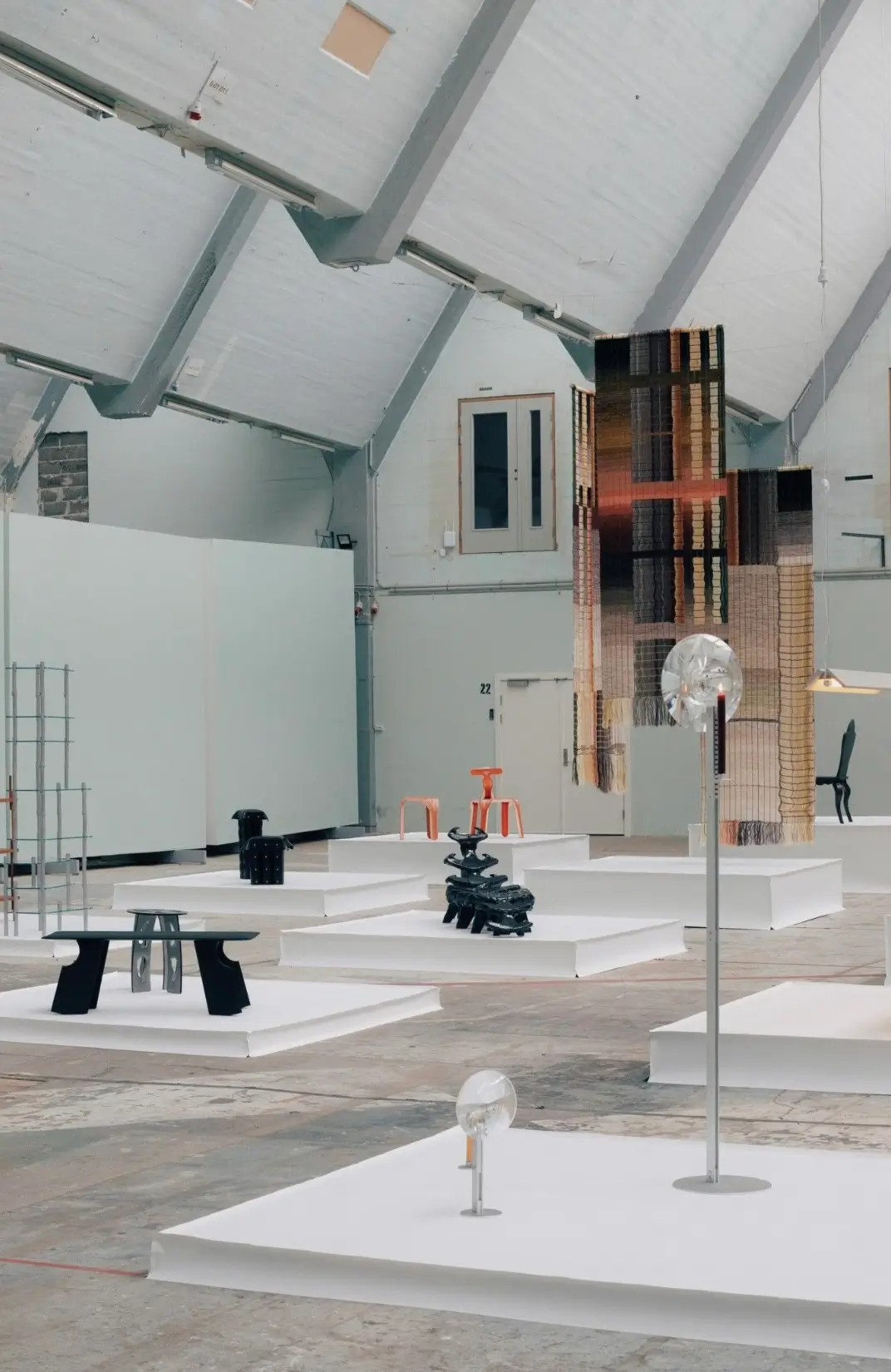
Although it continues to live on in the stories shared on social media, the curtain has fallen on 3 Days of Design 2026, and we, now bereft of one of the most eagerly awaited events in the Western design calendar, are trying to take stock of what unfolded in Copenhagen. There are two ways to reconcile projects and exhibition quality, geopolitical complexities and evolving scenarios: the first is to let yourself be seduced by the efficiency of a city that seems to generate beauty effortlessly, where every detail communicates coherence, control and measure without ever clashing with its own history; the second is to wonder whether this perfection, exhibited and reiterated, does not end up translating into a feeling of reassuring predictability.
Just like its variable climate, Copenhagen, even when rain mists the streets and canals, continues to function as one of the most impeccable and credible backdrops of contemporary design. From June 10 to 12, 2026, under the banner Make This Moment Matter, the city hosted a meticulously orchestrated festival that drew an estimated surge toward 120,000 visitors—doubling prior figures—and featured over 400 brands. It reaffirmed Nordic design’s reputation for purposeful restraint while subtly exposing its internal tensions.
View this post on Instagram
stir
For the past thirteen years, designers and journalists, curators and entrepreneurs have been arriving, meeting and moving with the same ease within a narrative that, despite never betraying expectations, risks appearing already written. Everything, from the outfits of recognized and recognizable insiders—played on ice or camel tone-on-tone—to the codes and design languages, aligns with the genius loci, the rhythms and the light of the host city. Yet, behind the reassuring image of the Danish capital, something seems to be quietly simmering.
The 2026 edition, built around the claim Make This Moment Matter, attracted over 400 brands. A number still far from the volumes of Milan Design Week, but enough to generate the first signs of congestion: queues at entrances and fatigued routes that feel anomalous in a culture accustomed to the natural dilution of bodies in space. At venues like the Palæ Bar and the Nordic Bar Basso, nighttime conversations revolved around expansion. Whispers suggested the days could grow to four. Founder Signe Byrdal Terenziani has repeatedly reaffirmed loyalty to the original three-day format, but the hypothesis alone signals maturation and pressure.
Rumors about the future of Stockholm Design Week, Malmö’s rising role, Helsinki’s waterfront presence, and formats like Trends & Traditions point toward an integrated Nordic exhibition network. This network positions itself as complementary to Milan—vertical, product-focused, and rooted in serial production—rather than subordinate. Luca Nichetto, a frequent observer of these latitudes, highlighted cross-cultural projects such as Japan Creative Association and Portrait of Korean Living. These emphasize shared values of material precision, tradition-innovation continuity, and constructive rigor.
Fashion’s limited footprint remains telling. Issey Miyake’s debut connection with Ambientec on the O Series lamp collection stood out as a rare bridge, yet broader cross-pollination with streetwear, haute accessories, or sports-fashion hybrids—hallmarks of more porous ecosystems—felt restrained. The event’s coherence is its strength, but it also raises questions about openness to messier, more hybrid culture dialogues prevalent in fashion and contemporary art.
flow
Despite monumental installations like the Aalto 90 Pavilion—a 7-meter-high aluminum structure by Hydro with Iittala, honoring the Aalto City vase collection—and growth in exhibitors, the event reaffirmed quality over quantity. Signe Byrdal Terenziani’s emphasis on purpose and intentional design addressed a core issue in an era of instability, media noise, and polycrisis. Every project must contribute to collective well-being.
Here lies the Copenhagen Paradox: while Nordic design reaffirms the centrality of industrial design, material culture, and product construction, it often favors reassurance over challenge. The festival remains a staunch believer in industrial design as culture infrastructure—not a sprawling fair replicating Milan’s transversality, but a focused platform around seriality and accessible furnishings that improve day life.
This well-tested format excels at delivering coherent narratives but struggles as a bridge to diverse cultures and disciplines beyond longstanding ties with Japan and Korea. “The East is a culture always twinned not only for aesthetic affinity, but also for a common attention to material culture, constructive precision, continuity between tradition and innovation,” Nichetto observed. Fashion, outside Miyake’s contribution, found limited fertile ground. Danish brands “invoice” while some Italian counterparts prioritize premium perception—a provocative truth that underscores different market strategies.
Exhibitors like Hay, Fredericia, Vitra, Royal Copenhagen, and Kvadrat presented monumental archives, technical sections, and material taxonomies. These deconstructed product histories into identity heritage, turning design into understandable systems. Yet after multiple chairs dissected to their smallest details, one wonders: is this the full scope of what we demand from design?
praxis
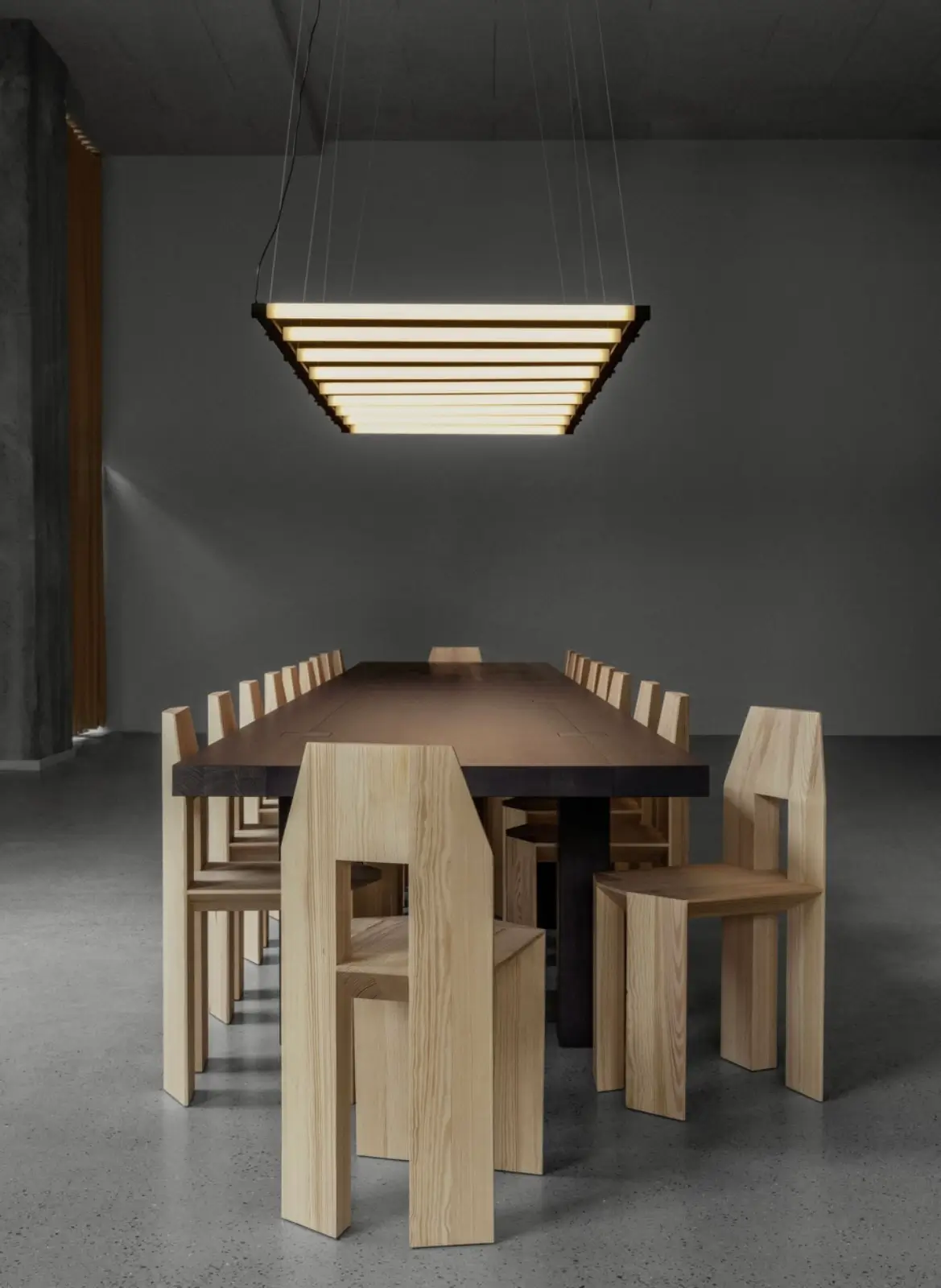
Nordic companies scale efficiently because production, distribution, and communication fill voids left elsewhere. Brands like New Works, Wendelbo, and Raawii demonstrate agile supply chains that translate projects into market-ready pieces—lamps at accessible price points with coherent, desirable aesthetics. This prioritizes the serial dimension and democratized quality.
Circularity and sustainability received sophisticated treatment, with material innovation (seaweed composites, recycled HDPE, aerated concrete) and responsible sourcing prominent across exhibitions like Material Matters. Yet fragility, migrations, social transformations, and broader cultural disruptions appeared underexplored, even among emerging voices. The Ukurant collective and Deoron offered refined selections, but Ukraine House’s Form in the Making provided one of the few direct engagements with pressing realities.
This pragmatism yields tangible results—strong business outcomes, visitor satisfaction, and a polished urban-design symbiosis—but carries a price: predictability that may limit disruptive inquiry. In a fashion-design crossover era where streetwear, horology, music, and art constantly hybridize (think recent Nike, Adidas, or Human Made collabs), Nordic design’s machine runs smoothly but risks operating in a self-contained loop.
Good design does not always reassure. It upends habits, insinuates doubt, and proposes uncomfortable postures. The event’s archives and taxonomies excel at cataloging heritage, yet the bolder provocations—those questioning identity, belonging, or systemic change—felt selective.
View this post on Instagram
medit
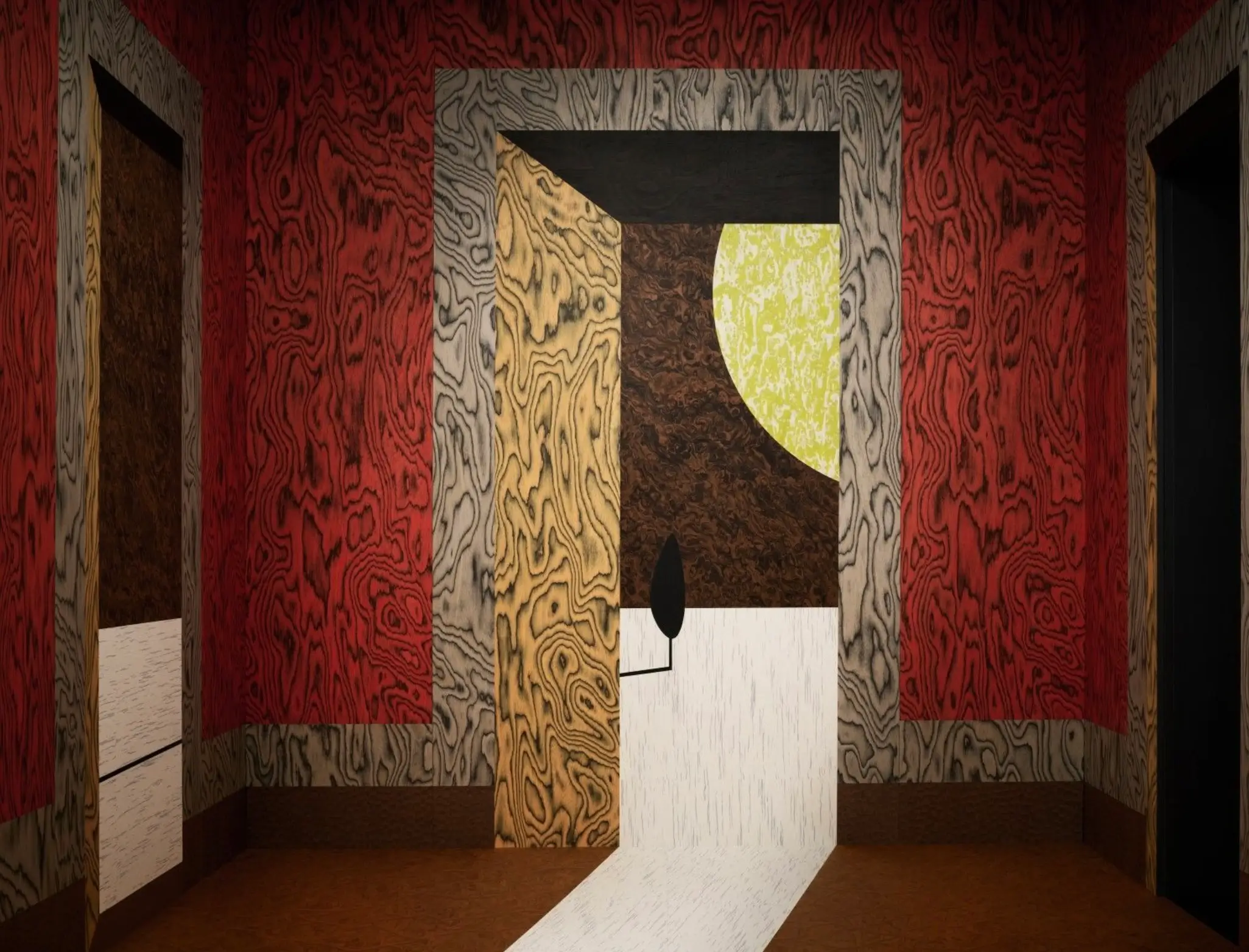
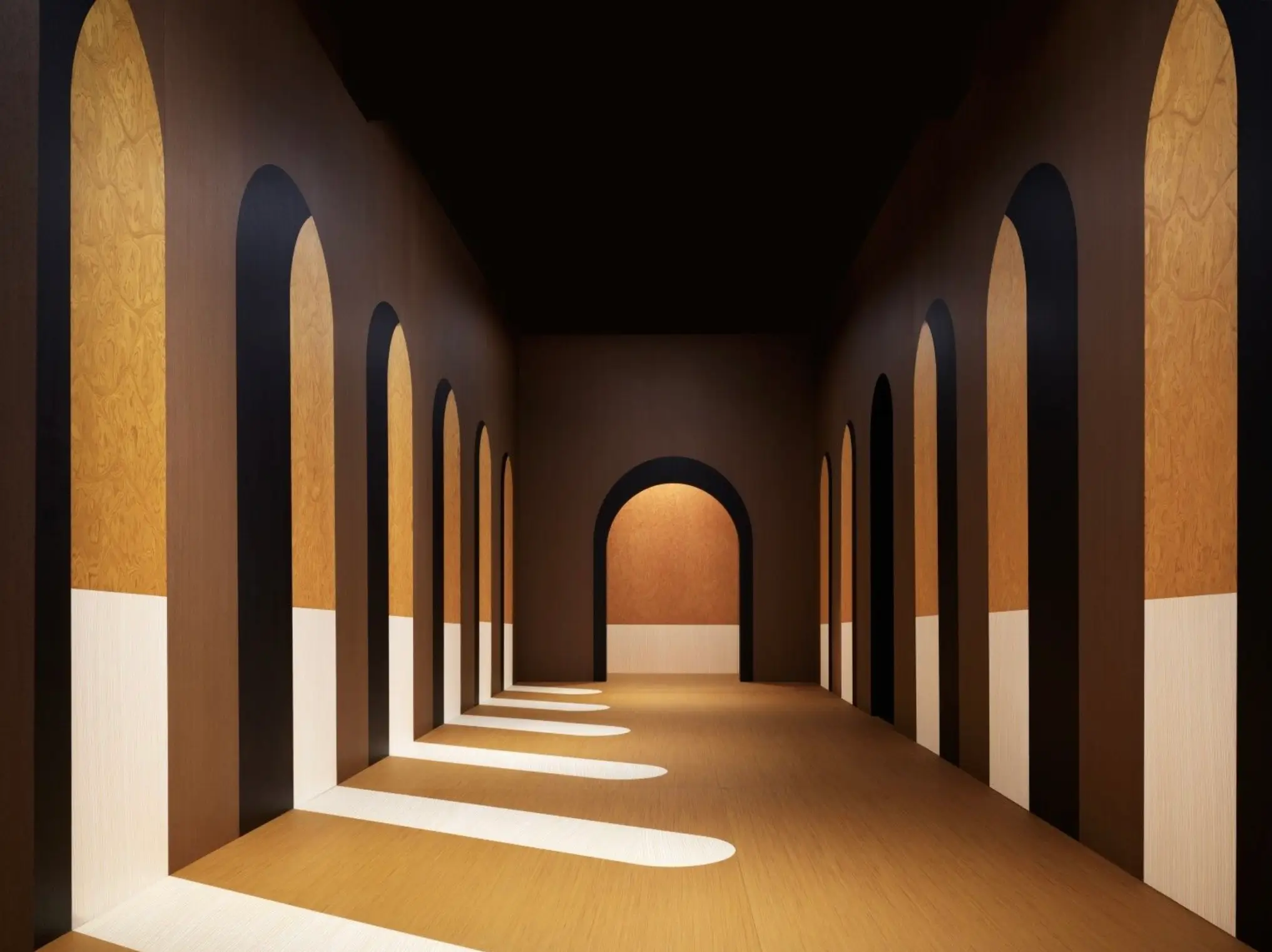
It is in this relative void that contrasts with more porous systems emerge. The Italian (and broader Southern European) approach—heterogeneous, disordered, vivacious, and unpredictable—offers a counterpoint. GamFratesi’s Piazza Interiore for Alpi exemplified this. A performative, metaphysical installation at Narrow Creative, it created contemplative moods through ALPI woods, transforming architecture into an inner perceptual landscape. Inspired by spatial dynamics and sensorial possibilities, it invited active engagement: a sequence of environments with suspended architectures, sharp shadows, and silent perspectives. The key gesture—sitting at the center—restored proportions and emphasized public space as encounter and belonging.
Jaime Hayon’s Jaime, What Are You Doing? with St. Leo gallery offered another intimate reflection. Dedicated to his late mother Raquel Benchimol, the exhibition used the recurring maternal question as a lens for memory, love, imagination, and cultural identity. Sculptural furniture and objects in glass, marble, and bronze carried warm, deeply Mediterranean sensitivity—narrative, relational, and connective. It reminded audiences that design synthesizes not only functions but identities, belongings, and relationships, bridging distant worlds.
These interventions highlighted design’s potential beyond industrial precision: as a language of cultural connection. Copenhagen excels at observing industrial design in refined action, yet Milan (and Mediterranean influences) remains a laboratory open to crossings, sharing, and evolution.
@sofijaninesa day 1 recap of 3 days of design – favorite week in copenhagen 🥹 #copenhagen #thingstodo #designtok #copenhagenstyle ♬ ELEGANCE GIRL – Baby thug
fin
3 Days of Design 2026 succeeded brilliantly on its terms. The Aalto 90 Pavilion’s immersive aluminum contours, Kvadrat’s rhythmic textiles, Georg Jensen’s forward-looking flatware, and wellness-oriented rituals all embodied Make This Moment Matter. Craftsmanship, natural materials, and intentional choices shone through. The city’s backdrop—canals, light, coherent urban fabric—amplified every detail.
Yet the paradox persists. Perfection can breed predictability. The machine is flawless: efficient supply chains, heritage archives, material rigor, and purposeful restraint deliver accessible beauty and commercial viability. Its challenge lies in expanding without diluting identity—embracing more discomfort, hybridity, and global dialogues already enriching fashion, art, and music crossovers.
The future may involve four days, deeper Nordic integration, or bolder thematic risks. Both Copenhagen and Milan face the same test: transforming “meaning” and “purpose” from keywords into courageous acts that question the present rather than merely confirm it. Design’s highest calling remains improving ordinary lives—not just through flawless objects, but through ideas that unsettle, connect, and propel us forward.
In the end, 3 Days of Design leaves us admiring the machine while shh hoping it occasionally glitches—in the most beautiful, human way possible. Copenhagen’s perfection is enviable; its next evolution may prove even more compelling.