DRIFT AUDIO
Listen to this story
Choose a voice, then press play.
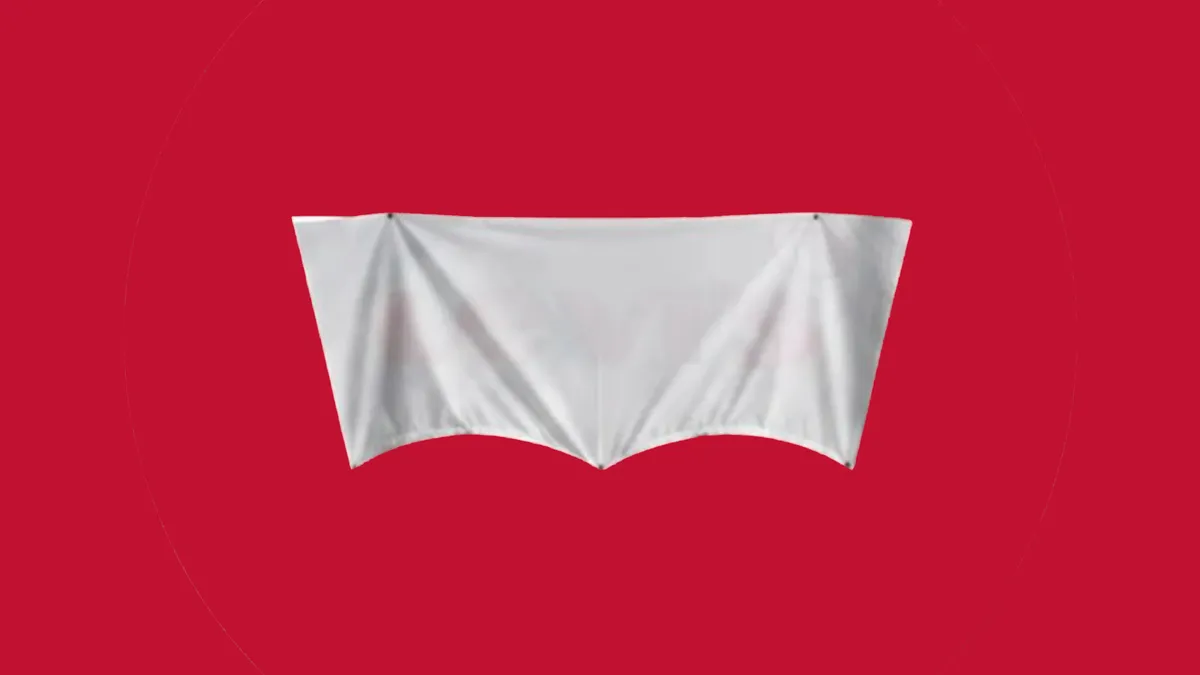
In the high-stakes arena of global sporting events, few rules carry as much commercial weight as FIFA’s infamous “clean stadium” policy. For the 2026 FIFA World Cup, hosted across the United States, Canada, and Mexico, non-sponsor branding must vanish from view to protect official partners. Yet at Levi’s Stadium in Santa Clara, California—temporarily rechristened San Francisco Bay Area Stadium—one of the most iconic logos in American fashion history refused to disappear. A simple white tarp, cut meticulously to the silhouette of Levi’s legendary batwing logo, turned mandatory concealment into an unforgettable branding triumph.
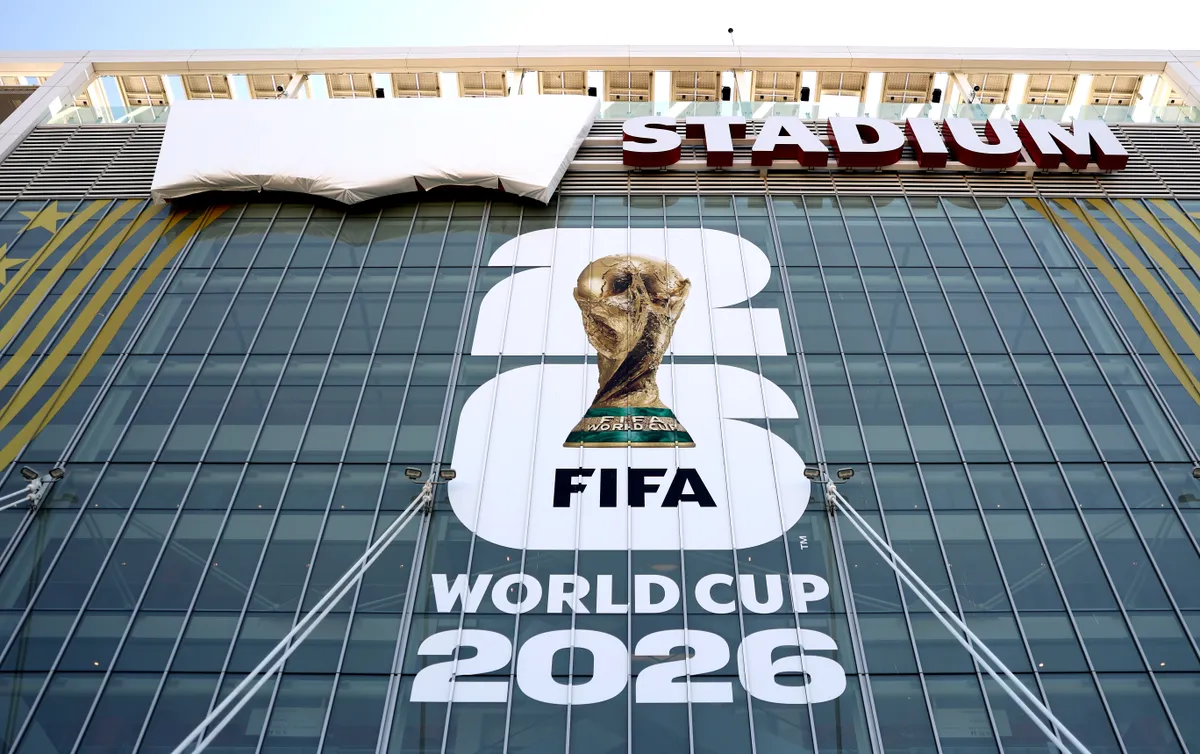
What began as regulatory compliance morphed into a masterclass in cultural savvy. Levi’s didn’t just comply—they leaned in with wry humor on social media, swapping their Instagram profile picture to the shrouded logo and posting a cheeky video captioned something akin to “Welcoming the world to the beautiful [redacted] stadium!” over the “Nobody’s gonna know” TikTok sound. The internet did the rest. In an era of polished corporate campaigns costing millions, a bedsheet-like tarp delivered priceless visibility, proving that true brand equity lives far beyond physical signage.
Here with us, this episode reveals deeper truths about heritage brands navigating modern spectacle. Levi’s, a cornerstone of American denim since 1853, reminded the world why some symbols endure.
stir
FIFA World Cup 2026 is the largest edition yet, with 48 teams and matches spread across 16 venues. To safeguard billions in sponsorship revenue from giants like Adidas, Coca-Cola, and Visa, FIFA enforces strict “clean stadium” protocols. Corporate naming rights are suspended, exterior logos are obscured, and even minor branding—condiment bottles in press boxes gets taped over.
Levi’s Stadium, home to the NFL’s San Francisco 49ers and opened in 2014 with a naming rights deal, became one prominent case study. Located in Santa Clara (about 40 miles from San Francisco), it was rebranded for the tournament. The prominent red batwing logo on the stadium’s exterior received the tarp treatment. But rather than a haphazard cover, the material followed the exact contours of the iconic winged emblem, rendering the “hidden” logo instantly recognizable from afar.
This wasn’t accidental genius alone. Levi’s has long mastered subtle culture embedding. The batwing—evolved from the brand’s red tab and arcuate stitch—transcends mere advertising. It represents durability, rebellion, and everyday American cool, etched into collective memory through decades of jeans worn by cowboys, counterculture icons, Hollywood stars, and everyday wearers.
flow
Levi Strauss & Co. traces its roots to the California Gold Rush. In 1853, German immigrant Levi Strauss arrived in San Francisco, initially selling dry goods before partnering with tailor Jacob Davis to patent riveted “waist overalls” in 1873—the birth of blue jeans. The 501® model, introduced later, became a cultural staple, symbolizing rugged individualism and democratic style.
The batwing logo, refined over time, is deceptively simple yet powerfully distinctive. Its curved, winged shape evokes motion and strength, much like the brand’s “Levi’s” wordmark. By the mid-20th century, Levi’s jeans had crossed into fashion’s upper echelons—worn by Marlon Brando in The Wild One, embraced by the 1960s counterculture, and later reinterpreted by designers in high-fashion collabs.
This heritage positioned Levi’s perfectly for the World Cup moment. Unlike fleeting logos, the batwing lives in muscle memory. As social media users noted, “When a logo is the real deal, no tarp can erase it, because it no longer lives on the stadium wall but in people’s heads.”
scope
The tarp tactic exemplifies brilliant brand strategy: maximal compliance with minimal erasure. By shaping the cover to the logo’s outline, Levi’s transformed restriction into revelation. The shrouded version became a meta-commentary on visibility itself—acknowledging the rules while subverting their intent through sheer recognizability.
Levi’s social response amplified this. Updating profile pictures and sharing humorous content turned potential frustration into participatory humor. Fans and commentators flooded platforms with praise: “Levi’s scored free advertising that no official sponsor could buy.” The moment trended, generating organic impressions far exceeding traditional ads, especially during high-viewership matches like the Qatar-Switzerland draw at the stadium.
This approach aligns with broader trends in sports-fashion crossovers. Brands like Nike, Adidas, and New Balance invest heavily in athlete endorsements and event activations, but Levi’s—rooted in casual, accessible style—thrives on authenticity. The tarp incident reinforces that narrative: Levi’s doesn’t force presence; it simply is present in culture.
Comparisons to other venues highlight the uniqueness. At Mercedes-Benz Stadium in Atlanta, similar coverings sparked discussion, but Levi’s execution stood out for its playful precision. Even internal details, like taped condiments, underscored FIFA’s zeal, making Levi’s light touch all the more resonant.
crossover
The 2026 World Cup arrives amid booming sports-fashion intersections. Tennis, golf, NBA, and soccer increasingly blur lines with streetwear. Levi’s denim fits seamlessly—durable for stadium stands, stylish for global fans. Imagine fans in 501® jeans or trucker jackets layered over team kits, embodying the casual sophistication Levi’s champions.
This incident spotlights how heritage brands leverage events without official sponsorship. While FIFA partners dominate pitch-side, Levi’s claims cultural adjacency through San Francisco Bay Area roots and universal appeal. Denim’s sustainability narrative (recycled materials, longevity) also resonates in 2026’s eco-conscious climate, contrasting fast-fashion excess.
Styling inspiration abounds: Pair classic Levi’s straight-leg jeans with a neutral UT-style graphic tee for match-day comfort, or elevate with a denim jacket featuring subtle batwing embroidery. The shrouded logo moment inspires limited-edition drops—perhaps a “Redacted” capsule with minimalist white-on-white designs nodding to the tarp.
For women and diverse audiences, Levi’s offers inclusive fits echoing the brand’s evolution toward body positivity and cultural relevance. In streetwear contexts, the batwing pairs with sneakers from ASICS, Nike, or New Balance collabs, creating looks that transition from stadium to after-party.
length
This episode offers timeless marketing insights. Strong visual identity withstands obfuscation. In a saturated media landscape, subtlety and humor often outperform overt promotion. Levi’s demonstrated “owning the narrative”—turning regulatory headache into viral gold.
Psychologically, partial concealment heightens intrigue (the “curiosity gap”). Social amplification did the heavy lifting: X, Instagram, and Reddit buzz created a feedback loop of shares and memes. For brands, this underscores investing in timeless design over transient campaigns.
Critics of FIFA’s rules point to overreach—erasing local identity for global uniformity. Levi’s response subtly pushes back, celebrating place-based heritage (Bay Area cool) amid homogenized spectacle. It humanizes corporate giants, showing wit and resilience.
In fashion terms, it parallels how icons like the Nike Swoosh or Adidas Trefoil transcend contexts. Levi’s batwing joins this pantheon, its silhouette as evocative as a red tab or rivet.
human
At its core, this story celebrates creativity’s triumph over bureaucracy. Levi’s, born in innovation and adaptation, embodies American ingenuity—pivoting constraints into opportunity, much like miners who needed tough pants in 1850s California.
In 2026, amid AI-driven design and digital fatigue, tangible heritage matters. Denim represents craftsmanship, stories woven into fabric. The World Cup, a festival of human athleticism and unity, gains depth through such cultural footnotes.
Levi’s move fosters connection: fans bonding over cleverness, brands earning respect through authenticity. It’s a reminder that fashion and sports thrive on shared narratives—joy, competition, community.
why
For design enthusiasts, this is peak visual storytelling. The batwing’s power lies in simplicity and history—lessons for any creator. Levi’s didn’t panic or protest; they played the long game, reinforcing equity built over 170+ years.
As the tournament unfolds, expect more Levi’s activations—perhaps pop-ups, fan experiences, or social campaigns celebrating the “shrouded era.” Early buzz suggests this could rank among 2026’s standout marketing stories.
In an age of calculated virality, genuine moments like this refresh the industry. Levi’s turned a tarp into a trophy, proving iconic brands don’t hide—they shine through.
The next time you slip on a pair of Levi’s, remember: some logos are simply unforgettable. Whether at the World Cup or on city streets, they carry stories of resilience, style, and quiet defiance.
This “backfire” is a win for creative branding everywhere—affordable, accessible, and eternally cool. In the intersection of fashion, sport, and culture, Levi’s just scored.
n
From the DRIFT archive: Lara Croft’s Dual Guinness Records Cement an Icon: How a Digital Explorer Became a Cultural Artifact Herself · PANTONE’s 2026 Color of the Year Takes Shape With Play-Doh and Post-It Editions
Related Articles

Master Chief Reports to Call of Duty Now: Inside Xbox’s Second Reset Wave
Twenty-five years after Halo launched the original Xbox, the next mainline game belongs to Activision. […]