DRIFT AUDIO
Listen to this story
Choose a voice, then press play.
A four second teaser and two words, air and emotion, are all the San Marino workshop has given away so far.
The clip runs barely four seconds. Clouds part over a gray sky, then two lines of text arrive on screen: revealed by the air, driven by emotion. That is the entire teaser Eccentrica posted to Instagram this week, and it is doing a remarkable amount of work for something so short. The caption underneath fills in slightly more: the next chapter of the company’s V12 restomod project stays naturally aspirated, stays manual, and promises to put the driver closer to the world outside the car than anything Eccentrica has built before.
Read that phrasing enough times and one conclusion becomes hard to avoid. This is very likely a roofless Lamborghini Diablo, and a properly rare one at that. The reveal lands during Monterey Car Week, which opens on August 10 this year, the same date Eccentrica has now confirmed for the unveiling itself. Nobody outside the company has seen the car’s face yet. What they have seen is enough to start counting down the days.
None of this arrives in a vacuum. Boutique restomod builders have spent the last several years treating vintage Italian exotics the way American shops once treated muscle cars, tearing into a beloved chassis and rebuilding it around modern engineering while leaving the original personality intact. Officine Fioravanti has done it with the Ferrari Testarossa, other small workshops have taken similar swings at Countach era Lamborghinis and early Ferrari V12 grand tourers, and Eccentrica has positioned itself squarely in that same lane since its founding, with the Diablo as its singular obsession rather than one project among many. A roofless variant is the kind of move that only makes sense once a builder has already proven the mechanical formula works, which is precisely where Eccentrica sits heading into this reveal.
Eccentrica’s own teaser image for the August 10 reveal, credited to the company itself.
stir
Eccentrica exists because of one person’s fixation on a single car. Emanuel Colombini, born in 1978 and based in San Marino, runs the Colombini Group, an interior design business, and spends the rest of his time collecting and racing Lamborghinis, including a stint in the Europe Huracan Super Trofeo series. By his own account, the company traces back to an encounter with a Diablo sitting on a dealership floor, a moment that turned a childhood fascination into a business plan.
Colombini brought in the design house BorromeodeSilva to rework the Diablo’s body without erasing what made it recognizable in the first place, a silhouette that traces back to Marcello Gandini, the designer behind the Miura and the Countach before he ever touched the Diablo. Lamborghini’s own production version softened some of Gandini’s harder edges under direction from Chrysler’s design studio during the American ownership years, and Eccentrica’s project sits at the intersection of both legacies, restoring some of that original tension while adding everything a modern owner expects from a car built to be actually driven rather than trailered to shows.
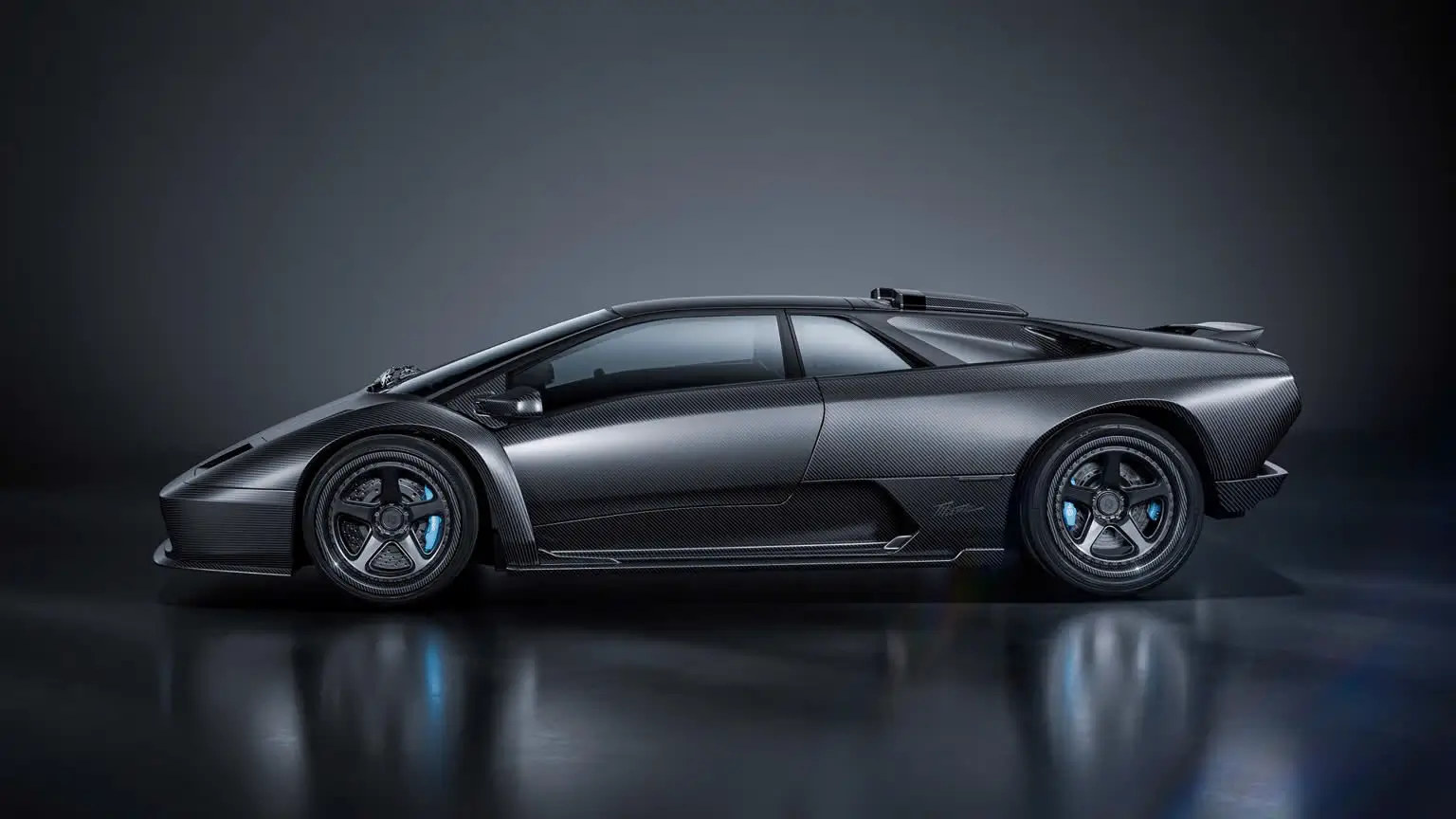
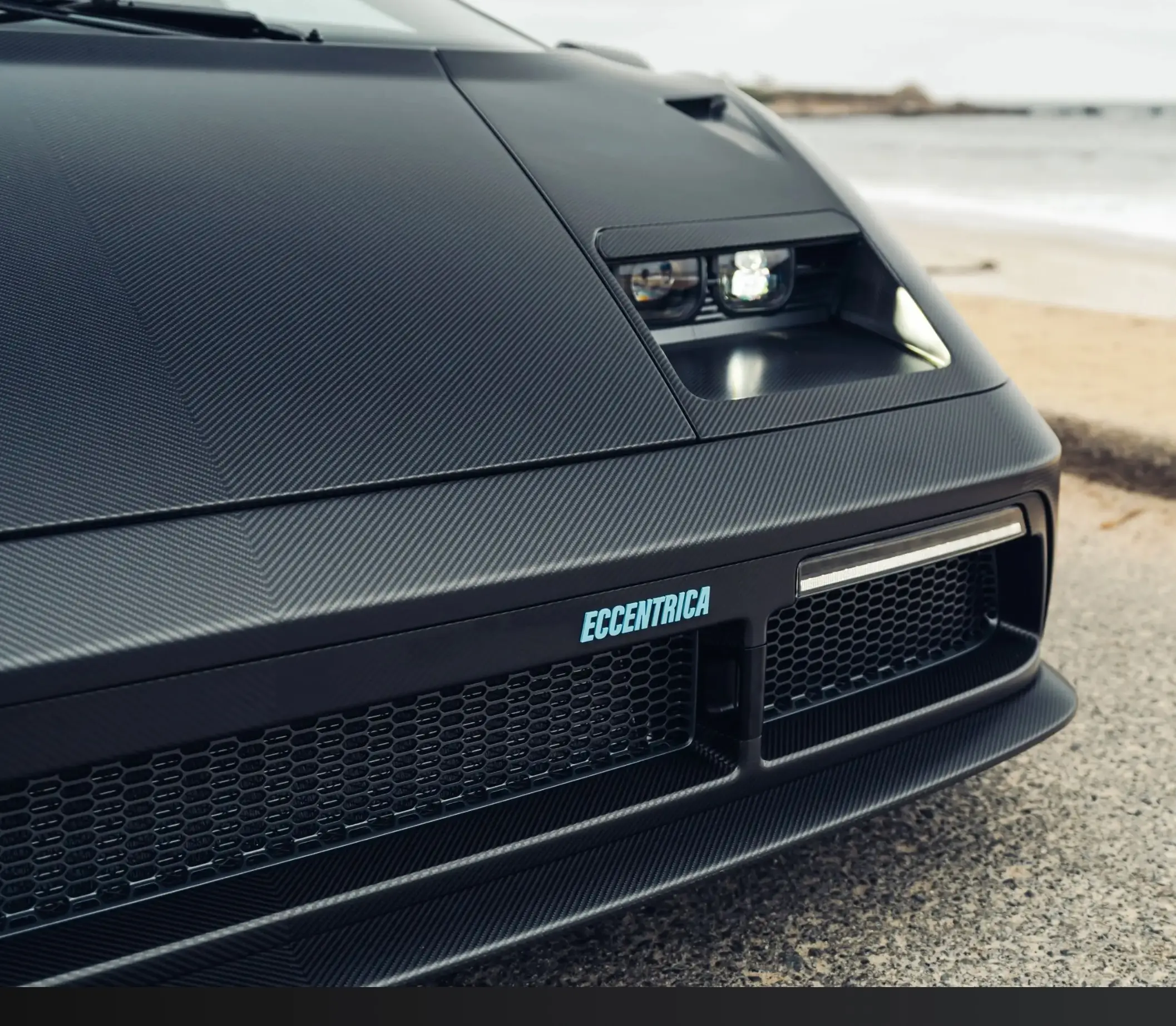
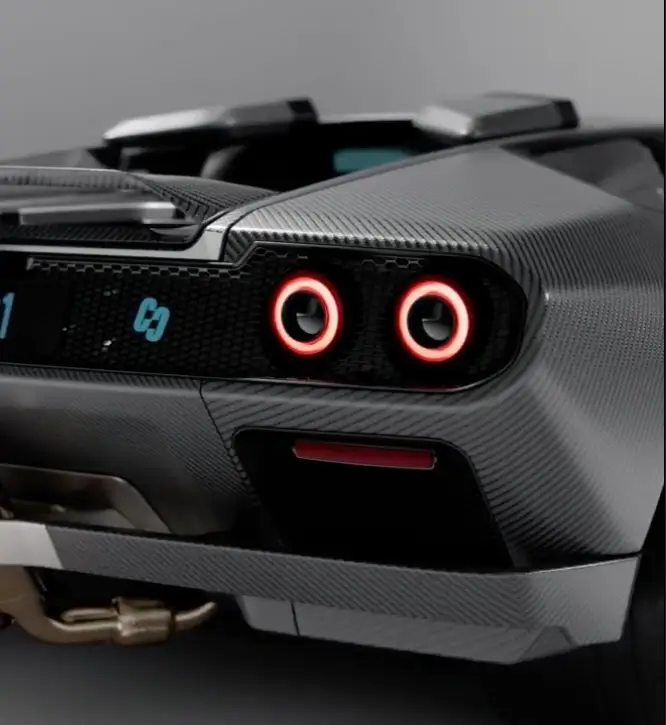
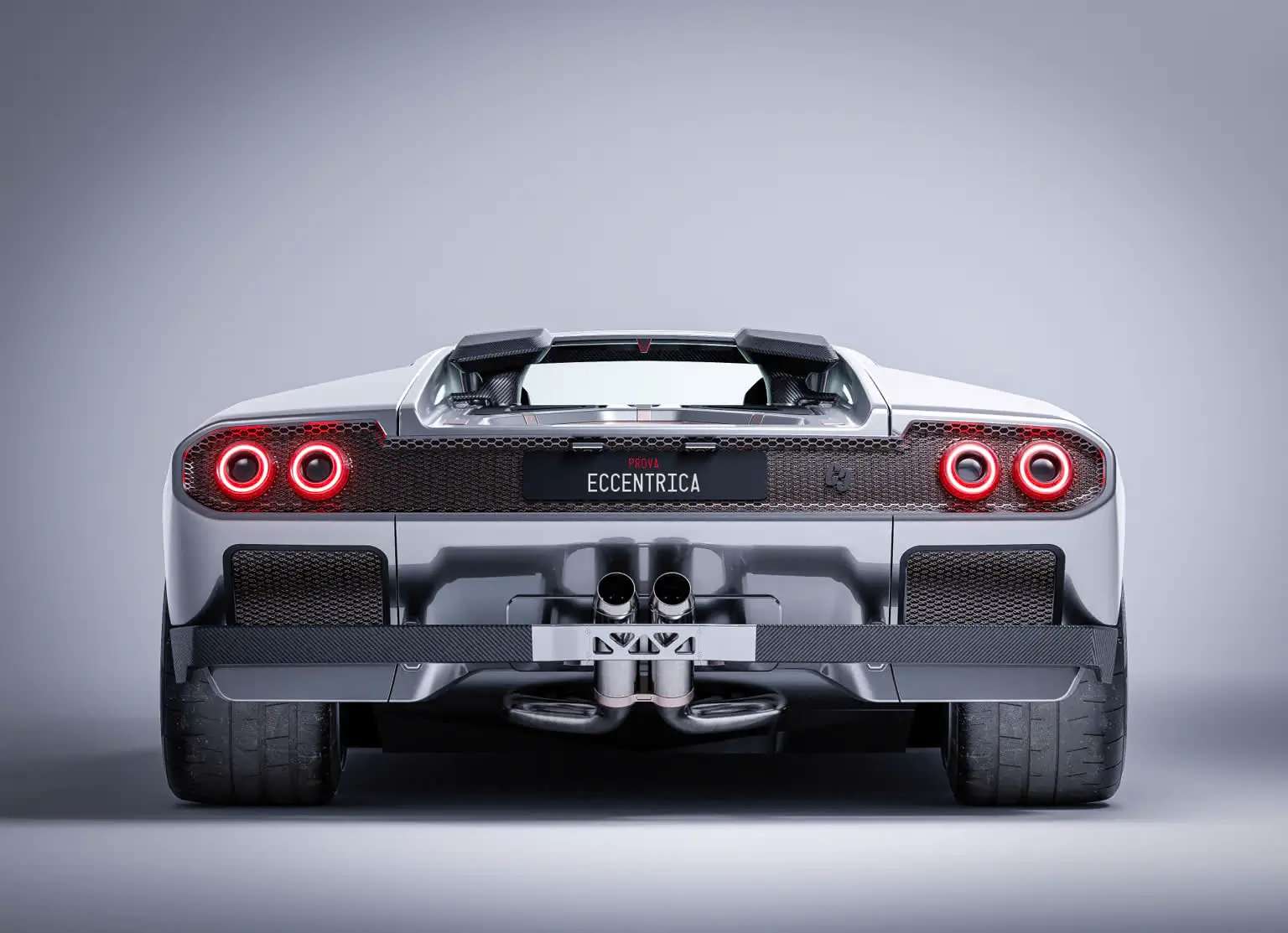
The redesign work on that first car went well beyond a fresh paint job. BorromeodeSilva extended the proportions, streamlined the front end, reworked the side skirts, and fitted new alloy wheels, while the rear end was flattened into a horizontal band of refined detailing that reads as a deliberate contrast to the original Diablo’s busier surfacing. One detail in particular has become something of a signature for the brand: pop-down headlights that echo the retractable units on the earliest Diablos while meeting modern pedestrian safety standards that killed off retractable headlamps industry wide by the late 1990s. It is a small piece of engineering, but it captures what Colombini has said he is chasing across the whole project, a car that looks like it could have rolled straight out of period photography while doing everything a modern owner expects underneath.
proof
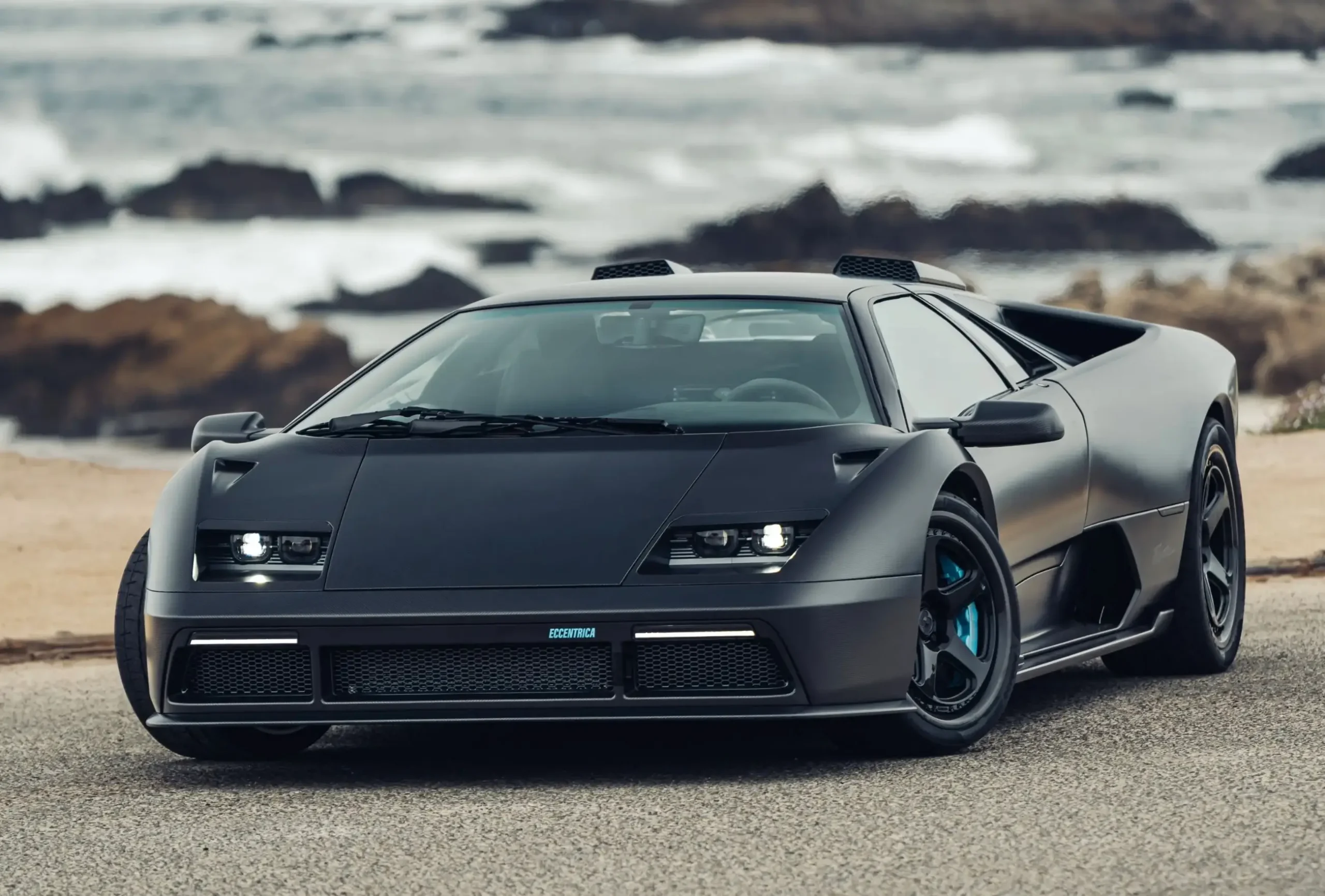
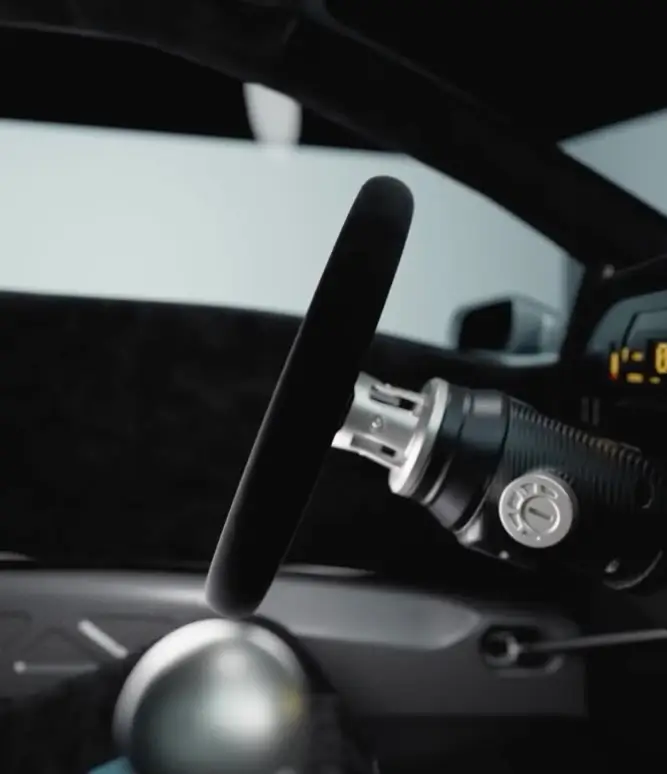
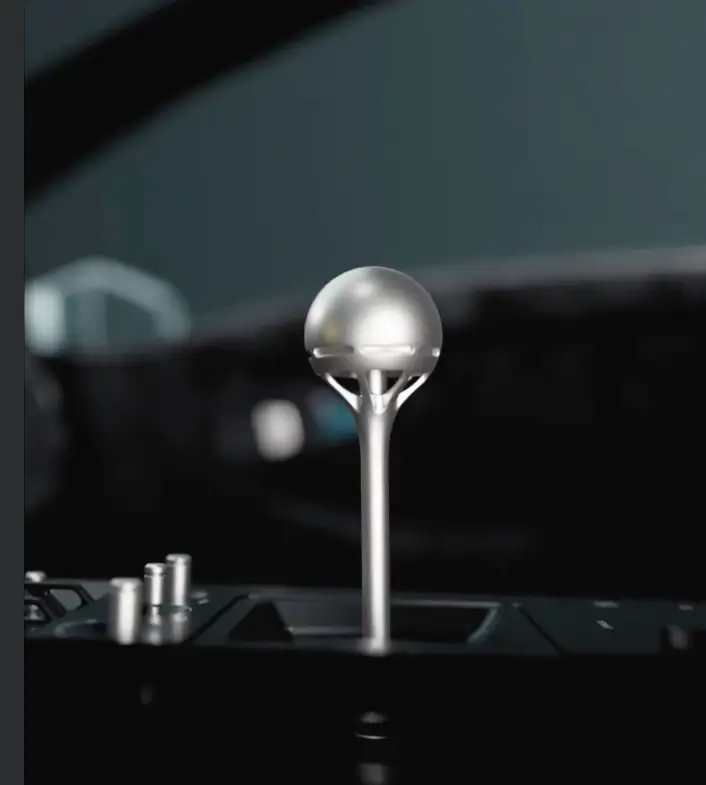
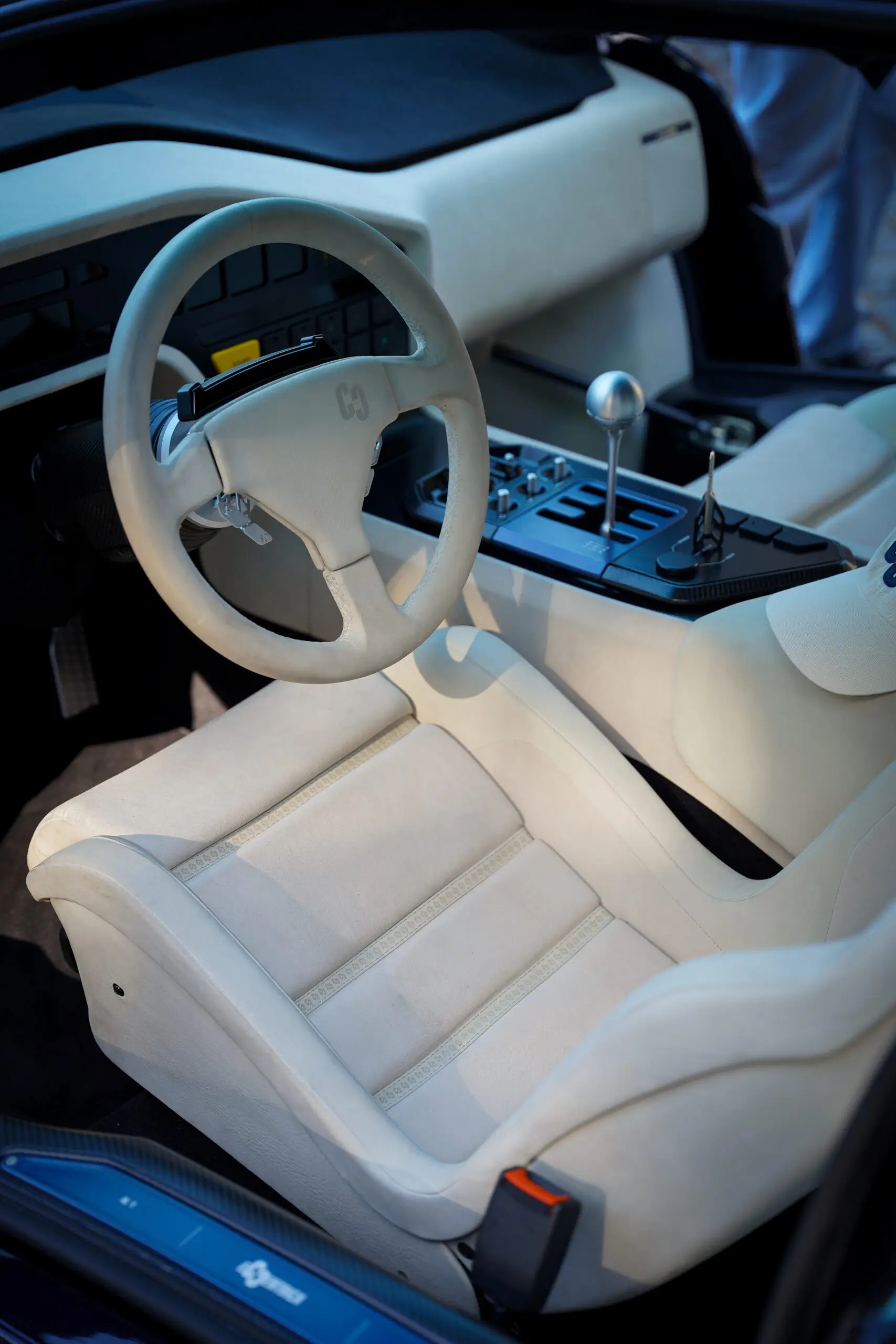
Eccentrica’s first car debuted in Milan in 2023 before touring to the Goodwood Festival of Speed and then across the United States, with stops in Monterey, New York, and Miami. The formula was aggressive from the start. A first series Diablo donor gets a steel tube chassis reinforced with a carbon fiber tunnel, a fully overhauled suspension, and braking hardware developed with Brembo using six piston monobloc calipers on vented rotors. Inside, the cabin keeps its gated six-speed manual shifter but swaps in an all-digital instrument cluster styled to look more like an eighties dashboard than anything Lamborghini actually built in period, wrapped in leather and Alcantara with carbon fiber trim throughout.
The engine is where the real argument for the car lives. Eccentrica takes the original 5.7-liter naturally aspirated V12 and rebuilds it with new camshafts, an electronic throttle body, and an optimized flywheel, numbers that have moved slightly across the company’s own previews. Earlier estimates put output at 550 horsepower, while the figure Eccentrica settled on at its Monterey debut was 542 horsepower and 443 pound-feet of torque, a meaningful step up from the roughly 523 horsepower and 446 pound-feet the strongest factory V12 Diablo variant produced. Production is capped at 19 examples, with deliveries beginning in 2025 and pricing reported around 1.2 million euros, or roughly 1.3 million dollars, before the cost of the donor car itself.
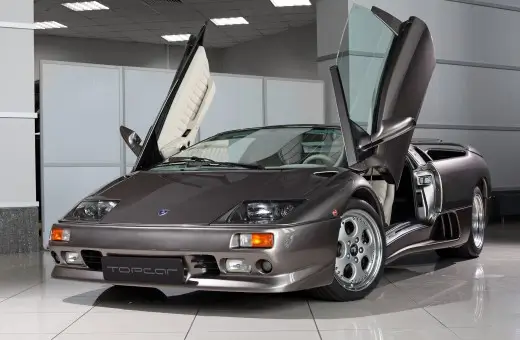
A factory Lamborghini Diablo with its scissor doors raised, the same donor platform Eccentrica’s roadster restomod is built from.
retro
Eccentrica returned to Monterey in 2025 with a harder edged answer to its own coupe, called the Pacchetto Titano, a name borrowed from Monte Titano, the roughly 600 foot peak that rises over San Marino itself. Where the debut car chased usability, the Titano package strips weight through partially exposed carbon fiber body panels, adds a suspension setup tuned specifically for track days, and pairs the same naturally aspirated V12 with an in house six-speed manual gearbox and three selectable driving modes rather than the single character of the original.
Colombini described the goal as amplifying the driving experience without letting the upgrades overshadow the car’s original personality, and the company brought three cars to Monterey that year to make the point, including one finished in a triple layer rose gold livery and another in a pastel Verde Chartreuse, both signaling how far customers can push customization on top of the shared mechanical base. Nineteen examples of the Titano package are planned, mirroring the production cap on the original coupe.
What the Titano really demonstrated was that Eccentrica’s platform had enough headroom in it to support two genuinely different personalities from the same starting point, one built for road comfort and one built for lap times, without either feeling like an afterthought bolted onto the other. That flexibility matters for reading the roadster teaser correctly. A company that had only ever built one version of one car might struggle to justify a third, riskier variant so soon. A company that has already shown its chassis and drivetrain can flex between a grand touring coupe and a track focused hardtop has a much easier case for asking whether the same bones can support an open car without losing what made either version work in the first place.
cut
Lamborghini built 2,903 Diablos between 1990 and 2001 before the car gave way to the Murcielago, making it the last model the company launched before Audi took ownership. Roadster versions were always the rarer branch of that family. The Diablo VT Roadster arrived at the Bologna Motor Show in December 1995 with a 492 horsepower version of the V12 and a carbon fiber targa style roof panel that stowed above the engine cover when removed, making it one of the fastest open top cars in the world at the time. A refreshed version followed in 1999 after Volkswagen’s acquisition of Lamborghini, with output climbing to 523 horsepower and fixed headlamps borrowed from the Nissan 300ZX replacing the original pop-up units. Estimates for total roadster production land around 300 cars across both versions combined, a small fraction of the run even by Diablo standards.
Every roadster used Lamborghini’s viscous traction all wheel drive system, a rear biased setup that could redirect up to a quarter of the engine’s torque to the front axle if the rear wheels lost grip, without dulling the car’s reputation as a handful to drive quickly. That system, along with the removable targa roof itself, is part of what makes a Diablo Roadster donor car a fundamentally scarcer starting point than the coupes Eccentrica has used for every build so far.
The roadster’s arrival also followed a slightly winding path inside Lamborghini itself. Engineers had experimented with open top Diablo concepts even before the VT platform existed, but it took until the Geneva Salon era of the mid nineties for the company to settle on a production version built specifically around the viscous traction chassis rather than adapting a two wheel drive car after the fact. That decision meant every roadster that reached a customer came standard with all wheel drive, unlike the standard Diablo coupe lineup, which offered both two wheel drive and VT variants side by side for most of its run. A handful of roadsters were also built for the North American market specifically, a detail that has made surviving examples a recurring fixture at auctions during Monterey Car Week itself, decades before Eccentrica ever proposed building a modern successor to the shape.
fin
Eccentrica has confirmed less than it has implied. The company has not said whether the new build keeps the Diablo’s viscous all wheel drive system or drops to a purely rear driven layout, a question that matters both mechanically and to how the car will actually behave with the roof off. No pricing, no production count, and no photograph of the finished car have surfaced ahead of the reveal itself. What is confirmed is narrower but still notable: a naturally aspirated V12, a manual gearbox, and a design built around removing the barrier between driver and road that a fixed roof provides.
The venue lines up with the company’s own recent history. Eccentrica’s last two Monterey appearances centered on The Quail, A Motorsports Gathering in Carmel, an invitation only event held on a golf course lawn that has become one of the week’s preferred stages for genuinely new metal rather than restorations or repaints. There is no indication that pattern breaks this year, and showing there again would put Eccentrica’s roadster in direct view of the same collector audience that has already bought into the coupe and the Pacchetto Titano.
Whatever rolls out on August 10 will be judged against a roadster history that Lamborghini itself treated as a special occasion rather than a routine model extension, unveiled at its own dedicated motor show moment back in 1995 rather than folded quietly into the standard Diablo range. It will also be judged against two prior Eccentrica builds that have already shown the company is willing to rebuild a legend’s mechanical guts rather than simply repaint its skin. A roofless version raises the degree of difficulty on both fronts at once, cutting into chassis rigidity that a coupe gets for free while asking the naturally aspirated V12 to perform with nothing standing between it and the open air. Eccentrica has bet its entire short history on being able to solve exactly that kind of problem tastefully, and Monterey will be the first chance anyone outside San Marino gets to see whether the bet paid off.
From the DRIFT archive: Cornell Team Develops Ultrablack: The “Darkest Fabric Ever” That Reflects Close to No Light
Related Articles
Six Days of Asphalt, One Day of Dirt: The 2026 Tacoma TRD Pro Makes Its Case
Two red shock absorbers ride on the back of the driver’s seat, and they say […]