DRIFT AUDIO
Listen to this story
Choose a voice, then press play.
A former iron foundry in Berlin-Reinickendorf spends this month making an unlikely case: that seeing the whole planet doesn’t require leaving it.
Astronauts have a name for the disorientation that hits when they look back at Earth from orbit: national borders disappear, and the planet resolves into a single, fragile, blue-and-white whole. Researcher Frank White coined “the overview effect” in a 1987 book built on interviews with the spacefarers who described it. Nearly forty years later, curator Anna Carnick, American-born and based in Berlin, has borrow the phrase for a group exhibition that poses an unlikely question inside a century-old iron casting plant: must we actually leave the planet to understand how connected we already are?
An exhibition poster titled “end to end” mounted on a wall, featuring a textured background with white, linear elements that resemble strings passing in front of the display.
stir
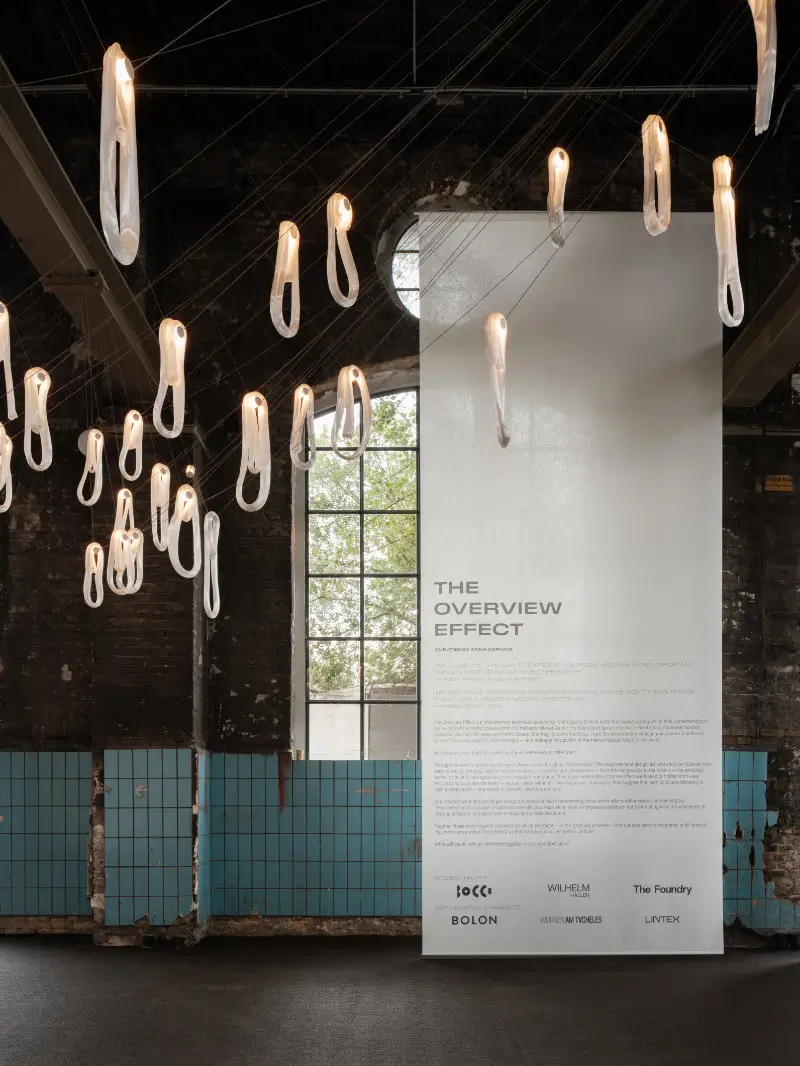
The exhibition, titled The Overview Effect, runs September 5 through 13, 2026, closed on the 7th and 8th, at The Foundry, the roughly 1,680-square-metre exhibition space Bocci operates inside Wilhelm Hallen, the former Winkelhof iron foundry in Berlin’s Reinickendorf district. It’s Bocci’s second major show in the space, following last year’s Crafting Community, and it lands just ahead of Berlin Art Week’s own September 9 to 13 run, timed instead to Wilhelm Hallen’s own umbrella event, Hallen 07, which this year spreads more than fifty artists across the compound’s roughly 9,000 square metres, guest artist Christian Jankowski among them.
Carnick gathered close to twenty international designers and artists for the show, working in materials that range from wool and clay to silkworm cocoons and heirloom corn husk. In an interview published ahead of the opening, Johannes Schön, Bocci’s Director of Brand and Cultural Strategy, described the company’s pull toward practices that resist a single disciplinary label: the space where art, architecture and design start to overlap, because that overlap tends to be where unexpected ideas turn up.
flow
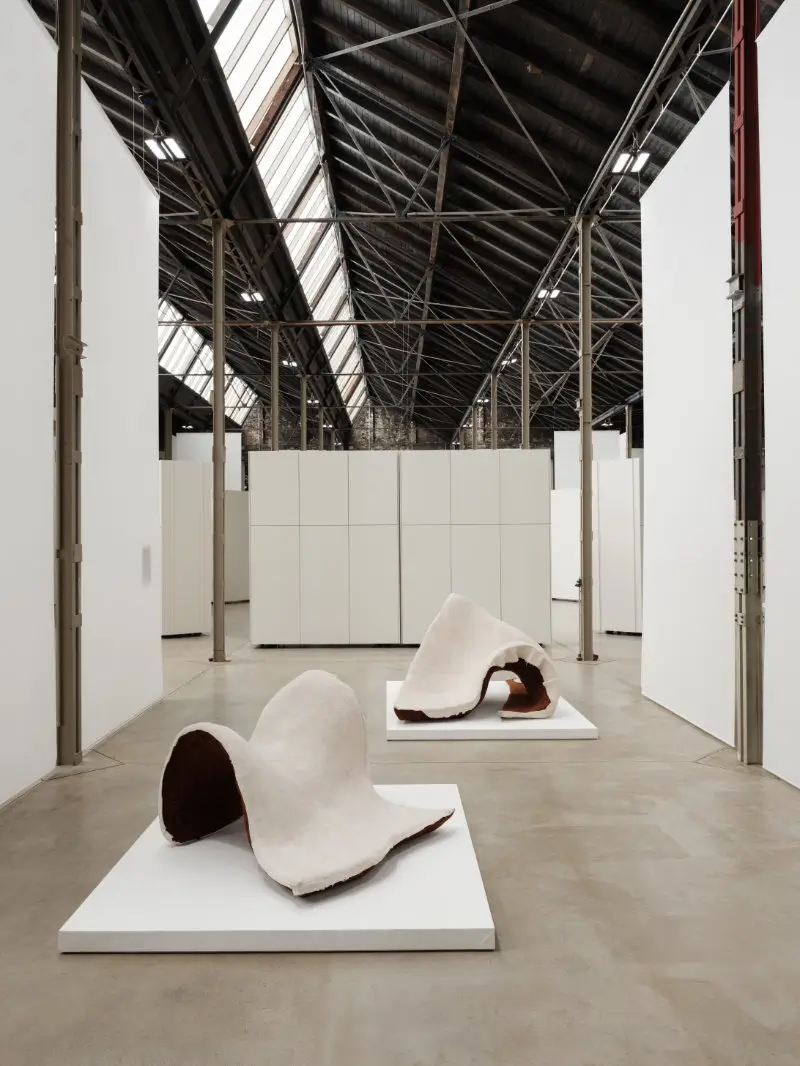
That overlap shows up physically in the building itself. Exhibition architect Chris Leeuw divided The Foundry’s cavernous hall using soft, semi-transparent paper surfaces that let works emerge in sil before resolve into full view, an effect built to echo a gradual shift in vantage point rather than one clean instant of clarity. Visitors enter through a darkened passageway before the space opens onto the main hall, a staging choice that, as Sleek described after visiting, makes the transition feel less like walking into a gallery than switching between two different atmospheres entirely.
Rather than pushing one argument, Carnick built the show as something closer to a loose constellation, letting relationships between works surface as visitors move through rather than laying them out as fixed narrative. Three contributions in particular show how differently that starting point can be interpreted once artists are actually working with material in hand.
sustain
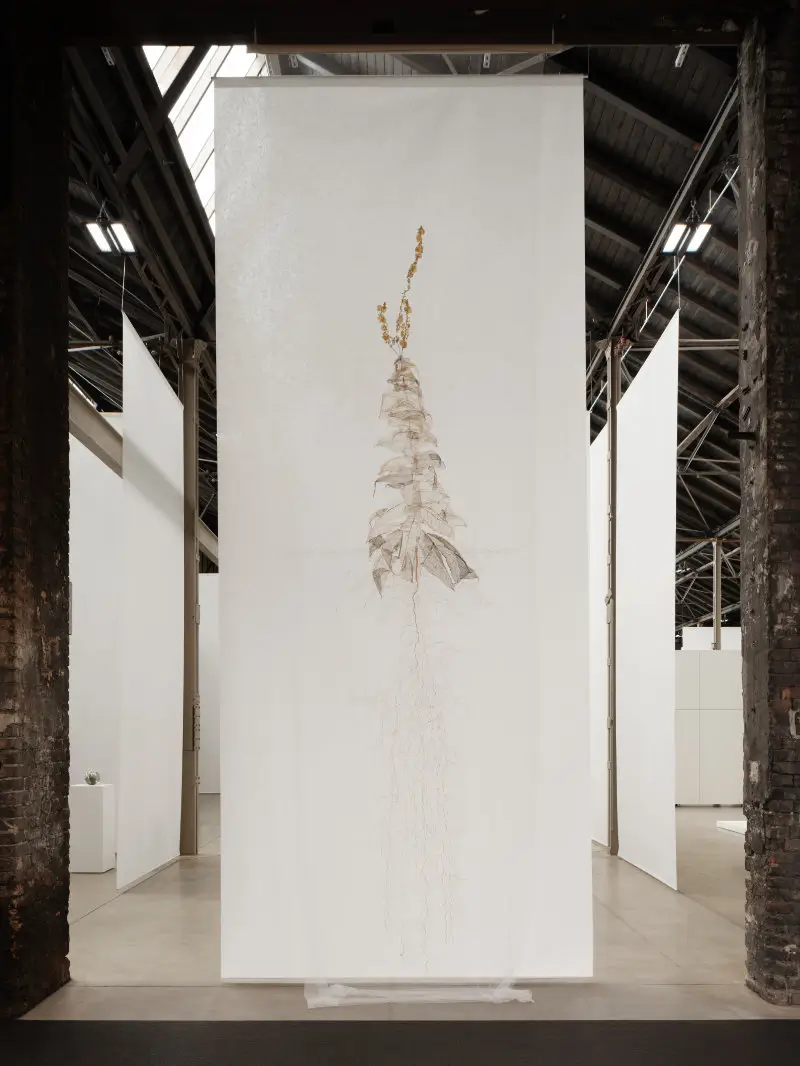
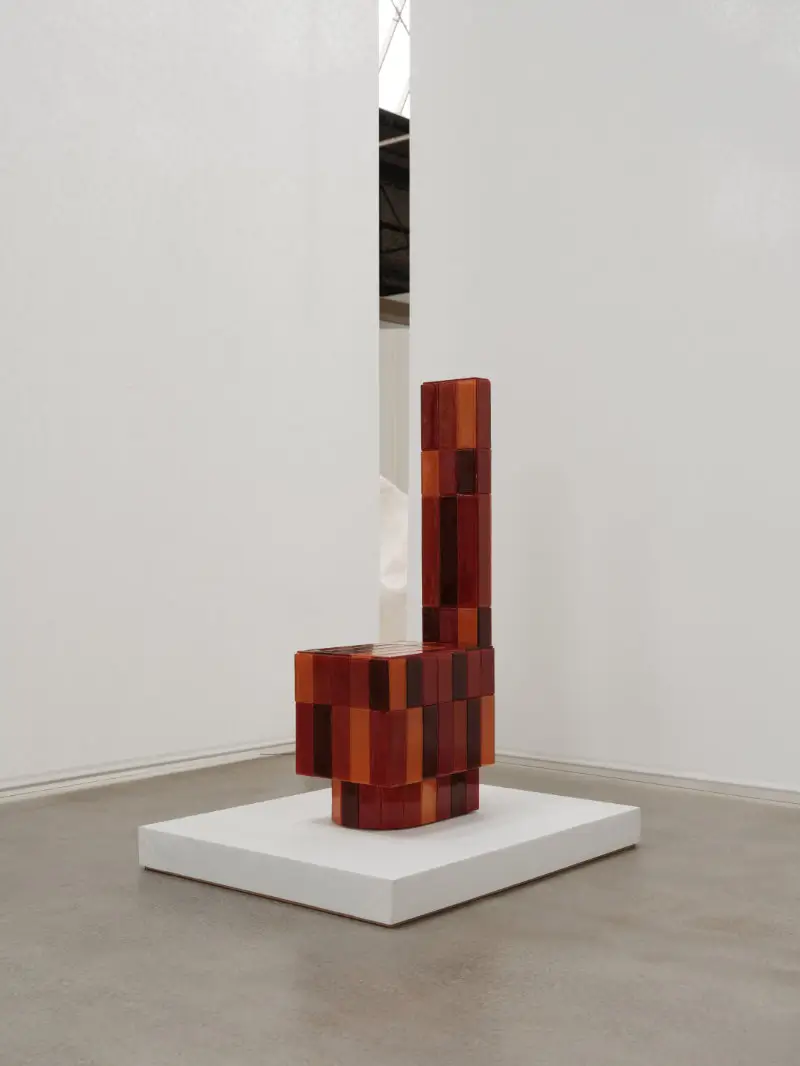
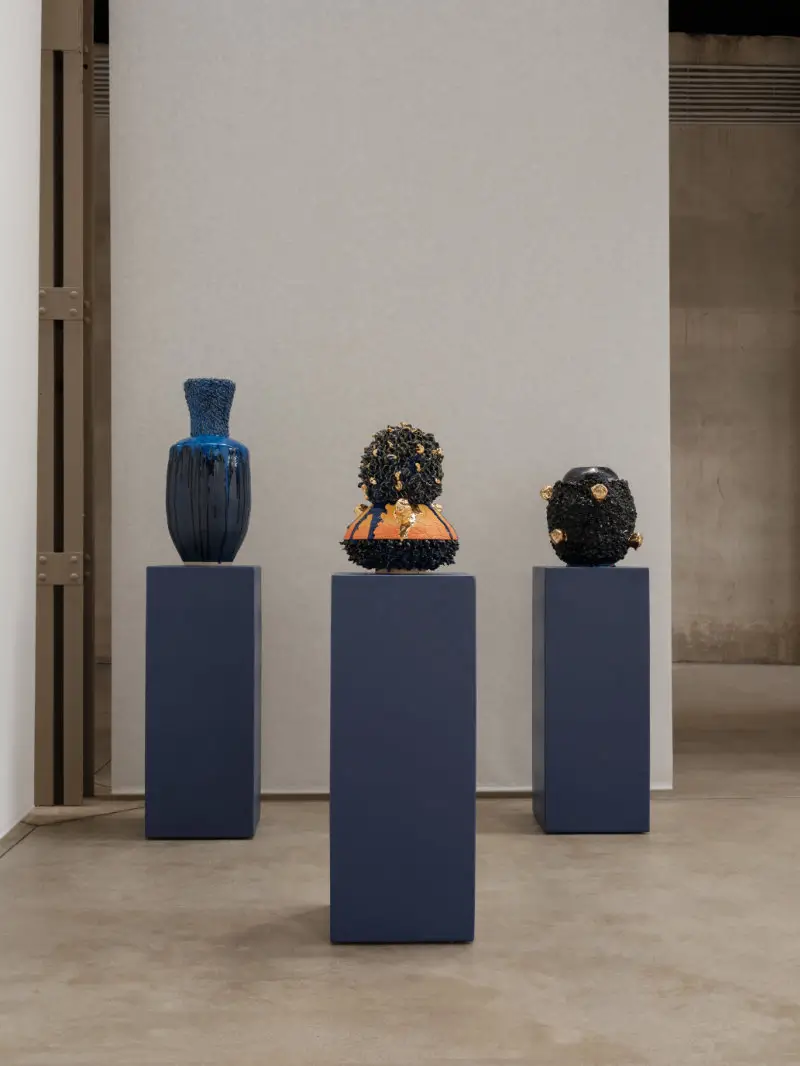
Among the most personal work in the show comes from Marten Herma Anderson, a Berlin-based architect, designer and object-maker who works primarily in ceramic. His two 2026 pieces for the exhibition, Preserved Garden Vessel and Preserved Garden Mural, made from ceramic and metallic glaze, trace back to his grandmother’s garden on Rügen, the Baltic island where he grew up.
The starting point was small, almost accidental: a pressed flower that slipped out of one of his grandmother’s books, a forgotten keepsake that had quietly held onto a memory for years without anyone noticing it was there. Anderson translates that discovery into ceramic surfaces shaped by pressure, heat and gravity, letting botanical impressions embed themselves into the material the way a memory embeds itself in an object nobody thought to look at twice.
It’s a version of the exhibition’s premise running in the opposite direction from an astronaut’s view of the whole Earth. Rather than looking at the planet all at once, Anderson looks closely at one garden, one flower, one memory, and arrives somewhere surprisingly similar. A garden, in his telling, is never just a garden: it carries the people who tended it, whatever the local climate did to the plants that grew there, and every memory that has accumulated around it since. His ceramics turn that landscape into something closer to an archive, their iridescent, faintly extraterrestrial surfaces making an ordinary botanical trace look strange again, caught somewhere between ancient and future-facing.
View this post on Instagram
Anderson’s practice moves between architecture, sculpture and design more broadly, and memory keeps resurfacing as a material in its own right. Growing up on Rügen, between the Baltic coastline and the repeating geometry of GDR-era housing blocks, appears to have shaped his interest in the friction between organic form and constructed order, a tension that runs through Preserved Garden Vessel as much as it does his other work. Within The Overview Effect, his contribution makes the case that the planetary can start from something as small as a grandmother’s flower bed: landscapes preserve us at least as much as we try to preserve them.
one
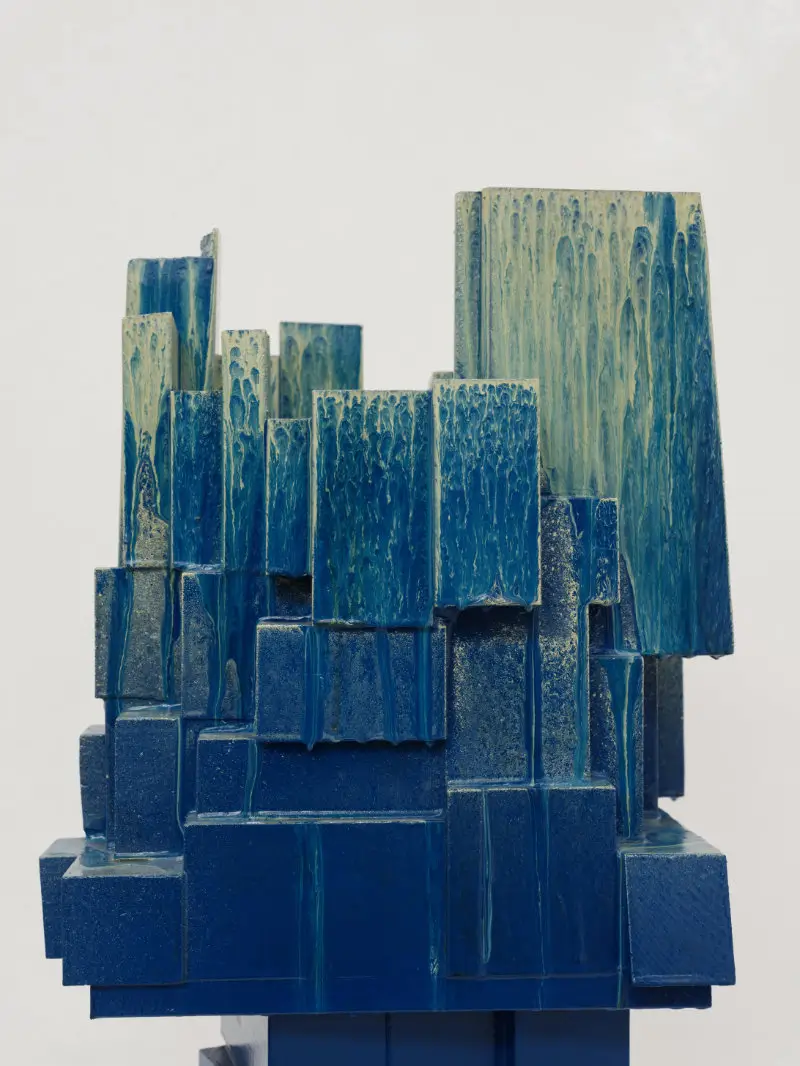
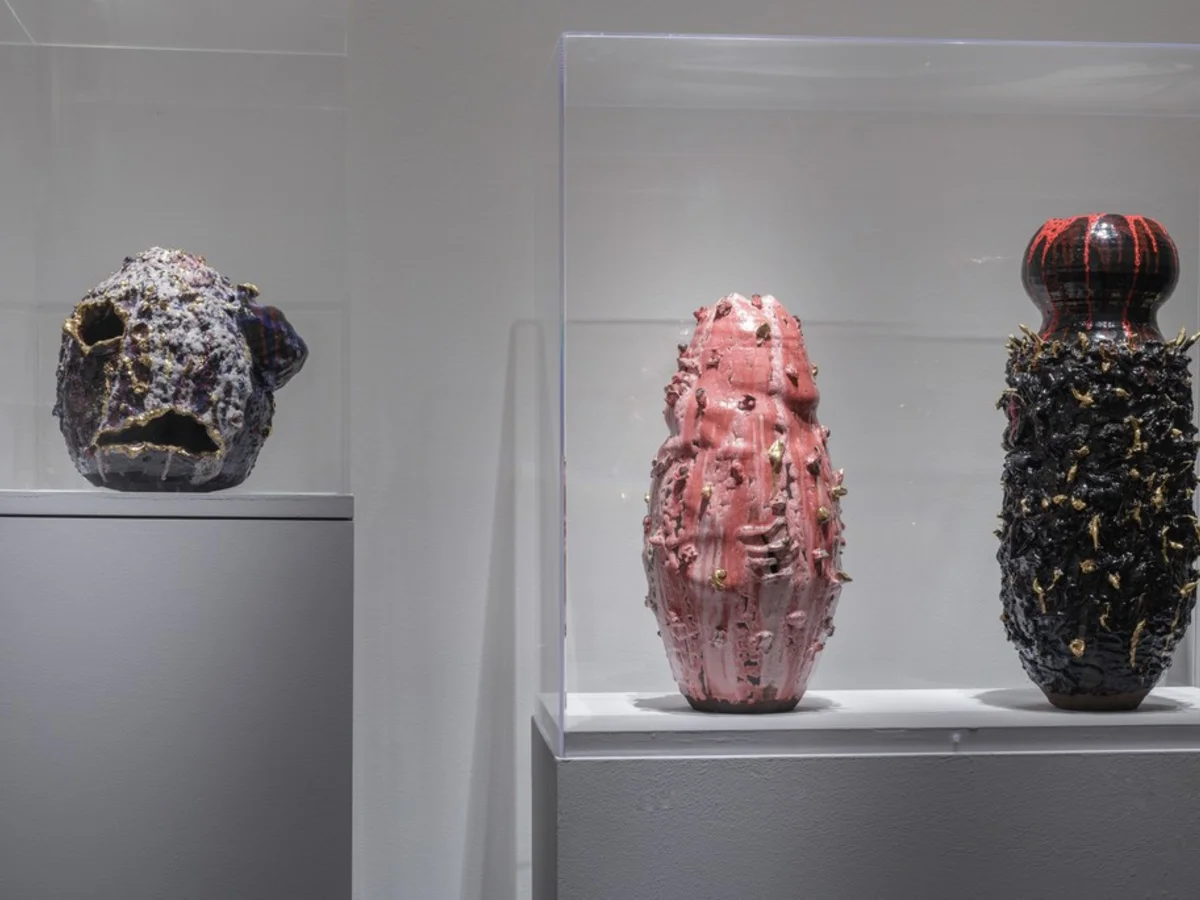
If Anderson works through memory, King Houndekpinkou gets to a similar place through one of the oldest materials people have used: clay. For the show, the Franco-Beninese ceramicist presents three glazed works, Blue Cavilux: Purple Rain Drops, Outer Space Gold Ritual Vessel: Sounds from the Other Side and Frozen Hopes: The Rain May Not Wash All Our Sins Away, titles that alone suggest a practice moving freely between the earthly, the spiritual and the cosmic.
Houndekpinkou has spent more than a decade building ties between Benin, where his family is from, and Japan, where he apprenticed with potters in the ancient kiln town of Bizen after a first visit in 2012. His 2016 project Terres Jumelles(Twin Soils) formalized that exchange, pairing ceramic practitioners across the two countries and mixing clay sourced from both. For this exhibition, his vessels incorporate clay gathered from Benin, Japan and beyond, letting distinct geographies and pottery traditions share space inside a single object rather than staying separate.
The potter’s wheel becomes a useful image here. As clay spins beneath his hands, Houndekpinkou has spoken of the process as a stand-in for existence on a planet that never stops spinning either, a matter of continual small adjustments rather than a fixed state. His luminous blue glazes reinforce that reading, evoking the blue dot astronauts describe seeing from orbit, while the vessel form itself carries a much older human history of storing, offering and passing things down. The result reads as both ancient and speculative: rooted in specific traditions while refusing to sit inside just one of them.
That refusal is where his work lines up most directly with Carnick’s premise for the show. Identity, in Houndekpinkou’s ceramics, isn’t sealed or singular. It’s built continually through movement, inheritance and exchange, whether that’s a lump of clay crossing a border or a kiln technique passed from a Japanese teacher to a French-Beninese student decades his junior. As Houndekpinkou has put it, clay carries the memory of cultures and generations, yet remains “the same material beneath all our feet,” regardless of whose hands shaped it.
flow
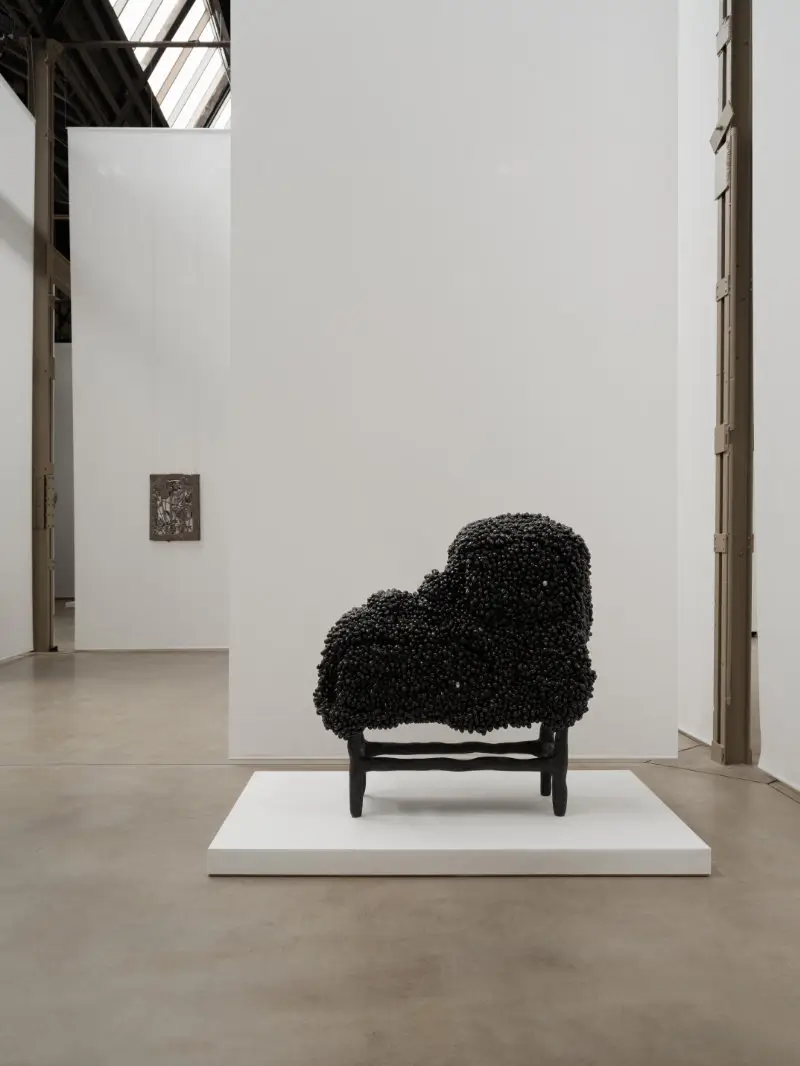
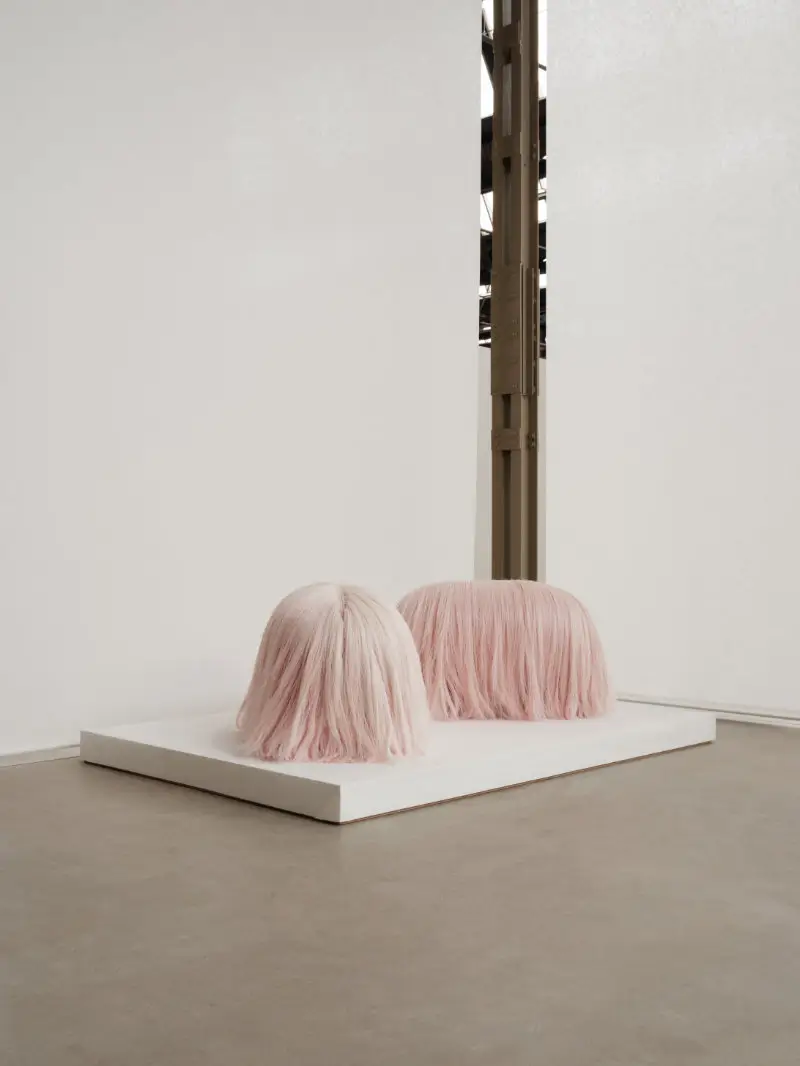
The relationship between body and land turns softer, almost enveloping, in the work of South African artist Christine Jacobs. Jacobs grew up on a sixth-generation Merino sheep farm in the Xhariep district of South Africa’s Free State province, and wool sheared from that farm has become the material she keeps returning to. For The Overview Effect, her 2023 sculptures Scape IV and Scape V combine wool, felt and steel into large, tactile forms that read as somewhere between landscape, shelter and body.
There’s something genuinely comforting about them. Jacobs hand-felts her surfaces so they fold and curve rather than confronting a viewer head-on, and inside the raw industrial architecture of Wilhelm Hallen, that softness stands out even more: the pieces sit almost like small emotional landscapes inside a vast former factory floor. But the softness isn’t simplicity. For Jacobs, felting is both a meditative process and a way of thinking through entanglement, wool tying the work back to sheep, farming, family and generations of accumulate knowledge about one specific stretch of land.
A gallery installation view featuring three ceramic sculptures in clear display cases: a textured multi-colored head on the left, a pink spiky vase in the center, and a black vessel with gold spikes on the right.
Jacobs treats land not as a backdrop to human activity but as an active participant in it, something that provides, protects, remembers and changes on its own terms. That framing lines up closely with the exhibition’s premise. Looking at Earth from space tends to make the planet look vulnerable and precious all at once; Jacobs arrives somewhere similar by working extremely close to the ground, using a material produced by a living agricultural landscape she’s known since childhood. In her own words, the space her sculptures create is one where “we may rest and find solace in the softness of the earth’s fine layers.” Her work suggests that caring for a place starts with understanding yourself as a guest in it, not an owner standing outside looking in.
scope
What makes The Overview Effect work is that it never tries to illustrate outer space literally. There’s no simulated galaxy, no pretense that The Foundry has become a spacecraft. The rest of the roster fills out a group nearly twenty names deep, each starting from a different material and a different question. Fernando Laposse shows furniture and wall panels made from totomoxtle, the veneer he produces from heirloom Mexican corn husks in partnership with farmers in the village of Tonahuixtla. Tara Sakhi, working with Venetian glassmakers, contributes vessels whose surfaces suggest Earth’s atmospheric layers. Marlène Huissoud brings her long-running research into silkworm cocoons and honeybee bio-resin, a practice she’s spent over a decade developing. Elisa Strozyk, the Berlin designer known for turning rigid wood into something closer to drapable fabric, and Studio Furthermore, the London studio run by Marina Dragomirova and Iain Howlett, who model their material processes on geological formation, round out a lineup that also includes Marjolein Hessels and more than a dozen others working across Europe, Asia, Africa and the Americas.
extend
The show closes on a different register. Chilean studio gt2P contributes an interactive mural, Shhh the Hope Keeper, inviting visitors to anonymously write down a wish for the planet’s future, adding to a growing collective archive as the exhibition runs its course. It’s a quiet gesture after everything that comes before it, but it fits: after moving through nineteen separate material arguments for interconnection, the last thing the show asks of a visitor is to name, specifically, what they’d want to see change.
For Bocci, the exhibition extends an ambition that’s been building since the company converted part of Wilhelm Hallen into The Foundry in 2019. In an interview given ahead of the opening, Schön framed that ambition as an interest in practices that live between disciplines rather than settling into one, the territory where art, architecture and design begin to overlap. Furniture becomes sculpture in that reading. Clay becomes geography. Wool becomes landscape. A pressed flower becomes an archive. None of the individual pieces in The Overview Effect argue that the planet’s problems can simply be designed away. What they argue, collectively, is smaller and harder to dismiss: that attention, paid closely enough to a material and where it came from, tends to lead back to whoever’s hands shaped it, and from there to whoever happens to be standing next to you.
The Overview Effect runs through September 13, 2026, at The Foundry, Kopenhagener Str. 60-68, Berlin, open 11:00 to 20:00 daily except September 7 and 8.
Related Articles
fnnch Revives the Honey Bear Hunt for Halloween, No Tape Required
San Francisco’s honey bear artist is turning porch season into a scavenger hunt again, five […]