DRIFT AUDIO
Listen to this story
Choose a voice, then press play.
A short-sleeve staple folds American quilt lineage into an architectural back graphic, the latest turn from a Tokyo collective built on scavenged memory.
A cloth fabric Tee does not usually need a floor plan. KHOKI‘s newest one comes with something close to it: a back graphic that treats the human torso like a wall to be papered over, stacking architecture line drawings against the loud geometric blockwork of an American quilt.
View this post on Instagram
stir
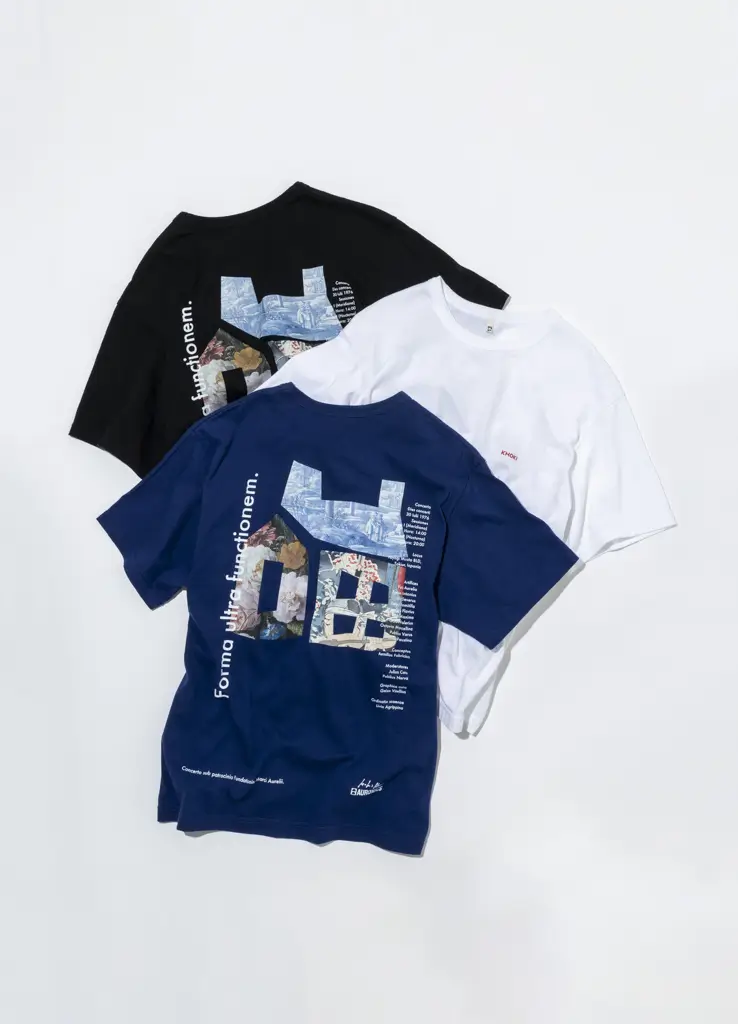
The House Tee is a basic short-sleeve body, unisex, cut to sit on its own or layer under a shirt or jacket without adding bulk. The design work happens entirely on the back, where collage-style view lay architectuel motifs over one another to chase an emotive the brand describes as structure meeting memory. Bold iconography and lettering spell out the word House across the print, giving the whole thing the presence of a frame piece rather than a passing graphic. Underneath that, the print borrows shapes from American quilt school design, the block-pieced, hand-assembled patterns long associated with Amish and Appalachian textile communities, softening the architecture with a domestic, handmade warmth.
The restraint is deliberate. The palette stays tight enough that the shirt reads as day cloth fabric first and statement piece second, and the 100 percent cotton build is made for rotation rather than display, with the label noting the fabric’s absorbency and breath as a seasonless wardrobe anchor rather than a one-off graphic tee. It comes in black, white, and a third indigo colorway, each priced at 14,850 yen and stocked through KHOKI’s own EYE web store as well as through Osaka and Kyoto retailer FASCINATE, which brought KHOKI into its own lineup only within the past year and now carries the label alongside labels like DEVOA and GUIDI.
That kind of shh utility runs against the instinct a back graphic this dense might suggest. Nothing about the shirt is precious. It is meant to be worn under an open shirt, layered beneath a jacket in the colder months, or left to stand alone, with the graphic doing the work of a statement piece while the body of the shirt behaves like the plainest basic in a closet. That tension between an elaborate, collaged back print and a genuinely wear front and body is close to the whole KHOKI thesis in min.
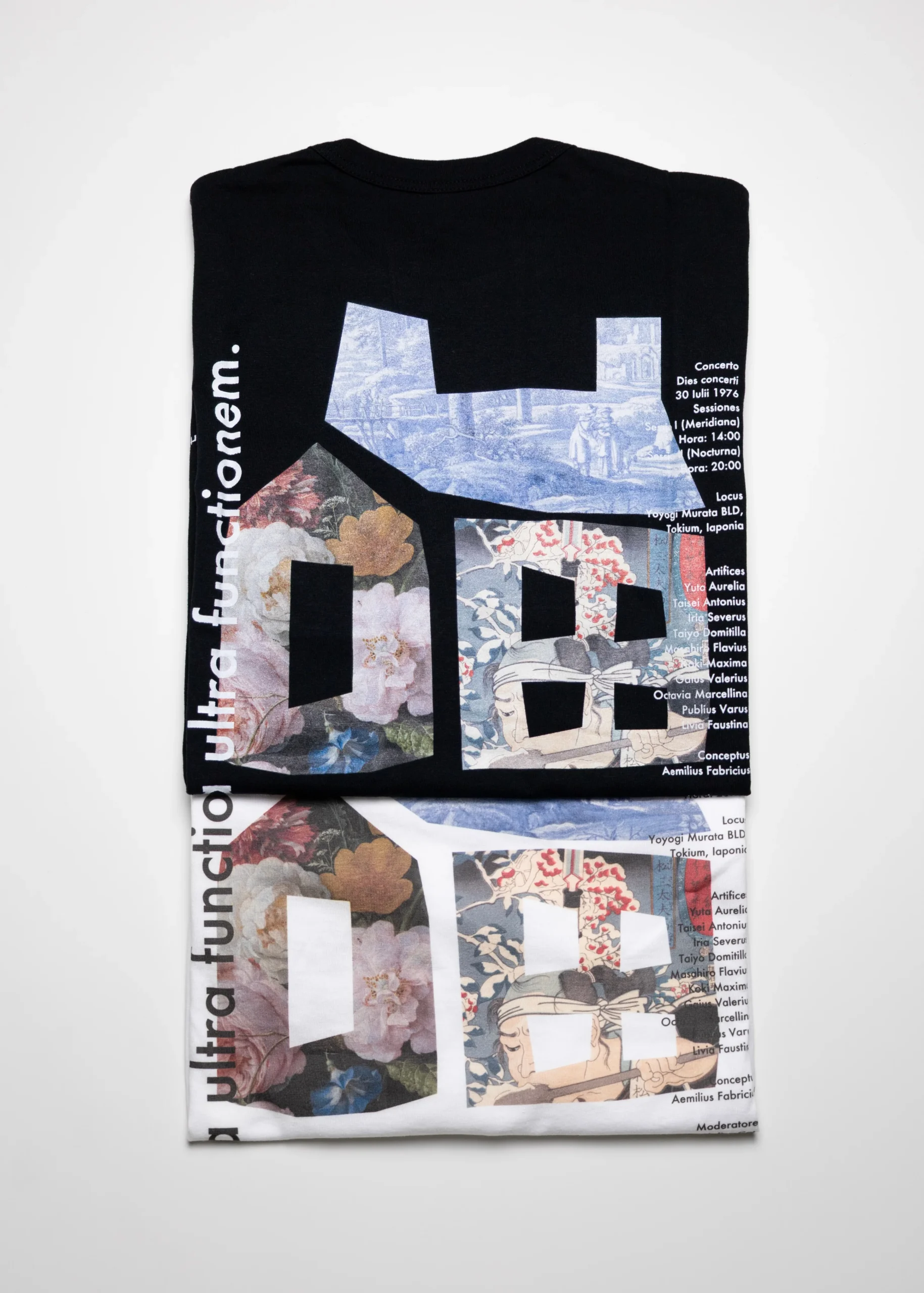
Khoki — graphic tees on light gray surface.
flow
The quilt reference is not incidental. KHOKI has spent its short run mining folk textile traditions from well outside Japan, working South Asian kantha stitching and Central Asian Suzani embroidery into puffers and cargo pants long before quilting showed up on a T-shirt back. The brand has described its own process as chasing the thrill of a flea market, the sense that something unexpected might turn up among stacks of unrelated material. Its own account of that instinct, given through Rakuten Fashion Week Tokyo, frames the label as a place where East and West intertwine and drifting nostalgia carries memory and imagination from the past into the present. The House T Shirt is that statement compressed onto a single garment: a Japanese-made basic wearing an American craft tradition on its back, built around the word House itself.
That handcraft instinct was formalized as recently as the brand’s 2025-26 autumn/winter season, run under the theme The Visible Hand of the Maker, which pushed lace embroidery and needle punching further into the collection as a direct answer to mass production. The House T Shirt, a spring/summer 2026 piece, reads as a quieter, more wearable continuation of that same argument.
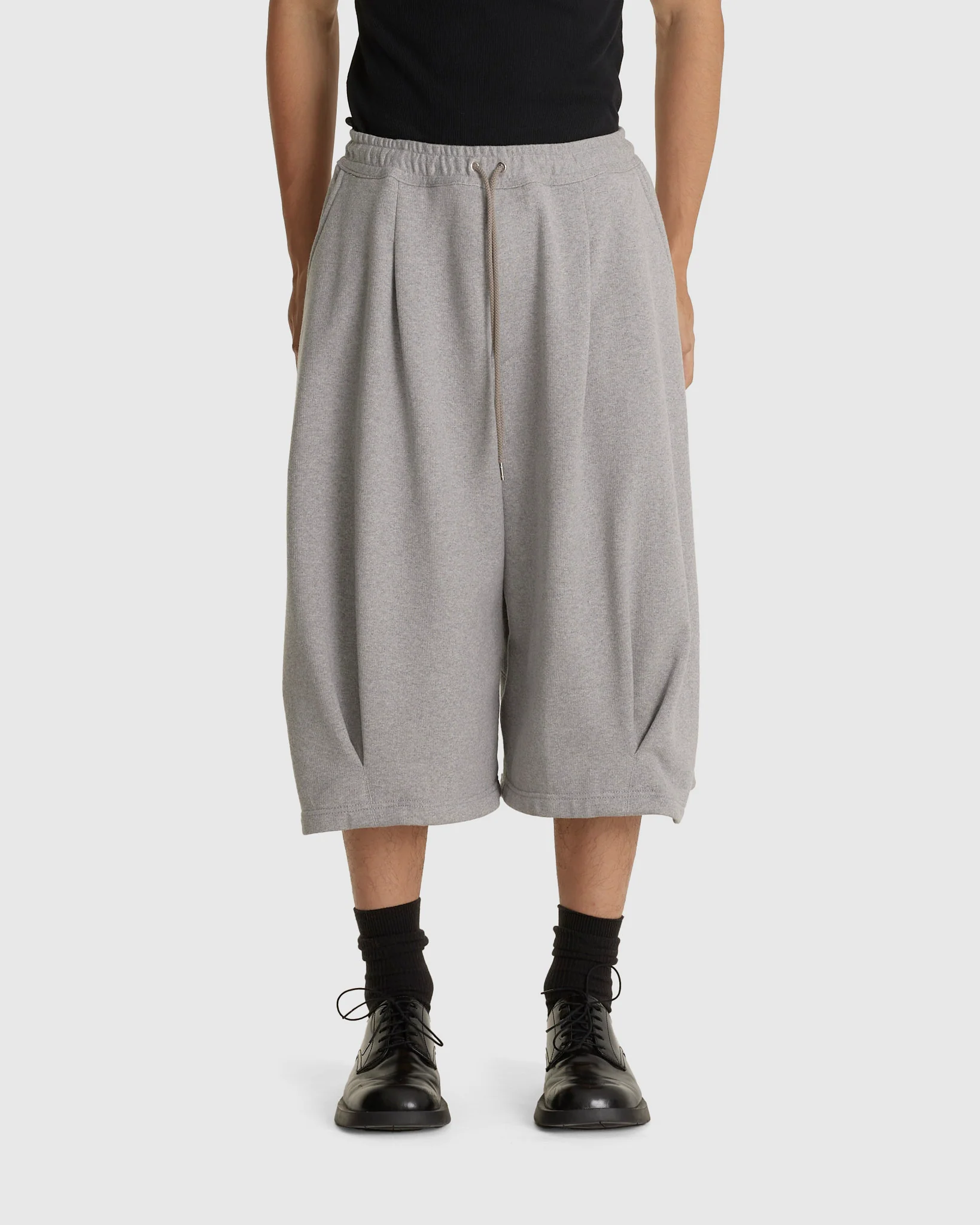
Relaxed grey jersey shorts with structured pleating, styled with a polished contrast of chunky leather brogues.
idea
KHOKI was founded in Tokyo in 2019 by a design collective led by Koki Abe, who worked at established Japanese fashion houses before starting the label. The brand does not put forward a single credited designer. Each season is instead built around one keyword, translated simultaneously into apparel and standalone art pieces, a structure the team has said keeps the focus on the clothes rather than any individual name behind them, in the mold of a design house like Martin Margiela’s early years. It is an unusual amount of anonymity for a label that has, in six years, gone from an unknown Tokyo start-up to one of the more closely watched names coming out of Japan.
fin
The trajectory has moved fast. KHOKI won a Tokyo Fashion Award in 2023, staged its first runway show the following March, and was named an LVMH Prize 2024 semifinalist before landing on a 10 Asian Designers to Watch list in 2025. This year brought a Paris retail expansion through Dover Street Market and a Hong Kong showcase via Lane Crawford’s Menswear Open House, moves that put the label on shelves alongside far more established Japanese and European names within a handful of seasons.
Most recently, the brand made a shh but significant move into sportswear, building a one-off custom Nike ACG fit for Tokyo rapper IO’s Fuji Rock Festival set alongside a separate patchwork shoe collide with OAO. As consider, frame was that Khoki prefer to move in relative shh even while picking up a major co-sign, which tracks with a label that has never put a single name designer in front of the work. None of the recent momentum has come with a public face attached to the design team, and that anonymity remains the brand’s defining eccentricity as much as the quilt or the architecture ever was. A Tee with House spelled across the back, built by a collective that keeps its own names off the label, ends up making a fairly direct argument about what the word is actual meant to describe.
Related Articles
Moncler Re/Icons Takes On Four Archive Jackets at Once, and Isetan Shinjuku Gets Them First
Moncler’s 2026 Re/Icons chapter reworks four archive down styles dating from 1954 to 2009, and […]