DRIFT AUDIO
Listen to this story
Choose a voice, then press play.
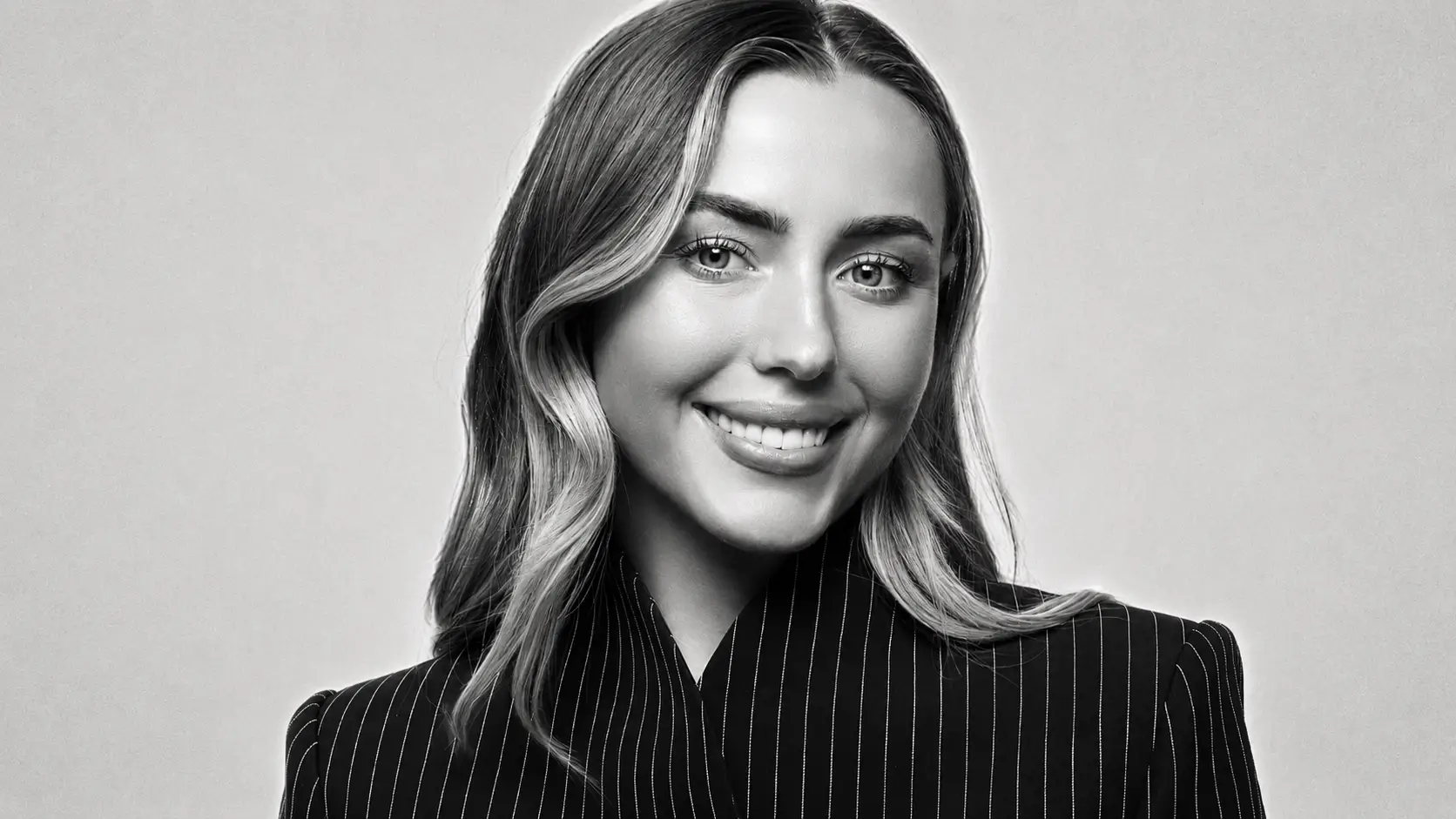
Aimee Smale built Odd Muse from her bedroom with no investors and no marketing budget, betting that young women wanted pieces built to last rather than another weekend outfit.
Odd Muse did not begin with a business plan. It began with a 22-year-old named Aimee Smale, working an administrative role at Asos, deciding to spend the money she had been saving toward a house on a clothing line instead. Five years and one pandemic later, that decision has turned into a self-funded womenswear brand doing roughly $30 million a year in revenue, with stores in London and New York and an Instagram following that has climbed past a million.
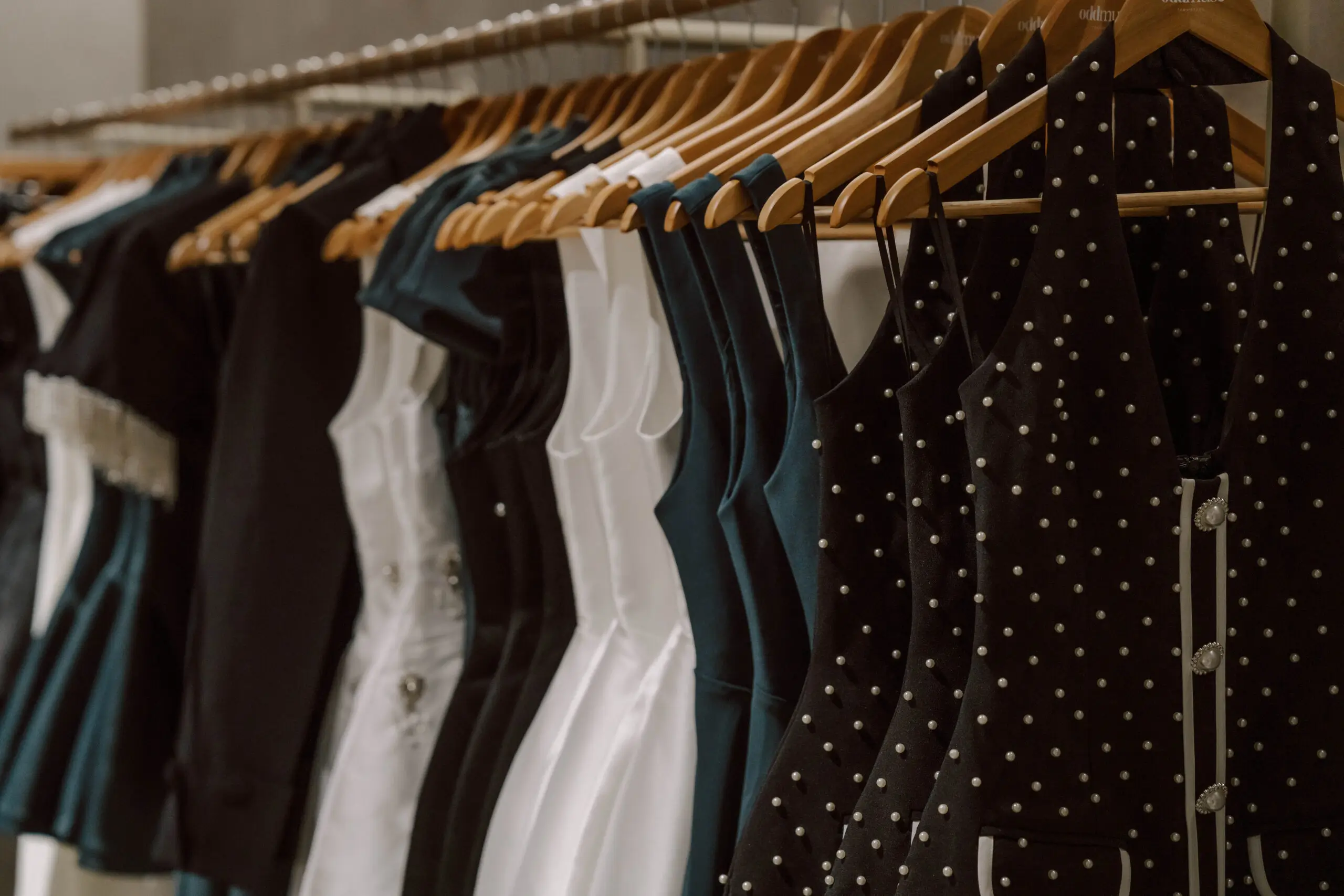
Odd Muse Dresses Displayed Inside The Store
stir
Smale launched Odd Muse from her bedroom in 2020, during the early months of the Covid-19 pandemic, with a small amount of personal savings and no outside funding of any kind. She has described the leap plainly: “When I started Odd Muse, I was 23 and had £12,000 saved,” she told Entrepreneur UK, adding that she had no investors, industry connections, or formal fashion training behind her, just a clear idea of the brand she wanted to build. The brand’s first product, the Ultimate Muse Blazer, sold out within days of launch, an early signal that the gap Smale believed she’d spotted in the market was real rather than imagined.
What she had instead of capital or connections was a story, and she leaned into it from the start. A self-taught founder in her early twenties, modeling her own designs and building an audience on TikTok as the platform was exploding in popularity, Smale became the face of the brand almost by necessity: there was no marketing budget for anything else. That approach has held for five years. She remains one of Odd Muse’s most visible assets, recently signing with UTA’s creator division alongside a roster that includes fellow British media personalities Jamie Laing and Sophie Habboo, a move that formalizes a role she had already been playing informally since the brand’s earliest days.
That founder-forward strategy has meant Smale’s own daily life has become part of Odd Muse’s content in a way most fashion brands, even ones with a visible creative director, tend to avoid. She has spoken publicly about her early mornings running the business alone before the company had a proper team, and about the shift in what her role actually looks like now that Odd Muse employs a full staff working out of an Essex office. The work has moved from designing and modeling pieces herself to leading a team, but the public-facing role she built out of necessity in year one has stayed largely intact, and she has said she has no plans to hand it off.
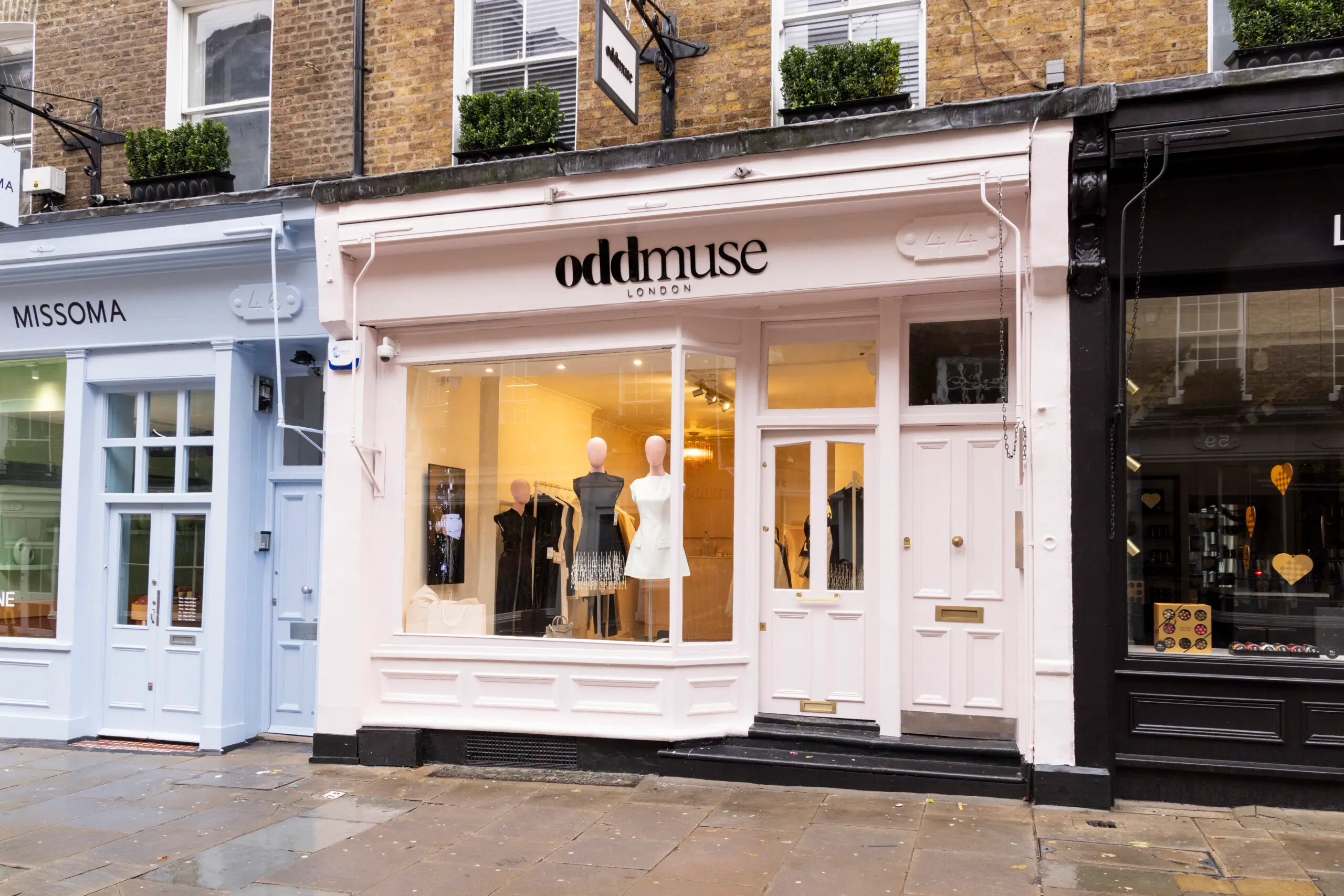
Odd Muse London Storefront In Covent Garden
flow
Smale has been consistent about what she believed was missing from the market when she started. Young women, she felt, were being offered a narrow choice between disposable trend pieces and price points that put real investment dressing out of reach entirely, with almost nothing built for the space in between. “Everything was either disposable or completely inaccessible,” she has said of the landscape she was designing against, arguing that no one was making capsule pieces at a genuinely mid-luxury price point for a younger customer.
That observation became the brand’s entire design philosophy: structure tailor, cinched waists, and versatile form built to outlast a single season, priced well above fast fashion but well below the haute houses Smale saw as inaccessible to her own generation. It is a positioning that has aged well. Odd Muse has become closely associated with the broader “quiet haute” and “old money” aesthetics that took hold across fashion in the years following the brand’s launch, though Smale had already committed to timeless, understated design before either phrase entered wide circulation, which has helped the brand read as an early mover in that space rather than a follower of it.
The commercial logic behind that positioning is straightforward, even if it’s less common in practice than the theory suggests it should be. A customer who buys a piece expecting to wear it for years rather than a single season is, by definition, a repeat customer worth retaining rather than a one-time sale worth chasing, and Smale has been explicit that trust is the actual product Odd Muse is selling as much as any individual blazer or dress. That framing has shaped everything from how the brand talks about its own pieces in marketing to how it has approached expansion, treating longevity less as a design constraint and more as the entire basis of the business model.
grow
Odd Muse’s expansion has been deliberate unhurried relative to how quickl brands with viral social following often try to scale. The label only introduced its first knitwear range in its fourth year of operation, a pace Smale has framed as intentional rather than cautious, choosing to fully establish one category before building out the next rather than launching broadly and thinning the brand’s identity in the process. Roughly half of Odd Muse’s total business still comes from a small set of core form that have been in continuous production for three to four years, a retention rate that Smale points to as proof the brand’s founding thesis, elevate pieces built to remain relevant well past a single season, actual works in practice rather than just in market copy.
The brand’s pre-order model has jure a sig role in making that pace sustainable without outside investment. Selling stock ahead of production rather than manufacturing speculatively has kept Odd Muse’s cash flow largely self-generating, while also creating a natural scarcity around new drops that has fed directly into the brand’s social media momentum. It’s a structure that ties commercial discipline and community-building together rather than treating them as separate strategies, and it has let a company with no institutional backing behave, financially, more like a considerably larger and better-capitalized one.
Community has functioned almost as a second product line alongside the clothing itself. Smale has spoken about treating Odd Muse’s audience less as a customer base to be marketed at and more as a group brought directly into the brand’s decisions, whether that’s early looks at product development or behind-the-scenes updates from the Essex studio. Combined with a founder who has, from year one, put her own face and name to the brand rather than hiding behind a corporate identity, that approach has built a level of customer familiarity that’s difficult for larger, more anonymous fashion houses to replicate regardless of budget, and it’s part of why Odd Muse’s growth has tracked so closely with Smale’s own social media presence rather than running as a separate channel.
follow
Odd Muse’s move from a purely digital brand into physical retail began with a pop-up in London’s Covent Garden, which converted into the label’s first permanent flagship store in November 2023, the same year it debuted at London Fashion Week and expanded into wholesale through Harvey Nichols in the UK and David Jones in Australia. Smale later added a second London location on New Bond Street, a three-storey townhouse she has described as extending the brand’s community from a busier, more casual shopping strip onto one of the city’s more prestigious retail addresses.
The bigger leap came with Odd Muse’s move into the United States, via a store on Mercer Street in New York’s SoHo neighborhood. Smale has called it a genuine step change for the business, noting that she wasn’t aware of another self-funded UK brand making a comparable move into US retail without outside investment behind it. The US market has since grown into a substantial share of Odd Muse’s overall business, and Smale has said future store openings will continue to be chosen selectively, built around where the brand’s existing customer base is already strongest, rather than pursued for the sake of expansion alone.
The two London locations serve deliberately different roles rather than duplicating each other. Covent Garden, the brand’s first permanent home, is positioned as the higher-energy, community-facing space, close to the pop-up culture where Odd Muse first proved it could draw a crowd in person rather than only online. New Bond Street is a different pitch entirely: a townhouse set on one of London’s most established luxury retail streets, aimed at signaling that Odd Muse’s ambitions extend into the same conversation as the legacy houses Smale once described as out of reach for her own generation. Placing both formats within a few miles of each other, rather than choosing one identity for the brand’s UK retail presence, reflects a company still decide how far into traditional luxury territory it wants to move while keeping the more accessible, community-first side of the business intact.
View this post on Instagram
look
By any measure, Odd Muse’s trajectory is unusual for how little outside capital has touched it. The brand has grown from a bedroom operation into an eight-figure business, earned Smale a spot on the Forbes 30 Under 30 list in 2023 and a place on Drapers’ own 30 Under 30 the following year, and built an Instagram following of over a million, all while remaining entirely self-funded. That combination, high growth without a funding round underwriting it, is rare enough in fashion that it has become as central to how the brand gets covered as the clothes themselves.
Smale has framed her own approach to ambition as long-term rather than reactive, describing Odd Muse as a project she thinks of in terms of decades rather than seasons or funding rounds. Her advice to other founders leans in the same direction: start before everything feels figured out, trust early instincts, and build for depth rather than speed. Either that patience continues to pay off at the pace it has so far will depend on how well a brand built around timelessness can keep expanding without diluting the very quality that got it here. For now, the numbers suggest she has more room to grow into the vision than she has already used up.
What stands out most about Odd Muse’s growth curve, set against the wider landscape of social-media-born fashion brands, is how rarely the two things that built it, a single visible founder and an entirely self-funded balance sheet, tend to coexist at this scale for this long. Founder-led brands that grow this quickly typically either bring in outside capital to accelerate further or see the founder’s personal view fade as the business professionalizes around them. Odd Muse has done neither. Smale is still the person modeling the brand’s own campaigns and nar its decision public, and the company has still never taken on a funding round, which makes its next several years less a question of whether the growth continues and more a question of whether that specific, unusual rare combo can keep holding as the business gets bigger.
Related Articles
Moncler Re/Icons Takes On Four Archive Jackets at Once, and Isetan Shinjuku Gets Them First
Moncler’s 2026 Re/Icons chapter reworks four archive down styles dating from 1954 to 2009, and […]