DRIFT AUDIO
Listen to this story
Choose a voice, then press play.
A New York menswear label puts its own plaid and heel embroidery on Converse’s flagship archive sneaker, sold exclusively across Japan starting August 21.
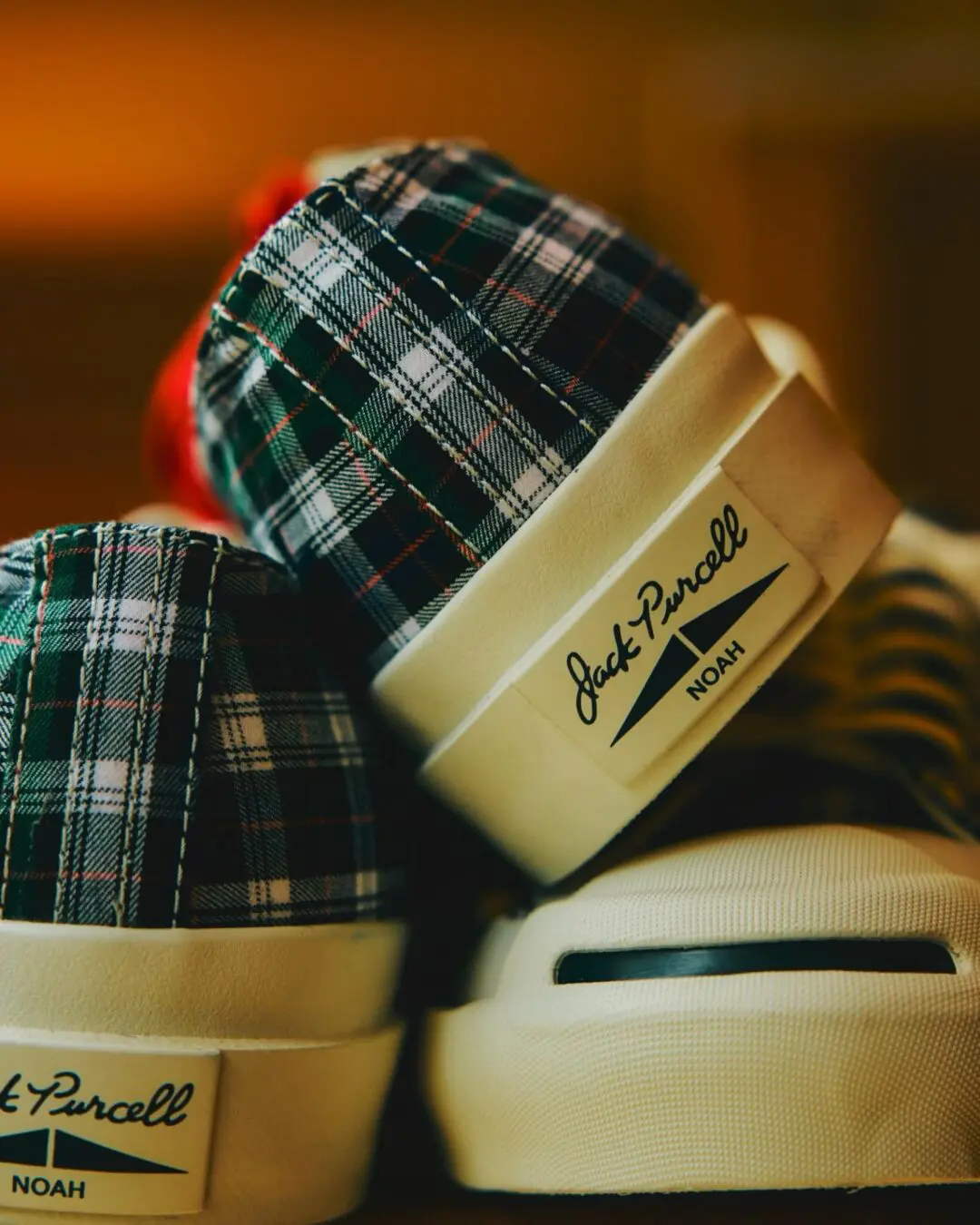
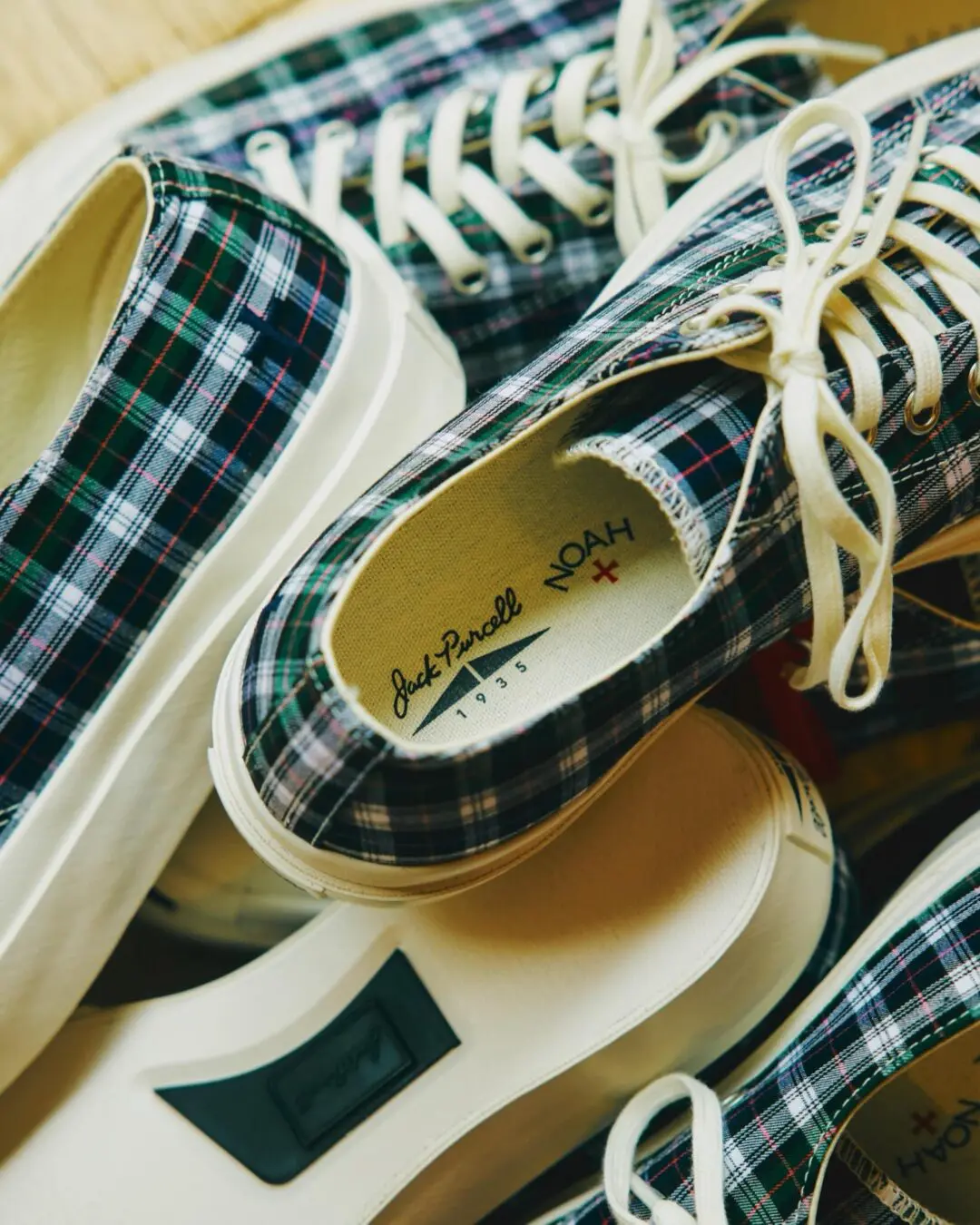
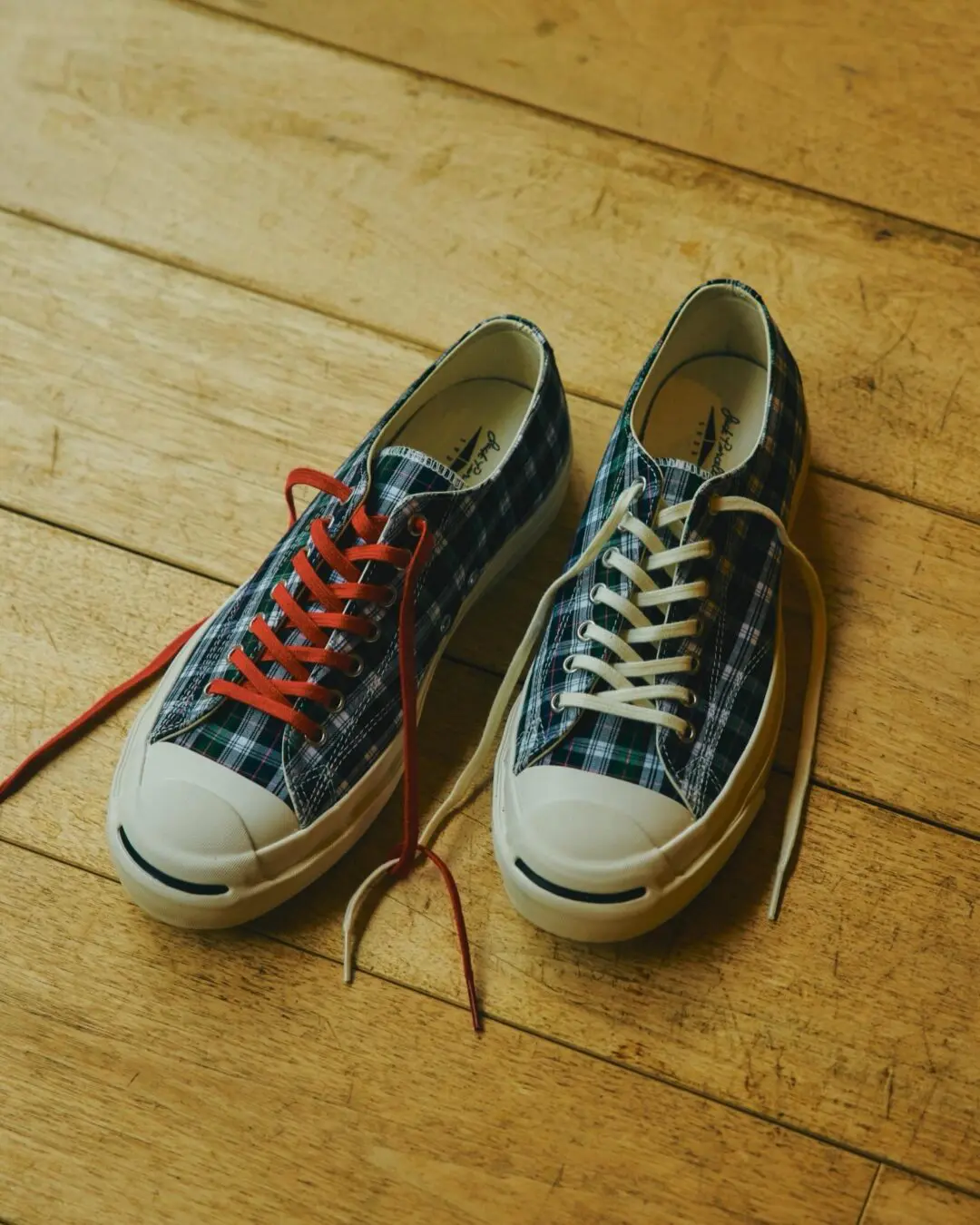
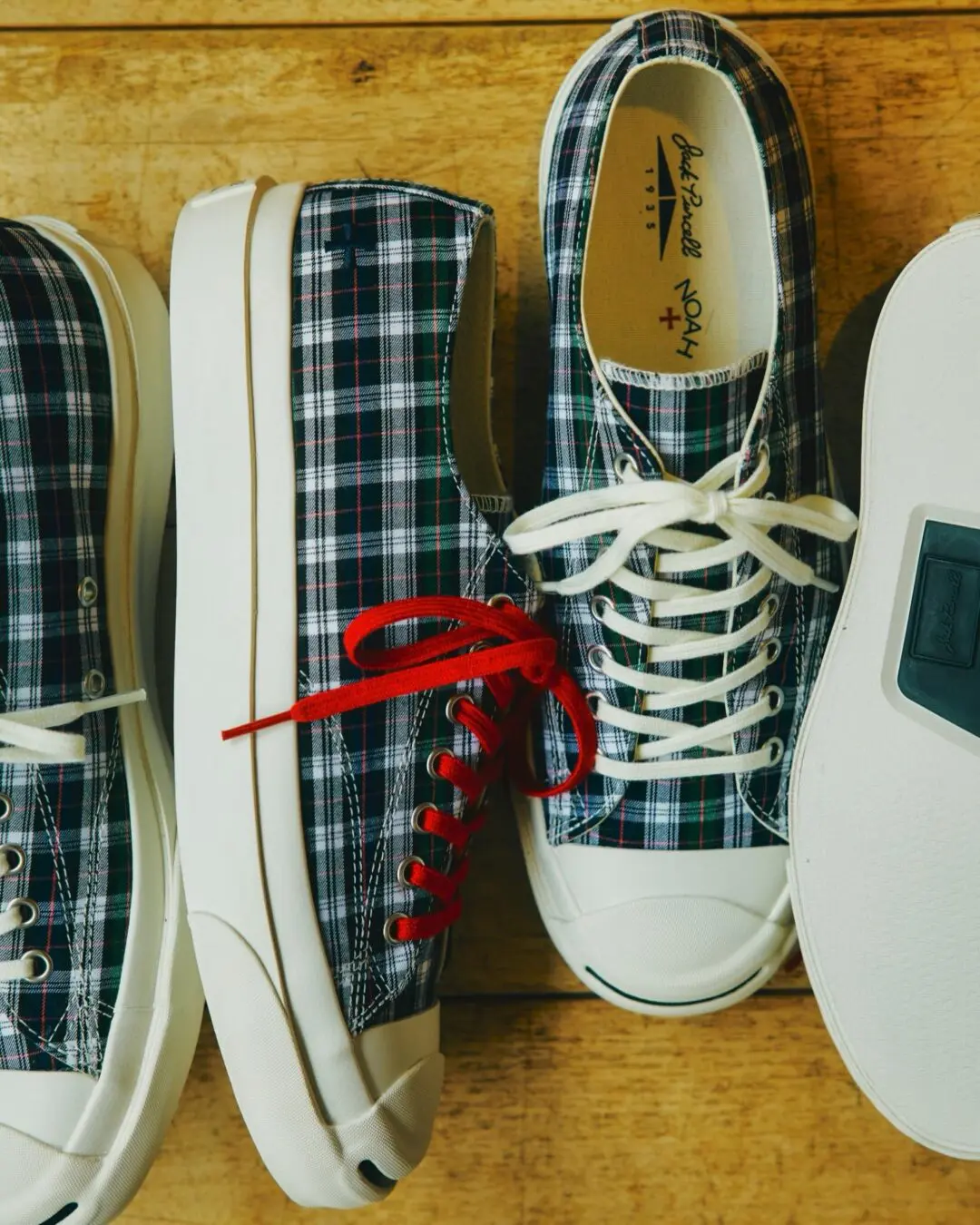
The shoe in question is built on Converse‘s “JACK PURCELL 1935” line, the flagship model the brand launched to mark 90 years since the original silhouette’s debut. For this pair, NOAH has reworked the upper in its own original plaid pattern, a fabric choice that reads more like a shirt swap than a shoe trope, and added cross embroidery along the heel side. That cross is not incidental. It has functioned as NOAH’s signature mark since the label’s earliest seasons, and seeing it stitched into a heel typically reserved for Converse’s own triangular logo, the detail fans call the shoe’s “mustache,” is the clearest signal of how deep this collaboration runs into the shoe’s identity rather than sitting on top of it.
The heel label itself has been changed to a special joint-bran version, and the shoe ships with two sets of laces, one white and one red, so the wearer can toggle between a shh reading of the design and a version that pulls more color out of the plaid. Converse lists the rel under a single “Multi” colorway (SKU 33301540), and price is set at 18,700 yen include tax, or roughly $125. Nothing about the form itself has been altered for the collide. NOAH’s contribution sits entirely in materials, pattern, and the small brand markers that sneaker collectors tend to scrutinize first, which keeps the shoe legible as a Jack Purcell before it reads as a collision at all.
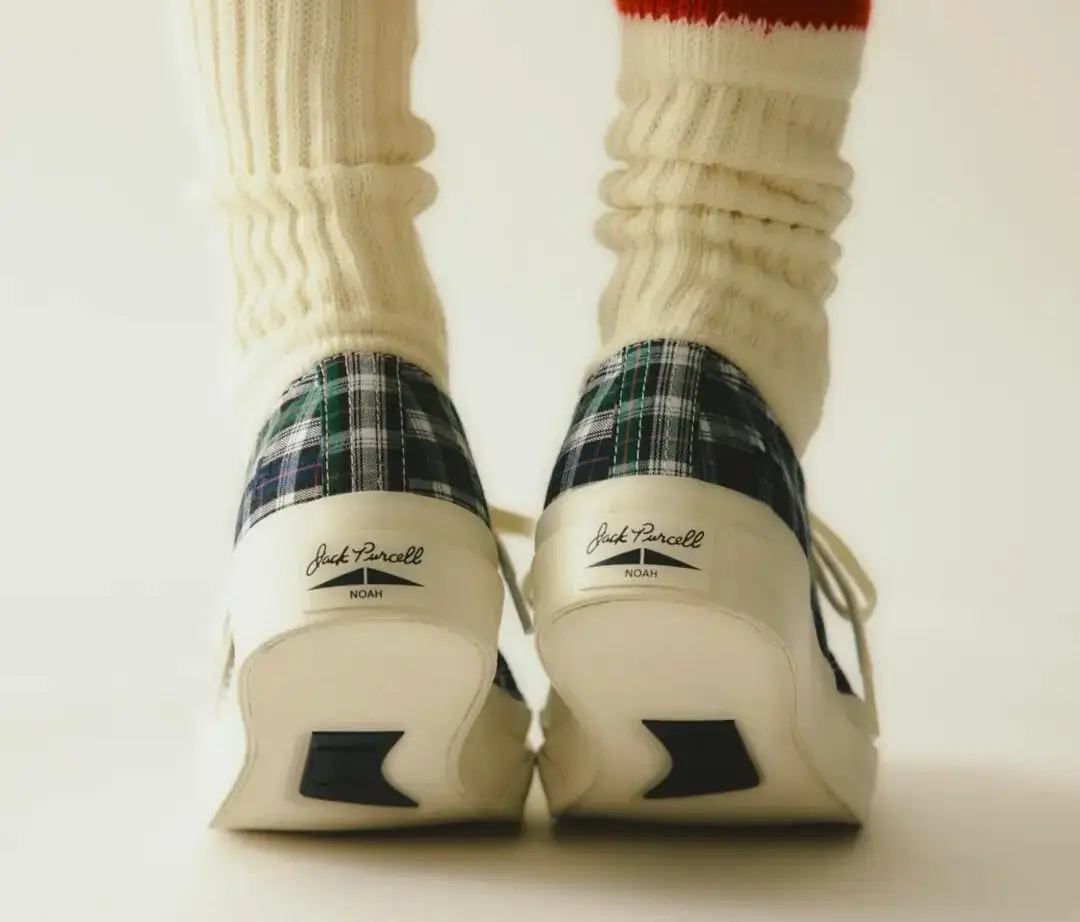
Rear Of Noah X Jack Purcell Plaid Low-Top Shoes Worn With Cream Ribbed Socks, Showing Off-White Rubber Heels And Co-Branded Heel Labels.
from
Jack Purcell was not originally a Converse product at all. The shoe was developed in 1935 with input from the badminton world champion whose name it carries, and it first went to market through Spalding before B.F. Goodrich took over production. Converse only picked up manufacturing and sales rights in 1972, decades after the shoe had already left the badminton court behind for a much broader life in casual dress. The “1935” line that this NOAH connection sits inside was built specifically to mark that origin year, pulling 1970s-era archive details back into a modern flagship model: a four-stitch heel strap, a toe guard cut to different lengths on the inside and outside edge, and side stitching lifted from the same period. Converse paired those inherited details with a newly developed anatomical last, a fiber shank for arch support, and an Ortholite insole, aiming the shoe more at everyday urban wear than at revival-for-revival’s-sake nostalgia. The toe still carries the “smile” curve that has defined every Jack Purcell since 1935, regardless of who was manufacturing it that decade. That continuity is part of the shoe’s appeal to a label like NOAH in the first place. Jack Purcell has spent most of the last several decades as a low-key alternative to Converse’s own Chuck Taylor, worn by people who wanted the same era of sneaker without the size of the logo, and the “1935” line leans into that reputation rather than fighting it. Converse Japan has treated the label as a standalone flagship over the past year, releasing archive-inspired colorways, a loafer variant, and a suede reissue under the same name well before NOAH’s version arrived, which gives this collaboration a more established shoe to build on than a typical one-off collaboration model would offer.
show
NOAH’s own history has a similar false start built into it. Brendon Babenzien, who spent years as design director at Supreme, first launched NOAH in 2002 and closed it not long after, returning to Supreme before finally relaunching the label in 2015 with his wife and creative partner, Estelle Bailey-Babenzien. The version of NOAH that exists today, built around a flagship at 195 Mulberry Street in SoHo with additional stores in Los Angeles, London, and Tokyo, has positioned itself deliberate against the drop-culture churn Babenzien helped build at Supreme, favoring restrained East Coast prep, surf and skate references, and a sustainability pitch tied to where and how its clothes are actually made. A Tokyo store has been part of that footprint for years, which makes a Japan-exclusive Converse tie-up less of a stretch than it might look on paper. NOAH has collision before with adidas Originals, Timex, and Vuarnet among others, but a Converse project built around one of the brand’s own archive flagships, rather than a Chuck Taylor colorway, points to a more considered kind of partnership than a typical logo swap. It also lines up with how NOAH has always talked about its own output, favoring materials and construction over headline graphics, and a badminton shoe with 90 years of continuous production behind it fits that stated preference for things built to be worn rather than flipped.
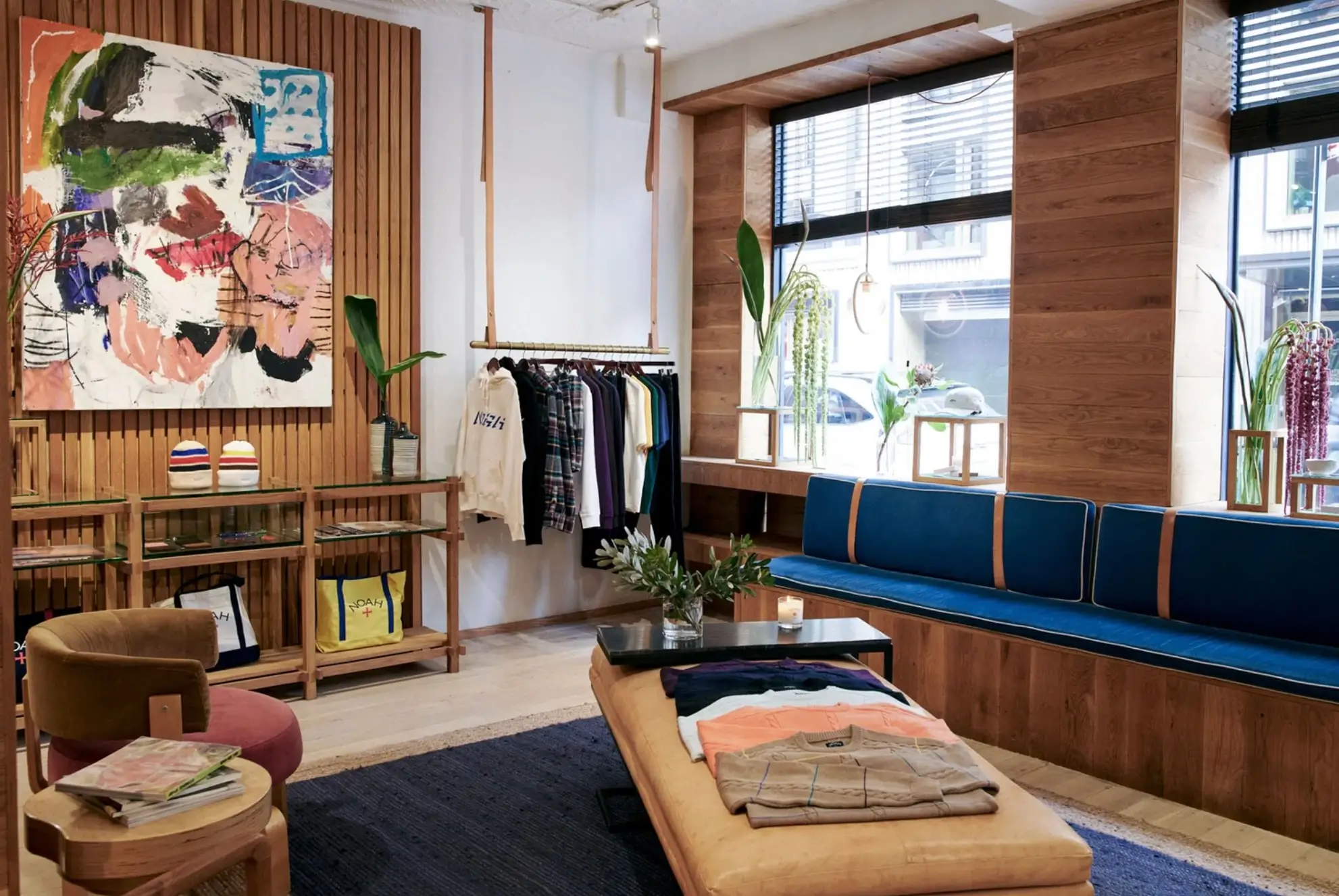
Interior Of A Noah Retail Store Featuring Warm Wood Paneling, Clothing Displays, Abstract Artwork, Blue Window Seating, Plants, And Folded Apparel.
fin
The release itself is staggered and geographically narrow. From August 21, the shoe is available first and only through NOAH’s own Japan retail, specifically NOAH CLUBHOUSE, NOAH NOODLESHOP, and SELECT by BAYCREW’S, before the general release opens on August 26 through Converse’s own channels. Converse has confirmed the collaboration is limited to Japan with no indication of a wider rollout, which fits a pattern of Japan-first or Japan-only show links that both brands, along with plenty of others in this space, have leaned on for years. Whether the shoe ever surfaces outside Japan through resale or a later restock is not something either brand has addressed. The staggered structure, giving NOAH’s own three doors a five-day head start before Converse opens the shoe up more broadly, mirrors how the label has always handled its own weekly product drops back in New York, prioritizing the people already inside the store over a wider release. Applying that same sequencing to a Japan-only Converse project, rather than a straightforward simultaneous launch across both brands’ channels, suggests NOAH had more say in how this particular release was staged than a standard licensing connection typical elicit.
Related Articles
Converse Covers Its Pointed-Toe All Star in Fur and Cuts the Laces
The toe line stays razor clean while everything behind it turns to long-pile fur. Converse […]