DRIFT AUDIO
Listen to this story
Choose a voice, then press play.
KEF’s new LS Luxe pairs a sculptor’s curves with a listening system built from scratch, marking the veteran designer’s fourth turn shaping the British hi-fi brand’s lineup.
KEF pulled the wraps off its LS Luxe wireless speakers on July 30 at a reveal event near the brand’s London base, a launch that had been teased for days without a name, a price, or a single confirmed specification attached to it. What arrived was, by KEF’s own description, its most ambitious wireless hi-fi system yet, and one that leans as hard on how it looks as on how it measures.
The company behind KEF has spent more than six decades arguing that a loudspeaker does not need to resemble a shipping crate to sound serious, and the LS Luxe is the clearest recent proof of that argument. It slots in above KEF’s existing LS Wireless family, the compact LSX II and the larger LS50 Wireless II, both of which built a following by folding amplify, stream, and the brand’s Uni-Q driver tech into complete stereo sys that skip the rack entirely.
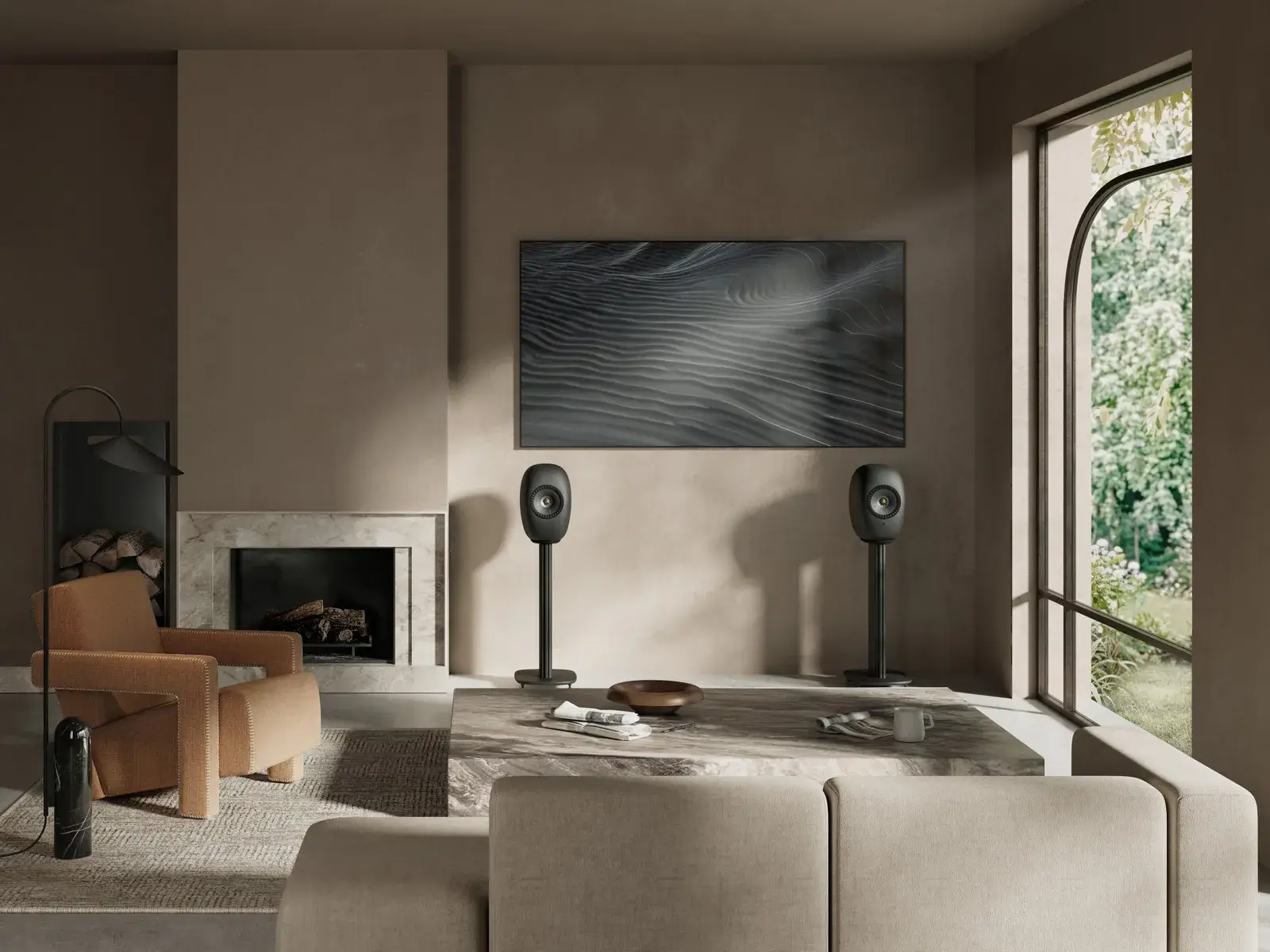
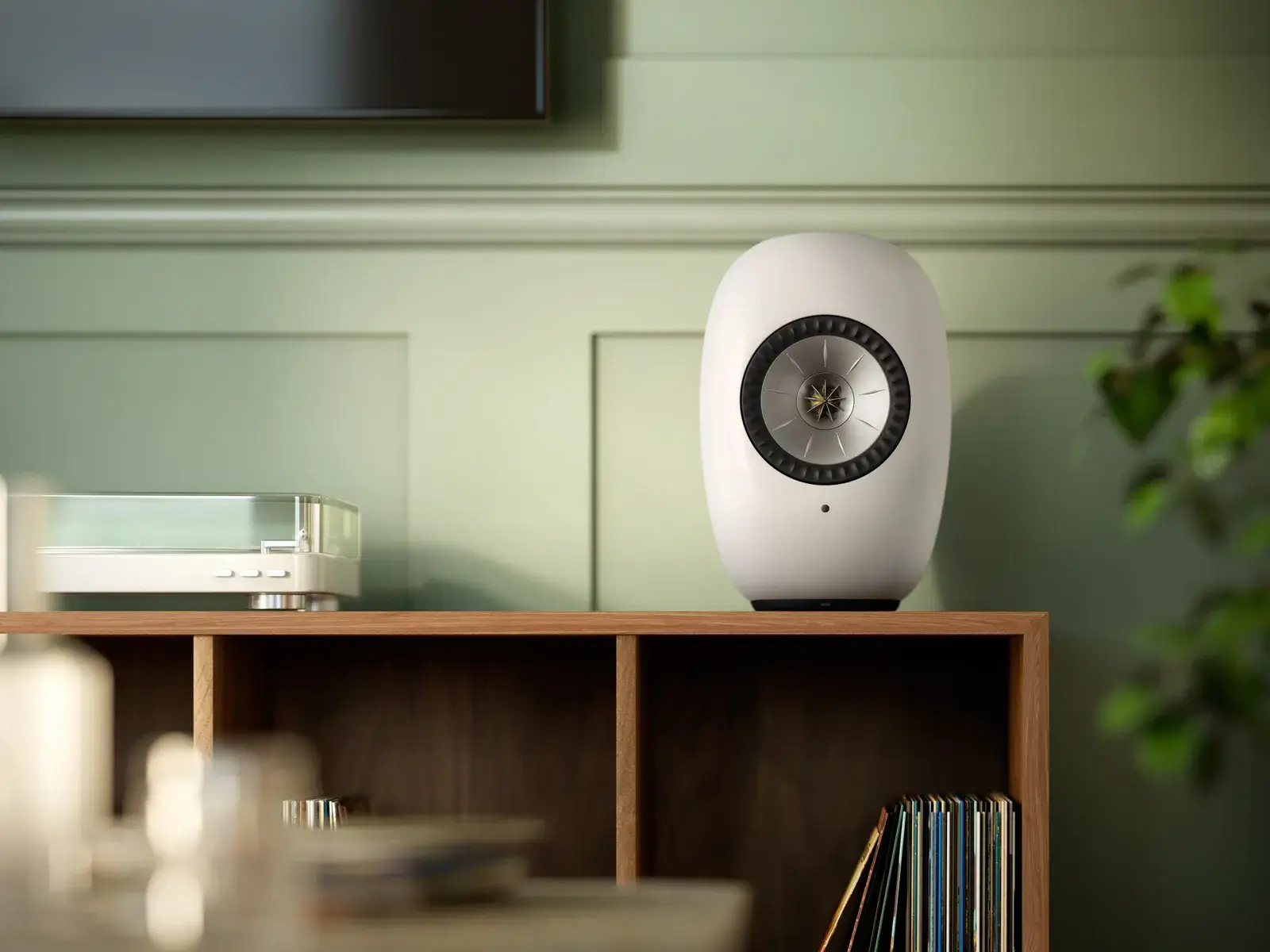
The KEF LSX II LT wireless speakers blend into a warm, contemporary living room, delivering high-fidelity stereo sound through their signature Uni-Q drivers while complementing minimalist architecture and refined interior design.
stir
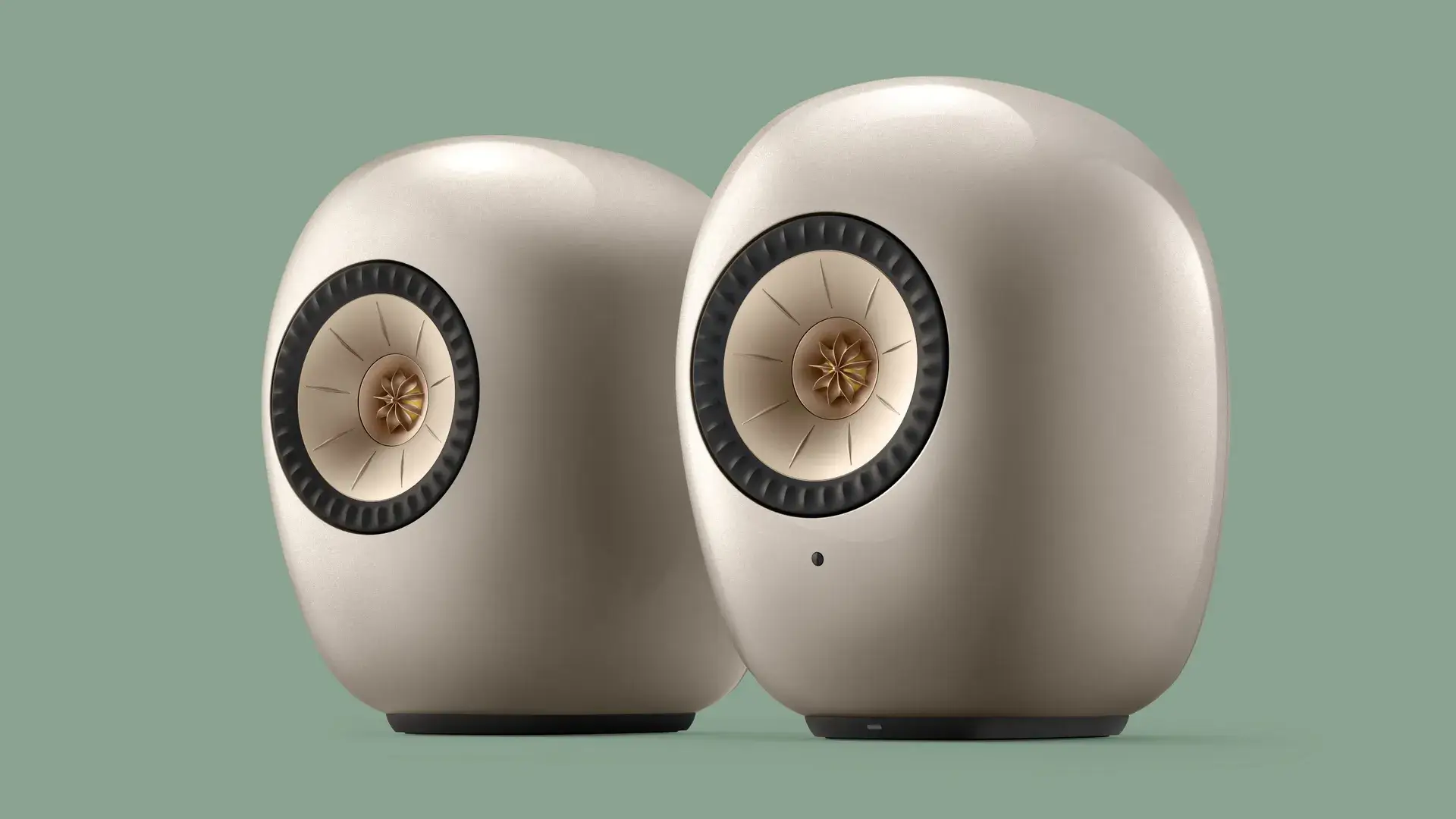
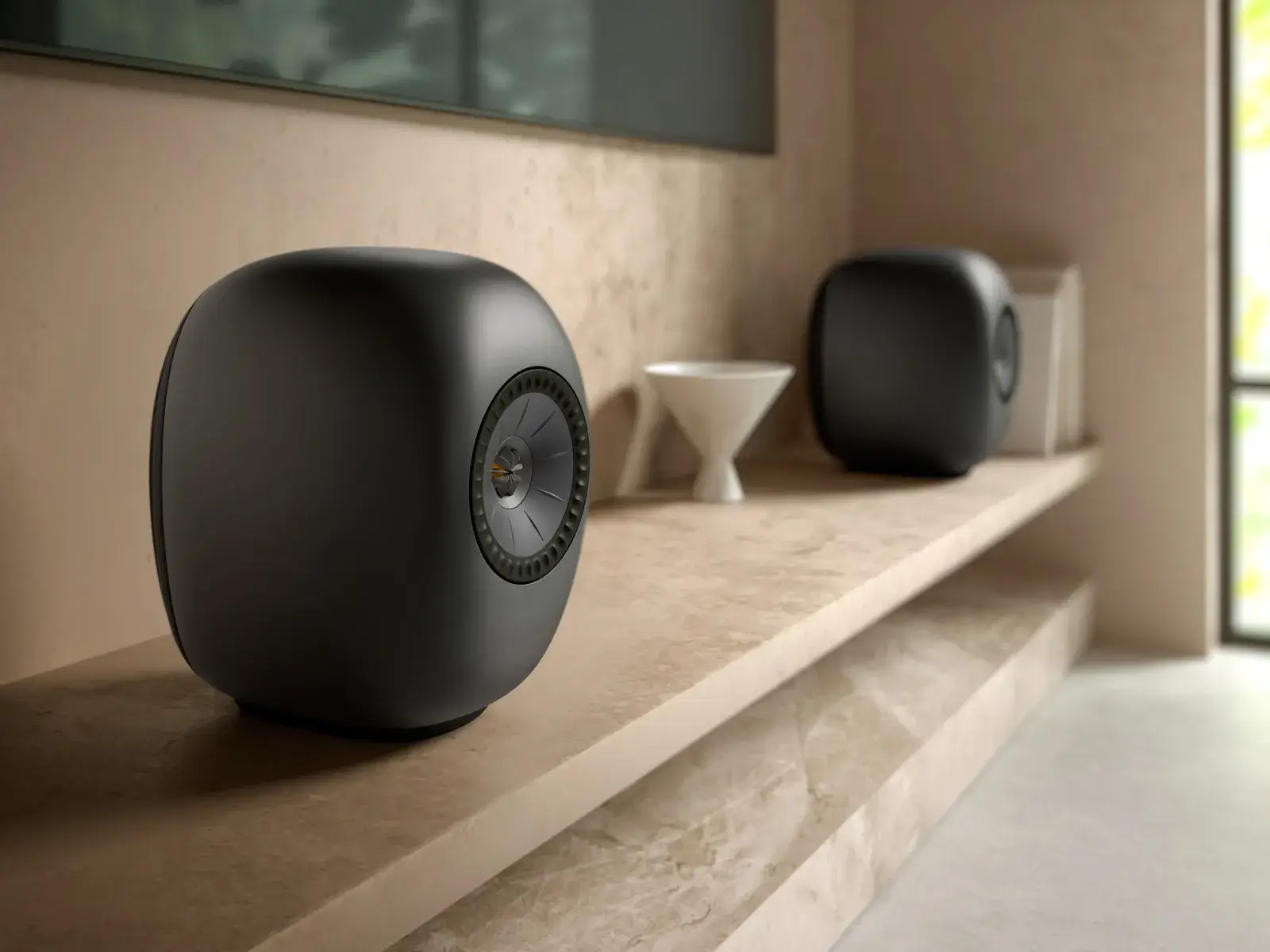
Anyone who has followed Ross Lovegrove‘s work will recognize the LS Luxe before they read a single spec sheet. The Welsh designer, born in Cardiff in 1958 and trained first at what is now Manchester Metropolitan University and later at the Royal College of Art, built a career on the idea that a well designed object should look grown rather than machined. Compound curves, no sharp edges, forms that trace back to natural structures rather than geometric convention: that lexicon earned him the nickname Captain Organic, and it is stamped across the LS Luxe’s rounded cabinet just as plainly as it was on his earlier work for KEF.
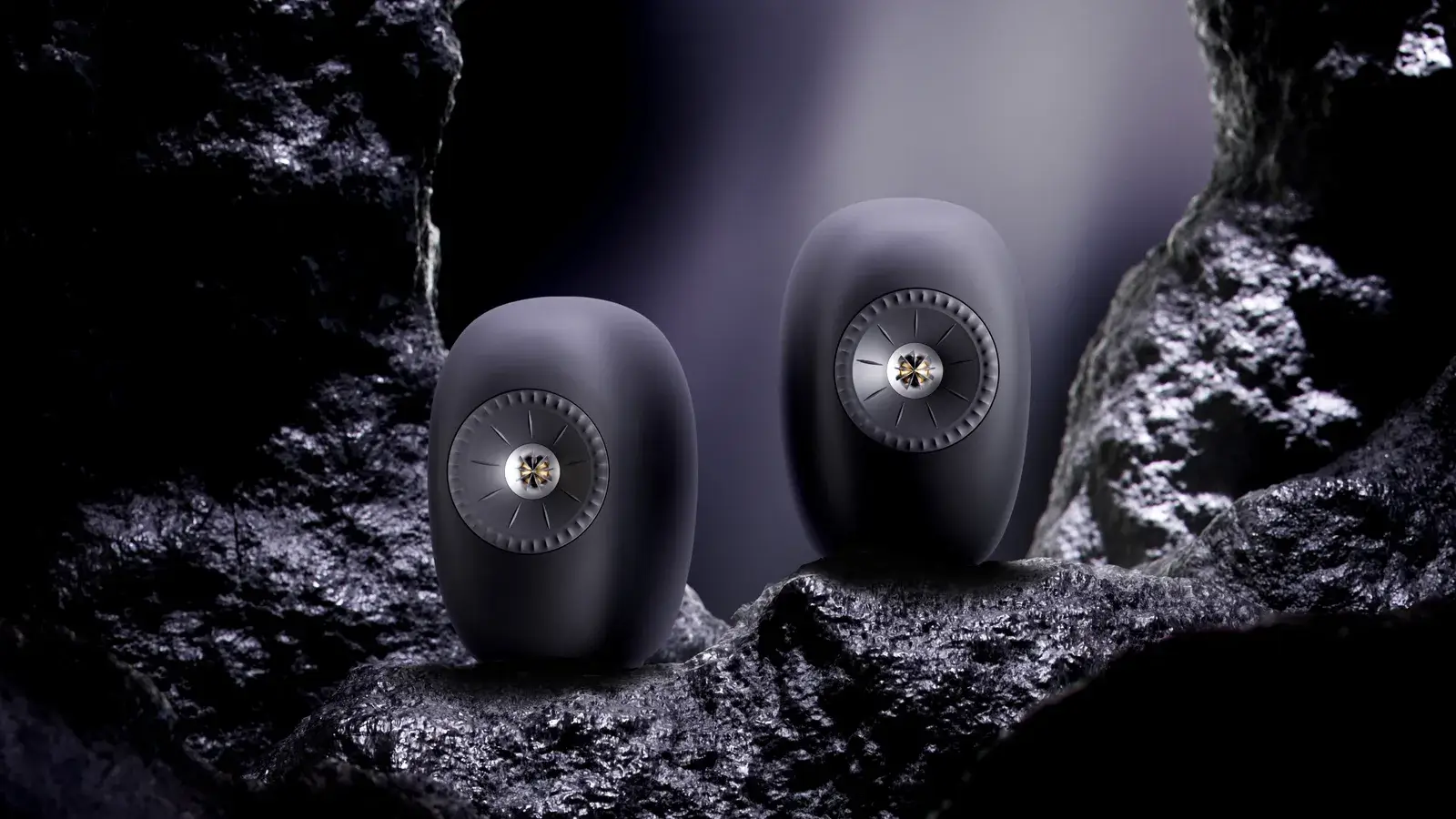
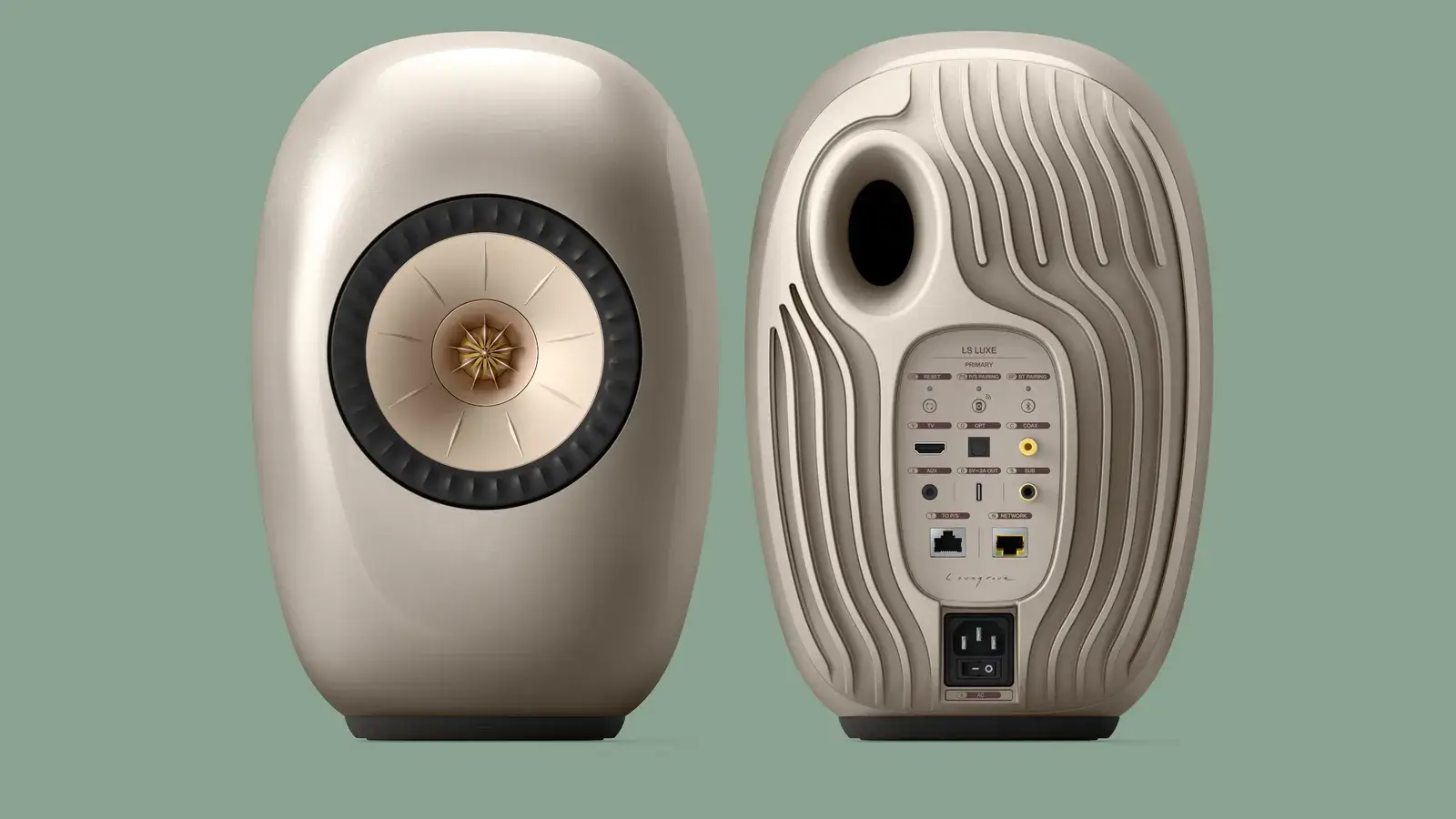
The enclosure is built from a bulk molded compound rather than the wood veneer or MDF that dominates the category, wrapped around what KEF calls a flexible, decoupled internal structure. The company frames the shape as function rather than decorative: a low diffraction surface with no parallel internal walls, meant to avoid the standing waves that build up inside a conventional box. According to report from reliable sources, Lovegrove’s fluid, curvaceous form is a world away from the crisp edged black and wooden boxes that currently dominate the category, and the effect in person is closer to a piece of tabletop sculpture than a piece of stereo equipment.
Before Lovegrove’s own studio in London, formerly Studio X, took shape in 1990, he had already logged time at Frog Design working under Hartmut Esslinger on projects for Sony and early Apple computers, then moved to Paris for a stint with Knoll International, colliding along the way with architect Jean Nouvel and designer Philippe Starck. That background in industrial manufacturing as much as pure aesthetics shows up in how deliberately KEF frames the Luxe’s curves: not ornament, the brand insists, but structure doing acoustic work.
View this post on Instagram
in
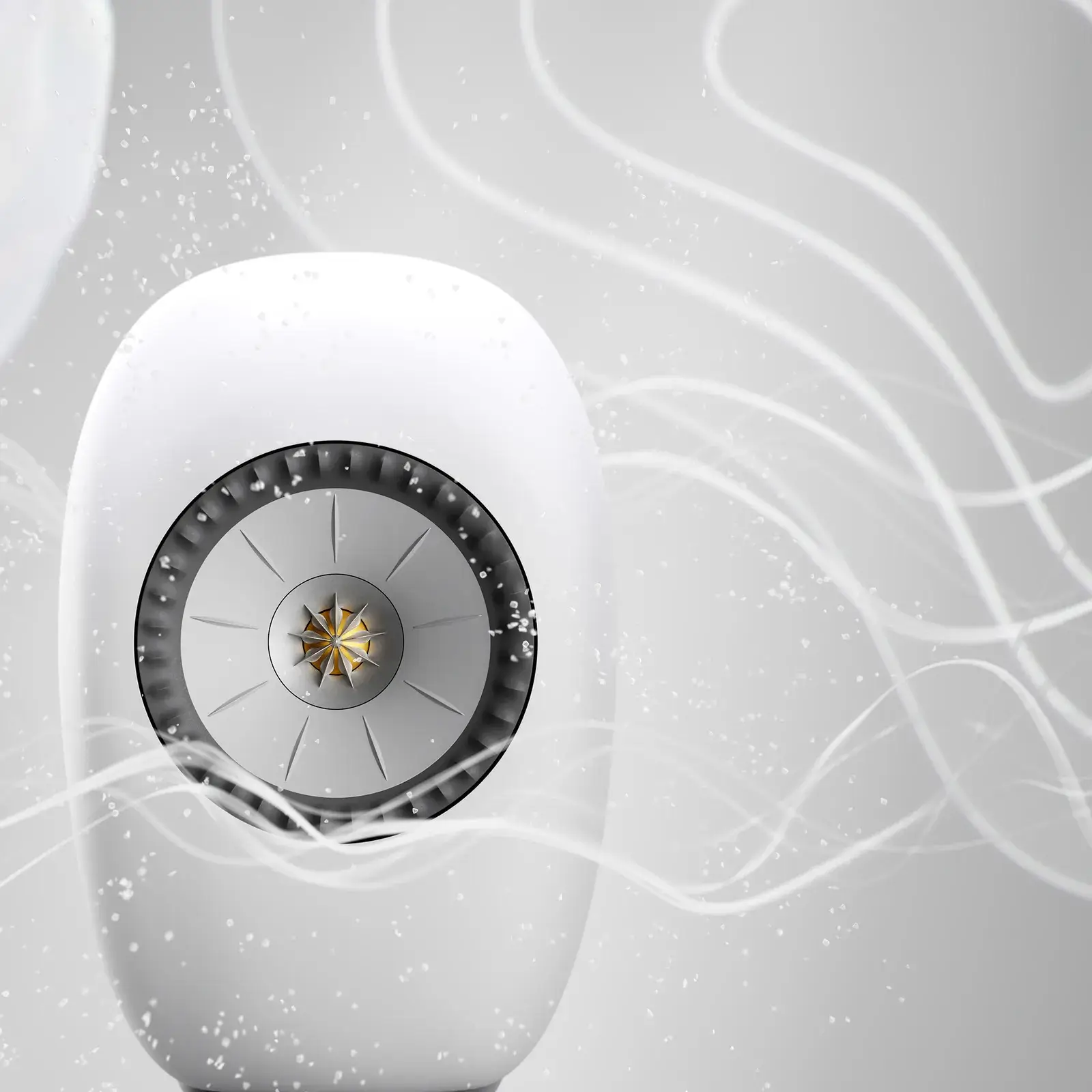
Strip away the sculpture and the LS Luxe is built around a 6.5 inch, 12th gen Uni-Q driver, KEF’s long run coaxial design that places the tweeter at the acoustic center of the midrange cone so the two behave as a single point source rather than two separate sound sources fighting for the same room. Wrapped around it is Metamaterial Absorption Technology, KEF’s internal shorthand MAT, a labyrinth structure that sits behind the driver and absorbs unwanted rear sound waves before they can hue the output.
The genuinely new piece of engineering is something KEF calls Velocity Control, or VECO. It is the first time the tech has appear in a standalone speaker, having previously done its work inside KEF’s XIO soundbar. VECO uses a speed sensor to track the Uni-Q driver’s movement in real time and feeds that data to a purpose built amplifier that corrects irregularities in the driver’s motion as they happen, a closed loop system aimed at distortion that conventional passive designs simply cannot address because the amplifier and driver are made by different companies with no shared feedback loop.
Each speaker carries a hefty 380 watts of amp, split between a 100 watt Class AB amp for the high frequency and a 280 watt Class D amplifier for the low end, for a combined 760 watts across a stereo pair. KEF quotes a frequency range of 35Hz to 47kHz, and for anyone who finds that bottom end insufficient, each speaker includes a subwoofer output, with an optional KW1 wireless adapter kit avail for a cable free connection to a KEF subwoofer.
sys
The LS Luxe ships as a primary and secondary pair. The primary speaker houses the bulk of the connectivity: HDMI eARC, TOSLINK optical, coaxial digital, a 3.5mm analog input, and two RJ45 Ethernet ports, one for the home network and one to link the pair directly. That wired link runs at 24 bit/192kHz; opt for a wireless connection between the two speakers instead and the resolution steps down to 24 bit/96kHz, a tradeoff KEF is upfront about rather than obscuring in a footnote.
Streaming runs through KEF’s W2 wireless platform, which supports hi resolution playback up to 24 bit/384kHz alongside a genuinely broad spread of services: Tidal, Amazon Music, Qobuz, Deezer, UPnP and DLNA, Spotify Connect, Tidal Connect, QPlay, AirPlay, and Google Cast, with multi room audio built in. Roon Ready support is confirmed for arrival in 2027, a notable gap for a system pitched at this price point but one that at least has a stated timeline attached rather than an open ended promise.
Early listening impressions gathered at the London reveal, reported across several outlets that heard the system firsthand, described an open, clean presentation with strong detail retrieval and bass that outperforms its compact footprint. KEF’s own marketing frames the ambition plainly. Grace Lo, the brand’s president and head of global marketing, described the goal as making the listen an experience truly inspiring, calling LS Luxe the realization of that view.
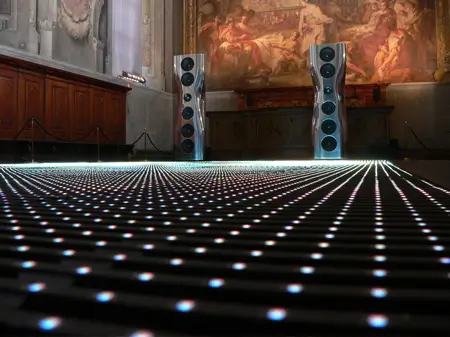
The floorstanding high-fidelity loudspeakers stand atop a glowing LED installation within a historic gallery, juxtaposing contemporary acoustic engine against centuries-old artwork and architecture in a striking audioview show.
time
The LS Luxe is not Lovegrove’s first connection with KEF, and the company is not shy about tracing the lineage. It began in 2007 with Muon, a two meter tall loudspeaker fabricated from superformed aluminum and limited to an edition of just one hundred pairs, unveiled at Milan’s Salone del Mobile in a former science museum cloister. KEF has described Muon’s curvaceous form as drawing on the abstract sculpture of Barbara Hepworth and Henry Moore, and at roughly 254 pounds per unit it remains one of the most extreme physical statements a hi-fi brand has ever put into production.
From there the partnership moved toward smaller, more accessible objects: the Muo portable Bluetooth speaker in 2015, followed later by the Mu3 wireless earbuds and Mu7 wireless headphones. The LS Luxe sits at a different point on that spectrum again, a serious wireless hi-fi system rather than a limited edition sculpture or a piece of personal audio, but KEF’s own materials place it explicitly within the same design lineage running back to Muon.
That continuity matters partly because of who KEF is today. The brand was founded in 1961 by BBC engineer Raymond Cooke as Kent Engineering and Foundry, and now operates under Jinshan Industrial Group, a company listed on the Hong Kong Stock Exchange. A repeated, decades long relationship with a single outside designer is unusual for an audio brand of any size, let alone one that has changed ownership as many times as KEF has, and it signals how central the Lovegrove aesthetic has become to how the company wants to be seen.
Related Articles

Six Days of Asphalt, One Day of Dirt: The 2026 Tacoma TRD Pro Makes Its Case
Two red shock absorbers ride on the back of the driver’s seat, and they say […]