DRIFT AUDIO
Listen to this story
Choose a voice, then press play.
Metal speed hooks, rope laces and a long-napped beige suede pull PUMA’s 1968 classic toward the mountains, with a Japan release set for October 23.
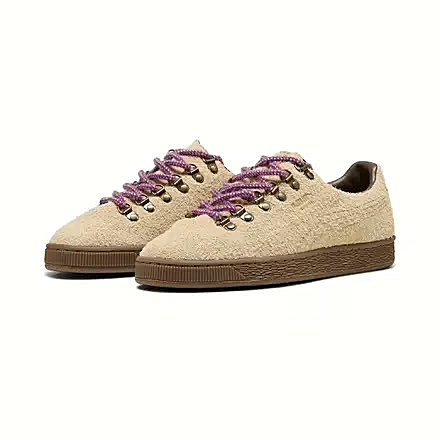
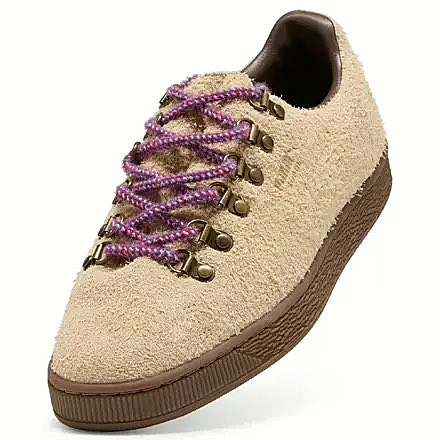
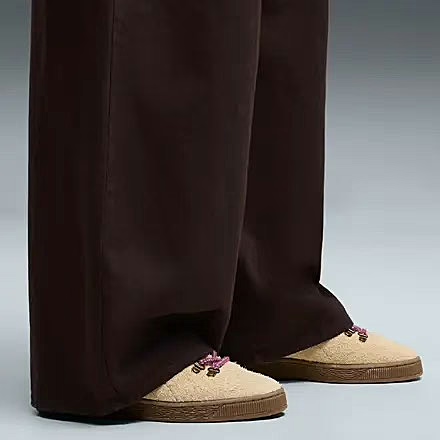
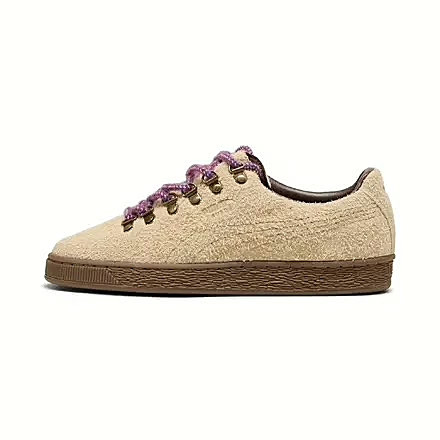
The first thing to register on the Suede Hike is the lacing. The PUMA Suede has always run its laces through plain punched eyelets; this version climbs the throat with metal speed hooks instead, the kind of hardware normally riveted onto a leather mountaineering boot. Underneath, the low, rounded profile of the PUMA Suede Hike is left almost entirely alone, the same shape the brand has been building since 1968. The Cashew/Gum colorway, style code 407166-02, is the second of the model’s two launch colors and the one heading to Japan next.
Signal. What happened: PUMA has put a second colorway of its outdoor-leaning Suede Hike on the Japanese release calendar, following the model’s US debut earlier this month. Exact object: PUMA Suede Hike “Cashew/Gum,” style code 407166-02, a long-napped beige suede upper on a gum rubber sole, laced through metal speed hooks. When and where: a Japan release is scheduled for October 23, 2026, per a Japan market release notice; Japanese retail pricing had not been published at the time of writing, while the US line launched at $130. Source: PUMA’s own US product listings for style 407166, plus a Japan market release notice. Why it matters: this is a change to how the Suede actually laces, not just a new color or material, and that kind of structural edit is rare for the model outside of a collaboration. Earlier DRIFT: coverage of the PUMA x le PÈRE Suede in August tracked the same silhouette being pushed in a very different direction this season, toward a slim, split-toe bowling shoe.
stir
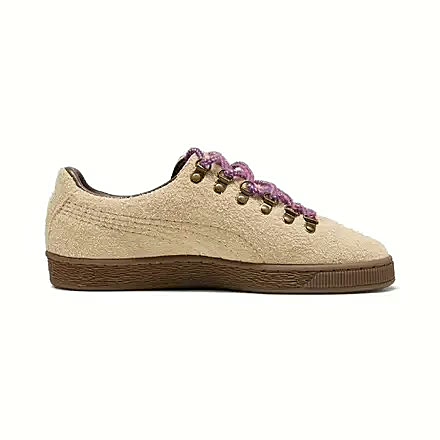
The hooks carry a dull, slightly matte finish rather than polished chrome, which keeps them closer to tool hardware than jewelry. They’re strung with round, rope-style laces in a purple base woven through with yellow and other accent threads, and that cord does most of the visual work on a shoe that is otherwise deliberately calm. PUMA’s own product copy keeps the description plain: metal speed hooks for the laces, a cow leather upper, and signature branding details kept to a minimum.
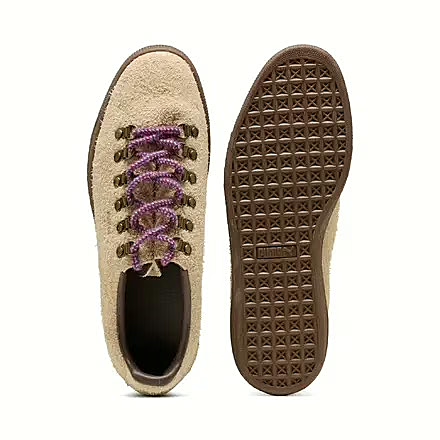
None of this turns the Suede Hike into a technical hiking shoe. There’s no waterproof membrane listed, no rock plate, no raised collar. What PUMA has done is borrow the visual vocabulary of old approach and trail footwear, the hooks, the cord, a chunkier tread on the gum outsole, and lay it over a lifestyle silhouette that was never designed to leave the pavement. The result sits in the same family as decades of city-ready hiking hybrids, meant to be worn with workwear, fleece and heavy denim rather than carried up a ridge.
shh
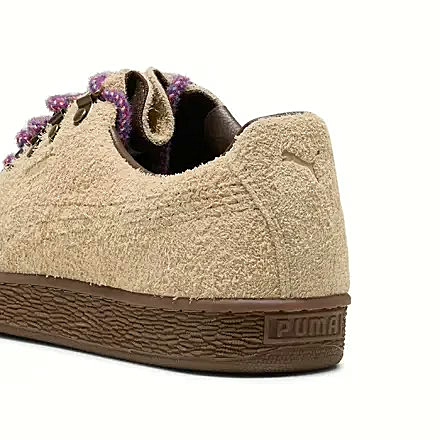
Cashew is a warm, natural beige, and on this pair it covers nearly everything above the sole. The upper is a long-napped suede with a visible pile, shaggier than the tighter nap of a standard Suede Classic, and that surface fuzz catches light in a way that reads as autumn and winter rather than summer court shoe.
The biggest departure from the original is the Formstrip. On a conventional Suede, the swooping side stripe is the loudest element on the shoe, usually cut in a contrasting color. Here it’s handled tone on tone, traced in stitching and sitting in the same brushed cashew as the surrounding panels, so the shape is still there without the contrast. The side logo is just as understated. With both signature elements dialed down, the textured suede and the laces become the focal points.
Inside, a dark brown insole adds a deeper note under the foot, and that tone carries down into the caramel and brown of the gum rubber sole. The palette moves from pale beige at the collar to darker browns at ground level, a gradient that keeps the pair looking grounded even with brightly colored laces running across the top.
flow
The PUMA Suede arrived in 1968, conceived as a suede alternative at a time when most shoe were canvas and looked much the same. It entered history that same year, when Tommie Smith brought his PUMA shoes to the medal stand at the Mexico City Olympics, set them down, and raised a gloved fist alongside John Carlos. In the early 1970s, New York Knicks guard Walt “Clyde” Frazier pushed PUMA for a wider version suited to his game, and the shoe that resulted carried his nickname.>
By the early 1980s the Suede had become a New York street fixture. Its thick rubber sole and durable upper suited the floor work of breaking, and crews including the Rock Steady Crew wore it as part of a full tracksuit uniform. Film and television carried that look out of the city, and the Suede became shorthand for early hip-hop style around the world.
The silhouette has absorbed decades of experiments since then, from Japan-made editions in premium leathers to collaborations that slim it, pad it, or split it. The Suede Hike belongs to that line but takes its cues from outdoor gear rather than the basketball court or the dance floor. Removing the eyelets is a small change on paper. On a shoe whose profile has barely moved in nearly six decades, it changes how the whole front half reads.
roll
PUMA opened the Suede Hike in the United States with a Wild Fern/Gum colorway, style code 407166-01, which went on sale through the brand’s own site on October 1 at $130. The Cashew/Gum pair also appears on PUMA’s US listing, and European retailers have been carrying it at around €130. Both colorways are offered in unisex sizing.
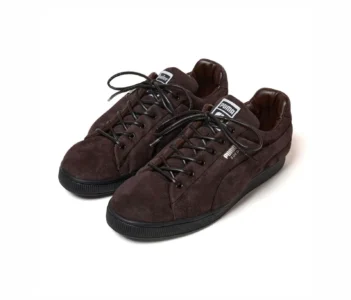
In Japan, the Cashew/Gum pair is scheduled for October 23, according to a Japan market release notice, with local pricing yet to be confirmed. It lands in the same month as the second delivery of PUMA’s le PÈRE collide, which brought that split-toe Suede back in brown on October 10, putting two very different rewrites of the 1968 shoe on shelves within two weeks of each other.