DRIFT AUDIO
Listen to this story
Choose a voice, then press play.
In an era where video games often equate entertainment with explosive set pieces, loot grinds, and endless competitive friction, Melbourne-based developer House House offers a radical counterpoint. Their upcoming title Big Walk, set for release on August 4, 2026, across PC, Mac, PlayStation 5, and Nintendo Switch 2, is precisely what its name suggests: a game about walking and talking. But beneath that disarmingly simple premise lies a deeply considered meditation on friendship, exploration, communication, and the shh joy of shared presence in a vast, hand-crafted world.
This is no mere idle simulator. Big Walk is a cooperative multiplayer adventure designed for groups of 2 to 12 players—ideally people you actually know and enjoy spending time with. It transforms the act of virtual wandering into a platform for teamwork, mischief, puzzle-solving, and those precious in-between moments where nothing much happens except the strengthening of bonds. In a gaming landscape dominated by battle royales and open-world epics built around conflict, House House has crafted what might be the ultimate antidote: a game that celebrates slowing down.
stir
House House first captured global attention in 2019 with Untitled Goose Game, a mischievous delight in which players embodied a chaotic goose terrorizing a quaint British village. The game’s slapstick humor, physics-based interactions, and refusal to take itself seriously resonated widely, selling millions and earning critical acclaim for its accessible charm and inventive level design.
Big Walk evolves that spirit into something more expansive and relational. Where the goose operated mostly solo (or in two-player local co-op in later updates), Big Walk is inherently social from the ground up. The studio, founded in 2014 in Melbourne, has always prioritized surprising, funny, and friendly experiences that stand apart from industry norms. With Big Walk, they draw from personal experiences during the COVID-19 lockdowns—when digital spaces became lifelines for connection—and channel that into a game explicitly about “hanging out and getting lost with close friends in a big world.”
The game’s development reflects this ethos. Collaborators include environment artist Kalonica Quigley, sound designer Em Halberstadt, and composer AKSFX, among others, under publisher Panic (known for whimsical titles like Untitled Goose Game and Firewatch). The result is a cohesive vision that feels personal and tactile.

flow
At its core, Big Walk places you and your friends on a sprawling island inspired by Australian bushland—think sun-drenched grasslands, dense forests, rocky coastlines, and quirky hand-crafted structures. There’s no overarching narrative pressure or ticking clock. Instead, you embark on a shared adventure filled with environmental puzzles, discoveries, and optional challenges that reward creativity and collaboration.
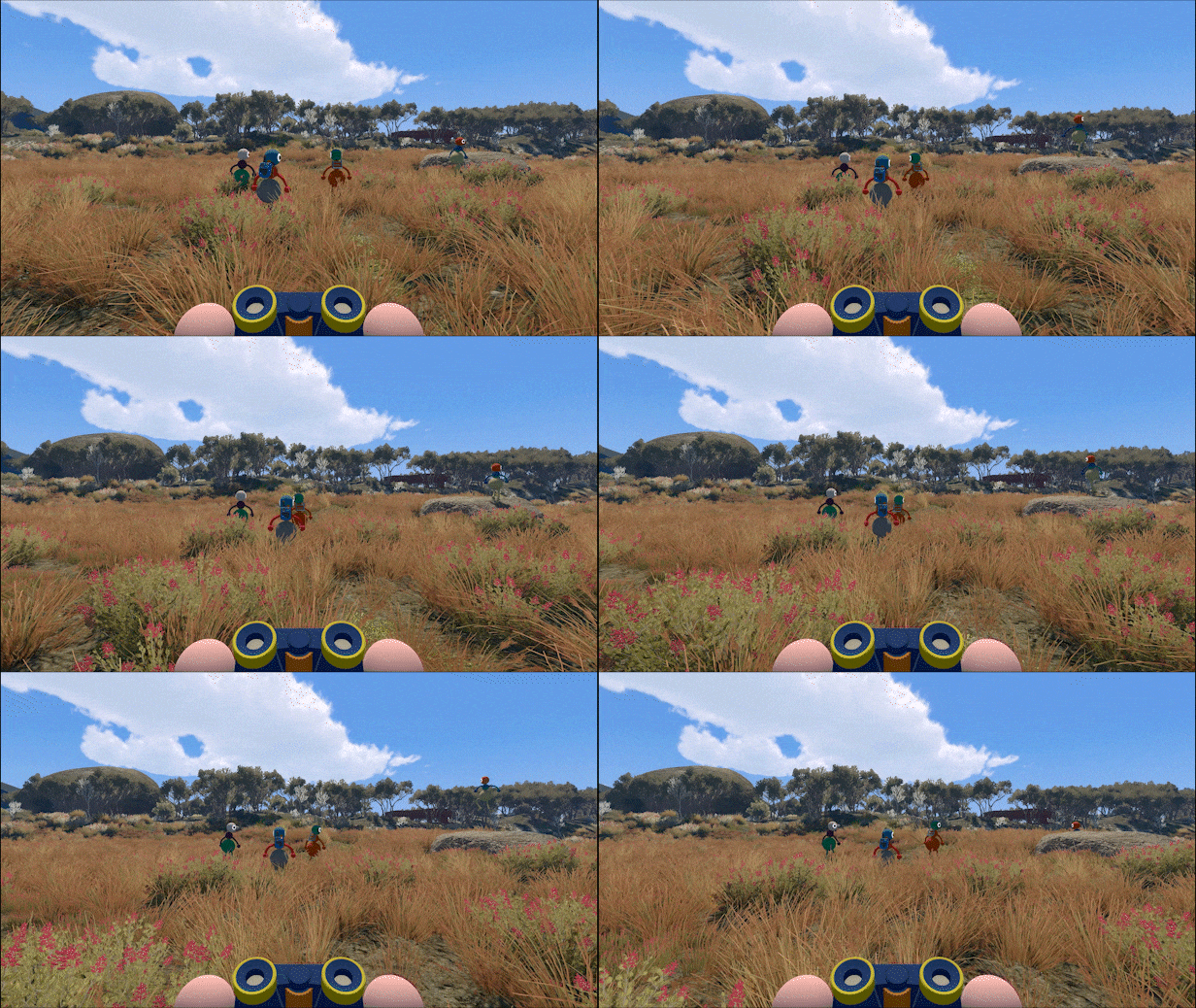
Communication is the true mechanic. Proximity voice chat creates an intimate audio landscape where voices fade naturally with distance, encouraging players to stay close or use tools to bridge gaps. When standard talk fails—certain areas literally render characters speechless—you improvise with emotes, whiteboards, laser pointers, walkie-talkies, megaphones, flares, binoculars, and physical gestures. Miming, singing, or transmitting codes becomes part of the fun, turning potential frustration into hilarious problem-solving sessions.
Puzzles range from simple coordination tasks (moving heavy objects together) to more elaborate environmental riddles that might require splitting the group or scouting ahead. The world is packed with secrets: hidden vistas, interactive objects ripe for mischief (stealing a friend’s binoculars and kicking them into the ocean is explicitly encouraged), and serene spots perfect for watching a sunset.

The game supports different group sizes with tailored modes, scaling up to 12 players without descending into chaos. It’s hand-crafted for a complete start-to-finish experience with friends, complete with an ending, yet flexible enough for casual drop-in sessions. Cross-play ensures accessibility across platforms.
This “walker-talker” design philosophy prioritizes low-stakes joy. You might spend an hour planning a route only to get distracted by a curious landmark, or form a search party when someone wanders off in the dark. These emergent stories—shared laughs, inside jokes, and memories of minor triumphs—are the real reward.

build
The view style is instantly recognizable as House House: charming, rounded characters with oversized eyes and expressive animations, set against a vibrant, stylized take on Australian landscapes. Rolling hills dotted with wildflowers, eucalyptus-scented forests (in spirit), coastal cliffs, and eccentric architecture blend whimsy with a grounded sense of place. Lighting and weather shifts—from bright midday sun to golden hour glows and starry nights—enhance the immersive, contemplative mood.
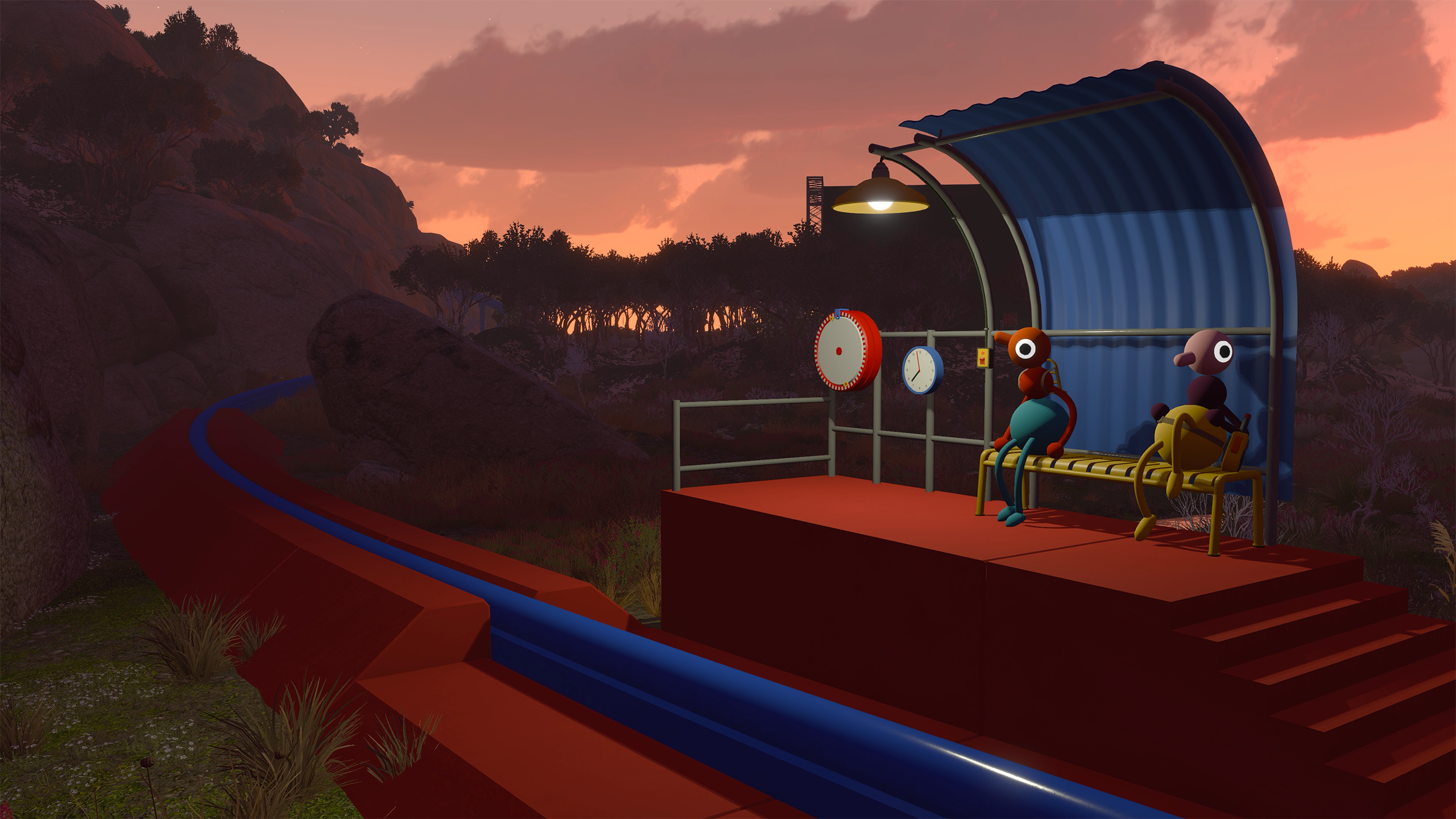
Sound design plays a crucial role. Footsteps crunch realistically on different terrains, ambient wildlife and wind create a living atmosphere, and the soundtrack by AKSFX complements the relaxed vibe with gentle, exploratory tones. Proximity audio makes every conversation feel authentic and spatially aware.
Accessibility is thoughtfully considered, with options for various play styles and group dynamics. It’s priced accessibly (around $19.99, with launch discounts and PS Plus availability), lowering barriers for friend groups.
culture
In 2026, gaming often mirrors societal pressures: hyper-optimization, FOMO-driven events, and toxicity in competitive spaces. Big Walk rejects this. It aligns with broader cultural shifts toward wellness, mindfulness, and meaningful digital connection—think the rise of “cozy games,” virtual book clubs, or apps designed for presence rather than productivity.

It echoes experiences like Animal Crossing, Stardew Valley, or even non-game activities such as long hikes with friends, but packages them into a purposeful, shareable format. By making communication a core challenge and delight, it subtly comments on modern disconnection while offering tools to overcome it. In an age of polarized online discourse, a game that rewards listening, adapting, and laughing together feels profoundly timely.
House House’s Australian roots infuse the project with a laid-back sensibility—mateship, appreciation for the outdoors, and a wry sense of humor—that translates universally. It’s not preachy; the game trusts players to find their own rhythm, whether that’s tackling every puzzle or simply vibing on a bench.
leg
Big Walk stands apart from contemporaries. It lacks the combat of Fortnite or GTA, the crafting loops of survival games, or the narrative density of story-driven adventures. Instead, it shares DNA with experimental titles like The Witness (for environmental puzzles), Journey (for wordless connection), or Keep Talking and Nobody Explodes (for asymmetric communication). Yet it feels entirely its own—playful without being childish, ambitious in scope while intimate in execution.
For fans of Untitled Goose Game, it delivers the same irreverent joy on a grander scale. The potential for emergent storytelling positions it as a new benchmark for co-op design, one that could influence how developers think about social games beyond competition or consumption.
fin
Ultimately, Big Walk is a celebration of the ordinary made extraordinary through companionship. In its world, getting lost isn’t failure—it’s opportunity. Solving a puzzle isn’t about leaderboard dominance but collective “aha!” moments. And sometimes, the best part is doing nothing at all: sitting together as the sun dips below the horizon, sharing a virtual silence that speaks volumes.
As we navigate increasingly fragmented digital lives, House House reminds us that games can be vessels for genuine connection. Big Walk isn’t trying to be the biggest or loudest title of the year. It simply invites you to take a step—together—and see where the path leads.
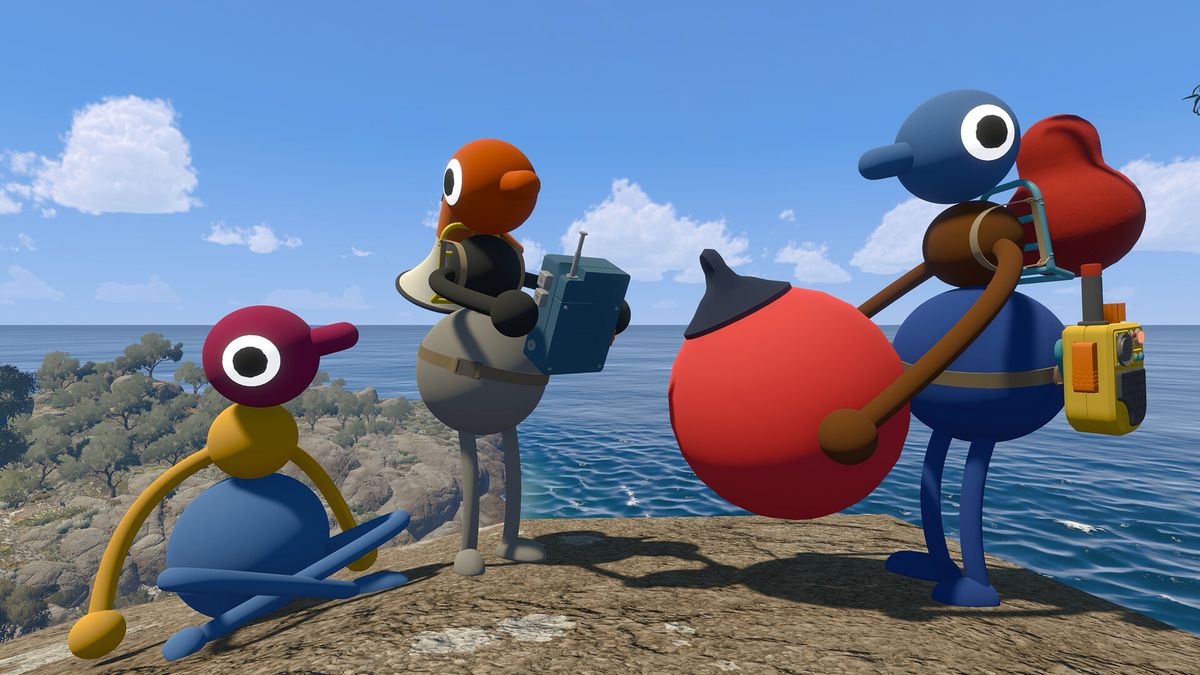
Whether you’re coordinating a complex rescue operation or kicking a megaphone off a cliff for the third time, the game fosters memories that linger long after the session ends. In that sense, it transcends entertainment to become a small but meaningful act of cultural resistance: proof that in a noisy world, there’s profound power in a quiet walk with friends.

n
From the DRIFT archive: Cornell Team Develops Ultrablack: The “Darkest Fabric Ever” That Reflects Close to No Light · LEGO unveils buildable replica of the coveted FIFA World Cup trophy ahead of 2026 kickoff