DRIFT AUDIO
Listen to this story
Choose a voice, then press play.
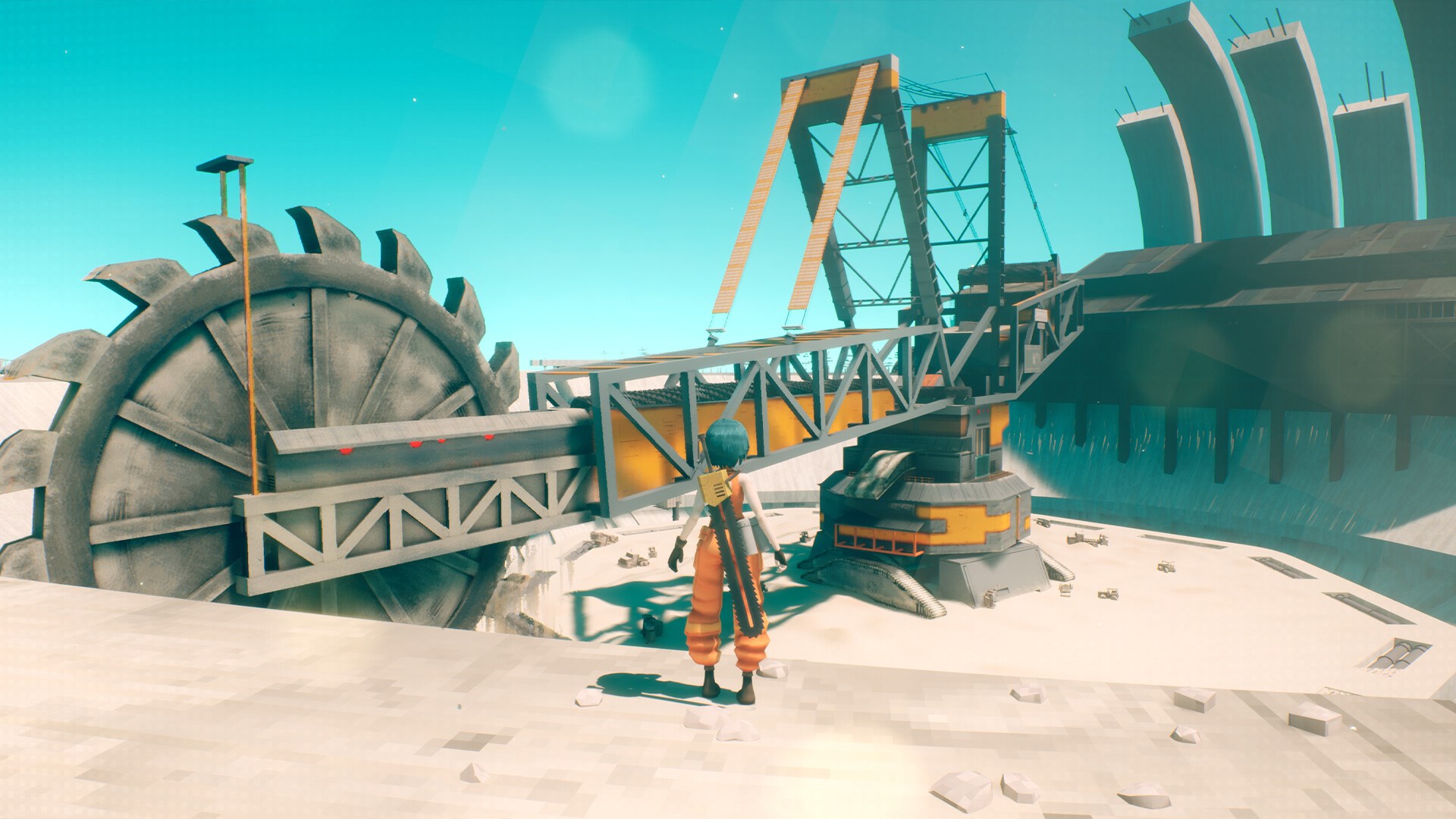
In the sun-bleached expanse of a vast, handcrafted megastructure, a lone figure in orange overalls sprints across concrete dunes, chainsaw humming at her side. Giant construction machines loom like dormant gods, their metallic forms etched against a cyan sky. This is the world of Motorslice, a striking indie parkour-action game from the two-person Regular Studio that has quietly become one of 2026’s most compelling releases. At its core lies a hypnotic fusion of influences: the poetic solitude and colossal scale of Fumito Ueda’s masterpieces, the fluid first-person momentum of Mirror’s Edge, and the oppressive, labyrinthine megastructures of Tsutomu Nihei’s Blame!.
These references don’t merely decorate the game—they form its very architecture, both literal and emotional. Motorslice transforms constraints into show, crafting a surreal industrial dreamscape that feels both intimately tactile and overwhelmingly vast.
stir
Developed primarily by brothers Lucas and Luiz Bonatti at Regular Studio, Motorslice emerged from a clear, singular vision: a tincture-laden yet desolate world where high-speed parkour meets giant boss encounters inside an interconnected brutalist megastructure. The protagonist, known simply as ‘P’, navigates this environment as a “slicer”—a worker tasked with dismantling malfunctioning machines. What could have been a straightforward action game instead became a meditative exploration of scale, solitude, and human ingenuity amid ruins.

From the outset, the team leaned into stylization over photorealism. Low-poly aesthetics nod to PS2/PS3-era charm while leveraging Unreal Engine 5’s Lumen for dynamic lighting and soft gradients. The result is a world that feels handcrafted—every dune, window, and girder placed with intent—evoking a tangible sense of place rarely achieved in larger productions.
mood
Fumito Ueda’s influence permeates Motorslice most profoundly through its treatment of scale and emotional isolation. Games like Ico, Shadow of the Colossus, and The Last Guardian masterfully use vast, empty environments to heighten intimacy and wonder. In Shadow of the Colossus, players climb living mountains that double as ancient beings, forging a bond through struggle and melancholy.
Motorslice echoes this in its colossal bosses—towering construction machines that players must scale, exploit, and dismantle. The sense of solitude is palpable: vast concrete plains stretch under an endless sky, interrupted only by the rhythmic clank of machinery or the distant hum of wind. Yet, like Ueda’s works, these moments of isolation give way to exhilarating connection—when P latches onto a machine’s weak point or traverses a newly opened pathway, the world feels alive and responsive.
The team explicitly cited Ueda’s ability to evoke desolation through scale and atmosphere. This manifests in Motorslice’s central obelisk-like structure that anchors the interconnected world, guiding exploration while maintaining a dreamlike coherence. The emotional undercurrent—P’s quiet determination amid mechanical titans—mirrors the shh heroism in Ueda’s narratives.

edge
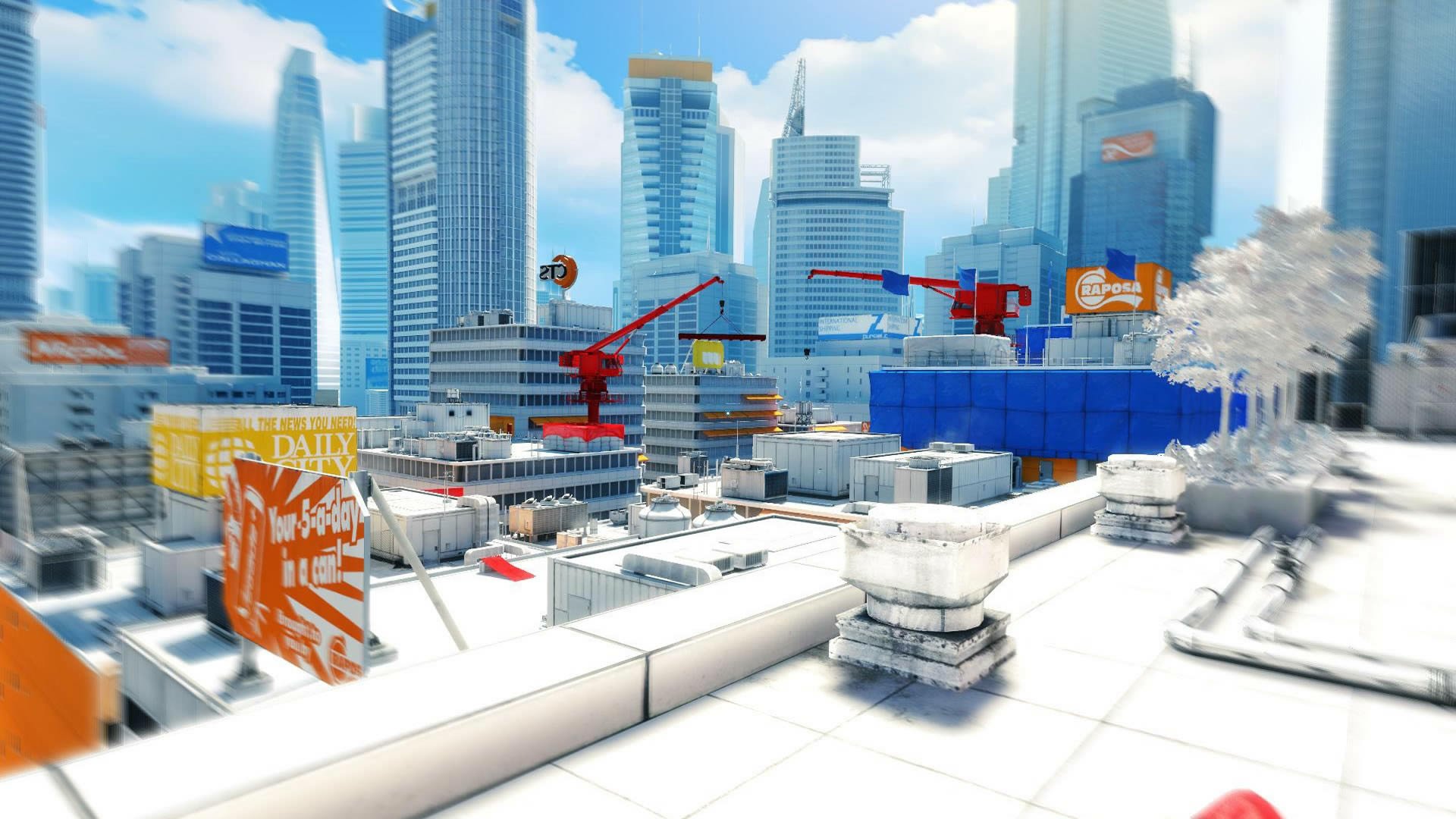
Where Ueda provides the poetic scale, Mirror’s Edge (2008) supplies the kinetic heartbeat. DICE’s groundbreaking parkour title turned rooftops into a playground of first-person movement, using clean lines, bold tinctures, and environmental cues to guide players at breakneck speeds. Faith Connors’ runs across gleaming white structures became synonymous with freedom and precision.
Motorslice adapts this know brilliantly to its third-person, low-poly world. Yellow hazard markings—drawn from heavy machinery—serve as view bits, ensuring readability during frantic chases and climbs. The game’s movement system rewards flow: wall-running, grappling, and precise jumps feel intuitive yet deeply satisfying. The brutalist architecture, with its stark geometric forms, creates natural “runs” across girders, cranes, and elevated walkways, much like Mirror’s Edge’s cityscape.
Crucially, Motorslice filters this influence through its surreal industrial lens. Instead of pristine corporate futurism, players traverse weathered concrete and rusting metal, blending Mirror’s Edge’s clarity with a post-apocalyptic melancholy. The cyan skies and white sand accents enhance contrast, making navigation pop even at high speeds.
role
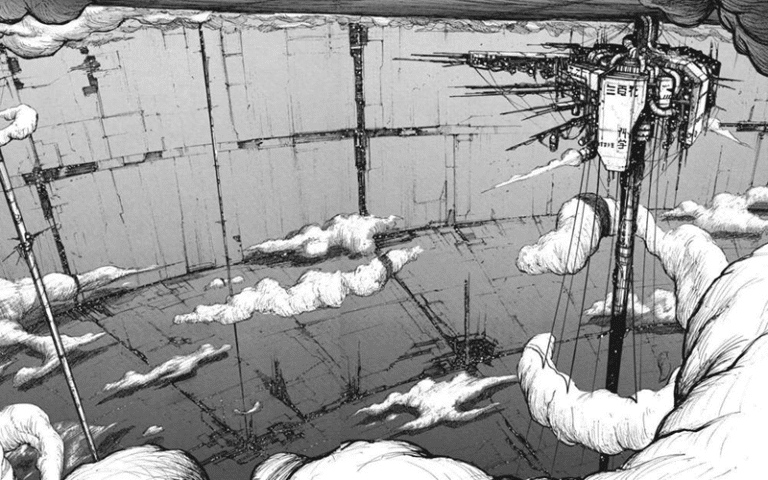
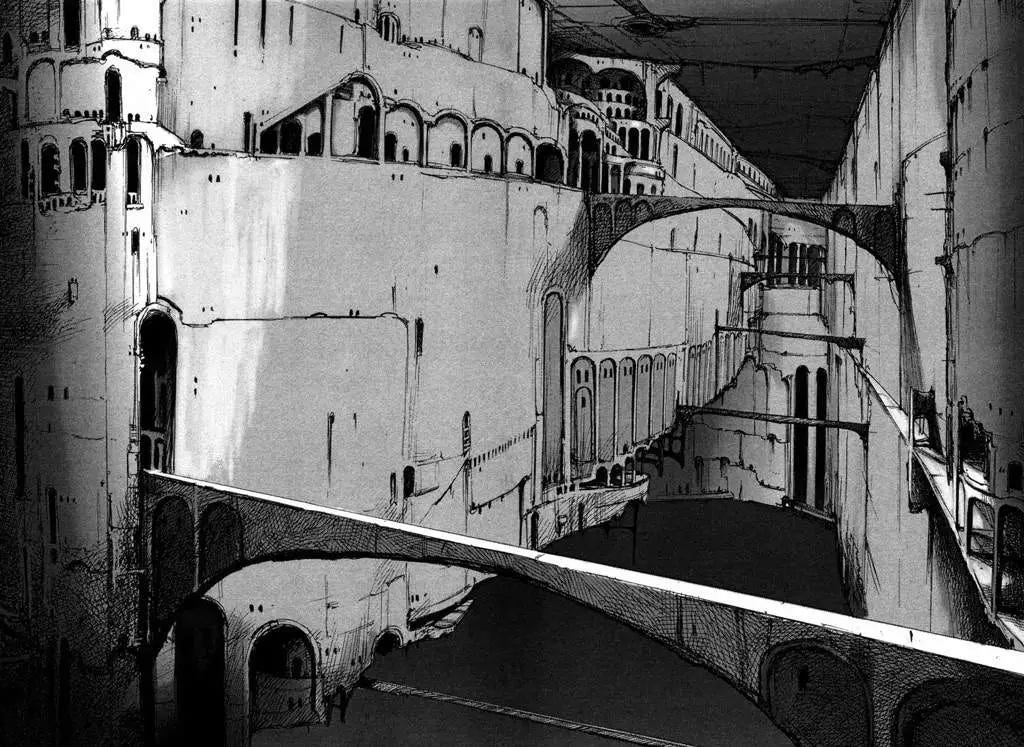
Tsutomu Nihei’s Blame! manga provides the densest architectural DNA. Nihei’s masterpiece depicts a nightmarish, infinitely expanding megastructure known as the City—layer upon layer of decaying industrial gothic, where human figures are dwarfed by incomprehensible machinery and endless corridors. The manga’s intricate linework and oppressive scale have influenced countless games and artists.
In Motorslice, this translates to the game’s core environment: a single, physically connected brutalist world painstakingly built by hand. Players can traverse from surface dunes to deep internal chambers, discovering how structures interlink in surprising ways. The machines—massive, almost organic in their malfunctioning menace—echo the Silicon Life and Safeguards of Blame!, serving as both obstacles and narrative vessels.
The team noted that while not a direct replication, engaging with megastructure design inevitably channels Nihei. The result is a world that feels lived-in and ancient, where exploration reveals stories through environmental detail rather than exposition.
praxis
Brutalism serves as the unifying lang. Its raw concrete forms, geometric purity, and monumental presence align perfectly with the influences: Ueda’s sparse grandeur, Mirror’s Edge’s clean guidance, and Blame!’s overwhelming density. For a tiny team, it was also pragmatic—min shapes elicited vast vistas with fewer assets, while yellow accents and strategic lighting ensured gameplay clarity.
Textures feel tactile and cohesive, reinforcing the “one big place” model. Handcrafted details reward attentive players, creating that rare sense of a believable, reactive world.
reason
Motorslice arrives at a moment when players crave authenticity and wonder amid polished blockbusters. Its surreal industrial world speaks to broader fascinations with brutalism, megastructures, and human-scale stories in vast settings. The game’s success underscores the power of clear artistic direction—even (especially) from small teams.
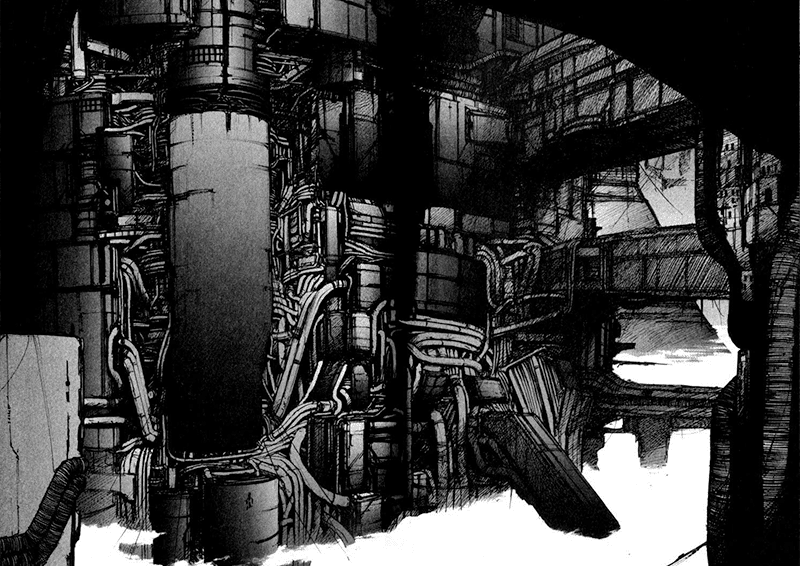
By weaving Ueda’s emotional depth, Mirror’s Edge’s momentum, and Blame!’s architectural dread, Regular Studio has created something greater than the sum of its references: a vibrant, melancholic playground where parkour meets poetry.
As P revs her chainsaw atop another fallen titan, players don’t just conquer machines—they inhabit a world that lingers long after the credits. In an industry often chasing spectacle, Motorslice reminds us that the most memorable journeys emerge from focused vision and sincere homage.
n
From the DRIFT archive: Cornell Team Develops Ultrablack: The “Darkest Fabric Ever” That Reflects Close to No Light · PANTONE’s 2026 Color of the Year Takes Shape With Play-Doh and Post-It Editions