DRIFT AUDIO
Listen to this story
Choose a voice, then press play.
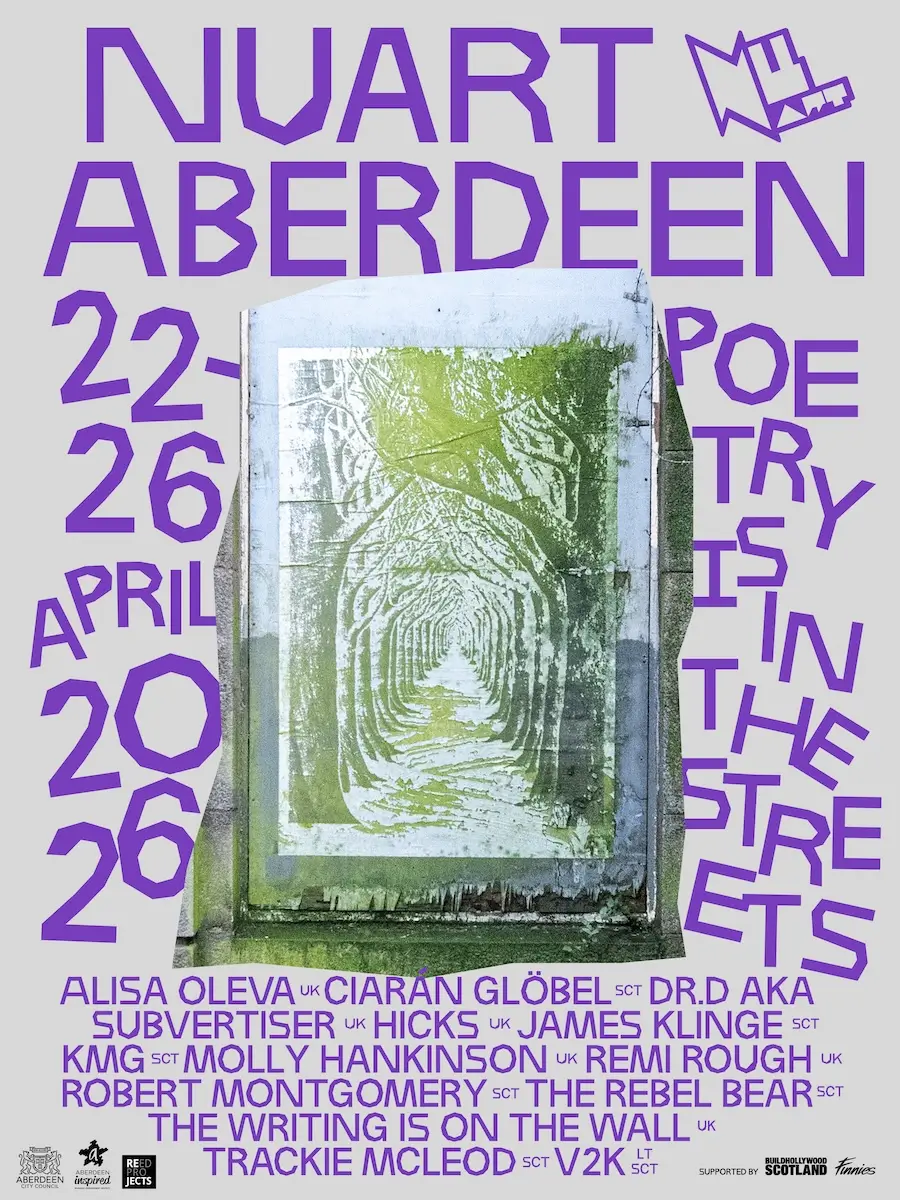
In the granite-hewn streets of Aberdeen, Scotland, from April 22 to 26, 2026, a shh revolution unfolded. Nuart Aberdeen 2026, under the theme Poetry Is in the Streets, positioned itself as what curators believe to be the world’s first major street art festival centered primarily on poetry and text-based works. This bold pivot, articulated powerfully by founder and curator Martyn Reed, challenges the view dominance of large-scale figurative murals while reaffirming street art’s grassroots origins.
The provided curatorial statement captures the ethos with clarity and conviction. It is not merely an event recap but a manifesto for culture stewardship—one that resonates far beyond Aberdeen’s harbors and into broader conversations about creativity, privilege, and the future of public art.
from
“As far as we can ascertain, this will be the first street art festival in the world with a focus primarily on poetry and text-based works.” Reed’s opening lines set a declarative tone. Over the past decade-plus, Nuart festivals (in Stavanger, Aberdeen, and beyond) have celebrated monumental murals by global talents. These works dazzle with tincture, scale, and technical prowess—yet Reed astutely notes their inherent barriers. Producing a tower-block mural demands scaffolding, permits, significant budgets, and often formal training or institutional support. In an era where street art has professionalized, it risks becoming another elite spectacle rather than a living, participatory culture.
Nuart’s mission has always extended beyond spectacle: “to inspire and encourage those without the privilege of a fine art degree or access to the arts, to have a go themselves.” This democratic impulse echoes the origins of graffiti and street art—from 1970s New York subway tags to Banksy’s accessible stencils. Large murals, while impressive, rarely spark the immediate “I can do that” response. Smaller interventions—stencils, paste-ups, wheatpastes, textual fragments—do. They require minimal tools: cardboard, spray paint, a craft knife, and an idea. This accessibility has historically propelled the culture forward, birthing new gens of artists who began as volunteers or assistants at Nuart events.
By foregrounding text and poetry, Nuart Aberdeen 2026 deliberately lowers the threshold. Words invite interaction—reading, reciting, responding, even defacing or adding to them. In a festival context, this fosters dialogue between artist, viewer, and city fabric. It transforms passive observation into active engagement, aligning with street art’s subversive roots while addressing contemporary needs for meaning in public realms.
reason
Street art’s relationship with text is foundational. From ancient graffiti in Pompeii to Situationist détournements, words have always punctuated urban surfaces. The 20th century saw poets and artists like those in the Dada and Beat movements blur lines between verse and view protest. In modern street art, figures like Robert Montgomery, with his poetic light installations and billboards, or The Writing Is on the Wall collective, exemplify this lineage.
Nuart itself has evolved since its inception. Aberdeen’s inaugural edition in 2017 already featured text elements, but 2026 marks a deliberate thematic consolidation. This shift arrives at a timely culture moment: amid digital overload, AI-generated content, and polarized discourse, reclaiming physical, poetic language in shared spaces feels urgent. It counters the dominance of image-driven social media algorithms with slower, reflective textual encounters. For fashion and design audiences, it parallels movements toward sustainable, human-scale craft—rejecting spectacle for intimacy and authenticity.
The festival’s timing in late April 2026 coincided with spring’s renewal, mirroring poetry’s themes of emergence and resilience in Aberdeen’s resilient granite architecture.
spotlight
The program blended established voices with emerging talent, all responding to “Poetry Is in the Streets.”
- Molly Hankinson: Created a mural drawing from Adrienne Rich’s The Dream of a Common Language, exploring feminist solidarity and artistic lineage through layered text.
- Robert Montgomery: Returned to Aberdeen (having participated in 2017) with text-based works that probe emotional and political landscapes.
- Trackie McLeod: Scottish artist behind “Gay if you don’t,” a bold, declarative piece on Rennie’s Wynd addressing identity and acceptance.
- Alisa Oleva: Led art walks treating the city itself as a poetic text—inviting participants to “read” and “write back” to urban environments.
- Local and International Contributors: Including Ciarán Glöbel, dr.d (Subvertiser), HICKS, James Klinge, KMG, Remi Rough, The Rebel Bear, and V2k. Works ranged from large text murals to intimate paste-ups and performative readings.
Additional programming via Nuart Plus featured conferences, tours, and workshops emphasizing participation. A digital map now guides visitors to over 60 permanent and temporary pieces across the city, ensuring lasting impression.
These interventions humanize Aberdeen’s streets—turning gable ends, alleys, and terraces into open books. Viewers encounter not just art, but invitations: to reflect, to create, to claim space.
straddle
Reed’s statement highlights a core tension: festivals must balance sponsor demands (often favoring photogenic murals) with long-term cultural health. Nuart chooses the latter. Evidence from past editions shows that accessible formats inspire replication. Banksy’s stencils democratized protest art; paste-ups allow rapid, low-risk expression. By elevating these, Nuart nurtures the ecosystem—producing not just artworks but artists.
This approach has broader implications. In fashion, we see parallels with ready-to-wear versus haute couture: the former inspires personal styling and customization. In design and music, DIY ethos fuels innovation. For street art’s survival, especially amid commercialization and legal crackdowns, fostering broad participation ensures relevance and resilience.
Moreover, poetry in public space combats alienation. In an age of digital fatigue, encountering verses on a wall reconnects individuals to place, history, and one another. It echoes literary traditions from Baudelaire’s flâneur to contemporary spoken word, while intersecting with view culture.
Challenges remain: balancing artistic quality with accessibility, navigating permissions for text works that may provoke, and measuring intangible impressions like inspired creations. Yet Nuart’s track record—spanning multiple cities and producing enduring public collections—suggests thoughtful curation can navigate these.
qualify
Nuart Aberdeen 2026 reaffirms that street art’s greatest strength lies in its potential as a catalyst. As Reed notes, many producers and artists this year trace their journeys to earlier Nuart involvement. This gen cycle is the culture’s lifeblood.
For creators, visitors, and readers: pick up a marker, craft a stencil, write a line. Poetry truly is in the streets—and now, more than ever, it invites us all to contribute. In Aberdeen’s granite embrace, words endure where images might fade, reminding us that culture thrives not through gatekept monuments but through shared, imperfect voices.
This edition stands as a model for festival-making: ambitious yet humble, spectacular yet intimate. It honors street art’s rebellious heart while evolving it thoughtfully for new generations. In doing so, Nuart doesn’t just paint the city—it writes its future.
From the DRIFT archive: London Streets Print by Arina Iastrebova Captures the Soul of a Rainy City · The Art of the Can: Chaz Bojórquez’s Hand-Signed MTN Spray Paint Edition