DRIFT AUDIO
Listen to this story
Choose a voice, then press play.
From the mutable phases for Tokyo’s culture scene, where innovation meets heritage in dazzling displays, a new beacon of experiential art emerges. On Friday, June 12, 2026, the doors of RÊVE DES LUMIÈRES swing open within Tokyo Dream Park in Ariake, marking the first landing of France’s acclaimed Atelier des Lumières on Japanese soil. This isn’t merely another exhibition space; it represents a profound connection of cutting-edge digital technology, masterful artistry, and immersive storytelling that promises to redefine how we encounter art in the 21st century.
Those attuned to the intersections of fashion, design, culture, and sensory experience—this arrival feels both inevitable and exhilarating. Tokyo, a city that has long championed immersive environments through trailblazers like teamLab, now welcomes a global heavyweight whose roots trace back to Paris’s vibrant artistic ecosystem. As the tenth venue in the Lumières series worldwide, RÊVE DES LUMIÈRES stands poised to captivate a new generation of art enthusiasts, fashion-forward creatives, and culturally curious visitors alike.
stir
To fully appreciate the significance of this Japanese debut, one must journey back to the origins of Atelier des Lumières. Housed in a former 19th-century steel foundry in Paris’s 11th arrondissement—established in 1835 and repurposed through view renovation by Culturespaces—the original Atelier opened its doors in 2018. What was once an industrial relic, with its soaring 10-meter walls, metal structures, and brick fireplaces, transformed into a 3,270 square meter canvas for digital immersion.
Culturespaces, a leading European provider of authentic digital art experiences since 1990, pioneered this format. Their Lumières series blends world-renowned masterpieces with state-of-the-art projection mapping, synchronized soundscapes, and narrative-driven storytelling. The results have been nothing short of revolutionary: over 21.5 million visitors across locations in France, the United States, the Netherlands, Germany, South Korea, and beyond. Exhibitions featuring Van Gogh, Gustav Klimt, Antoni Gaudí, Egyptian pharaohs, and even pop culture icons like Tintin have drawn crowds ranging from seasoned connoisseurs to families seeking shared wonder.
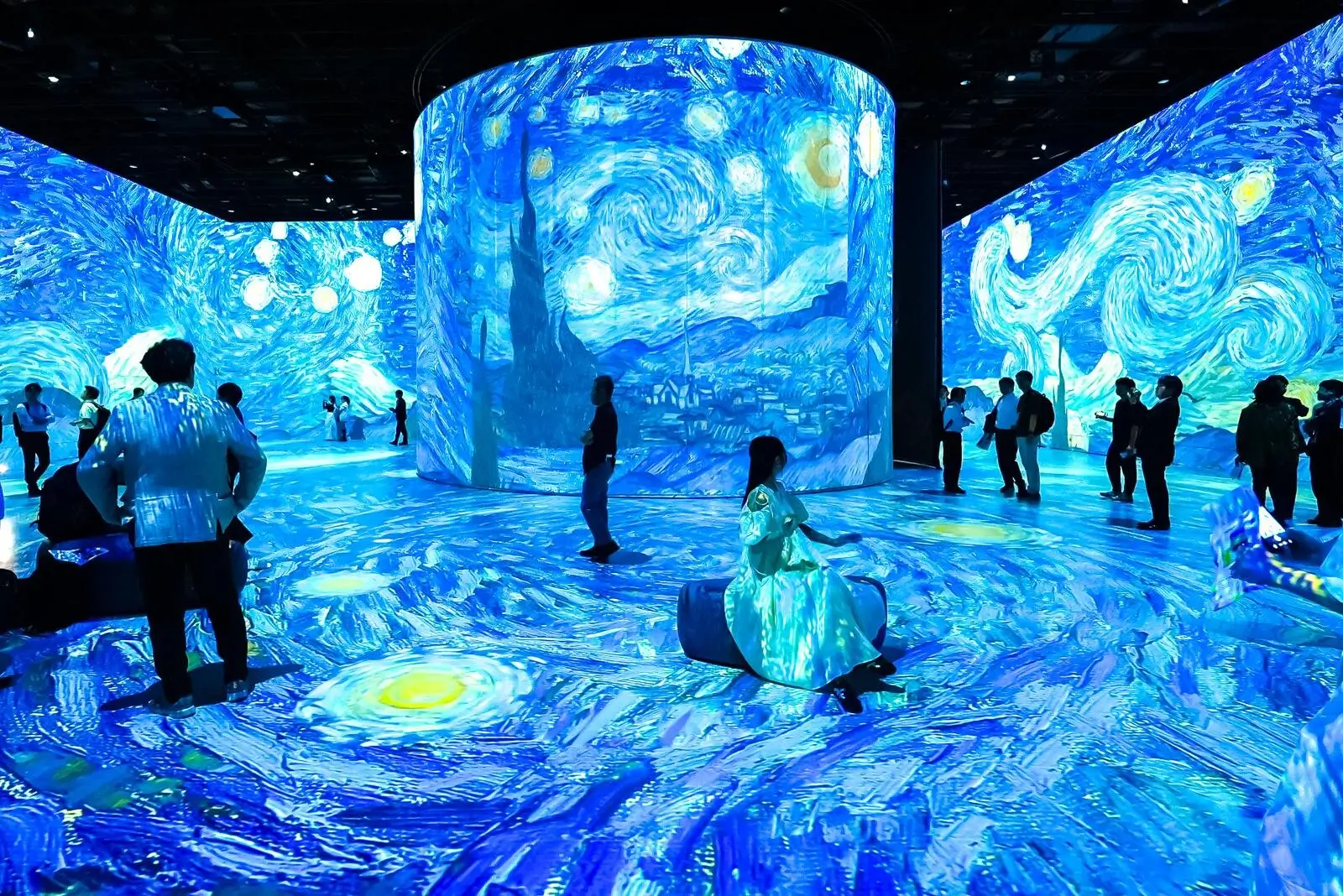
The technology at play is the AMIEX® (Art and Music Immersive Experience) system, which deploys hundreds of high-definition projectors to animate paintings across floors, walls, and ceilings. Brushstrokes swirl into motion, colors bleed and bloom, and musical compositions—carefully curated to evoke the artist’s emotional world—envelop the space in three-dimensional audio. It is art not observed from a distance, but lived within. Visitors move freely, their perspectives constantly shifting the narrative, turning passive viewing into an active, personal dialogue with the work.
This approach democratizes art while honoring its depth. As one reviewer noted, it creates “a whirlwind of visual and aural wonders,” where novices and experts alike find themselves spellbound. In Paris, exhibitions have rotated through Renaissance masters, prehistoric worlds, and contemporary reinterpretations, always emphasizing emotional resonance over static display.
flow
RÊVE DES LUMIÈRES finds its home in Tokyo Dream Park, a sprawling nine-floor-plus-basement entertainment complex developed by TV Asahi that grand-opened on March 27, 2026, in Ariake, Koto Ward. Positioned as a comprehensive indoor destination—encompassing theaters, exhibition halls, dining, and a rooftop Dream Terrace—the park embodies Tokyo’s forward-looking ethos: weatherproof culture playgrounds that blend leisure, shoe, and innovation.
Situated on the 8th floor in EX STUDIO 8 (address: 3-3-8 Ariake), the facility was purpose-built for immersive art. Spanning approximately 1,500 square meters with ceilings reaching up to 8 meters, it surpasses many international counterparts in scale and ambition. Equipped with 106 high-definition projectors and 63 speakers, the space delivers a “shower of art” that engulfs the body and senses. A dedicated design ensures seamless immersion from any vantage point.
The name itself—“RÊVE” evoking dream, paired with “LUMIÈRES” for light—perfectly aligns with Tokyo Dream Park’s conceptual heart. It signals not just a venue but an awakening: an encounter where technology illuminates the soul of artistic creation.
in
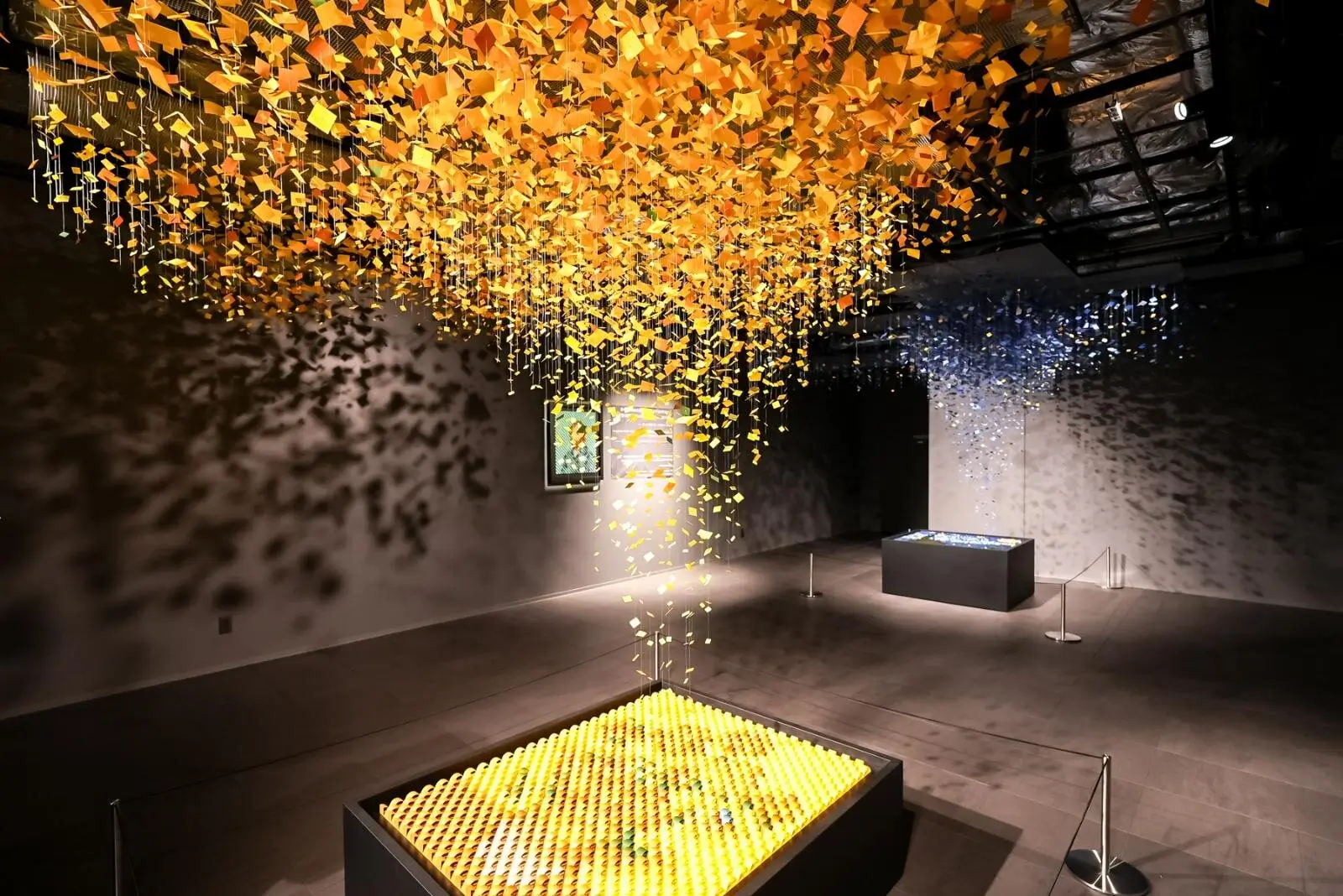
Visitors enter through a light-filled lobby that builds anticipation. An “Introduction” zone provides thoughtful context on featured artists and works, while the “Atelier” space offers contemporary reinterpretations, bridging historical masterpieces with modern sensible—much like how fashion houses reinterpret archival silhouettes for today’s wardrobes.
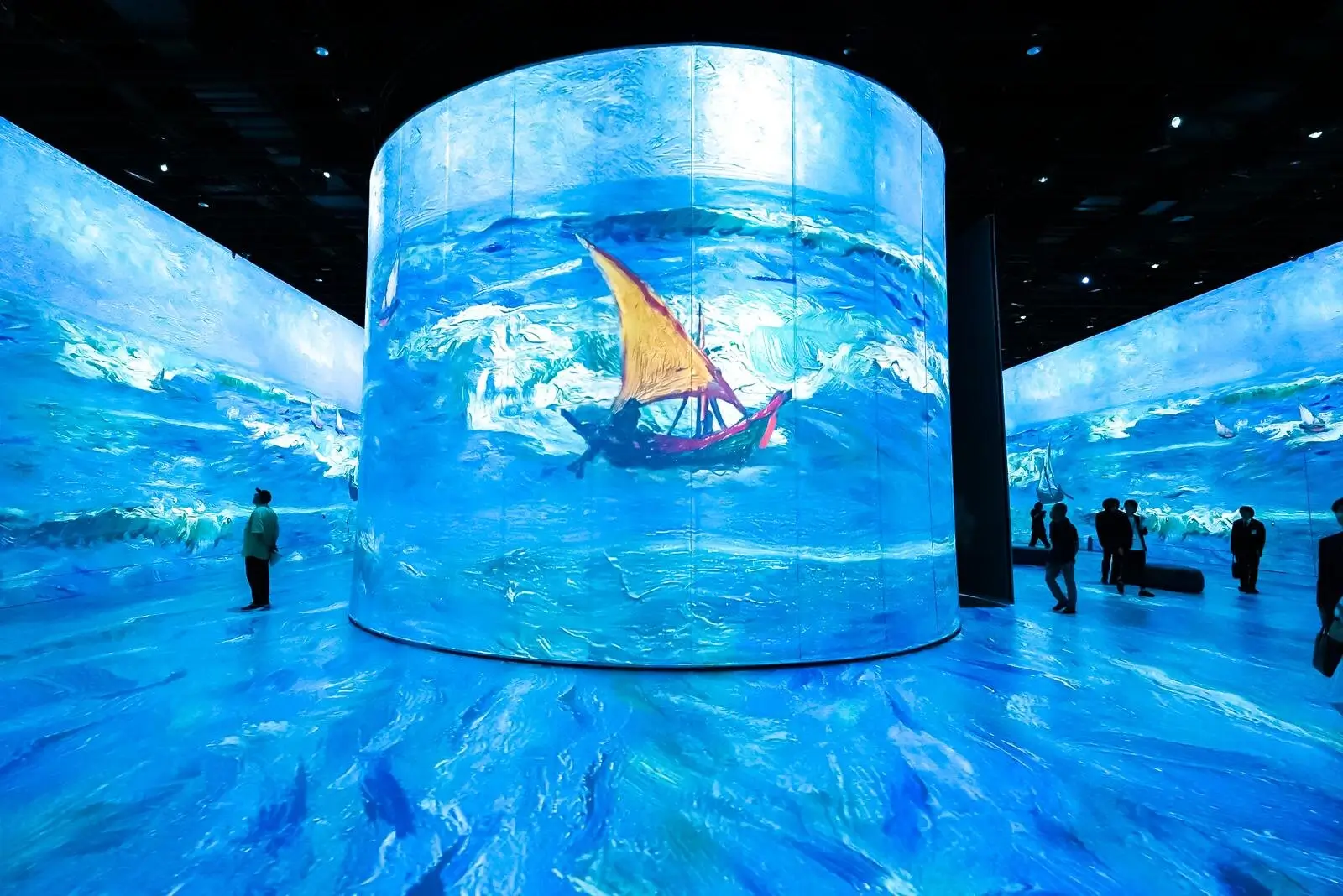
The centerpiece is the Main Hall, a vast projection arena hosting a ~40-minute main program and shorter ~10-minute features. Here, artworks come alive in choreographed sequences synchronized to music. Additional installations amplify the magic:
- Spiral Cylinder (Vortex Screen): A towering 9.5-meter diameter, 6.6-meter high structure at the hall’s center. Curtain-like screens create a whirlpool effect, drawing viewers physically into swirling imagery.
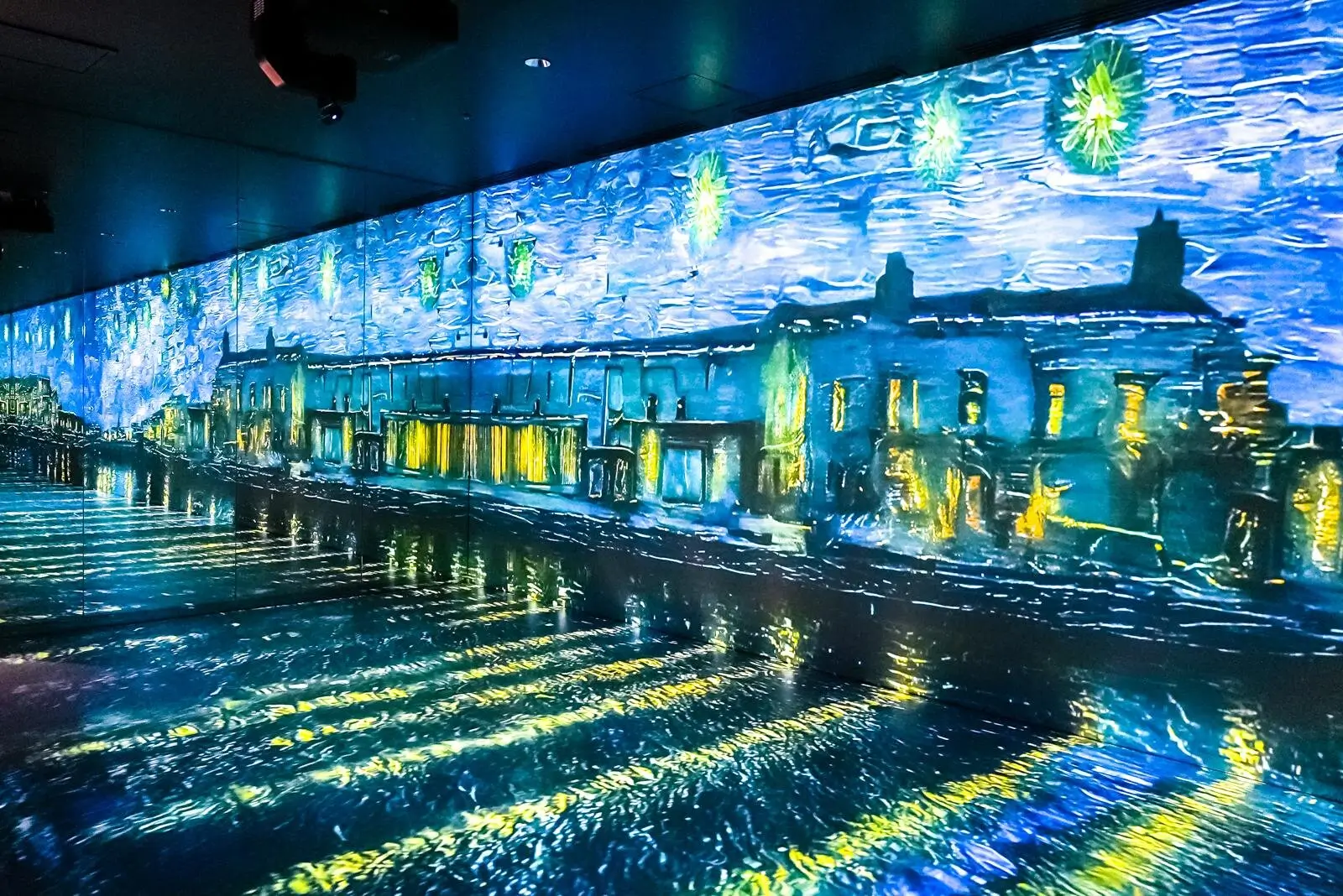
- Infinite Horizon: Mirror-lined on three sides, this creates endless view expanses. Projections on walls and floors generate dreamlike infinity, ideal for contemplative photography where the self merges with the art—echoing the reflective, layered aesthetics prized in contemporary Japanese design.
- 360° Cube: Full-surround projections, including the ceiling, themed around cosmic or expansive motifs, evoking the sensation of floating through vast universes.
- Mezzanine: An elevated observation deck offering panoramic, bird’s-eye views of the main hall’s symphony of light.
A dedicated official store at the exit allows guests to extend the experience through merchandise, from art books to inspired accessories—perfect for those curating their personal cultural narratives.
extent
The inaugural wave fittingly centers on Vincent van Gogh, whose works have long resonated in Japan through exhibitions and Japonisme influences. The main program journeys through masterpieces like Sunflowers, The Starry Night, The Night Café, and self-portraits. Viewers witness paint spreading across vast surfaces, stars twinkling in turbulent skies, and emotional landscapes unfolding in real time—a visceral encounter with the artist’s inner turmoil and genius.
Complementing this is a shorter program on Antoni Gaudí, celebrating the Catalan architect’s organic, visionary forms. From the Sagrada Família (nearing completion in reality) to Park Güell, Casa Batlló, and Casa Milà, vibrant colors and fluid structures dance across the space, highlighting Gaudí’s harmony with nature and innovation—parallels to sustainable and biomorphic trends in today’s fashion and product design.
This programming choice underscores a beautiful cultural reciprocity: Van Gogh’s fascination with Japanese ukiyo-e prints now returns transformed, inviting Japanese audiences to rediscover these icons through a luminous, shared lens.
reason
Japan’s embrace of immersive digital art is no accident. From teamLab’s boundary-blurring installations to the country’s rich tradition of ukiyo-e, lantern festivals, and seasonal moments (like cherry blossoms or autumn leaves), there exists a profound cultural affinity for transient beauty, light, and multisensory engagement. RÊVE DES LUMIÈRES arrives at a moment when Tokyo solidifies its status as a global hub for experiential culture, especially post-pandemic, where shared physical wonder feels more precious than ever.
For the fashion and design community, the parallels are striking. Just as haute couture transforms fabric into emotion, or watchmaking elevates mechanics into flow, this venue elevates pixels and projections into living art. It invites reflection on heritage versus innovation—core themes in Japanese streetwear, haute collections, and contemporary design. Imagine editorial shoots within these glowing spaces, or runway presentations synchronized to similar audio view narratives.
Moreover, its accessibility broadens appeal: families, couples, creatives, and tourists can all find entry points. Ticket pricing accommodates various audiences, with early-bird options available, underscoring an inclusive ethos.
Practical Details for Visitors
- Location: Tokyo Dream Park, 8F EX STUDIO 8, 3-3-8 Ariake, Koto-ku, Tokyo. Approximately 7 minutes from Tokyo Big Sight Station (Yurikamome Line).
- Hours: Generally 10:00–19:00 (subject to change; check official site).
- Tickets: Available via https://tdp.tv-asahi.co.jp/reve-lumieres/. Early-bird discounts until June 11. Under-5s free.
- Duration: Allow 50–90 minutes for a full, unhurried experience.
- Tips: Wear comfortable shoes for movement. Photography is encouraged in designated areas. The space’s scale rewards exploration from multiple angles.
A New Chapter in Tokyo’s Cultural Tapestry
As RÊVE DES LUMIÈRES illuminates Ariake, it does more than import a successful French format—it adapts, dialogues with, and enriches Japan’s artistic DNA. In an era of digital fatigue, it offers genuine presence: bodies moving through light, minds transported by sound and vision, hearts stirred by timeless creativity.
For those who cherish the interplay of art, technology, fashion, and lived experience, this is essential viewing. Either revisiting Van Gogh’s swirling skies or marveling at Gaudí’s architectural dreams made fluid, visitors will emerge changed—carrying fragments of light into their own creative endeavors.
Tokyo Dream Park, already home to Doraemon exhibitions, theaters, and more, gains a luminous crown jewel. Book your tickets, step into the dream, and let the lights guide you. In the words echoed by countless visitors to the Paris original: “A moment of view flow.” Japan’s chapter begins June 12, 2026.
From the DRIFT archive: Between Walls and Silence: Nuno Viegas’s Street Artist (2018)