DRIFT AUDIO
Listen to this story
Choose a voice, then press play.
A first-time director spent over a decade filming his skateboarding friends in a hollowed-out Illinois factory town, and walked away with an Oscar nomination.
Rockford, Illinois sits about ninety miles northwest of Chicago, a city that once manufactured furniture, tools and auto parts for the rest of the country and then watched most of that work disappear. It is not the kind of place documentaries usually orbit around. But it is where Bing Liu grew up, and it is the backdrop for every frame of Minding the Gap, the film that turned him from a guy filming his skate crew for fun into an Academy Award nominee before he had ever directed a feature.
stir
Liu was born in Beijing in 1989. His mother enrolled at Tuskegee University in Alabama when he was five, which brought the family to the United States; his parents divorced not long after. By eight he had lived in Los Angeles and then landed in Rockford, where he stayed. It’s a city that shows up in Minding the Gap mostly through what’s missing: shuttered storefronts, empty parking structures, streets with almost no cars in them. Those same empty structures turn out to be ideal terrain for skateboarding, and that’s exactly how a teenage Liu started filming in the first place, pointing a camera at his friends as they rolled through a town that had largely emptied out around them.
What began as skate-video footage, the kind kids have shot on VHS camcorders for decades, kept going. Liu kept the camera running for over a decade, well past the point where most people would have called the project finished, because the story kept changing shape underneath him.
Rockford itself becomes something close to a fourth character in the film, even though it never gets a formal introduction. News clips about unemployment and population loss surface periodically, not as sociological framing dropped in from outside but as the ambient noise these three men grew up inside. It’s the kind of place plenty of American cities can recognize: a downtown built for a much larger economy than the one still operating in it, a skate scene that exists partly because there’s so much unused concrete lying around. Liu never asks the audience to feel sorry for Rockford. He just keeps the camera pointed at what’s actually there, which turns out to be more effective than commentary would have been.
endure
By the time Liu started actually cutting the film together, he had roughly twelve years of footage of his friends, shot from adolescence into their twenties. He serves as director, cinematographer and co-editor, working alongside editor Joshua Altman, and he produced the film with Diane Quon through Chicago’s storied Kartemquin Films, the documentary house behind Hoop Dreams. Kartemquin’s own Steve James came on as an executive producer, and the connection shows: reviewing the film out of its Sundance premiere, The Hollywood Reporter‘s Daniel Fienberg noted that its structure recalls James’ own Hoop Dreams and The Interrupters, films that also let a story reveal itself over years rather than forcing it into a tidy arc.
The camerawork is a big part of why the film works as well as it does. Liu shot much of the skating himself while skating alongside his subjects, weaving when they weave, catching air off the same curbs. Fienberg’s review singled that out directly, calling the film an audacious feature debut on all levels.It’s a fair assessment. There’s a fluency to how the camera moves that you don’t usually see from someone who had never made a feature before, and it comes from the fact that Liu wasn’t a hired cinematographer parachuting into somebody else’s story. He’d been skating these same streets with these same guys since he was a teenager.
flow
The film centers on three young men: Liu himself, and his longtime friends Zack Mulligan and Keire Johnson. Zack is the oldest of the group, someone who spent years as the fun-loving center of gravity for the crew before his own life outpaced him. His girlfriend Nina becomes pregnant, and the film tracks what happens to a relationship, and to a person, when adulthood arrives faster than anyone is ready for. Keire, the youngest, is working through his own racial identity as a mixed-race kid in a mostly white friend group, all while shouldering new responsibility after the death of his father.
Race, class and masculinity all run through the film, but never as separate chapters. They surface the way they actually do in people’s lives, tangled together, showing up mid-conversation or mid-argument rather than announced by a title card. Domestic violence in particular becomes a throughline that connects all three men’s households, and the film treats it with the same patience it gives everything else: not as a shocking reveal, but as something these guys have been circling around, sometimes without naming it, for their entire friendship.
way
It would be easy for a film built this way to treat skateboarding as decoration, a hook to get people watching before the “real” subject matter kicks in. Minding the Gap doesn’t do that. The skating sequences, ollies and heelflips and tailslides cut through empty lots and parking decks, function as something closer to release valves. For Zack, Keire and Liu, a board is one of the only places where the chaos at home doesn’t follow them. It’s not a metaphor stapled onto the film after the fact; it’s the actual reason these three people know each other and trust each other enough to let a camera this close into their lives.
That grounding in something real, rather than a subject picked for its topicality, is part of why critics who reviewed the film out of Sundance kept describing it in terms usually reserved for narrative filmmaking rather than documentary. The film doesn’t build toward a thesis statement so much as let a handful of specific, flawed, sympathetic people accumulate on screen until you understand them.
There’s also a generosity in how Liu frames skating itself, refusing to treat it as a niche subculture that needs explaining to an outside audience. He doesn’t linger on trick names or competition footage the way a straightforward sports documentary might. Instead the board functions almost like a shared language between Zack, Keire and Liu, a way of communicating and being together that doesn’t require anyone to talk about what’s actually going on at home. Watching them skate is watching them be, briefly, exactly as old as they are and nothing more complicated than that.
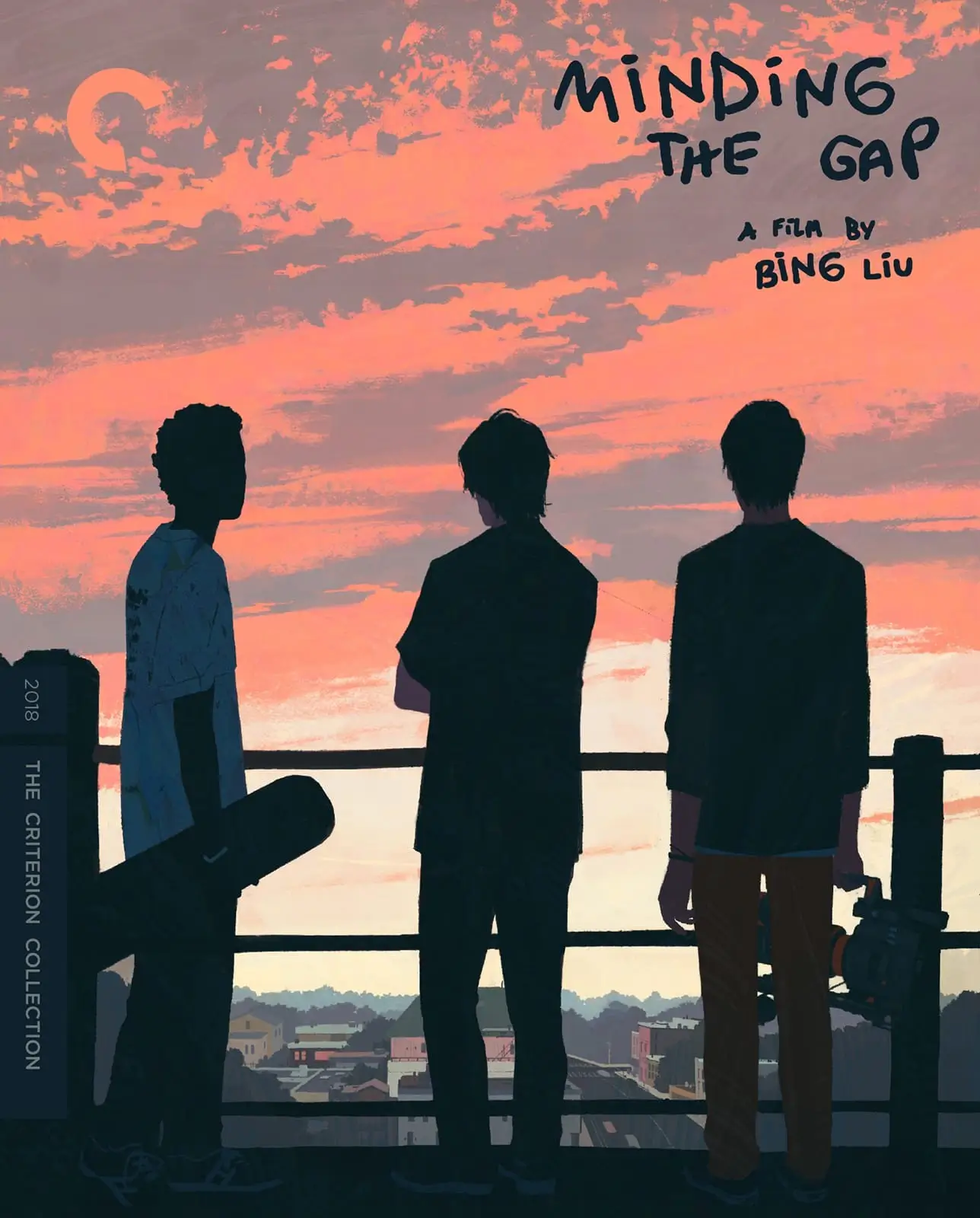
Minding the Gap
allure
The film’s most difficult stretch comes when Liu turns the camera on his own mother, asking her directly about the abuse he experienced growing up at the hands of her former husband, his stepfather. It’s the moment where the film stops being observational and becomes something closer to a confrontation, except the person doing the confronting is also the person who has to keep filming, keep editing, keep living with the answer. Liu has talked about how much thought went into whether and how to include that footage at all, since it involves someone he loves rather than a subject at arm’s length.
That willingness to turn the same unflinching eye on himself that he applies to Zack and Keire is a big part of why the film reads as generous rather than exploitative. Nobody in Minding the Gap, including its director, gets to be the one person who has it figured out.
The film handles Zack’s own behavior with the same refusal to simplify. As his relationship with Nina deteriorates, the documentary doesn’t let him off the hook, but it also doesn’t turn him into a villain there to make a point about toxic masculinity in the abstract. He’s a specific person, shaped by a specific household, trying and often failing to become the kind of father he never had. That refusal to flatten anyone into a symbol, even when the subject matter would make it easy, is probably the single hardest thing to pull off in a film like this, and it’s the thing critics kept returning to when the film made the festival rounds.
leg
Minding the Gap premiered at the 2018 Sundance Film Festival in the U.S. Documentary competition, where it won the Special Jury Award for Breakthrough Filmmaking. Hulu and Magnolia Pictures picked it up that summer, releasing it theatrically and on Hulu on August 17, 2018. From there it kept collecting honors: a Critics’ Choice Documentary Award for Best First-Time Director, two Cinema Eye Honors, the Truer Than Fiction Award at the Film Independent Spirit Awards, and the New York Film Critics Circle Award for Best Non-Fiction Film, among more than two dozen total. At the Sundance Institute’s own Chicago screening series, UIC, Liu’s alma mater, later hosted him for a talkback, since Liu graduated magna cum laude from the University of Illinois Chicago with a degree in literature before he ever picked up a professional camera.
extend
The film went on to earn an Academy Award nomination for Best Documentary Feature at the 91st Academy Awards in February 2019, alongside Hale County This Morning, This Evening, Of Fathers and Sons and RBG. The award went to Free Solo, but the nomination cemented Liu, a first-time director in his twenties, as one of the more significant new voices in American nonfiction film. Minding the Gap also picked up an Emmy nomination and a Peabody Award.
The Sundance win mattered beyond just the trophy, too. It’s a rare thing for a documentary to break out of the festival’s U.S. Documentary competition and end up in wide theatrical release the same year, and Minding the Gap‘s trajectory, from a hometown skate project to a Hulu and Magnolia Pictures release in under a year, became something of a case study for other first-time documentary filmmakers about what a strong festival premiere can actually unlock.
Liu didn’t disappear after the awards circuit ended. He served as a story director on America to Me, Steve James’ ten-part docuseries about a suburban Chicago high school, and in 2021 he and Joshua Altman won the Tribeca Film Festival’s jury award for Best Cinematography, Documentary Feature for All These Sons, Liu’s follow-up film about violence-intervention programs on Chicago’s West and South Sides. He was also named a 2020 United States Artists fellow. This year, he moved into scripted narrative filmmaking for the first time with Preparation for the Next Life, adapted from Atticus Lish’s novel; talking to The Hollywood Reporter about the jump, Liu has said plainly that he won’t be making a sequel to Minding the Gap, which tracks. The film’s ending already earned its ambivalent, hard-won sense of hope the hard way, over twelve years, and that isn’t the kind of thing you go back and try to top.
fin
The film’s influence shows up less in imitators trying to copy its subject matter and more in how it expanded what a coming-of-age documentary was allowed to look like: unresolved, structurally loose by design, willing to let a filmmaker be an active participant in his own story rather than a neutral observer standing outside it.
What holds up almost a decade later is how little Minding the Gap needed to manufacture. Liu didn’t go looking for a story about American manhood, race and the long shadow of domestic violence; he pointed a camera at his own friends over more than a decade and the story found him. That’s rarer than it sounds, and it’s the reason the film still gets cited as one of the more clear-eyed nonfiction portraits of blue-collar American life to come out of the last decade.
Related Articles

Where the Face Should Be, Rafael Silveira Paints Open Sky
A pink shirt, shoulder-length hair, then no face at all: in “Surprise,” Rafael Silveira lets flowers and a clear blue sky stand in for the person.