DRIFT AUDIO
Listen to this story
Choose a voice, then press play.
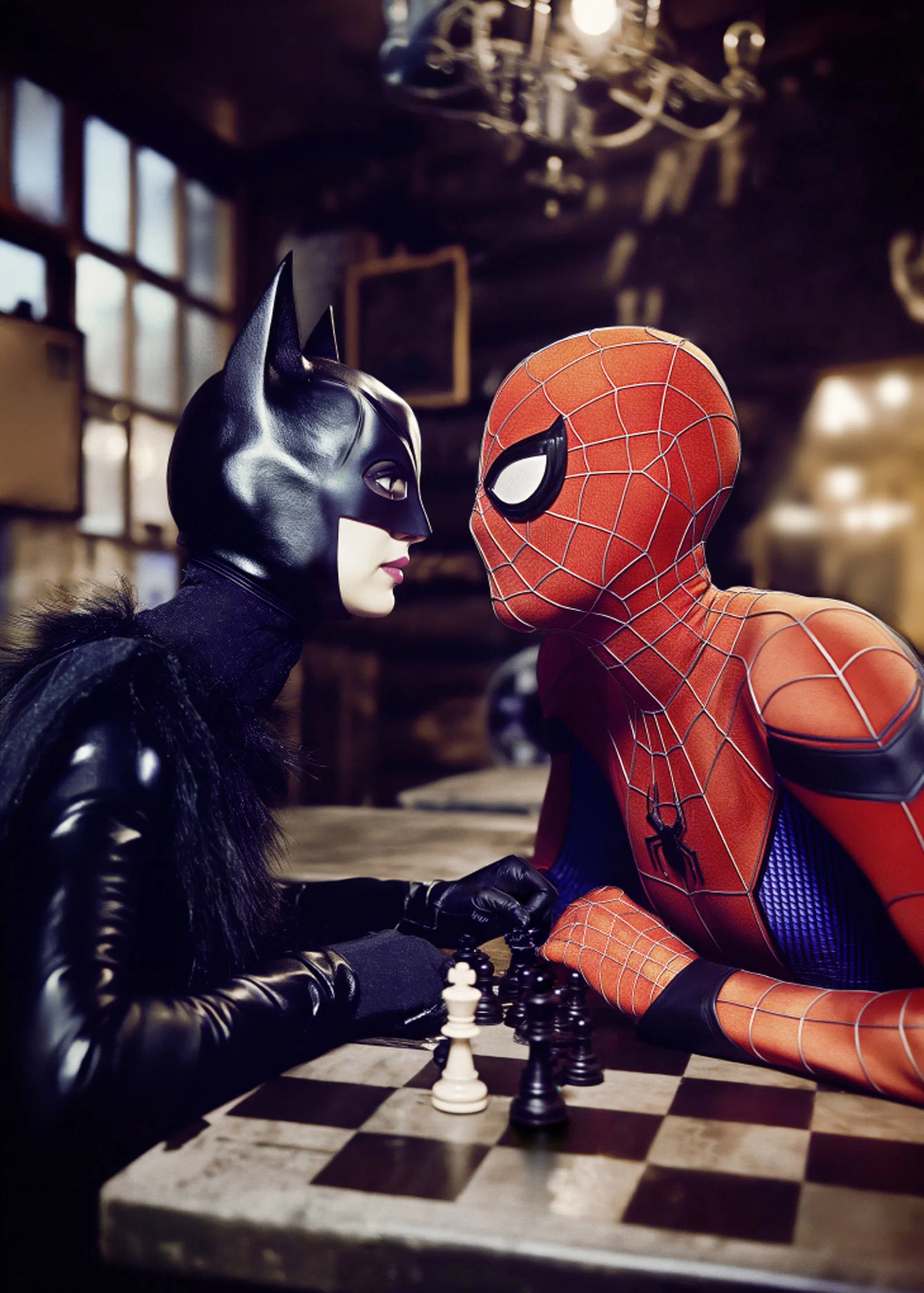
Tom Baker’s The Chess Match emerges as a standout achievement in contemporary digital illustration, seamlessly blending pop-culture mythology with classical artistic principles. This compelling scene captures Catwoman and Spider-Man locked in a high-stakes chess encounter within a silhouette, atmospheric interior. Far from a simple crossover novelty, Baker’s work delivers a nuanced exploration of rivalry, intellect, and human connection. Through meticulous rendering and thoughtful composition, the piece invites viewers into a private moment that resonates well beyond its comic-book origins.
stir
The artwork’s strength begins with its carefully structured layout. Catwoman occupies the left side in elegant profile, her sleek black ensemble and distinctive feline mask conveying poised intensity. Spider-Man sits opposite on the right, his red-and-blue suit slightly leaned forward, the expressive white eye lenses suggesting deep focus. Between them rests an aged chessboard, its pieces arranged in active conjure, serving as both a literal game and a powerful view anchor.
Baker employs a near-perfect symmetrical tension, positioning the figures as view counterweights. A grand chandelier hangs overhead, its warm illumination creating dramatic contrasts that draw the eye naturally across the frame. Tall windows on the left introduce subtle exterior light, hinting at the bustling city beyond while maintaining an intimate, enclosed atmosphere. This spatial arrangement transforms a static scene into one brimming with dynamic energy and psychological depth.
cin
One of the most impressive aspects of The Chess Match is its sophisticated use of light and backdrop. The chandelier acts as the primary light source, bathing the characters in rich, golden highlights that accentuate textures while plunging the background into velvety darkness. This technique echoes the dramatic chiaroscuro traditions of Old Masters, yet feels entirely modern and cinematic.
Subtle reflections dance across Catwoman’s glossy leather and Spider-Man’s textured suit, revealing Baker’s keen eye for material realism. Cool ambient light filtering through the windows adds atmospheric balance, preventing the scene from feeling overly theatrical. The result is an environment that feels lived-in and authentic — a forgotten Manhattan brownstone that could plausibly host such an unlikely meeting.
flow
Baker demonstrates exceptional command of digital techniques throughout the piece. The rendering of surfaces stands out particularly: the supple quality of leather, the soft texture of fur trim, the intricate webbing pattern on Spider-Man’s costume, and the worn grain of the wooden table all exhibit remarkable tactile quality. Even minor background elements — framed artwork on the walls, distant furniture, and architectural details — receive careful attention, enriching the overall world-building.
The depth of field is handled with professional precision, keeping the foreground chess pieces and main figures sharply defined while allowing the upper chandelier and rear architecture to soften naturally. Color choices favor a moody, sophisticated palette of deep blacks, vibrant crimsons, warm ambers, and cool blues, enhancing both emotional tone and visual cohesion. This level of execution rivals professional concept art from major entertainment studios while retaining a distinctive personal voice.
scope
At its core, The Chess Match functions as a meditation on duality and moral complexity. Catwoman represents fluid ethics and seductive independence, while Spider-Man embodies earnest responsibility and unwavering principle. Their silent confrontation across the chessboard becomes a metaphor for the intellectual and philosophical battles that define superhero narratives.
The subtle interplay between the characters adds emotional richness. Their close proximity and mutual gaze suggest mutual respect mixed with underlying attraction — a tension handled with elegance and restraint. Baker avoids exaggeration, instead allowing small details — a slight head tilt, the positioning of gloved hands, the focused expressions — to convey volumes about their complex relationship. The chess game itself symbolizes strategy, foresight, and the eternal struggle between order and chaos.
culture
In today’s media landscape, where superhero stories often prioritize spectacle, Baker’s work stands apart by emphasizing quiet intimacy and character psychology. By placing these icons from different universes in a shared, realistic setting, the artist comments on the fluidity of modern mythology and the way these characters have transcended their original comic pages.
The Chess Match also reflects broader artistic trends, where digital creators increasingly bridge “genre” illustration with fine-art concerns. The piece engages with historical traditions of depicting intellectual contests while updating them for contemporary audiences. Its exploration of moral ambiguity feels particularly relevant in an era questioning traditional notions of heroism and villainy.
innov
Baker’s approach synthesizes multiple influences: the narrative clarity of classic American illustration, the lighting mastery of theatrical cinema, and the technical possibilities of modern digital tools. Rather than relying on flashy effects, the work achieves impact through thoughtful restraint and emotional authenticity.
While some observers might note the hyper-detailed style as leaning toward photorealism, this choice serves the piece’s goals perfectly — making the fantastical feel immediate and believable. The artwork demonstrates how digital media can honor traditional compositional values while pushing technical boundaries.
fin
Tom Baker’s The Chess Match succeeds on every level: technically accomplished, view captivating, and thematically substantial. It transforms a familiar character pairing into something fresh and meaningful, capturing the enduring appeal of these figures while offering deeper insights into human nature.
For enthusiasts of digital art, comic culture, and narrative illustration, this piece represents a high point in the genre. It reminds us that even in an age of blockbuster franchises, the most powerful stories often unfold in small, charged moments of connection and challenge. The Chess Match doesn’t just depict two beloved characters — it captures the timeless game that continues to fascinate us all.
From the DRIFT archive: Larry Cohen: Brentwood, 1982 A Study in Suburban Tension and the Cinematic Stillness of California · Salomón Huerta’s “Unspoken Ritual”: The Subtle Weight of Intimacy
Related Articles
Modigliani’s Limestone ‘Tête’
Carved from a single block of limestone in Montparnasse more than a century ago, one of Modigliani's rare stone heads goes to auction for the first time…