DRIFT AUDIO
Listen to this story
Choose a voice, then press play.
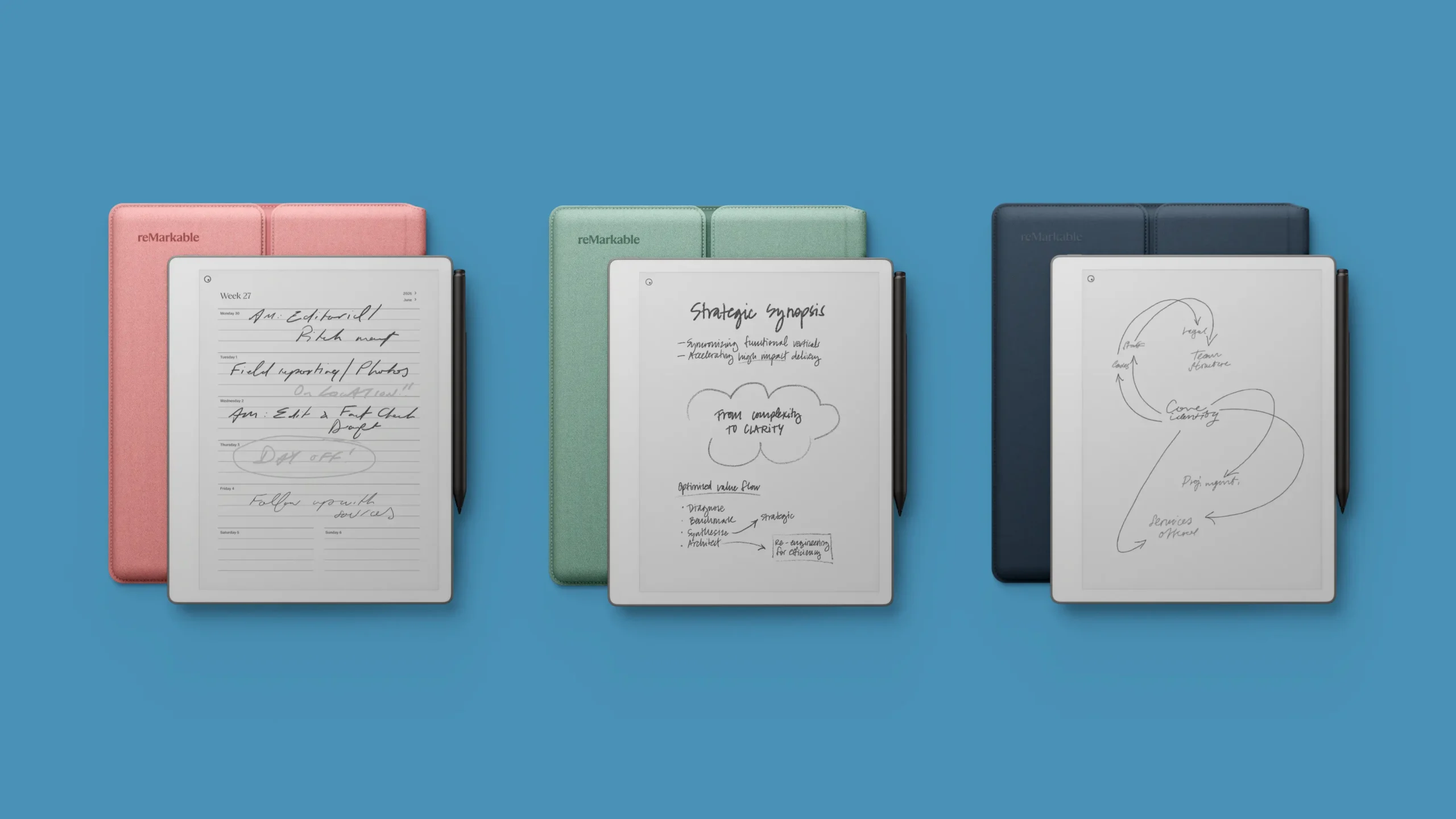
In an era dominated by notifications, infinite feeds, and multitasking fatigue, reMarkable continues moving in the opposite direction. Rather than competing to become another all-purpose tablet, the Norwegian company has built its identity around focus, handwriting, and the preservation of uninterrupted thought. With the introduction of the reMarkable Paper Pure on May 6, 2026, that philosophy reaches its most distilled form yet. Positioned as the successor to the six-year-old reMarkable 2, the new device arrives at the same $399 entry price while introducing substantial improvements to speed, contrast, battery life, repairability, and overall responsiveness.
The Paper Pure is not attempting to out-feature an iPad or replace a laptop. Instead, it narrows its purpose intentionally. This is a device built for reading, sketching, annotating, brainstorming, and thinking deeply without interruption. In a technology landscape increasingly driven by AI overlays and constant engagement loops, the Paper Pure feels almost radical in its restraint.
idea
What makes the Paper Pure particularly interesting is that it arrives after reMarkable’s recent exploration into color E Ink devices with the Paper Pro and Paper Pro Move. Rather than continuing to add complexity, the company has deliberately stripped things back again. No front light. No color display. No app ecosystem. No endless customizations.
That decision reinforces reMarkable’s central thesis: digital tools should disappear into the background rather than dominate attention. The Paper Pure represents the purest expression of that philosophy so far. It exists not as a multimedia device but as an environment for uninterrupted cognition.
There is something psychologically different about interacting with a device that refuses distraction by design. Without glowing notifications, social feeds, or algorithmic interruptions competing for attention, the Paper Pure encourages slower thinking and longer concentration spans. That emotional atmosphere may ultimately matter more than any individual specification.
intent
Physically, the Paper Pure introduces meaningful refinements without abandoning the minimalist identity associated with reMarkable hardware. The device measures 228.1 x 187.1 x 6.0 mm and weighs just 360 grams, making it noticeably lighter than the reMarkable 2 despite a slight increase in thickness.
The weight reduction transforms the experience during extended handheld use. It feels less fatiguing during long reading sessions or note-taking marathons, while still retaining enough density to feel premium rather than fragile.
Perhaps more importantly, reMarkable has embraced repairability and sustainability in a far more viewable way this generation. The rear panel now uses a recyclable plastic construction secured with screws and snaps instead of more permanent assembly methods. This allows easier battery access and future servicing, positioning the device as something intended for long-term ownership rather than rapid replacement cycles.
The sustainability figures reinforce that commitment. The Paper Pure reportedly incorporates 38% recycled materials overall, including fully recycled lithium and cobalt within the battery system itself. In a consumer electronics industry still heavily criticized for waste and planned obsolescence, this approach feels increasingly significant.
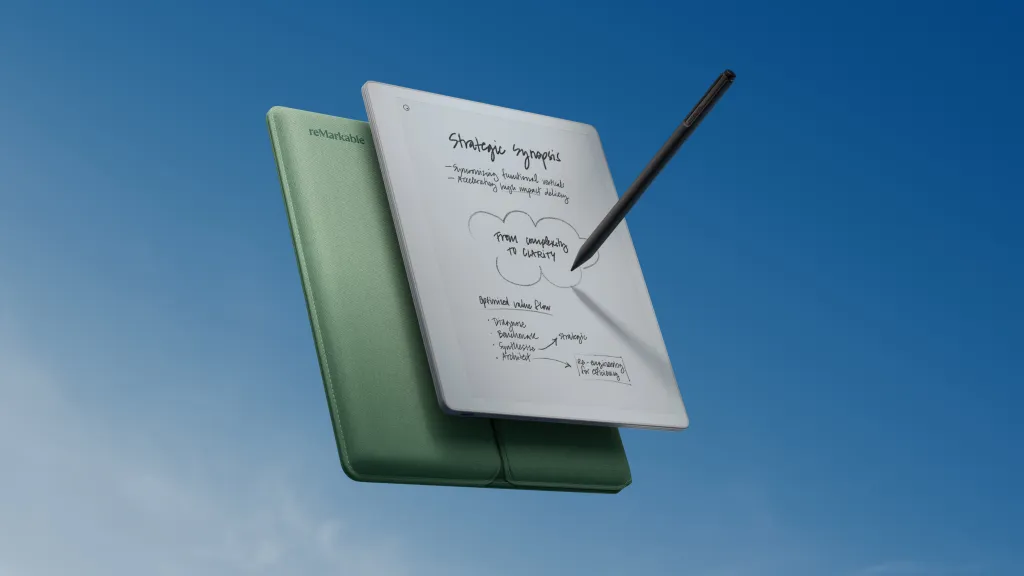
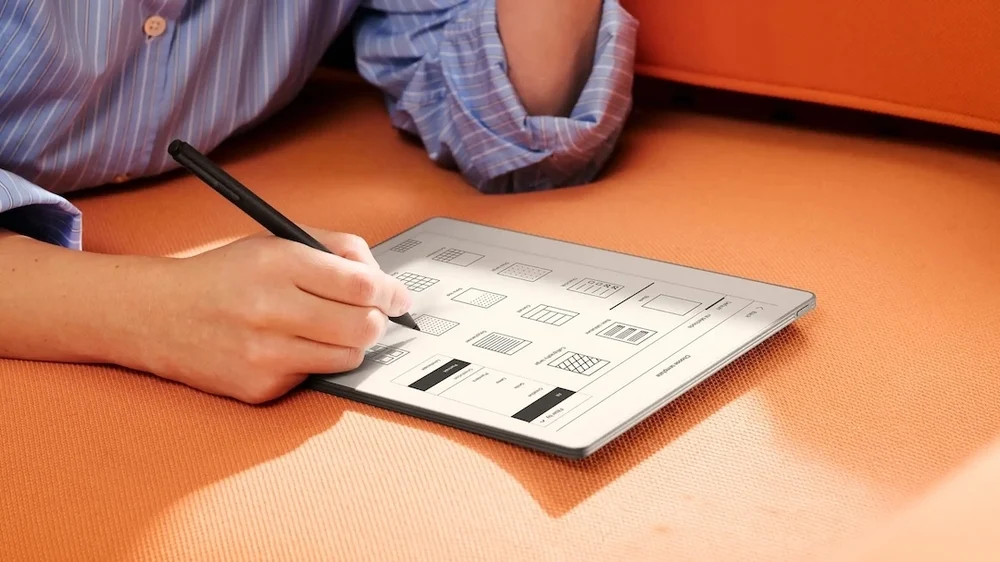
Aesthetically, the device remains unmistakably reMarkable. Matte textures, soft industrial lines, and minimal branding maintain a quiet Scandinavian sensibility. Thick side bezels function as ergonomic thumb rests, subtly acknowledging the realities of prolonged reading and handwriting sessions.
flow
The centerpiece of the Paper Pure experience is its third-generation Canvas display, a customized 10.3-inch E Ink Carta 1300 panel with a 4:3 aspect ratio and 226 PPI resolution.
Compared to the reMarkable 2, the upgrades are substantial:
- 20% higher contrast
- Faster refresh rates
- A noticeably whiter background surface
- Lower writing latency
These improvements matter because the illusion of paper depends almost entirely on responsiveness and visual clarity. Digital ink now appears in approximately 21 milliseconds, creating a writing experience that feels startlingly immediate.
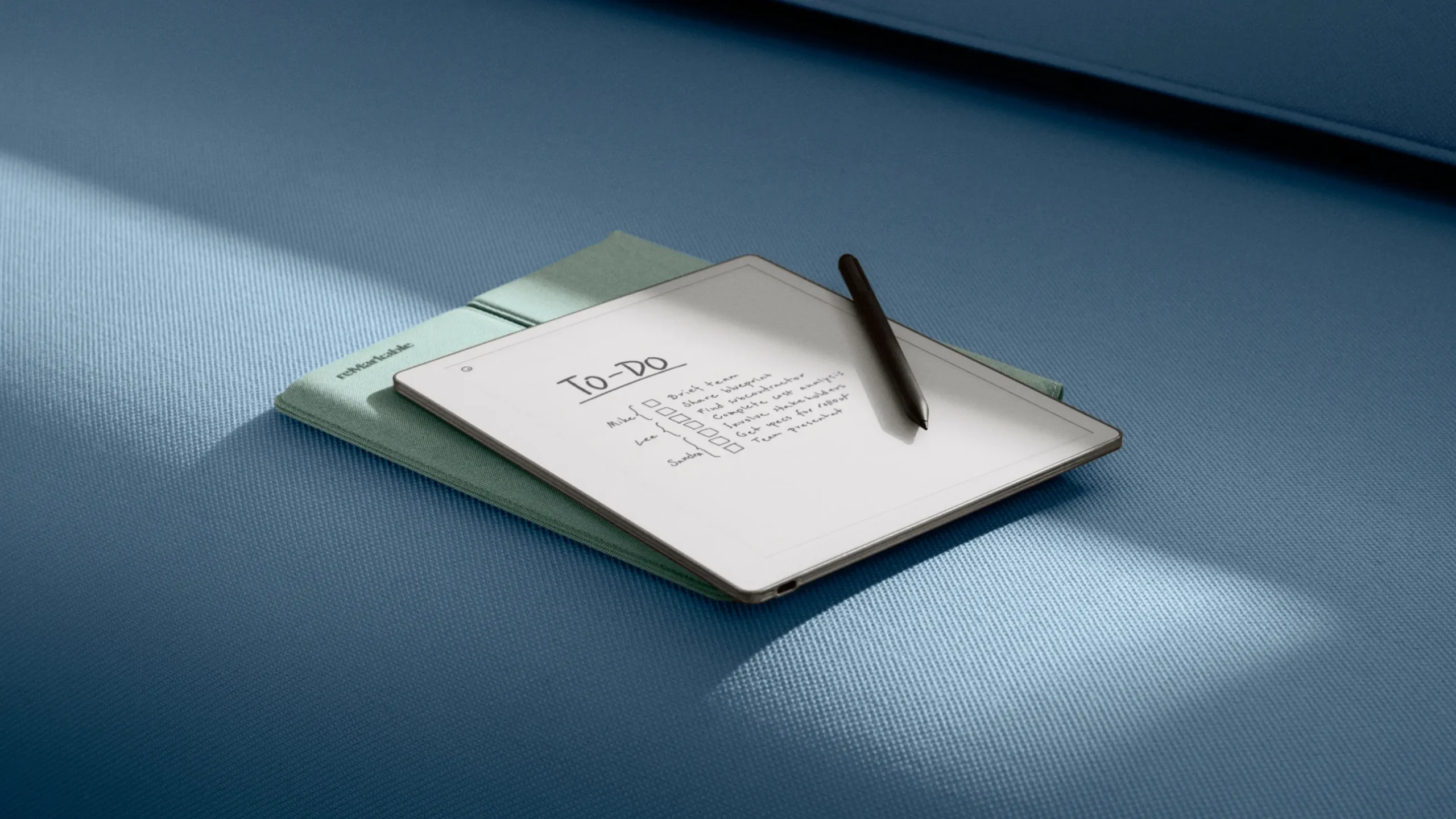
Combined with the textured Gorilla Glass 3 surface and pressure-sensitive Marker stylus, the Paper Pure achieves a level of tactile realism that few E Ink competitors can match. The slight resistance between stylus tip and screen creates a sensation closer to graphite or pen-on-paper friction rather than the slippery smoothness typical of glass tablets.
The absence of front lighting remains controversial but deeply intentional. reMarkable argues that avoiding illumination preserves both eye comfort and the paper-like visual experience. The tradeoff, of course, is limited nighttime usability. Yet for many users, especially writers and readers seeking daytime focus, the benefit outweighs the inconvenience.
In practical use, the screen encourages immersion in a way conventional tablets rarely do. There is no glow demanding attention. The display simply exists, quietly waiting for ideas.
show
One criticism frequently directed at earlier reMarkable devices involved responsiveness. While the writing experience itself remained excellent, navigation and multitasking occasionally felt sluggish.
The Paper Pure addresses that decisively. Powered by a 1.7 GHz dual-core Cortex-A55 processor alongside 2 GB of LPDDR4 RAM and 32 GB of storage, the device reportedly delivers around 50% faster responsiveness overall.
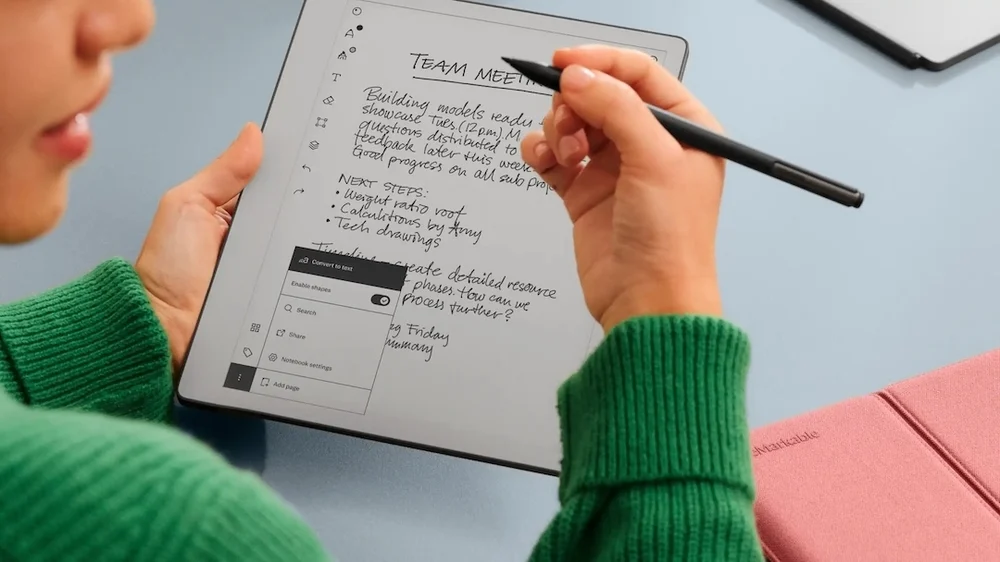
Page turns feel smoother, handwriting conversion processes complete more quickly, and interface navigation carries far less friction. The operating system still remains intentionally minimal, but now it finally feels fluid enough to disappear entirely during use.
Battery life also improves significantly. The 3,820 mAh battery promises roughly three weeks of use based on an hour of daily writing or reading—a roughly 30% improvement over the previous generation.
For a device designed around uninterrupted thinking, long battery life becomes psychologically important. It allows the tablet to behave more like a notebook and less like another device requiring constant charging awareness.
aware
The software philosophy behind reMarkable remains refreshingly narrow. There is no browser, no social media integration, no app store, and no push toward entertainment consumption.
Instead, the operating system focuses entirely on:
- Handwriting and note organization
- PDF and EPUB annotation
- Sketching and layered drafting
- Calendar integration
- Handwriting-to-text conversion
This singularity of purpose creates something increasingly rare in modern technology: cognitive quiet.
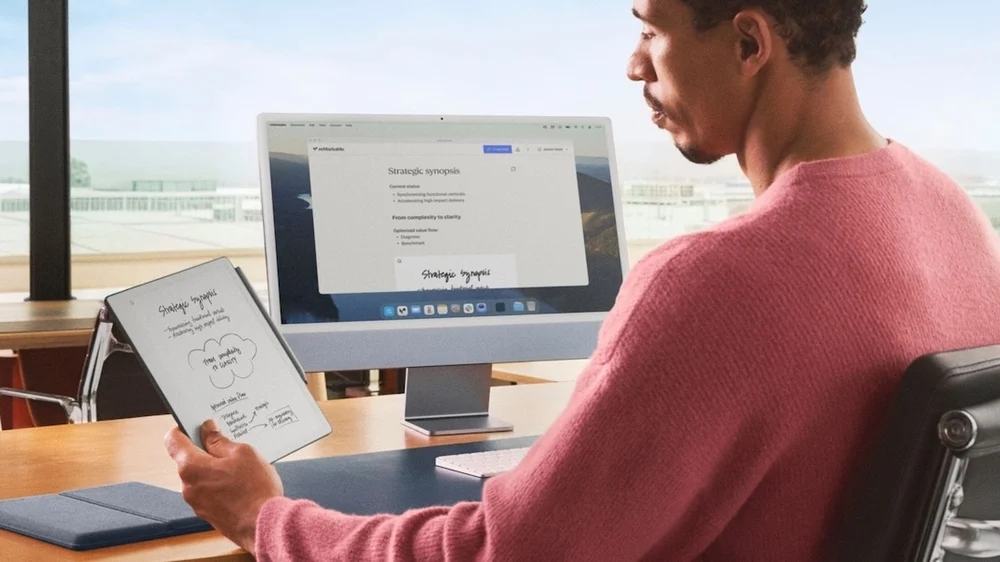
The Connect subscription layer expands functionality further with cloud syncing, desktop and mobile integration, Screen Share presentation support, and searchable handwritten documents.
Importantly, these additions do not fundamentally alter the distraction-free core experience. They exist to support workflow continuity rather than increase engagement time.
For students, architects, lawyers, writers, academics, and visual thinkers, this balance between analog creativity and digital organization becomes extremely compelling.
different
The Paper Pure succeeds largely because it rejects the dominant definition of productivity technology. Most modern productivity tools attempt to centralize everything into one ecosystem. reMarkable instead isolates one specific human activity—thinking with a pen—and optimizes ruthlessly around it.
That distinction changes how the device feels emotionally.
Writing on the Paper Pure does not carry the same low-level psychological noise associated with conventional tablets. There are no visual temptations waiting one swipe away. The environment remains singular and intentional.
As a result, many users report entering flow states more naturally on E Ink hardware than on traditional LCD or OLED devices. The Paper Pure amplifies that effect by removing nearly every remaining friction point.
stance
Against competitors like the Kindle Scribe, Supernote, Bigme devices, or even Apple tablets with stylus support, the Paper Pure distinguishes itself through focus rather than versatility.
Some rivals offer front lighting, Android app ecosystems, or broader functionality. But few match reMarkable’s clarity of purpose. The company understands that its audience is not searching for another multipurpose device. They are searching for relief from multipurpose devices.
The Paper Pure therefore occupies a unique category somewhere between notebook, creative workspace, and cognitive sanctuary.
attention
Perhaps the most important thing about the Paper Pure is not its specifications but what it represents culturally. In 2026, technology increasingly competes for attention aggressively. Devices are designed to maximize engagement, encourage scrolling, and keep users continuously stimulated.
The Paper Pure takes the opposite approach. It treats attention as something valuable worth protecting.
That philosophy gives the device unusual emotional resonance. It feels less like consumer electronics and more like an intentional tool—closer to a notebook, sketchpad, or writing instrument than a conventional tablet.
Tthe reMarkable Paper Pure succeeds because it understands that not every technological advancement requires additional complexity. Sometimes refinement means subtraction.
By focusing obsessively on handwriting, clarity, tactile realism, and cognitive calm, reMarkable has created perhaps the strongest argument yet for digital paper as a meaningful category rather than a niche curiosity.
From the DRIFT archive: PANTONE’s 2026 Color of the Year Takes Shape With Play-Doh and Post-It Editions · Lara Croft’s Dual Guinness Records Cement an Icon: How a Digital Explorer Became a Cultural Artifact Herself
Related Articles

Under Rue de Castiglione, Liaigre Gives Hôtel Costes a Spa With No Hard Corners
A 20-meter lap pool, eight treatment rooms and not one sharp angle: Studio Liaigre’s spa […]