DRIFT AUDIO
Listen to this story
Choose a voice, then press play.
Abercrombie is on its 14th straight quarter of growth, and the fur-trimmed hoodies teenagers once mocked are now the thing they want most.
Abercrombie & Fitch closed fiscal 2025 with record net sales of $5.3 billion, up 6 percent and the first time the company has ever crossed the $5 billion mark, extending a run of consecutive quarterly growth that hit its 14th straight period in the most recently reported quarter. Hollister, the teen-facing sister brand, did most of the heavy lifting, posting 15 percent revenue growth and its best year on record while the flagship Abercrombie brand actually dipped slightly, a reminder of how much this recovery now runs through the brand that was supposed to be the disposable one. Management has guided for another 3 to 5 percent of net sales growth this fiscal year, a modest but real target for a company that spent most of the 2010s treated as a cautionary tale rather than a turnaround.
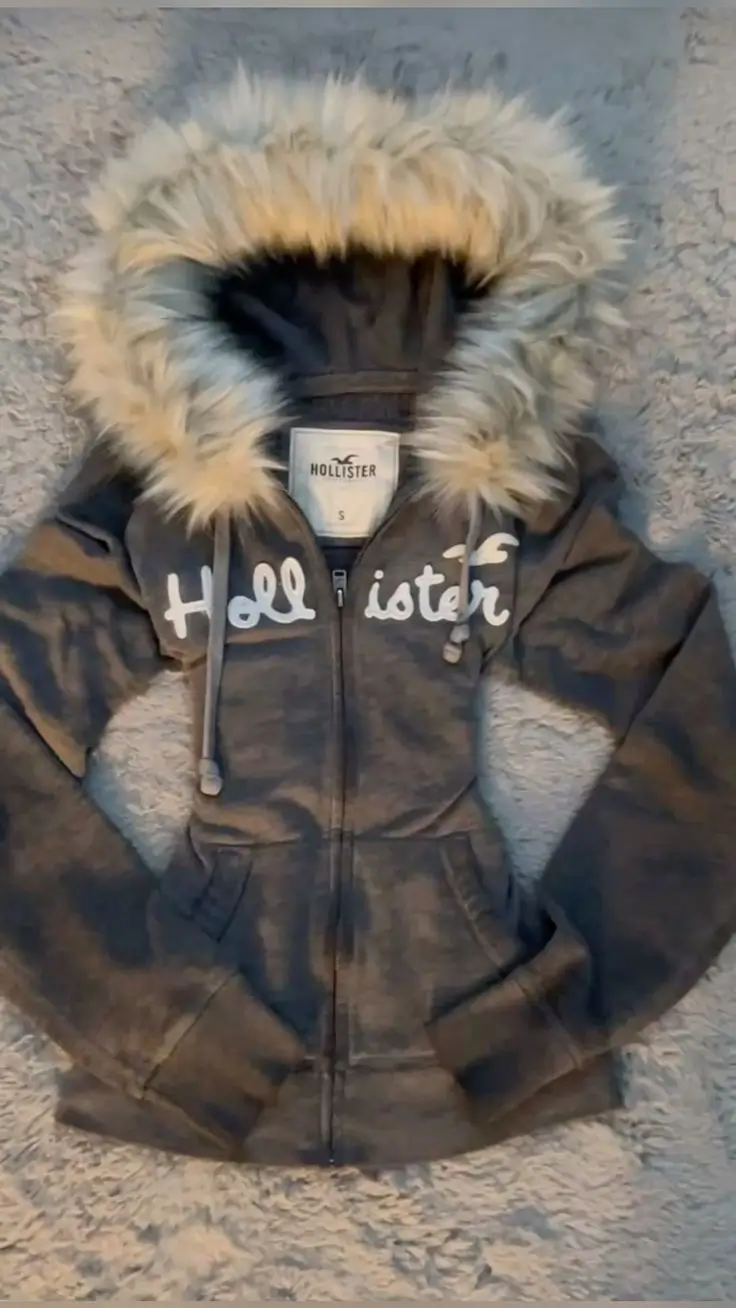
Vintage Hollister Brown Plaid Zip-Up Hoodie With Faux Fur-Lined Hood And Logo Script
None of that growth is coming from nowhere. It’s arriving at the exact moment secondhand Abercrombie and Hollister pieces have become genuinely desirable again, not as ironic thrift finds but as pieces a much younger customer is actively hunting down on resale apps and, increasingly, buying new from the brands themselves.
stir
To understand why any of this matters, it helps to remember what these two stores actually sold in the 2000s, which was never just clothing. Faded jeans, fitted polos, oversized embroidered-logo hoodies, cargo shorts, flip-flops, and fur-trimmed parkas were the uniform, but the real product was access to a specific, aspirational version of American adolescence, sold through dim lighting, blasting music, heavy cologne, and sales staff who were cast as much as hired. Walking into either store was less a shopping trip than an audition.
That same exclusivity became the thing that eventually sank the brand. Abercrombie’s construction of desirability depended on narrow beauty standards and a marketing style that, by the 2010s, looked increasingly out of step with a culture pushing back against exactly that kind of exclusion. Much of that reckoning traces back to a single 2006 interview, later resurfaced and gone viral in 2013, in which Jeffries described the company’s target customer as the attractive, popular kid, adding that a lot of people simply didn’t belong in the brand’s clothes. The comment, paired with the company’s long refusal to stock sizes above a 10 for women, drew public condemnation from celebrities, a change.org petition that gathered nearly 80,000 signatures, and years of continued scrutiny even after Jeffries issued a statement calling his own words regrettable.
The reckoning went well beyond aesthetics and old interviews, too. Jeffries, who ran the company from 1992 to 2014, was later accused in a wave of civil lawsuits and, in 2024, indicted on federal sex trafficking and interstate prostitution charges tied to alleged abuse of young men recruited under the promise of modeling work. Jeffries has pleaded not guilty, and a judge ruled him competent to stand trial this past week, with the case now headed toward an October court date. Abercrombie itself has said it was appalled by the allegations against its former chief executive.
huh
Stylistically, the fall was just as steep. Oversized logos, low-rise washed denim, and the whole overtly branded look of the mid-2000s became the exact aesthetic a new generation of shoppers wanted to distance themselves from. Fran Horowitz, who joined Abercrombie in 2014 as Hollister’s brand president before becoming CEO of the parent company in February 2017, inherited a business in double-digit decline and spent years quietly rebuilding it from the ground up: replacing the dark, cologne-heavy stores with brighter, more inviting spaces, retiring the shirtless-model marketing, expanding both brands’ size ranges into a genuinely inclusive line rather than simply upsizing the same cuts, and listening directly to customer complaints, down to details as specific as swapping out button-fly jeans once shoppers said they preferred a zipper. It worked. Abercrombie’s own brand revenue climbed from roughly $1.3 billion in fiscal 2019 to $2.6 billion in fiscal 2024, and Horowitz was named a Business of Fashion 500 honoree and NRF’s 2026 Visionary award winner for the turnaround. But it also meant the company spent nearly a decade deliberately walking away from the exact identity Gen Z shoppers are now paying resale premiums to recreate.
View this post on Instagram
vault
Hollister got there first, and did it deliberately. In July 2025, marking its 25th anniversary, the brand reissued 38 archival styles, including babydoll tops, cable-knit sweaters, bootcut jeans, fleece mini shorts, and logo-stamped hoodies, in what it called its “2000s Vault Release.” Executives were explicit about why: Hollister’s own VP of Americas marketing told trade outlets the company had watched demand for its now-vintage pieces climb on resale sites and in thrift stores, with customers tagging the brand in viral thrift hauls and asking directly for the old styles to come back. Several pieces reportedly sold out online within hours of the drop, and shoppers who visited stores in person described lines forming under the same bright lighting and surf-shop signage the brand used twenty years earlier. Since that release, some Hollister locations have continued stocking similar throwback styles, and social platforms including Reddit have carried scattered reports this year of additional vintage-style pieces reappearing on shelves, though the scope and permanence of any wider rerelease hasn’t been confirmed by the company.
nostalgia
Hollister’s own marketing has leaned into the same instinct on purpose. In March, the brand released its largest-ever summer campaign built around a full-length music video rather than a traditional ad, tapping 26-year-old singer-songwriter Gigi Perez for a cover of Green Day‘s 1997 graduation staple “Good Riddance (Time of Your Life),” directed by filmmaker Natalie Simmons. The brand’s senior vice president of creative marketing described the appeal directly, framing it as an honor to market to teenagers during the coming-of-age years when their biggest memories are formed. The accompanying “Time of Your Life” collection folded senior-year signifiers, Class of 2026 patches, keepsake-style jewelry, into the clothing itself, while in-store photo booths turned the retail floor into a physical extension of the nostalgia the video was selling. It followed Hollister’s first-ever Feel Good Fest music festival in 2024, headlined by Benson Boone, another sign the brand now treats music as core to its identity rather than a marketing afterthought, even if the songs it’s leaning on skew closer to the 2000s and 2010s than anything currently on the charts.
View this post on Instagram
miss
Abercrombie and Hollister aren’t riding this alone, either. Gap‘s namesake brand posted 10 percent sales growth in its most recent quarter, powered in part by the same logo hoodie Millennials wore to school two decades ago, a piece that’s shown up on celebrities from Britney Spears to Mark Zuckerberg over the years and is, according to Gap itself, once again one of the brand’s biggest sellers. Industry data cited in retail press shows 62 percent of shoppers aged 18 to 24 still buy primarily in physical stores, a full 10 points ahead of older shoppers, which helps explain why brands with an actual mall footprint, rather than a purely online one, are the ones capturing most of this specific wave.
The resale side of this has its own momentum, separate from anything the brands are doing intentionally. Platforms like Vinted and Depop have become the default hunting ground for shoppers, many of them too young to have worn these clothes the first time, chasing down the exact hoodies and jackets their older siblings or parents wore in middle school. Search interest in “2016 aesthetic” and similar terms has spiked to multi-year highs, and social platforms have tracked a surge in nostalgia-coded playlists and content built around the mid-2010s specifically, not just the early-2000s Y2K wave that came before it. Sellers specializing in this exact category of mall-brand resale have built entire followings and, in some documented cases, drawn interest from stylists working with major pop stars, a sign of how far the aesthetic has traveled from its original teenage audience.
What’s driving it isn’t pure irony. Industry analysts tracking the broader retro-revival trend, which has also touched everything from vintage-inspired handbags to reissued fast-food items, point to something more specific: a generation that came of age entirely online reaching for tangible, unselfconscious artifacts of a pre-algorithm adolescence, even one that isn’t their own. These are basics that already carry a built-in history, familiar enough to wear casually today and dated enough to feel genuinely new to anyone who was still in elementary school when they were first popular.
For Millennials watching all of this unfold, the discomfort is a little more specific than generational whiplash. It’s the realization that the exact hoodies they donated or threw away a decade ago, the ones that felt thoroughly, embarrassingly over, are now the thing a fifteen-year-old is willing to pay resale markup to track down.
From the DRIFT archive: Nike & Chipotle: How a Young Cancer Patient’s Burrito Ritual Became a Once-in-a-Lifetime Sneaker · Wizdom 2025 at Cipriani Wall Street: An Experiential Moment in Cloud Culture
Related Articles
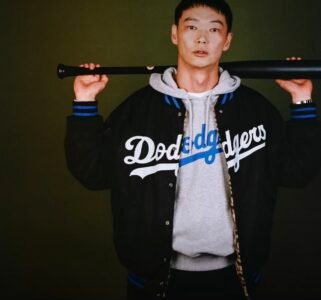
WACKO MARIA Brings Its Leopard Lining to the Big Leagues
Black nylon outside, leopard fur inside: WACKO MARIA’s first Major League Baseball collection reached Japan […]